Wayground logo

Free Printable Worksheets

Font size

S
M
L
XL
Worksheets

Balancing Equations, Types of Reactions, &Endo vs Exothermic

Total questions: 45

Worksheet time: 58mins

Name
Class
Date
1.
In an exothermic reaction, heat is ...
a)
taken in or absorbed
b)
given out or released
2.
In an endothermic reaction, heat is ...
a)
taken in or absorbed
b)
given out or released 
3.
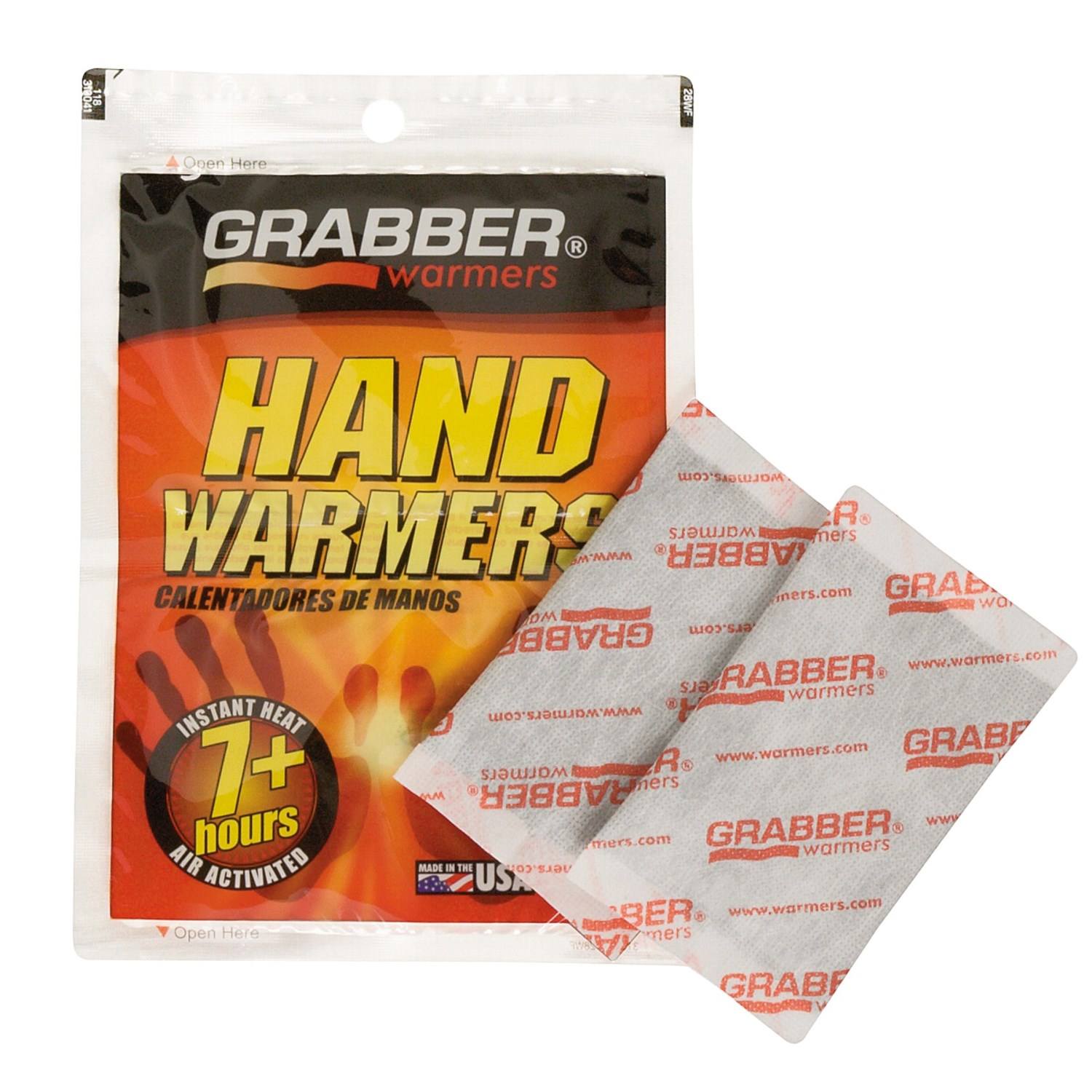
What type of reaction occurs in a hand warmer
a)
exothermic
b)
endothermic
4.
Exothermic reactions...
a)
Absorb energy
b)
Release energy
c)
Release Color
d)
Absorb Color
5.
If a chemical reaction is EXOTHERMIC, the temperature would....
a)
Stay the same
b)
Increase
c)
Decrease
6.

In an endothermic reaction, heat is ...

a)

taken in

b)

given out

7.

What is law of conservation of mass ?

a)

Mass of reactants = mass of products

b)

mass of reactants > mass of the products

c)

mass of the reactants < mass of the products

d)

mass of reactants > 2 mass of the reactants

8.
Consider the chemical equation CH4 + 2 O2 → CO2 + 2 H2O. In this equation, CH4 is a
a)
product
b)
reactant
c)
displacement
9.
What is the right part of a chemical equation called?
H2 + O → H2O
a)
Reactants
b)
Products 
c)
Yields 
d)
Chemical Equation 
10.

Does this follow the law of conservation of mass:

Yes No

a)

Yes

b)

No

11.

Does this follow the law of conservation of mass:

Yes No


Na + F --> NaF

a)

Yes

b)

No

12.
The number in front of a compound or element is a 
a)
Subscript
b)
Coefficient
c)
Superscript
d)
Charge
13.
How many nitrogen atoms does NH3 have?
a)
1
b)
2
c)
3
d)
4
14.
How many oxygen atoms are in this chemical formula?
a)
6 oxygen atoms
b)
2 oxygen atoms
c)
3 oxygen atoms
d)
4 oxygen atoms
15.
What is the law of conservation of mass?
a)
The amount of matter changes when reacted or changed.
b)
The mass of all reactants are changed during a physical or chemical change
c)
The mass of the reactants equals the mass of the products
d)
The mass of the products is different than the mass of the reactants.
16.
Balance this equation-
__P4 + __O2 --> __P2O3
a)
it is already balanced
b)
2, 1, 3
c)
1, 2, 3
d)
1, 3, 2
17.
 Mg  +  ___ HCl  →   MgCl2  +   H2
a)
1
b)
2
c)
3
d)
4
18.
Which of the following is an example of synthesis?
a)
Na + Br2 --> NaBr
b)
KClO3 --> KCl + O2
c)
HgO + Cl2-->HgCl + O2
d)
Cl2 + NaBr --> NaCl + Br2
19.

Which type of reaction has the following general pattern?

ABC → A + B + C

a)

synthesis

b)

combustion

c)

decomposition

d)

endothermic

20.
If a chemical reaction is EXOTHERMIC, the temperature would....
a)
Stay the same
b)
Increase
c)
Decrease
21.
3Ca + 2AlCl3 --> 3CaCl2 + 2Al
a)
Synthesis
b)
Decomposition
c)
Single diplacement
d)
Double displacement
22.
3KOH + H3PO4 --> K3PO4 + 3H2O
a)
Synthesis 
b)
Decomposition
c)
Single displacement
d)
Double displacement
23.
When balancing equations a ____ can be placed to the left of a formula of a substance to make the equations balanced
a)
charge
b)
subscript
c)
random number
d)
coefficient
24.
Balance this equation:
 __Li + __Cl2 -> __LiCl
a)
2Li + Cl2 -> 4LiCl2
b)
2Li + Cl2 -> LiCl2
c)
2Li +  Cl2 -> 2LiCl
25.
The number of atoms you begin with in a chemical reaction ...
a)
must be the same as the number of  atoms you end with
b)
must be an even number
c)
can be different to the number you finish with
d)
changes depending on how much energy is formed
26.

_____ reactions usually feel hot!

a)

endothermic

b)

exothermic

27.

____ reactions usually feel cold.

a)

endothermic

b)

exothermic

28.

During an exothermic reaction, heat is _________ and chemical bonds __________.

a)

released, formed

b)

absorbed, broken

c)

released, broken

d)

absorbed, formed

29.

During an endothermic reaction, heat is ________ and chemical bonds _______.

a)

released, formed

b)

absorbed, broken

c)

released, broken

d)

absorbed, formed

30.

Endo means in or _______.

a)

absorbed

b)

released

31.

Exo means out or ________.

a)

absorbed

b)

released

32.
Read the following chemical formula: C6H12O6. How many hydrogen atoms are in the formula?
a)
12
b)
6
c)
4
33.
Balance this equation...
HgO --> 2Hg + O2
a)
It is balanced 
b)
2HgO --> Hg + O2
c)
2HgO --> 2Hg + O2
34.
What coefficient should be used to make the following equation balanced?
N2+O2--> _NO 
a)
1
b)
2
c)
3
d)
4
35.
How many atoms of aluminum are on each side of the following equation: 4Al + 3O2 --> 2Al2 O3
a)
2
b)
6
c)
1
d)
4
36.
Is this balanced?...
Fe + S --> FeS
a)
YES!
b)
NO!
37.
True or False: When balancing chemical equations the subscripts can change.
a)
true
b)
false
38.
This is used to represent the number of atoms of each element being represented. 
a)
A Exponent
b)
The Coefficient
c)
A Molecule
d)
The Subscript
39.
How many hydrogen atoms are in this chemical formula: 
a)
4 hydrogen atoms
b)
1 hydrogen atom
c)
2 hydrogen atoms
d)
3 hydrogen atoms
40.
The following reaction is an example of what reaction type? 
CoCO3 → CoO + CO2
a)
Synthesis
b)
Decomposition
c)
Single Replacement
d)
Double Replacement
41.

AgF + CaCl2 ---> AgCl + CaF2

a)

double replacement

b)

decomposition

c)

single replacement

d)

synthesis

42.
How many ATOMS of Oxygen are in 3Fe2O3
a)
2
b)
3
c)
6
d)
9
43.

Balance the following:

____ Fe + ____ Cl2 → ____ FeCl3

a)
1,1,2
b)
1,3,1
c)
2,2,3
d)
2,3,2
44.

Balance the following:

____ Al + ____ O2 → ____ Al2O3

a)
2,3,4
b)
4,3,2
c)
1,1,2
d)
2,1,1
45.

Balance the following:

____ H2SO4 + ____ NaNO2 → ____ HNO2 + ____ Na2SO4

a)
1,1,2,1
b)
1,2,2,1
c)
2,3,3,2
d)
4,3,2,1