
 Worksheets
Topic 6 Forces & Motion
Total questions: 39
Worksheet time: 26mins
Name
Class
Date
1.

The term for when an object speeds up, slows down, or changes direction
a)
Speed
b)
Velocity
c)
Acceleration
d)
Newtons
2.

The net force of the following diagram is
a)
20 N
b)
Moving to the left
c)
Balanced forces
d)
160 N
3.

If forces acting on an object are balanced, then there _________ be a change in motion
a)
will
b)
will not
4.

The runner's motion as they turned the curve to pass the baton is best described as
a)
speed
b)
force
c)
acceleration
d)
velocity
5.

The net force of the following diagram is
a)
620N→
b)
To the right→
c)
20N←
d)
balanced↔
6.

A student slides a book across a desk by giving it an initial push. Which of the following is the MOST important reason that the book eventually comes to a stop instead of continuing to slide?
a)
The initial force was too weak to keep the book in motion.
b)
The mass of the book was not enough to keep the book in motion.
c)
The force that occurs when the book rubs against the desk stops the book.
d)
The magnetic force from the Earth stops the book.
7.

When an object is acted on by unbalanced forces, the object will
a)
continue in the same direction
b)
continue at the same speed
c)
accelerate in the direction of the unbalanced force
d)
will have no change in motion
8.
A satellite orbits the Earth at a constant speed. The forces that maintain the constant speed must be -
a)
BALANCED
b)
UNBALANCED
c)
CANCELLED
d)
DISPLACED
9.
A non-contact force means there is NO touching needed to make the force happen between the two objects. Choose the non-contact forces.
a)
using a magnet, electricity, pulling a sled
b)
hitting a baseball, using a magnet, pushing your friend
c)
using a magnet, dropping a ball, two balloons repelling
10.
An unbalanced force can make all of these things happen except...
a)
a moving object changes direction
b)
an object just sits there
c)
a moving object speeds up
d)
a moving object stops
11.
Balanced forces can cause
a)
an object to speed up or slow down
b)
an object to stay still or move at a constant speed and direction
12.

this force is ___________ and there will be
a)
unbalanced, no movement
b)
balanced, movement to the left
c)
balanced, no movement
13.

This force is _____________ and there will be _________________
a)
balanced, movement to back left
b)
unbalanced, movement to the back left
c)
balanced, no movement
14.

If all four forces are balanced, the plane will
a)
plummet to the ground
b)
fly faster and faster
c)
fly slower and slower
d)
fly at a constant speed and direction
15.
The more massive an object is...
a)
the harder it will be to get moving.
b)
The harder it will be to stop.
c)
the harder it will be to speed up.
d)
all of the above.
16.

What is a PUSH or PULL of an object?
a)
Motion
b)
Force
c)
Friction
d)
Gravity
17.

What is a force that works AGAINST MOTION?
a)
Force
b)
Motion
c)
Gravity
d)
Friction
18.

Why does a rolling ball stop?
a)
Gravity
b)
Friction
c)
Waterfalls
d)
Sand
19.
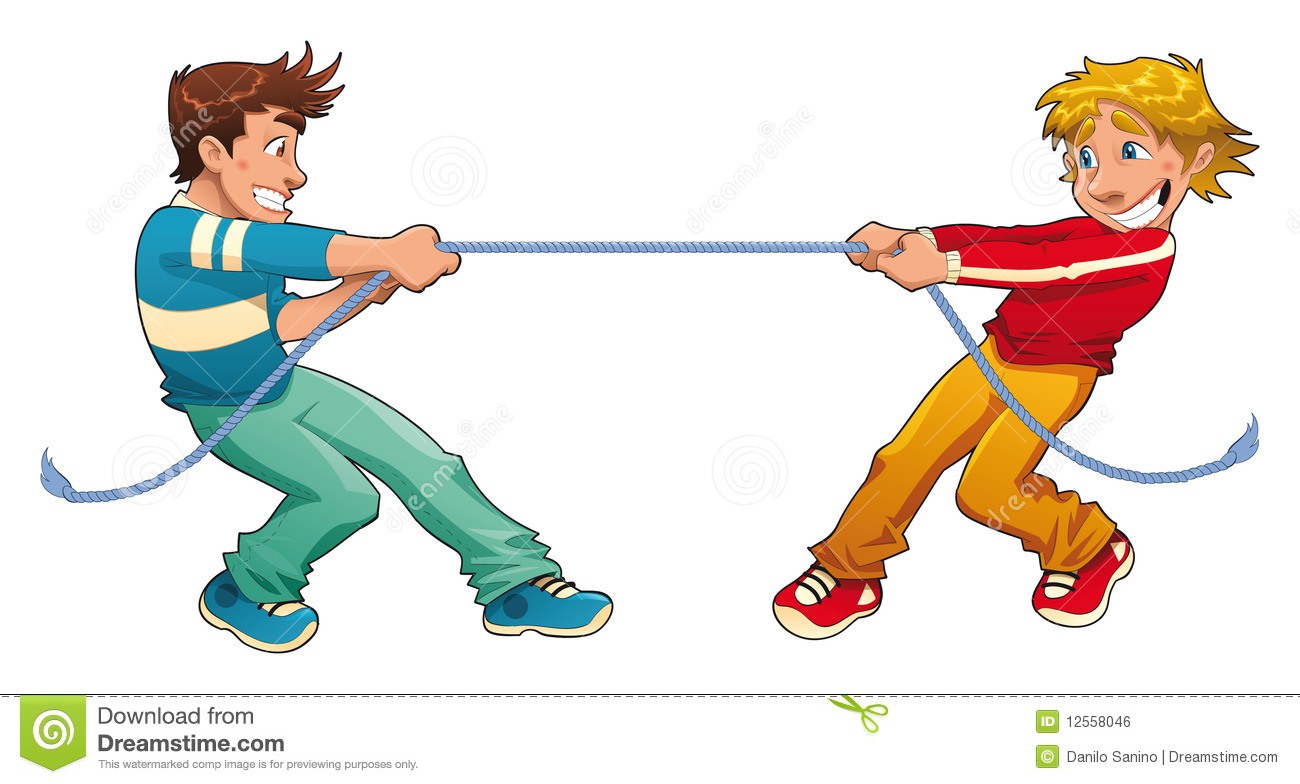
If these boys are pulling with the same amount of force. What will happen?
a)
The boy in blue will win.
b)
They will not move at all.
c)
The boy in red will win.
d)
Both will fall down.
20.

What pulls a ball back to earth?
a)
Gas
b)
Gravity
c)
Friction
d)
Molecules
21.
What are EQUAL forces acting on an object in opposite directions that do not change the object's motion?
a)
Friction
b)
Weight
c)
Balanced Forces
d)
Unbalanced Forces
22.
If an object does not move at all, what does that mean about the forces acting on the object?
a)
The forces are balanced.
b)
The forces are unbalanced.
23.
Is a force that pulls objects toward each other and down to the ground
a)
Force
b)
Friction
c)
Gravity
d)
weight
24.

What is the net force?
a)
2N to the right
b)
2N to the left
c)
8N
d)
8N to the right
25.
Which of the following shows that balanced forces are acting on it?
a)
a rock rolling down a hill
b)
a person riding a bike
c)
a cup sitting on a saucer
d)
a fish swimming in the water
26.
All of the following describe acceleration EXCEPT...
a)
the ball changed direction when it hit the side of the table
b)
the ball traveled at 30 cm/sec while it was moving
c)
the ball was at rest until the pool cue struck it
d)
the ball eventually came to a stop because of friction
27.

If the friction were increased to 25N, how will the movement of the bike be affected?
a)
The bike would move faster
b)
The bike would move slower
c)
The bike would stop
d)
The bike would turn
28.
If a soccer ball is sitting motionless on the grass and then a player kicks it to the right, what would best describe the motion of the ball?
a)
It would move at a constant speed to the right
b)
It would move right at an accelerated speed
c)
It would move right and then left
d)
It would move the direction it was kicked at a constant speed
29.
Two trucks with different masses are going down a hill. What would happen if they both applied their brakes to stop at the same time?
a)
The truck with the smaller mass will require less force to stop than the truck with the larger mass
b)
The truck with the larger mass will maintain its velocity while traveling down the hill.
c)
The truck with the smaller mass will take longer to stop than the truck with the larger mass
d)
The truck with the larger mass will have less inertia than the truck with the smaller mass.
30.

Given the forces being applied, the ball will...
a)
accelerate to the left
b)
accelerate to the right
c)
move at a constant rate to the left
d)
move at a constant rate to the right
31.
Which of the following shows acceleration?
a)
a book on the table
b)
a sky diver falling 500km per hour
c)
a car slowing down at a turn
d)
a bike moving 3m/sec
32.
If the force going one way is 14N and the opposite force is 2.3N, what is the net force?
a)
11
b)
117
c)
11.7
d)
.9
33.

Which cart would have the greatest change in speed if the same amount of force was used to push each one?
a)
A
b)
B
c)
C
d)
D
34.
A change in an objects direction or speed is
a)
inertia
b)
force
c)
unbalanced
d)
acceleration
35.
A push or pull that can act on or change an object is
a)
contact force
b)
non contact force
c)
force
d)
gravity
36.
An opposing force caused by two objects touching each other is
a)
contact force
b)
inertia
c)
friction
d)
compute
37.
A push or pull that moves or changes an object when two objects touch is
a)
inertia
b)
friction
c)
contact force
d)
non contact force
38.
A force that does not need to touch an object to affect it is
a)
acceleration
b)
contact force
c)
force
d)
non contact force
39.
A force that pulls masses toward large objects is
a)
friction
b)
deduce
c)
inertia
d)
gravity
100 %

