Wayground logo

Free Printable Worksheets

Font size

S
M
L
XL
Worksheets

Reconstruction and Gilded Age 1302 Help

Total questions: 126

Worksheet time: 2hrs 30mins
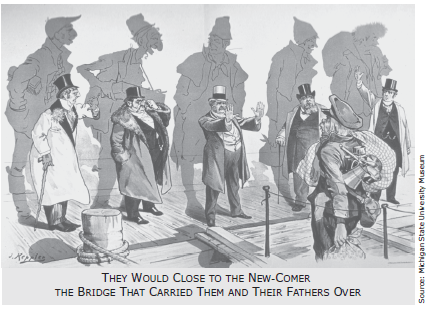
Name
Class
Date
1.
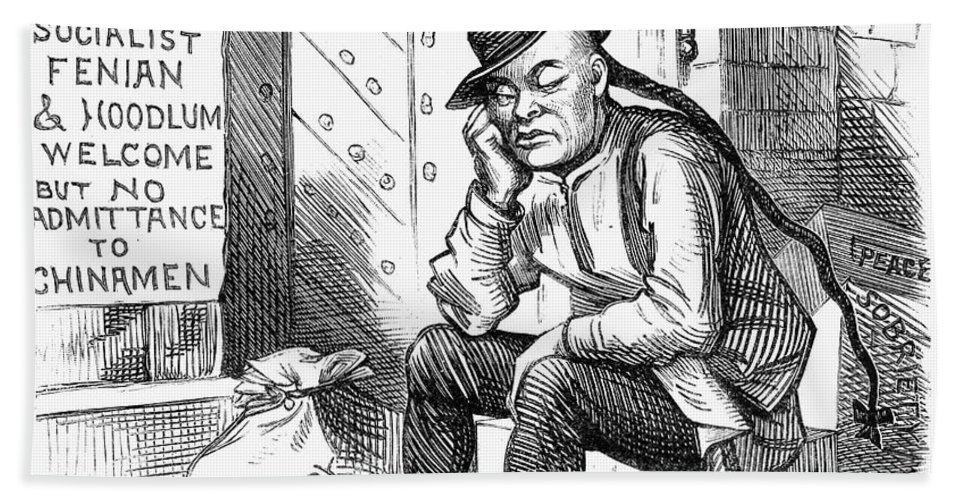
Which group of people most likely inspired the creation of this 1893 cartoon?
a)
Union Leaders
b)
Philanthropists
c)
Nativists
d)
Political Bosses
2.
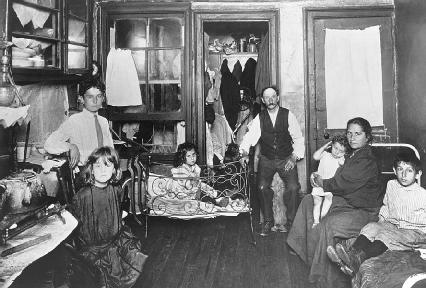
The photo demonstrates one of the problems with
a)
overcrowding urban tenements.
b)
labor union activism in urban areas.
c)
the overproduction of consumer goods.
d)
the growth of political machines.
3.
What gave 160 acres to people willing to settle the plains?
a)
Dawes Act
b)
National Grange
c)
Farmers' Alliances
d)
Homestead Act
4.
Assimilation can be defined as
a)
when one becomes more like the dominant culture.
b)
when a person refuses to learn the dominant culture
c)
when a culture is practice all over the world
d)
when a culture is similar to another culture
5.
Railroads, windmills, steel plows, and barbed wire are all examples of -
a)
items used to settle the Appalachian Mountains during the Gold Rush.
b)
native american technology.
c)
inventions and adaptations used to settle the Great Plains.
d)
innovations of WWI.
6.
19th century Chinese immigrants are known for what?
a)
Work in building the Transcontinental Railroad
b)
Work in New York factories
c)
Contributions to the steel industry
d)
Contributions to John D. Rockefeller
7.
Which factor contributed most directly to the settlement and development of the Great Plains after the Civil War?
a)
hospitality of the Native American tribes inhabiting the region
b)
construction of railroads west of the Mississippi River
c)
freeing of slaves in the southern states
d)
influx of immigrants from eastern and southern Europe
8.
In the late nineteenth century, the "bosses" of urban political machines often-
a)
accepted bribes in return for favors
b)
denied voting rights to the poor
c)
wasted money on military spending
d)
descrimated againts migrant workers
9.

What does "Gilded" mean when we talk about the Gilded Age?

a)

Nice on the outside, ugly on the inside

b)

Ugly on the outside, nice on the inside

10.

Political Machines took advantage of what major groups?

a)

The Immigrants and the Poor

b)

The Immigrants and Big Businesses

c)

The Poor and the Chinese

d)

The Chinese and the Big Businesses

11.

Civil Service Reform was a response to what?

a)

Political Machines and the Spoils System

b)

Chinese Immigrants

c)

Indians (Native Americans)

d)

The need to regulate State Governments

12.

Changing their names, cutting their hair, forcing them to adopt Christianity, requiring them to learn English, etc. These are all examples of what pushed on many Immigrants, but especially the Indians (Native Americans)?

a)

Assimilation

b)

Nativism

c)

Protectionism

d)

Temperance

13.

Americans who grew angry and resentful at the increased Immigrant migration into the country, especially those from Southern and Eastern Europe

a)

Nativists

b)

Populists

c)

Philanthropists

d)

Social Workers

14.

Though jobs were plentiful, they didn't pay well. This caused what change in women and children's lives in the nineteenth century?

a)

Women and children had to become wage earners

b)

Women and children became business owners

c)

Women and children became more educated

d)

Women and children became leaders of organized labor

15.

The Homestead Act caused a shift in population to move from where to where?

a)

East Coast to West Coast

b)

West Coast to East Coast

16.

What group was motivated the most by "The American Dream" during the Gilded Age?

a)

Immigrants

b)

The Poor

c)

Indians (Native Americans)

d)

Former Slaves

17.

Overcrowding and pollution were caused primarily by what?

a)

Urbanization

b)

Industrialization

c)

Nativism

d)

Assimilation

18.

Declining wages and a rise unemployment on the west coast led to what piece of legislation?

a)

Chinese Exclusion Act

b)

Dawes Act

c)

Homestead Act

d)

Pendleton Act of 1883

19.

How did Political Machines use Infrastructure to gain power and manipulate Immigrants?

a)

Got them to work on those projects in exchange for votes

b)

Got them to work on those projects in exchange for money

c)

Kept them from getting those jobs

20.

The Gilded Age saw the greatest shift in population from which area to which area?

a)

Rural areas to Urban areas

b)

Urban areas to Rural areas

21.

Who is most associated with political machines in New York City?

a)

"Boss" Tweed

b)

John Rockefeller

c)

Jane Adams

d)

Andrew Carnegie

22.

What was the main source of power in big city governments during the Gilded Age?

a)

Political Machines

b)

Industrial Capitalists

c)

Robber Barons

d)

Labor Leaders

23.
During the late 19th century, most immigrants to the US found work as-
a)
Educated professionals
b)
skilled workers
c)
Factory/sweatshop workers
d)
Scientists
24.
In the late 1800's, which was NOT a reason Congress passed restrictions on Chinese immigrants?
a)
Chinese immigrants took jobs
b)
Nativist & racial hate
c)
Chinese immigrants were moving east
d)
Chinese workers took lower pay
25.
Which island did European immigrants register to live in the U.S?
a)
Galveston
b)
Long
c)
Ellis
d)
Angel
26.
Which group believed in survival of the fittest and people were naturally selected to succeed?
a)
social darwinist
b)
political bosses
c)
nativist
d)
political machines
27.
Who was the leader of Tammany Hall (New York Poltical Machine)?
a)
Andrew Carnegie
b)
Henry Ford
c)
John D. Rockefeller
d)
William Tweed
28.

An increase in political corruption, big business, immigration, and urbanization took place during the-

a)

Progressive Era

b)

Gilded Age

c)

Roaring 20's

d)

Great Depression

29.

Americans who were anti-immigration due to the fear of losing jobs to immigrants were called-

a)

Bootlegger

b)

Monopolies

c)

Communists

d)

Nativists

30.

New __________________ like the light bulb made manufacturing processes more efficient.

a)

Innovations

b)

Manufactoring

c)

Ideas

d)

Infrastructure

31.

This type of economic system during the Gilded Age allowed for the growth of big business and monopolies-

a)

Monopolies

b)

Nativism

c)

Laissez-faire (hands off)

d)

New Deal

32.

During the Gilded Age there was an increase in ____________________ and ___________________ as people moved to U.S. cities looking for economic opportunities.

a)

Work and Infrastructure

b)

Corruption and Laissez-Faire

c)

Urbanization and Immigration

d)

Monopolies and Political Bosses

33.

During the Gilded Age, the expansion of ___________________ led to corruption in government, but also improvements in basic services and urban infrastructure.

a)

Infrastructure

b)

Nativists

c)

Monopolies

d)

Political Machines

34.

Andrew Carnegie was an entrepreneur and a _____________ because he donated money to libraries and universities.

a)

Person

b)

Philanthropist

c)

Nativist

d)

Political Boss

35.

This law was made to reduce competition for jobs on the West Coast because it prohibited immigration from China-

a)

Pendleton Act

b)

Homestead Act

c)

Mexican Repatriation Act

d)

Chinese Exclusion Act

36.
A movement concerned with helping the poor -- according to biblical principles
a)
Social Gospel
b)
Gospel of Wealth
c)
Social Darwinism
37.
"Survival of the fittest" applied to business competition
a)
Social Gospel
b)
Gospel of Wealth
c)
Social Darwinism
38.
Nativists oppose...
a)
Business regulation
b)
Immigration
c)
Capitalism
d)
Democracy
39.
Donating lots of money to humanitarian causes
a)
Philanthropy
b)
Egalitarianism
c)
Assimilation
d)
Socialism
40.
An organization that did favors (using public $$) / won votes for their party
a)
Labor union
b)
Political machine
c)
Caucus
41.
An organization of workers who promote their interests collectively (as a group)
a)
Labor union
b)
Political machine
c)
Caucus
42.
The __________ process was a less expensive way to make steel.
a)
Edison
b)
Foundry
c)
Bessemer
d)
Factory
43.
What did the 13th Amendment do?
a)
made slavery illegal
b)
made former slaves citizens and gave them rights
c)
gave black men the right to vote
d)
gave former slaves land to begin farms
44.
What did the 14th Amendment do?
a)
made slavery illegal
b)
made former slaves citizens and gave them rights
c)
gave black men the right to vote
d)
gave former slaves land to begin farms
45.
What did the 15th Amendment do?
a)
made slavery illegal
b)
made former slaves citizens and gave them rights
c)
gave black men the right to vote
d)
gave former slaves land to begin farms
46.
What was segregation?
a)
equal treatment for all people
b)
the forced separation of races
c)
a farmer shares part of his crop to pay for land
d)
the period of time after the Civil War
47.
How was President Lincoln killed?
a)
heart failure
b)
bit by a snake
c)
falling off a horse
d)
shot by John Wilkes Booth
48.

They were given food, clothing, and medicine on credit

They had to share a portion of their harvest with the landowner

They were provided land, a home, and fertilizer by the landowner

a)

slaves

b)

carpetbaggers

c)

scalawags

d)

sharecroppers

49.

The intent of the KKK was to

a)

help former slaves vote in elections

b)

prevent former slaves from voting in elections

c)

help former soldiers adjust to life at home

d)

prevent women from voting

50.

In what year did Reconstruction end? With the election of which president?

a)

1877, Rutherford B. Hayes

b)

1889, U.S. Grant

c)

1866, Andrew Johnson

d)

1890, Robert E. Lee

51.

Who became president after Lincoln's assassination?

a)

U.S. Grant

b)

Andrew Johnson

c)

Andrew Jackson

d)

Robert E. Lee

52.

Which of the quotes would have been said by a Radical Republican in response to the black codes?

a)

"This finally brings the war to a close by establishing a plan for the equal treatment of the former slaves."

b)

"This goes against everything that the war was fought for and undermines the actions of the federal government."

c)

"This allows for the newly freed African Americans to have an economic opportunity to get off of the plantations."

d)

"This creates the ability for the freedmen to be incorporated into society as the equal of the white man."

53.

Who was the first President to be Impeached?

a)

Bill Clinton

b)

Donald Trump

c)

Richard Nixon

d)

Andrew Johnson

54.

People move to new countries specially for .......

a)

hoping for more chances to find work.

b)

getting a worse life.

c)

separating family members.

d)

traveling in a ship.

55.
Which is the best description of Reconstruction?
a)
rebuilding the US after a big earthquake
b)
a period of rebuilding in the US after the Revolutionary War
c)
a period of rebuilding in the US after the Civil War
d)
unfair treatment of African Americans after the Civil War
56.
Which of these amendments gives citizens the right to vote regardless of race, color or previous condition of servitude?
a)
13th Amendment
b)
14th Amendment
c)
15th Amendment
d)
18th Amendment
57.
Southern states created the Black Codes to do what?
a)
limit African Americans rights
b)
expand Confederate rights
c)
give women voting rights
d)
jail Carpetbaggers
58.
Who could hold public office in the south during Reconstruction?
a)
African Americans
b)
Confederate Leaders
c)
Southern Women
d)
American Indians
59.
Which laws allowed Union Soldiers to supervise the south during Reconstruction?
a)
Jim Crow Laws
b)
the Voting Rights Act
c)
the Amnesty Act
d)
the Civil Rights Act of 1866 and the Military Reconstruction Act
60.
The Ku Klux Klan was a group that believed...
a)
in white supremacy
b)
in equality for all
c)
in black supremacy
d)
in southern supremacy
61.
Carpetbaggers were...
a)
Newly freed slaves
b)
Southern Republicans
c)
Confederate Soldiers
d)
Northerners who took advantage of southern economic hardships 
62.
What's the best title for this list? 
a)
Black Codes
b)
Reconstruction Laws & Policies
c)
Civil War Codes
d)
Jim Crow Laws
63.
Abraham Lincoln believed...
a)
African Americans needed Constitutional Amendments to guarantee voting rights
b)
in the southern cause
c)
southern states should have to prove their loyalty after the war
d)
preservation of the Union was more important than punishing the south
64.
The Presidential Election of 1876 resulted in...
a)
military supervision of the south
b)
the restoration of voting rights for white southerners
c)
the end of Reconstruction in the south
d)
equal rights for African Americans
65.
Scalawags were...
a)
Northerners who took advantage of southern economic hardships 
b)
Southern Republicans
c)
former Confederate Leaders
d)
African Americans
66.
Jim Crow Laws passed after Reconstruction took away African American Voting Rights using...
a)
Voter Registration Laws
b)
Political Gerrymandering
c)
Voter Identification Laws
d)
Poll Taxes and Literacy Tests
67.

What was the purpose of the 13th, 14th, and 15th Amendments

a)

to create equality for all Americans

b)

to ensure equal distribution of power between National and State government.

c)

to limit the power of the federal government

d)

to give all people the right to vote

68.

Lincoln's "10 Percent Plan" dealt with

a)

his idea for instituting an income tax.

b)

how to draft more men into the Union Army.

c)

re-admitting Southern states into the Union.

d)

his quest to reconquer only 10% of the South

69.

The purpose of the Freedman's Bureau was to

a)

provide 40 acres and a mule for each slave.

b)

gain the vote for millions of former slaves.

c)

provide work, education, and relief for former slaves.

d)

get radical Republicans in positions of power in the South.

70.

Presidential Reconstruction following the American Civil War can BEST be described as

a)

a plan to fix the damage to the White House caused by the Civil War.

b)

a desire to rebuild the southern states quickly to help control the economy.

c)

a desire to rebuild the country quickly and without ill feelings following the war.

d)

a desire to punish those southerners responsible for causing and/or prolonging the war.

71.

Which statement describes the attitude of the "Radical Republicans" following the Civil War?

a)

"Southern states should pass the 'Black Codes.' "

b)

"The Southern states have been conquered and should be punished for their actions."

c)

"Former Confederate leaders should be forgiven for their actions during the Civil War."

d)

"The country should follow President Lincoln's plans to reunite the country as quickly as possible."

72.

Which is the BEST description of the southern economy during Reconstruction?

a)

The southern economy was stabilized because of trade relationships with Great Britain and France.

b)

The southern economy was still based on agriculture and cotton, but now depended on sharecropping rather than slave labor

c)

The southern economy was transformed from being based on agriculture to being completely dependent on industry and manufacturing.

d)

The southern economy was completely restored by 1866 and was actually more productive and profitable than the pre- Civil War economy.

73.
What were Jim Crow Laws?
a)
equal treatment for all people
b)
laws that made segregation legal
c)
a farmer shares part of his crop to pay for land
d)
the period of time after the Civil War
74.
System of farming where farmers gave part of their crop to pay for the land they rented
a)
Family-Farming
b)
Sharecropping
c)
Groupcropping
d)
Split-Farming
75.
Why did sharecroppers remain poor?
a)
The South flooded during Reconstrucion
b)
They owed money to the landowners, never getting out of debt
c)
The sun never shone on crops
d)
Animals ate all the crops
76.

This Reconstruction plan was meant to punish the south for the war.

a)

Presidential Reconstruction

b)

Johnson's Reconstruction Plan

c)

Military Reconstruction Plan

d)

Radical Republican Reconstruction

77.

This plan for reconstruction had few steps and was meant to be an easy way for the south to rejoin the Union. It included the 10% plan.

a)

Radical Reconstruction

b)

Military Reconstruction

c)

Congressional Reconstruction

d)

Presidential Reconstruction

78.

Lincoln's Reconstruction needed southern states to have at least ________ % of the voting population take a loyalty oath.

a)

10

b)

30

c)

50

d)

99

79.

___________________ wanted African Americans to have full citizenship.

a)

Andrew Johnson

b)

Abraham Lincoln

c)

Radical Republicans

d)

Union Army

80.

President Johnson was impeached for _________________.

a)

lying to the country

b)

violating the Tenure of Office Act

c)

holding elections in an off year

81.

Special Field Order 15 gave _____________ to families of freedmen.

a)

labor contracts

b)

40 acres of tillable land

c)

voting rights

d)

citizenship

82.
Hayes agreed to remove federal troops from the South in order to win the Presidency in the Election of 1876. This--
a)
started Reconstruction
b)
got him impeached
c)
made Southern Democrats angry
d)
ended Reconstruction
83.

Who was the first African-American U.S. Senator?

a)

Frederick Douglass

b)

Philip Bazaar

c)

William Carney

d)

Hiram Rhodes Revels

84.

The Homestead Act attempted to promote development of western lands by

a)

creating a system of dams for crop migration

b)

removing all restrictions on immigration

c)

placing Native Americans on reservations

d)

providing free land to settlers

85.
How was the President’s Reconstruction Plan different from Congress’ Plan?
a)
The President's plan tried to make it easier for the South to rejoin the Union
b)
Congress' plan tried to make it easier for the South to rejoin the Union
c)
President's plan did not want the south to rejoin the Union
d)
Congress' plan wanted all Southerners to be sent to Mexico
86.
Which of these was NOT used to try to stop African Americans from voting?
a)
A reading test
b)
the "Grandfather Clause"
c)
The Ku Klux Klan
d)
The Freedmen's Bureau
87.
Sharecropping often kept African American farmers poor because
a)
The farmers owed more money than they made each year
b)
the landowners would not sell them land
c)
only those who voted could own land
d)
Most African Americans did not want to work anymore
88.
What did Congress do to enforce their plan for Reconstruction?
a)
Started the KKK
b)
Sent soldiers to the South
c)
Moved all African Americans to the West
d)
Restart the Civil War
89.
Who benefited the most from Jane Addams?
a)
Battered women.
b)
Poor Immigrants.
c)
Business Owners.
d)
Homeless toddlers.
90.
What was Jane Addams' establishment called?
a)
The Escape.
b)
Convalescent Home.
c)
Hull House.
d)
The Mansion.
91.

Which plan for Reconstruction required a majority of Southerners to give oath of loyalty?

a)

Lincoln's 10% Plan

b)

Wade Davis Bill

c)

Johnson's 10%+ Plan

d)

Reconstruction Act 1867

92.

An organization of workers dedicated to protecting members' interests and improving wages, hours and working conditions for all.

a)

Labor Union

b)

Workers Rights

c)

Worker Strikes

d)

Collective Bargaining

93.

The negotiation of wages and other conditions of employment by an organized body of employees

a)

Labor Unions

b)

Workers Rights

c)

Worker Strikes

d)

Collective Bargaining

94.

What was the first nationwide industrial union?

a)

the Knights of Labor

b)

the AFL

c)

the Pinkertons

d)

the Anarchists

95.

In July of 1877, what did several railroads announce that triggered the first nationwide labor protest?

a)

employee layoffs

b)

wage cuts

c)

blacklists

d)

sixteen-hour workdays

96.

Which incident was a result of a Chicago labor disturbance on May 4, 1886, in which people were killed by a bomb thrown during a demonstration?

a)

the Great Railroad Strike

b)

the Haymarket Square Riot

c)

the Homestead Strike

d)

the Pullman Strike

97.

What incident occurred in 1886 that badly hurt the reputation of the Knights of Labor?

a)

the formation of the American Federation of Labor

b)

the Pullman Strike

c)

the Haymarket Riot

d)

the Great Railroad Strike

98.
_______ is when workers refuse to work in order to force an employer to meet their demands.
a)
labor unions
b)
party
c)
strike
d)
sweatshop
99.
The Homestead Strike was a protest 
a)
in Colorado demanding safer working conditions. 
b)
Chicago demanding an eight-hour workday.
c)
against the Pullman Palace Car Company’s unsafe working conditions
d)
against the Carnegie Steel Company’s plan to cut jobs.
100.
How did the public often perceive unions as the result of events like the Haymarket riot and the Homestead strike?
a)
The unions were viewed as champions of the common man
b)
The unions were viewed as persecuted victims 
c)
The unions were viewed as promoting violence and anarchy 
d)
The unions were viewed as being treated unfairly by the government 
101.
What were working conditions like during the Industrial Revolution? 
a)
Safe
b)
Comfortable 
c)
Awesome 
d)
Dangerous
102.
What did workers want when they went on strike?
a)
Higher wages
b)
Better working conditions
c)
Fewer hours 
d)
All of the above
103.
Which national union did Samuel Gompers found?
a)
NFL
b)
CIO
c)
AFL
d)
NEA
104.
Why were strikes not as effective in industries with unskilled workers?
a)
Unskilled workers were paid high wages.
b)
Unskilled workers could be replaced more easily than skilled workers.
c)
Unskilled workers were not allowed to join unions.
d)
Many unskilled workers were deported for supporting unions.
105.
What does AFL stand for?
a)
American Fun Labor
b)
American Finance of Labor
c)
American Freedom of Labor
d)
American Federation of Labor
106.
How did railroads impact the prices of goods & services?
a)
Made goods and services more expensive & harder to ship
b)
Made goods and services cheaper & easier to ship
c)
Gave people safer transportation
d)
Opened new land for exploring and settlements
107.
Women were paid ____ than men for doing the same work.
a)
more
b)
less
108.
Why did people move to cities during the Industrial Revolution?
a)
People were looking for work.
b)
People were looking for farms.
c)
People wanted to buy a house.
d)
People wanted to sell their crops.
109.
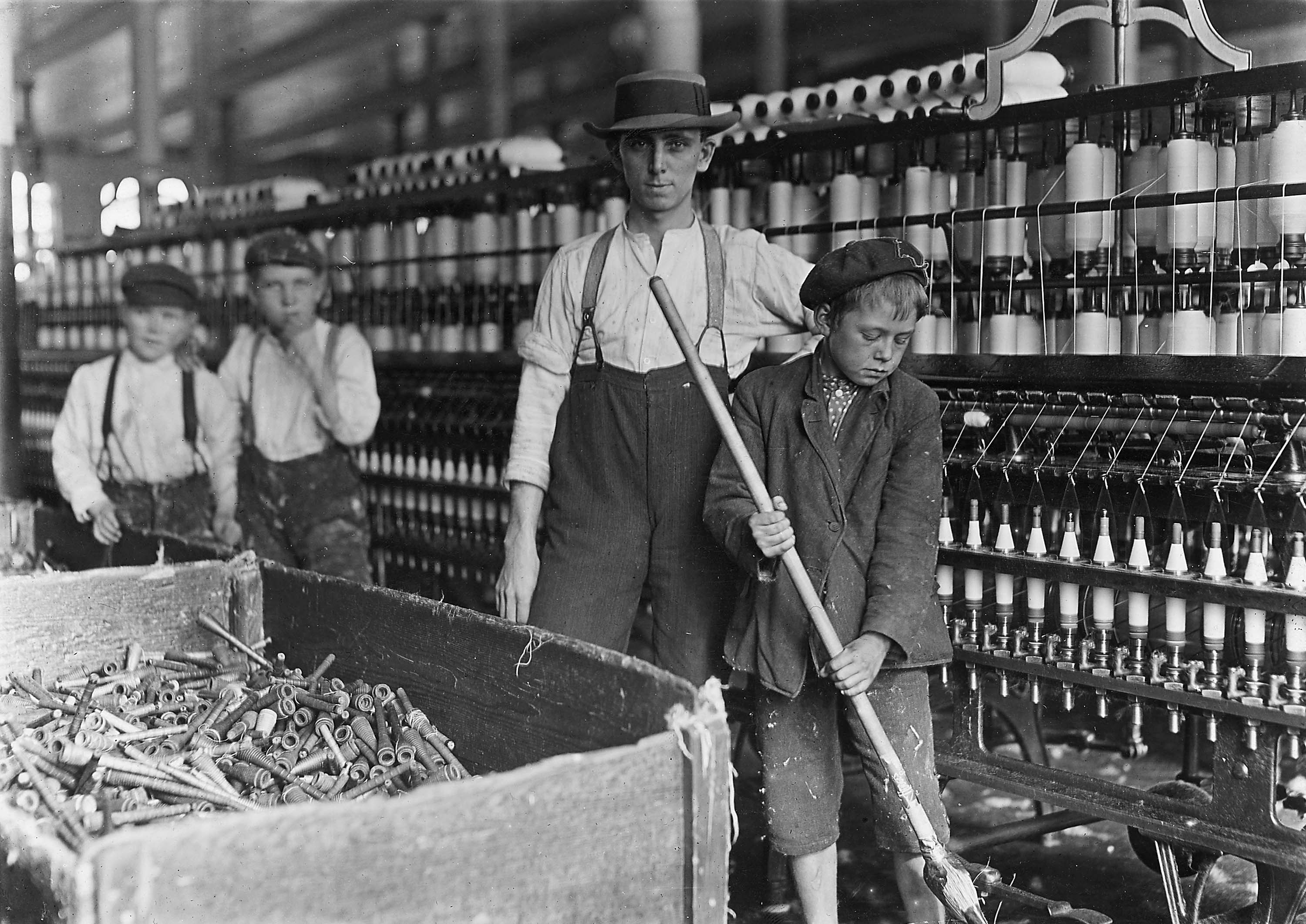
This picture shows which problem of the factory system?
a)
unsafe working conditions
b)
urbanization
c)
unfair wages for women
d)
child labor
110.
Using interchangeable parts for creating goods advanced the growth of industry because it-
a)
allowed the continuation of the domestic system
b)
permitted large quantities of goods to be mass produced at lower cost
c)
made it possible for unskilled workers to operate machines
d)
brought an end to the common abuse of factory workers
111.
_______________ are pieces made to fit many machines or tools.
a)
Interchangeable parts
b)
Fixed parts
c)
Limited parts
d)
New parts
112.
_______________ is a machine with sharp blades used to cut grain.
a)
The sower
b)
The reaper
c)
The cotton gin
d)
The sewing machine
113.
Look at the time line. What would be a good title for it?
a)
How the Cotton Gin Is Made
b)
How the Erie Canal Was Built
c)
Inventions from the Industrial Revolution
d)
Inventors of the Industrial Revolution
114.
Before the Industrial Revolution all products were created by
a)
Factories
b)
Hand
c)
Slaves
d)
Royalty
115.
This machine allowed factories to be built anywhere, powered by coal.
a)
flying shuttle
b)
steam engine
c)
spinning jenny
d)
cotton gin
116.
How did the Agricultural Revolution impact farmers?
a)
New farming methods required more workers on the farm.
b)
New farming methods produced bigger harvests with less farmers.
117.
Which 2 natural resources were the backbone of the Industrial Revolution?
a)
wood and peat
b)
oil and natural gas
c)
coal and iron
d)
cotton and tobacco
118.
The cotton gin and interchangeable parts were inventions of--
a)
Eli Whitney
b)
Robert Fulton
c)
Thomas Edison
d)
Robert Morse
119.
Which statement is true?
a)
Children were not allowed to work in the mines during the Industrial Revolution
b)
Work conditions were closely regulated
c)
There were no labor laws that prevented children from working
d)
Children were allowed to work but they were treated fairly. 
120.
Henry Ford found he could produce cars less expensively and more quickly by doing which of the following? 
a)
using the assembly line
b)
using designs made in Japan
c)
using plastic instead of steel
d)
hiring only immigrants 
121.
What were living conditions in the city like during the Industrial Revolution?
a)
Very extravagant
b)
Strict housing regulations
c)
Spacious and luxurious
d)
Crowded and unsanitary
122.

"Coal is a rock that is combustible, meaning that it burns easily when set on fire." What is an effect of coal during the Industrial Revolution - pick the best option.

a)

Coal fueled engines, factories, and trains

b)

Coal is found in the ground

c)

Coal is a natural resource

d)

Great Britain's location made it ideal for trading

123.

Due to inventions like the seed drill, which made planting crops easier and faster, farmers migrated to the cities. What was an effect of inventions like the seed drill?

a)

Farmers lost their jobs and moved into industrial jobs

b)

The machines turned into robots and took over land in Great Britain

c)

The farmers needed more work and hired more people to work the land.

d)

The farmers moved to the United States to farm.

124.
Which phrase most accurately describes the concept of nativism? 
a)
"Go West, young man."
b)
"American- First in War and Peace"
c)
"Help Wanted- Irish Need Not Apply"
d)
"The only thing we have to fear is fear itself."
125.
What push or pull factors related to immigration does this political cartoon show?
a)
Immigrants were pulled to the U.S because of political and social equality.
b)
Immigrants were pushed out of their home countries because of war and discrimination.
c)
Immigrants were pushed out of their home countries because of starvation and poverty.
d)
Immigrants were pulled to the U.S. because of the promise of religious freedom. 
126.
Why was the Bessemer Process so important to the development of our country?
a)
It made it cheaper to travel back and forth across the U.S
b)
It made it easier to convert iron into steel; steel was needed for skyscrapers and railroad tracks.
c)
It made the assembly line a faster and better way of producing cars.
d)
It made it possible to purchase one part of a cow or pig instead of the entire thing.