
 Worksheets
Articles IV -VII
Total questions: 49
Worksheet time: 35mins

What is Article IV of the Constitution about?
Amending the Constitution
Ratifying the Constitution
States Rights
Supreme Law of the Land

What is it called when a criminal commits a crime, runs away to another state, and then has to come back to the original state?
Extradition
Extracurricular
Extraordinary

What was Article V about?
Amending the Constitution
Ratifying the Constitution
States Rights
Supreme Law of the Land


What was Article VI about?
Amending the Constitution
Ratifying the Constitution
States Rights
Supreme Law of the Land

What is Article VII about?
Amending the Constitution
Ratifying the Constitution
States Rights
Supreme Law of the Land

What does ratify mean?
To change something
To entrust (a task or responsibility) to another person, typically one who is less senior than oneself.
To approve or pass
The idea that the Constitution is the Supreme law of the land.
privileges and immunties
supremacy
implied powers
full faith and credit
Amendments are proposed by (select all that apply)
3/4 of state legislatures supporting it
2/3 of state legislatures calling for a convention
3/4 of state conventions supporting it
2/3 of both houses of Congress supporting it
Which branch of government has the power to create a new state
Legislative
Executive
Judicial
The original Constitution consisted of
The Bill of Rights
Articles I-VII
Articles I - VII and the Bill of Rights
Articles I - VII and all 27 amendments
To ratify the original Constitution
9 out of 13 states had to approve
13 out of 13 states had to approve
25 states had to approve
50 states has to approve
The Constitution promised states all the following EXCEPT
Republican form of government
Protection of their borders
Help with internal conflicts
Help with internal conflicts after the state requests help
The principle which gives the national government the right to regulate international interstate trade, but the states have the authority to regulate trade within its own borders.
Popular Sovereignty
Checks and Balances
Separation of Powers
Federalism


What was the Anti-Federalists’ greatest concern about ratifying the U.S. Constitution?
The lack of a federal court system
The lack of legislative veto power
The lack of a strong military
The lack of a bill of rights
The statement below appeared in a 1787 essay by James Winthrop.
"It is impossible for one code of laws to suit Georgia and Massachusetts"
What does this statement reflect?
Federalist views
Anti-Federalist views
a cause of Shay's Rebellion
a cause of the Great Compromise
The Supreme Court is the weakest branch of government because it doesn't control the military and can't pass laws.
Federalists
Anti-Federalists
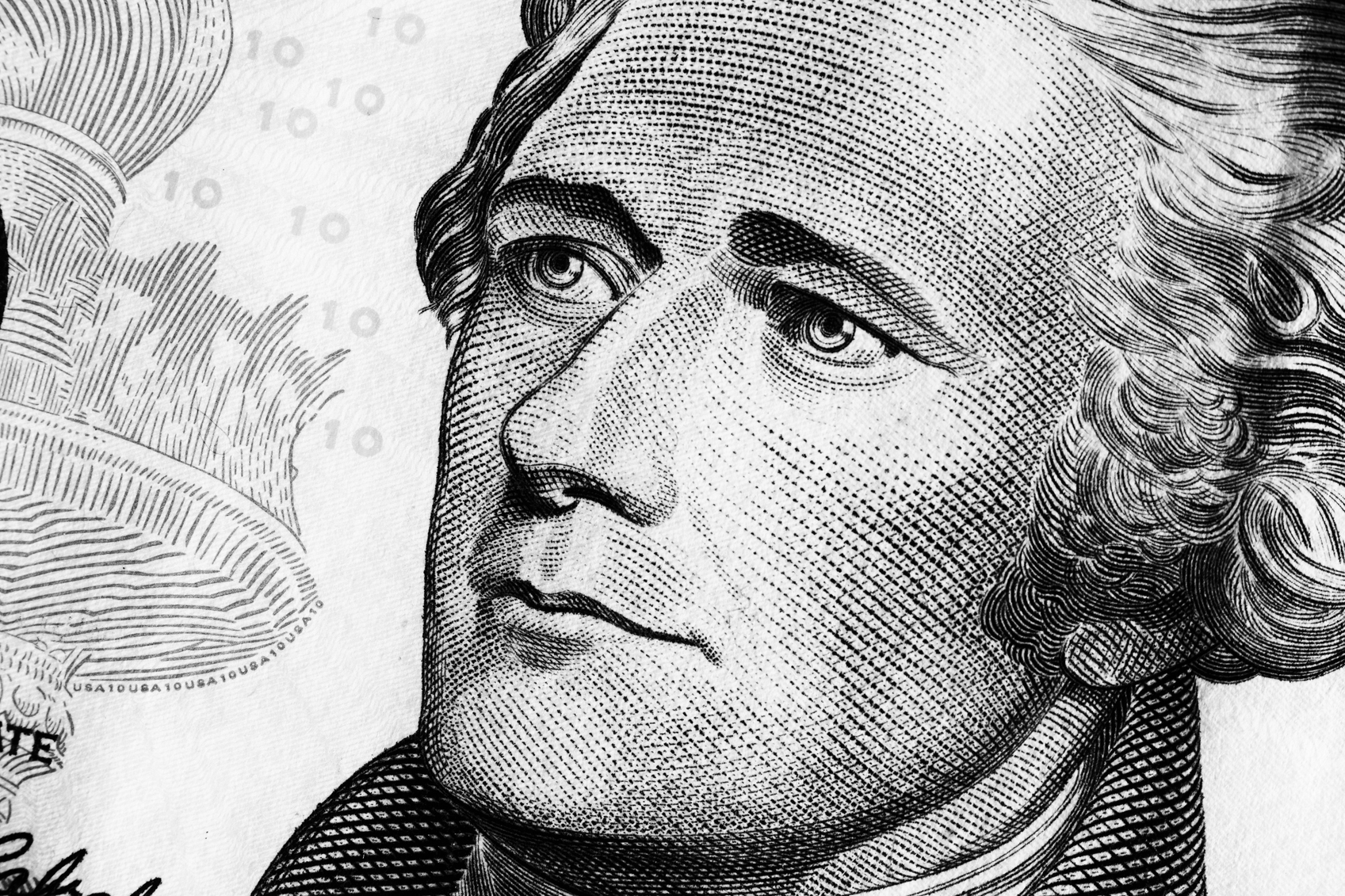
Who is known as the leader of the Federalists?
Alexander Hamilton
John Adams
Patrick Henry
Benjamin Franklin
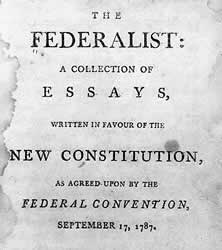
The "Federalist Papers" were written to:
Explain and convince the people into supporting the new U.S Constitution.
spark a new revolution among the American people against their government.
oppose a strong centralized government.
create a new monarchy.

Anti-Federalists were in favor of:
States Rights and the protection of individual rights.
A strong Central Government.
A Monarchy (King & Queen) to rule over the country.
a powerful National Government
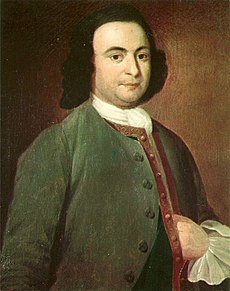
Who was the leader of the Anti-Federalists?
George Mason
George Washington
George Bush
Patrick Henry
Amendments are ratified by (select all that apply)
3/4 of state legislatures supporting it
2/3 of state legislatures calling for a convention
3/4 of state conventions supporting it
2/3 of both houses of Congress supporting it
Which was not a Federalist?
James Madison
Alexander Hamilton
John Jay
George Mason
Which was not an Anti-Federalist?
Mercy Otis Warren
Alexander Hamilton
Patrick Henry
George Mason

