wayground logo

Free Printable Worksheets

NEW

Font size

S
M
L
XL
Worksheets

Monache Forces and Motion Review 2020

Total questions: 42

Worksheet time: 33mins

Name
Class
Date
1.

..................is the amount of matter in an object

a)

Matter

b)

Mass

c)

Force

d)

Gravity

2.

.................states that an object in motion stays in motion unless acted upon by and unbalanced force; an object at rest stays at rest unless acted upon by an unbalanced force.

a)

Newton's First Law

b)

Newton's Second Law

c)

Newton's Third Law

3.

..................of motion explains how acceleration, force, and mass are related. It says an object's acceleration depends on the mass of the object and the size of the force acting on it.

a)

Newton's First Law

b)

Newton's Third Law

c)

Newton's Second Law

4.
The term for when an object speeds up, slows down, or changes direction
a)
Speed
b)
Velocity
c)
Acceleration
d)
Newtons
5.
What is the acceleration of a 50 kg object pushed with a force of 2,500 newtons?
a)
75,000N
b)
50N
c)
2500N
d)
50m/s2
6.
18 km/s in a northerly direction is an example of
a)
velocity
b)
Speed
c)
acceleration
d)
momentum
7.

Which graph best represents a graph of a car travelling along a freeway at a CONSTANT speed?

a)

A

b)

B

c)

C

d)

D

8.
If a 100 N force acts on a 50 kg car, what will the acceleration be? ( F= m x a)
a)
500m/s2
b)
2m/s2
c)
50m/s2
d)
150 m/s2
9.
The snail is traveling at 5 cm/hr. This is an example of
a)
speed
b)
forces
c)
acceleration
d)
velocity
10.
The net force of the following diagram is
a)
620N→
b)
To the right→
c)
20N←
d)
balanced↔
11.
a change in position is defined as
a)
force
b)
motion
c)
speed
d)
acceleration
12.
How are speed and velocity different?
a)
Speed includes direction
b)
Speed indicates momentum
c)
Velocity includes Momentum
d)
Velocity includes direction
13.
A student slides a book across a desk by giving it an initial push. Which of the following is the MOST important reason that the book eventually comes to a stop instead of continuing to slide?
a)
The initial force was too weak to keep the book in motion.
b)
The mass of the book was not enough to keep the book in motion.
c)
The force that occurs when the book rubs against the desk stops the book.
d)
The magnetic force from the Earth stops the book.
14.
When an object is acted on by unbalanced forces, the object will 
a)
continue in the same direction
b)
continue at the same speed
c)
accelerate in the direction of the unbalanced force
d)
will have no change in motion
15.
What will happen to the pile of dishes by the sink if no force acts on them?
a)
They will magically get cleaned
b)
The will go in motion
c)
They will stay at rest
d)
They will crash to the ground
16.

What is the speed that gravity pulls things down to Earth?

a)

9.8 m/s

b)

16 m/s

c)

8.2 m/s2

d)

It changes with object's weight

e)

9.8 m/s2

17.
If you want a tennis ball and a bowling ball to travel the same distance, what should you do with the amount of force you give?
a)
Give the tennis ball a greater push, and the bowling ball a lesser push
b)
Give the bowling ball a greater push, and the tennis ball a lesser push
18.
_____ is the force that slows and stops motion between touching objects.
a)
Friction
b)
Gravity
c)
Pull
d)
Push
19.
Which would require the most force to move?
a)
a toy car
b)
a sleeping cat
c)
a science book
d)
a chair with a friend sitting in it
20.
When was the ostrich going at a constant speed?
a)
Between 0 and 30 min.
b)
Between 45 and 60 min.
c)
Between 30 and 45 min.
21.
this force is ___________ and there will be 
a)
unbalanced, no movement
b)
balanced, movement to the left
c)
balanced, no movement
22.
If all four forces are balanced, the plane will
a)
plummet to the ground
b)
fly faster and faster
c)
fly slower and slower
d)
fly at a constant speed and direction
23.
To measure speed, you need to know...
a)
distance covered and speed
b)
distance covered and time it took
c)
acceleration and distance
d)
direction and time
24.
When distance increases, electrostatic force ____________; we call this relationship ____________ proportional
a)
decreases;directly
b)
decreases;inversely
c)
increases;inversely
d)
increases;directly
25.
If the distance doubles, what happens to the force?
a)
Reduced by half
b)
Reduced by 1/4
c)
Stays the same
d)
Quadruples
26.
The Electric Force is strongest when charges are...
a)
close together
b)
far apart
c)
the electric force is constant everywhere
27.
Electric current is measured in ______.
a)
Watts
b)
Volts
c)
Amperes
28.

A changing/moving magnetic field

a)

Can generate electricity in a wire

b)

happens when a two positive charges attract

c)

has no usefulness in modern life

29.

Electricity

a)

Can be measured in amps

b)

can induce a magnetic field

c)

is the flow of charged particles

d)

All of these

30.

The force of gravity

a)

Is usually far stronger than electrostatic forces

b)

is usually far weaker than electrostatic forces

31.
You push on a tree with 20 N of force. If the tree doesn't move, the tree is pushing back on you with _____of force.
a)
20N 
b)
40N 
c)
10N 
d)
70N
32.
What is a friction force acting upon an object on wheels?
a)
Static 
b)
Sliding 
c)
Rolling 
d)
Fluid 
33.
Pressing on the breaks when driving is an example of...
a)
sliding friction 
b)
static friction 
c)
rolling friction 
d)
fluid friction 
34.
What is a friction force  acting on an NON- moving object.
a)
Static friction 
b)
Fuild friction 
c)
Rolling friction 
d)
Sliding Friction 
35.
Imagine you travel to another planets. What will change as you walk around the surface of the planet- your mass or your weight?
a)
Mass
b)
Weight 
c)
Both 
d)
Neither 
36.

The unit that represents the amount of force needed to accelerate 1 kg 1 m/s2 is

a)

a newton

b)

An amp

c)

an ohm

d)

a volt

37.
A car accelerates from a standstill to 70 m/s in 10 seconds.  What is the acceleration?
a)
0.7m/s2
b)
7m/s2
c)
14m/s2
d)
none of the above
38.
The picture of the position vs. time graph shows an object that is...
a)
accelerating/speeding up
b)
moving at a constant speed 
c)
not moving 
d)
accelerating/slowing down. 
39.
Which graph shows the object standing still?
a)
A
b)
B
c)
C
d)
D
40.
Which graph demonstrates the greatest positive speed?
a)
A
b)
B
c)
C
d)
D
41.
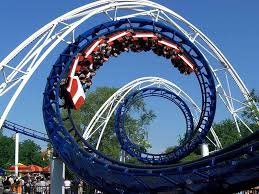
A roller coasters accelerates from an initial velocity of of 6.0 m/s to a final velocity of 70 m/s over 4 seconds.  What's the acceleration?
a)
24 m/s2
b)
18 m/s2
c)
16 m/s2
d)
16 m/s
42.
the tendency of an object to resist a change in its motion
a)
acceleration
b)
inertia
c)
mass
d)
frame of reference