wayground logo

Free Printable Worksheets

Font size

S
M
L
XL
Worksheets

3RD BIM REVIEW

Total questions: 90

Worksheet time: 3hrs 31mins

Name
Class
Date
1.
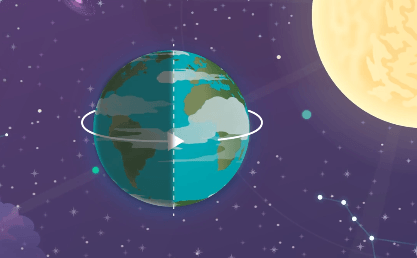
Day and night is caused by the _____________ of earth on its axis.
a)
revolution
b)
orbit
c)
rotation
2.
The spinning of an object on its axis is called______
a)
orbit
b)
rotation
c)
revolution
d)
tide
3.
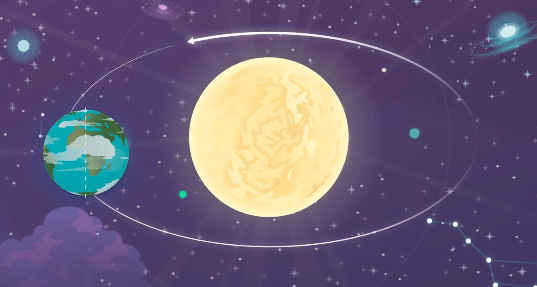
The earth orbits around...
a)
the sun.
b)
the moon
c)
other planets
d)
the Milky Way
4.
The Earth's _______ is an imaginary line that goes from the North Pole to the South Pole.
a)
vernal equinox
b)
axis
c)
solar eclipse
d)
solar flare
5.
How many days does it take to go around the sun?
a)
300 days
b)
365 1/4 days
c)
3000 days
6.
How long does earth's rotation last? 
a)
90 hours
b)
about 1 hour
c)
24 hours
d)
48 hours
7.
Earth's rotation on its axis is what causes ______________________________.
a)
seasons
b)
moon phases
c)
day and night
d)
weather
8.
How long does it take for the Earth to make one full orbit around the Sun?
a)
one day
b)
one week
c)
one month
d)
one year
9.
The Earth is rotating on its axis, creating _____
a)
the 12 months
b)
the years
c)
the seasons
d)
day and night
10.
When the Earth completes a full orbit around the Sun, it has completed _____ rotations or days
a)
7
b)
30
c)
91
d)
365
11.
The earth's revolution is called an orbit, and we orbit around
a)
The moon
b)
The sun
c)
Earth
d)
Venus
12.
What is the name of the imaginary line running through the North Pole to the South Pole?
a)
orbit
b)
axis
c)
equator
d)
latitude
13.
If the earth rotated slower, how would that affect the length of the day?
a)
longer day
b)
shorter day
c)
same time,  24 hours
14.
The change from day time to night time, and back again, is caused by
a)
the position of the Moon
b)
the movement of the tides
c)
the brightness of the Sun
d)
the rotation of the Earth
15.
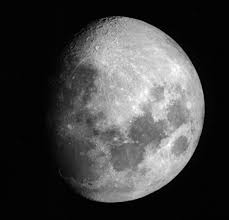
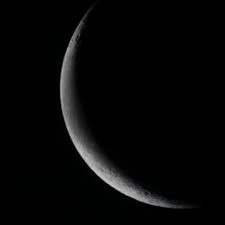
Name the moon phase
a)
waning crescent
b)
waxing crescent
c)
waning gibbous
d)
waxing gibbous
16.
Name the moon phase
a)
waning crescent
b)
waxing crescent
c)
waning gibbous
d)
waxing gibbous
17.
Name the moon phase
a)
waning crescent
b)
waxing crescent
c)
waning gibbous
d)
waxing gibbous
18.
Name the moon phase
a)
waning crescent
b)
waxing crescent
c)
waning gibbous
d)
waxing gibbous
19.
Name the moon phase
a)
waning crescent
b)
waxing crescent
c)
waning gibbous
d)
waxing gibbous
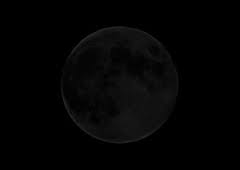
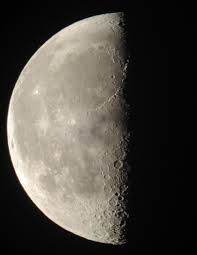
20.
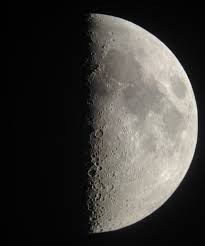
Name the moon phase
a)
First Quarter
b)
Last Quarter
c)
New Moon
d)
Full Moon
21.
Name the moon phase
a)
First Quarter
b)
Last Quarter
c)
New Moon
d)
Full Moon
22.
Name the moon phase
a)
First Quarter
b)
Last Quarter or (third quarter)
c)
New Moon
d)
Full Moon
23.
Name the moon phase
a)
First Quarter
b)
Last Quarter
c)
New Moon
d)
Full Moon
24.
How many phases does the moon go through?
a)
4
b)
8
c)
10
d)
16
25.
The moon ____________ around the Earth.
a)
revoloves
b)
rotates
c)
up
d)
down
26.
The moon ____________ around the Earth.
a)
revoloves
b)
rotates
c)
up
d)
down
27.
What is it called when plants give off water vapor as a waste product?
a)
condensation
b)
evaporation
c)
sublimation
d)
transpiration
28.
Where is most water found on Earth?
a)
glaciers
b)
lakes
c)
rivers
d)
oceans
29.
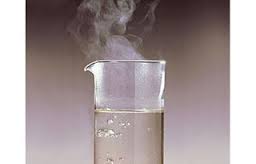
What is water doing when it is changed to water vapor?
a)
evaporating
b)
condensing
c)
precipitating
d)
runoff
30.
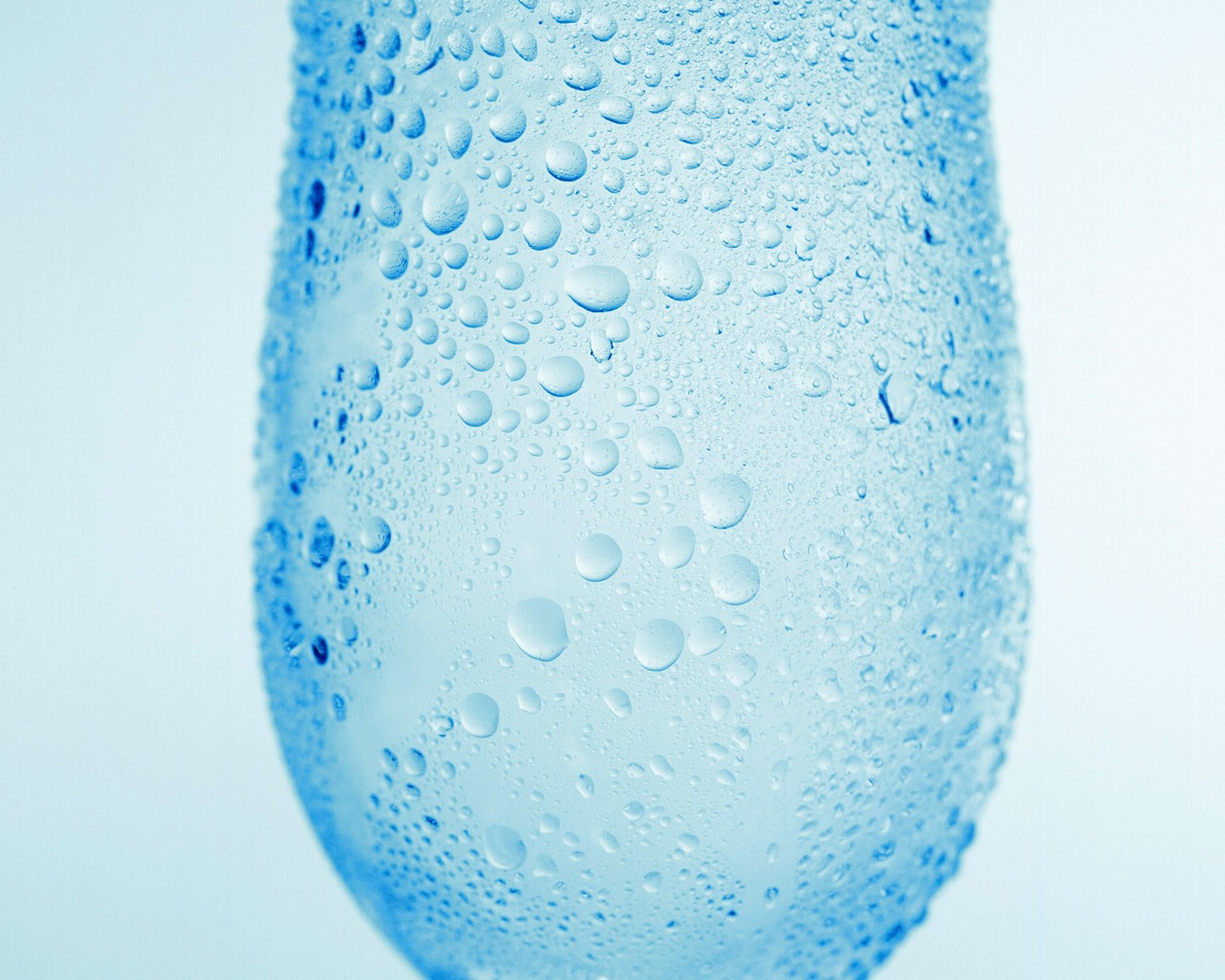
What is water vapor doing when it changes to water?
a)
evaporating
b)
condensing
c)
precipitating
d)
runoff
31.
What is the process of water droplets or ice crystals falling from the sky?
a)
evaporating
b)
condensing
c)
precipitating
d)
runoff
32.
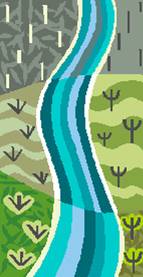
What is water that flows in rivers and streams into the oceans and lakes?
a)
evaporating
b)
condensing
c)
precipitating
d)
runoff
33.
A force of attraction between 2 object that is directly related to mass and indirectly related to distance.
a)
mass
b)
weight
c)
gravity
d)
kilogram
34.

The amount of water vapor in the air is known as ___.

a)

dew point

b)

humidty

c)

relative humidity

d)

rain

35.
What is happening at B?
a)
Evaporation
b)
Condensation
c)
Precipitation
d)
Collection
36.
What is happening at A?
a)
Evaporation
b)
Condensation
c)
Precipitation
d)
Collection
37.
What is happening at C?
a)
Evaporation
b)
Condensation
c)
Precipitation
d)
Collection
38.

Select the best answer- What is weather?

a)

Weather is what is happening in the atmosphere in a certain place at a certain time.

b)

Weather is the atmosphere.

c)

Weather is the clouds.

d)

Weather is the wind.

39.
A constellation is a group of visible ____ that form a pattern when viewed from Earth.  
a)
planets
b)
stars
c)
patterns
d)
creatures
40.
He was the first person to use a telescope to view the night sky.
a)
Nicholas Copernicus
b)
Aristarchus of Samos
c)
Galileo Galilei
d)
Isaac Newton
41.
Which Italian astronomer and telescope-maker is said to have contributed more to astronomy than anybody else?
a)
Nicholas Copernicus
b)
Isaac Newton
c)
Johannes Kepler
d)
Galileo Galilee
42.
Which 2 scientists suggested the Helio-centric theory. 
a)
Kepler and Newton
b)
Galileo and coperinicus
43.
1473-1543. Polish astronomer who was the first to formulate a scientifically based heliocentric model that displaced the earth from the center of the universe.
a)
Claudius Ptolemy
b)
Nicholas Copernicus
c)
Edwin Hubble
d)
Penzias and Wilson
e)
Hubble's Law
44.
What is the closest planet to the sun?
a)
Jupiter
b)
Neptune
c)
Mars
d)
Mercury
45.
What is the fourth planet from the sun?
a)
Mercury
b)
Mars
c)
Earth
d)
Venus
46.
What is the third planet from the sun?
a)
Earth
b)
Venus
c)
Mars
d)
Neptune
47.
What is the eighth planet from the sun?
a)
Venus
b)
Saturn
c)
Neptune
d)
Uranus
48.
What is the sixth planet from the sun?
a)
Saturn
b)
Uranus
c)
Neptune
d)
Jupiter
49.
What is the second planet from the sun?
a)
Mars
b)
Venus
c)
Mercury
d)
Earth
50.
What is the seventh planet from the sun?
a)
Saturn
b)
Jupiter
c)
Uranus
d)
Neptune
51.
What is the fifth planet from the sun?
a)
Saturn
b)
Neptune
c)
Mercury
d)
Jupiter
52.
Which planet is not a terrestrial planet?
a)
Mars
b)
Neptune
c)
Earth
d)
Mercury
53.
Which planet is not a gas giant?
a)
Saturn
b)
Jupiter
c)
Neptune
d)
Venus
54.
Is this the correct order of the planets from the sun: Mercury, Venus, Earth, Mars, Jupiter, Uranus, Saturn, Neptune?
a)
Yes
b)
No
55.
Is this the correct order of the planets from smallest to largest: Mercury, Mars, Venus, Earth, Neptune, Uranus, Saturn, Jupiter?
a)
Yes
b)
No
56.
Compared to the inner planets, the outer planets are...
a)
larger
b)
warmer
c)
denser
d)
better
57.
Which planet is known for it's red, rust covered surface?
a)
Venus
b)
Mercury
c)
Mars
d)
Jupiter
58.

Which two facts describe Earth?

a)

largest inner planet

b)

outer planet

c)

terrestrial planet

d)

gas giant

59.
Which is the hottest planet?
a)
Mercury
b)
Venus
c)
Earth
d)
Neptune
60.
which planet is the third from the sun?
a)
Mercury 
b)
Neptune 
c)
Pluto 
d)
Earth 
61.
The spinning of an object on its axis is called______
a)
orbit
b)
rotation
c)
revolution
d)
tide
62.
The earth orbits around...
a)
the sun.
b)
the moon
c)
other planets
d)
the Milky Way
63.

What are the four terrestrial (inner) planets?

a)

Earth, Uranus, Mercury, Venus

b)

Mercury Venus Earth Saturn

c)

Mars, Earth , Mercury, Venus

d)

Mars, Earth, Neptune, Mercury

64.
The inner planets are also called...
a)
terrestrial planets
b)
gas giants
65.
Gas giants
a)
Inner planets
b)
Outer planets
c)
Both
d)
Venus
66.
The greater mass a planet has, 
a)
the greater the gravitational force it has
b)
the less gravitational force it has
c)
gravitational force does not depend on mass
67.

Which planet was once known as the ninth planet?

a)

Pluto

b)

Mercury

c)

Mars

d)

Earth

68.

The red planet

a)

Earth

b)

Mars

c)

Jupiter

d)

Venus

69.

Which is the farthest planet from the sun?

a)

Neptune

b)

Saturn

c)

Jupiter

d)

Uranus

70.

Which is the smallest planet?

a)

Mercury

b)

Mars

c)

Earth

d)

Venus

71.
Saturn is known for it's _______. 
a)
rings
b)
atmopshere
c)
moons
d)
temperature 
72.
Saturn's rings are made of chunks of 
a)
volcanoes
b)
ice and rock
c)
nitrogen and helium 
d)
ice and 
73.
Uranus is different that other planets because it rotates on it's side. 
a)
True
b)
False
74.
Which planet is the largest?
a)
Jupiter
b)
Saturn
c)
Uranus
d)
Neptune
75.

Name the outer planets

a)

Jupiter, Saturn, Neptune, Uranus

b)

Mercury, Earth, Mars, Venus

76.
Name a planet known for its Great Red Spot
a)
Earth
b)
Jupiter
c)
Saturn
77.

The brightest planet

a)

Venus

b)

Earth

c)

Saturn

d)

Sun

78.

The only planet that rotates the opposite direction to most other planets.

a)

Mercury

b)

Mars

c)

Venus

d)

Neptune

79.
________is the instrument used to measure air pressure.
a)
barometer
b)
thermometer
c)
mercury
d)
watch
80.
Pressure is the effect of
a)
the weight of all the air above pressing down
b)
water vapor in the atmosphere
c)
greenhouse gases
d)
solar radiation
81.
___________is the result of the weight of a column of air pushing on an area.
a)
air pressure
b)
density
c)
volume
d)
none of the above
82.
The weight of the atmosphere is ...
a)
temperature
b)
humidity
c)
air pressure
d)
weather
83.
A layer of air that surrounds Earth to keep us warm is called ...
a)
atmosphere
b)
Sun's rays
c)
ozone layer
d)
air pressure
84.
What tool do we use to measure temperature?
a)
Thermometer
b)
Ruler
c)
Balance
d)
Magnifying Glass
85.
Which tool measures wind speed?
a)
Anemometer
b)
Hygrometer
c)
Barometer
d)
Wind Vane
86.
This weather instrument is an...
a)
wind vane
b)
anemometer
c)
barometer
d)
thermometer
87.
A rain gauge measures what?
a)
Air pressure
b)
Wind speed
wind speed
c)
Amount of rain fall
d)
Wind direction
88.
This weather instrument is a...
a)
anemometer
b)
barometer
c)
wind vane
d)
thermometer
89.
What does this tool measure?
a)
Wind speed
b)
Wind direction
c)
Air pressure
d)
Temperature
90.

A rain gauge measures how much rain an area receives during a certain amount of time. What other types of precipitation are there?

a)

Snow

b)

Clouds

c)

Sleet

d)

Hail