
Font size
 Worksheets
Nervous System
Total questions: 36
Worksheet time: 36mins
The nervous system is made up of these three parts:
Brain, heart, and spinal cord
Brain, spinal cord, and neurons
Nerves, arteries, and veins
Nerves, liver, and heart


Which are functions of the nervous system?
Collecting Information
absorb nutrients for energy
Make responses to information
Mantain homeostatsis


When you react to catch a dropped ruler your body reacts in this order:
1) muscles contract 2) eyes sense ruler move 3) message sent to brain 4) message sent to the muscles
1) message sent to muscles 2) muscles contract 3) message sent to brain 4) eyes sense ruler move
1) eyes contract 2) muscles sent to brain 3) message sense moves 4) ruler is sent to muscles
1) eyes sense ruler move 2) message sent to brain 3) message sent to muscles 4) muscles contract

As organisms get more complex, cells become specialized to perform specific functions in the body. What is the function for the cell shown (interneuron)?
contract and shorten movement
provide coverage and protection
carry impulses around the body
connects parts together
Which cell relays impulses from one neuron to another?
Motor Neuron
Sensory Neuron
Interneuron
Tissue
What type of neurons are typically found branching from the peripheral nerves?
Sensory & Motor
Peripheral & Central
Somatic & Autonomic
Brain & Spinal Cord

Which statement best describes a reflex?
Slow response that you have to think about
Rapid response to protect body from harm
__________ carry messages between sensory neurons and motor neurons.
Active Neurons
Interneurons
Refraction Neurons
Flower Neurons
A receptor that detects light and darkness it's called...
Photoreceptor
Mechanoreceptor
Chemoreceptor
brightnessreceptor
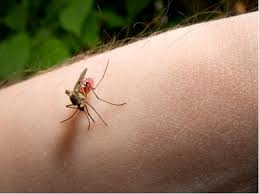
What action describes a response to internal stimuli?
Catching a ball at a baseball game
Drinking when you are thirsty
Running at the sight of a wild lion
Writing a thank you note
Based on the context, Stimulus refers to--
outside reactions that monitor your bodily systems
the temperature of the body
food that gives your body energy
a thing or event that causes a reaction
What sensory receptor reacts to light?
Chemoreceptor
Nociceptor
Photoreceptor
Gravoreceptor
What receptor helps us identify changes in smell and taste?
Thermoreceptors
Proprioreceptors
Electroreceptors
Chemoreceptors
What is an example of an External Stimuli?
Lions and Tigers and Bears...Oh my!! Run!
I'm so hungry, I could eat my shoe.
This test is causing me stress...I'm sweating!
I'm asleep.
What is an example of an internal stimulus?
I'm so hungry, I can't stand it! My stomach is growling.
The weather is cold out there.
Lions and Tigers and Bears..Oh My!
Those sticker bushes cut my leg!
What receptor allows you to see a rainbow?
Photoreceptor
Thermoreceptor
Mechanoreceptor
Gravitonreceptor
Which statement best describes a response?
Slow response that your brain has to process
Rapid response to protect body from harm
Which sense has mechanical inputs and uses Mechanoreceptors?
Touch
Taste
Smell
Hearing
Sight
Which sense has chemical inputs and uses chemoreceptors?
Touch
Taste
Smell
Hearing
Sight
Which sense has electromagnetic inputs and uses photoreceptors?
Touch
Taste
Smell
Hearing
Sight
What are possible outputs of the nervous system? (Select all that apply)
Memory
Reaction
A reaction and memory together
Stimulus
Which of the following relates to concussions?
The brain collides with the skull.
Headaches can occur
Paralysis can occur.
Impulses cannot travel the spinal cord
Which of the following relates to spinal cord injuries?
The brain collides with the skull.
Headaches can occur
Paralysis can occur.
Impulses cannot travel the spinal cord
What is the correct order of the order impulses take in the nervous system to make a response?
1) Sensory Neurons 2) Brain processes the information 3) Interneuron 4) Motor Neurons
1) Motor Neurons 2) Brain Processes Information 3) Interneurons 4) Sensory Neurons
1) Interneurons 2) Motor Neurons 3) Brain processes information 4) Sensory Neurons
1) Brain processes information 2) Sensory neurons 3)Interneurons 4) Motor Neuronss

