
 Worksheets
Evolution review
Total questions: 55
Worksheet time: 2hrs 50mins

Preserved remains of an organism that lived in the past…..
fossil
species
dinosaur
shell


"Survival of the fittest."


Homo sapien
Homo neanderthalensis
Homo habilis
Homo erectus

What way have hominids have evolved over the last 7 million years?
What term refers to body parts that perform a similar function but differ in structure?
analogous structures
homologous structures
evolutionary structures
vestigial structures
Rainfall in a tropical region has been below average for 10 consecutive years. Insect species adapted to dry conditions are much more plentiful at the end of the 10 years. Which of the following statements best explains the increase in the population of these insects?
Biodiversity in the region has increased due to the dry conditions.
Insects with a high tolerance for dry conditions have moved out of the region.
Natural selection has favored insect species with high tolerance for dry conditions.
Natural selection has selected against insect species that are adapted for dry conditions.
Which of the following is a correct statement about the relationship between natural selection and evolution?
Natural selection results from evolution.
Natural selection includes evolution as a part of it.
Natural selection and evolution are the same thing.
Natural selection is one mechanism of evolution.
When populations can no longer interbreed and produce fertile offspring
Evolution by chance and occurs in small populations is
Why are adaptations important for an animals?
They make life pass by more quickly for the animal.
They help them survive in their environment.
They complicate life for the surviving animal.
When scientists compare fossils from billions of years ago to recently formed fossils, what would they discover?
the species changed over time
the species stayed the same over time
the species chemically changed
the species moved to higher levels of the food chain

It took millions of years for giraffes to develop long necks. Slow evolution is called:
Punctuated equilibrium
Survival of the fittest
Gradualism
Selective Breeding
Which is the best example of punctuated equilibrium
The evolution of the whale over many millions of years.
The extinction of the dinosaurs
Bacteria mutating from one year to the next.
Amphibians evolving into reptiles over millions of years

The peppered moth's color camouflaged it on the light colored tree bark. It's color was an example of a/n
Variation
Dominant trait
Recessive trait
Adaptation

Changes in inherited characteristics can cause a species to change into a new one. This change over time is called?
Graduation
Selective Breeding
Revolution
Evolution

On the Galapagos Islands, different finches evolved on different islands to fit their environment. When a species develops unique traits because it is trapped in one area this is called:
Geographic isolation
Geologic separation
General relocation
Genetic differentiation

The male and female black widow spider look very different. However, we know they are the same species because:
They reproduce creating fertile offspring
They reproduce creating infertile offspring
They cannot reproduce
They are not the same species
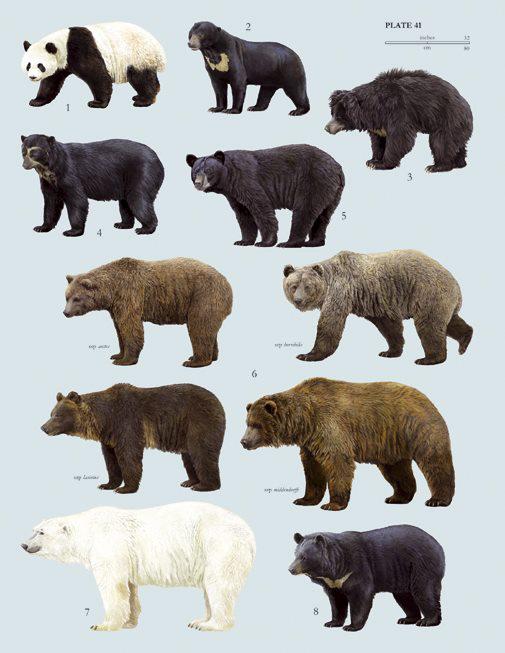
Which of the following is a term for a group of similar organisms that can reproduce to create fertile offspring?


Individuals can not evolve.

Human babies don't do well if they are born too small. If they are too big complications can occur during birth. Baby size should then be selected for by which method?
stabilizing
directional
disruptive
Tall kelp have a distinct advantage over shorter kelp in receiving needed sunlight in their ocean environment
directional selection
disruptive selection
stabilizing selection

Evolution occurring gradually and slowly over long periods of time
Homeostasis
Stasis
Punctuated Equilibrium
Gradualism

Evolution occurring quickly due to catastrophic events
Homeostasis
Gradualism
Statsis
Punctuated Equilibrim

According to evolutionary theory, all living things have a
analogous structure
Common function
Common ancestor
fossil
Most fossils form when organisms die intact and quickly become buried in sediments
True
False

The walkingstick uses..
camoflauge
Color changing
Mimicry
Lies
What are the four mechanisms of evolution?
mutation, genetic drift, natural selection, migration
stabilizing, disruptive, directional, and natural selection
gradualism, punctuated equilibrium, natural selection, and mutation
there is only one mechanism - natural selection
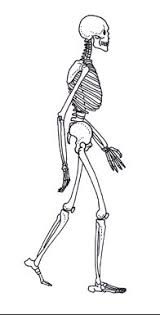
The ability to walk upright on two legs is called:
bipedalism
quadropedalism
bicyclepedalism
tripedalism

All primates have the following features EXCEPT:
large brains
excellent vision
grasping hands
bipedalism
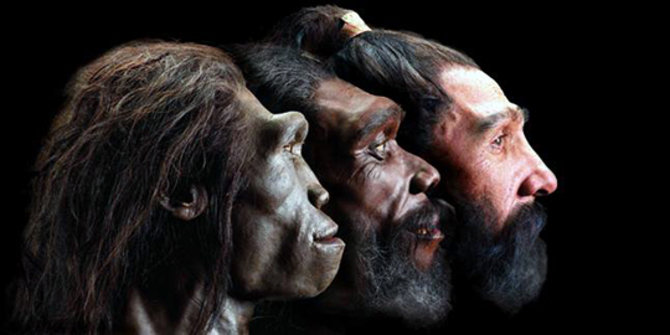
Modern humans and their closest relatives belong to the same family. Members of this family are called:
hominids
primates
homo sapiens
Lucy

Which species evolved about 3.9 million years ago and was bipedal?
Australopithecus afarensis
Homo neanderthalensis
Homo habilis
Paranthropus aethiopicus
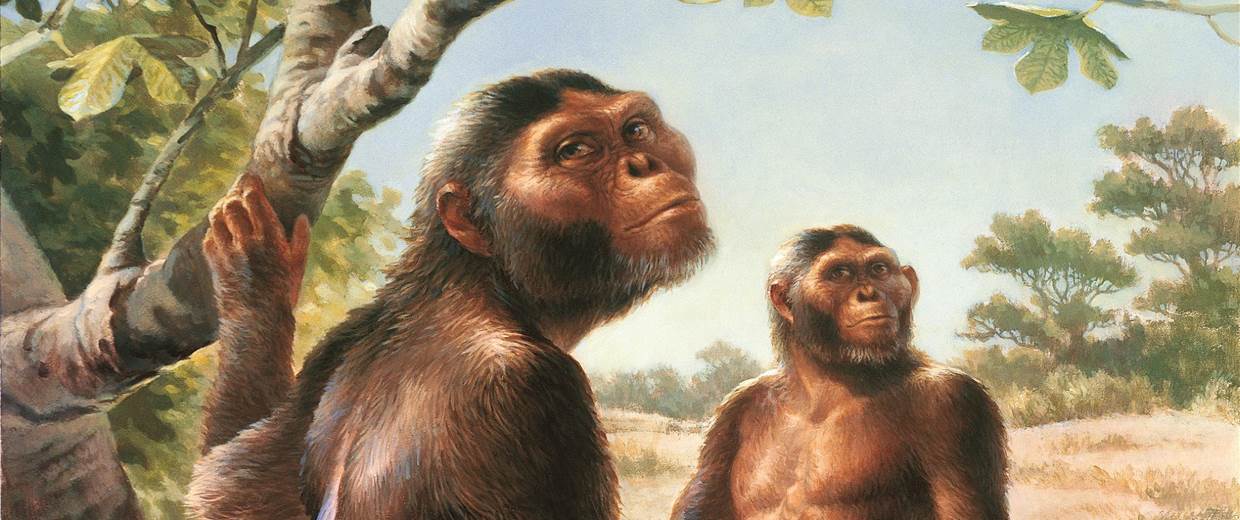
All of these are advantages of bipedalism EXCEPT:
Hands are free to carry food.
Save energy when walking long distances.
Hands are free to use tools.
Easier to balance on two legs.
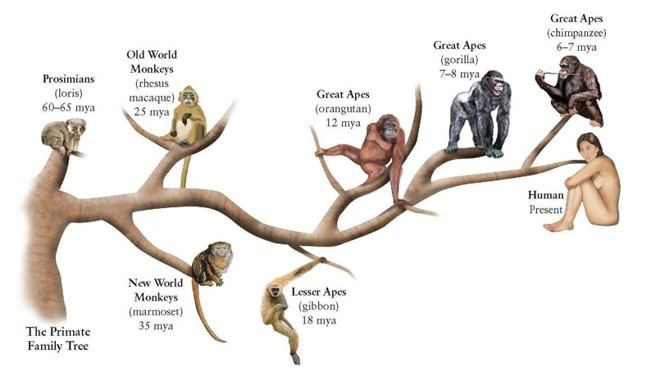
What do we share in common with primates?
Common Ancestors
Humans evolved from monkeys
Why did some primates stop living in trees?
Because of climate change: the climate became too dry
Because of climate change: the climate became more humid
Because the trees died off in the savanna.
Because of climate change: the climate became too rainy
What does arboreal mean?
tree dwelling
tail used to grasp things
many
few
What is a prehensile tail?
tail used like a 5th limb
tail used for balance
tail found in embryos that goes away before birth
lack of a tail
Which group of primates has a prehensile tail?
new world monkeys
old world monkeys
apes
all primates

