
 Worksheets
Ch. 16 ESS
Total questions: 70
Worksheet time: 57mins
Name
Class
Date
1.
What galaxy is our solar system in?
a)
Milky way
b)
milking way
c)
Milk way
d)
Milkie Weigh
2.
The star at the center of our solar system.
a)
Sun
b)
moon
c)
orbit
d)
axis
3.

Stars are formed in a large cloud of gas and dust called a
a)
galaxy
b)
nebula
c)
universe
d)
black hole
4.
Nebula's are mixtures of gases and what?
a)
clouds
b)
stars
c)
tiny particles
d)
dust
5.

The nearest star system to our Sun is
a)
Alpha Centauri.
b)
Algol.
c)
Gliese 584.
d)
Beta Centauri.
6.
Which of the following terms is used to refer to a stage in the life cycle of a star?
a)
frequency
b)
nebula
c)
luminosity
d)
magnitude
7.
A star's brightness is directly dependent on the star's what?
a)
The size of the star- the smallest stars are the brightest
b)
The size of the star- the biggest stars are the brightest
c)
Temperature of the star- the hottest stars are the brightest the star will be
d)
The age of the star- the youngest stars are the LEAST bright
8.
Light years are most helpful to scientists when they are measuring what?
a)
The speed of light
b)
The distances between objects in space
c)
The life cycle of our Sun
d)
The speed of a planet's orbit around the Sun
9.
Which of the following is true about nuclear fusion?
a)
Occurs at the center of stars & produces energy
b)
Occurs in the process of chemical reactions
c)
Results in the creation of black holes
d)
Occurs when 2 stars collide
10.
Determining a star's mass identifies the star's current what?
a)
position in the galaxy
b)
temperature
c)
life cycle
d)
gravitational pull
11.
Galaxies are classified according to their _____________
a)
size
b)
temperature
c)
shape
d)
planets
12.
According to the HR Diagram, stars that get hotter as they get brighter are what type of stars?
a)
super giants
b)
white dwarf
c)
main sequence
d)
giants
13.
An apparent shift in the position of an object when viewed from different locations.
a)
Parallax
b)
Perihelion
c)
Solar Nebula
d)
Prominence
14.
What is the main element in a stars composition?
a)
Hydrogen
b)
Helium
c)
Lithium
d)
Heavy Elements
15.
Is the sun a star?
a)
yes
b)
no
16.
The color of the star tells us its
a)
composition
b)
Temperature
c)
Luminosity
d)
Mass
17.
The hottest color star is
a)
Blue
b)
White
c)
Yellow
d)
Red
18.
Our star is a
a)
yellow/ large star
b)
yellow/ small star
c)
yellow/ medium star
19.
The only objects in our Universe that produces and emits its own light is
a)
Nebulas
b)
Comets
c)
Planets
d)
Stars
20.
What is the term used for a cloud of gas and dust?
a)
gas giant
b)
solar dust
c)
solar cloud
d)
nebula
21.
A light year is...
a)
The speed light travels
b)
How long it takes light to get to you from the sun
c)
The distance light can travel in a year
d)
How many years it takes light to be emitted
22.
This is what our sun will become at the end of its life cycle.
a)
red dwarf
b)
white dwarf
c)
blue supergiant
d)
black hole
23.
What is the next phase for our sun in its life cycle?
a)
supernova
b)
red giant
c)
white dwarf
d)
neutron star
24.

What type of galaxy is this?
a)
Spiral
b)
Elliptical
c)
Irregular
d)
Irrational
25.

What type of galaxy is this?
a)
Spiral
b)
Elliptical
c)
Irregular
d)
Irrational
26.

True or False
The Sun is the biggest star in the sky.
The Sun is the biggest star in the sky.
a)
True
b)
False
27.

What word best describes our sun?
a)
Average
b)
Supergiant
c)
Dwarf
d)
Red Giant
28.
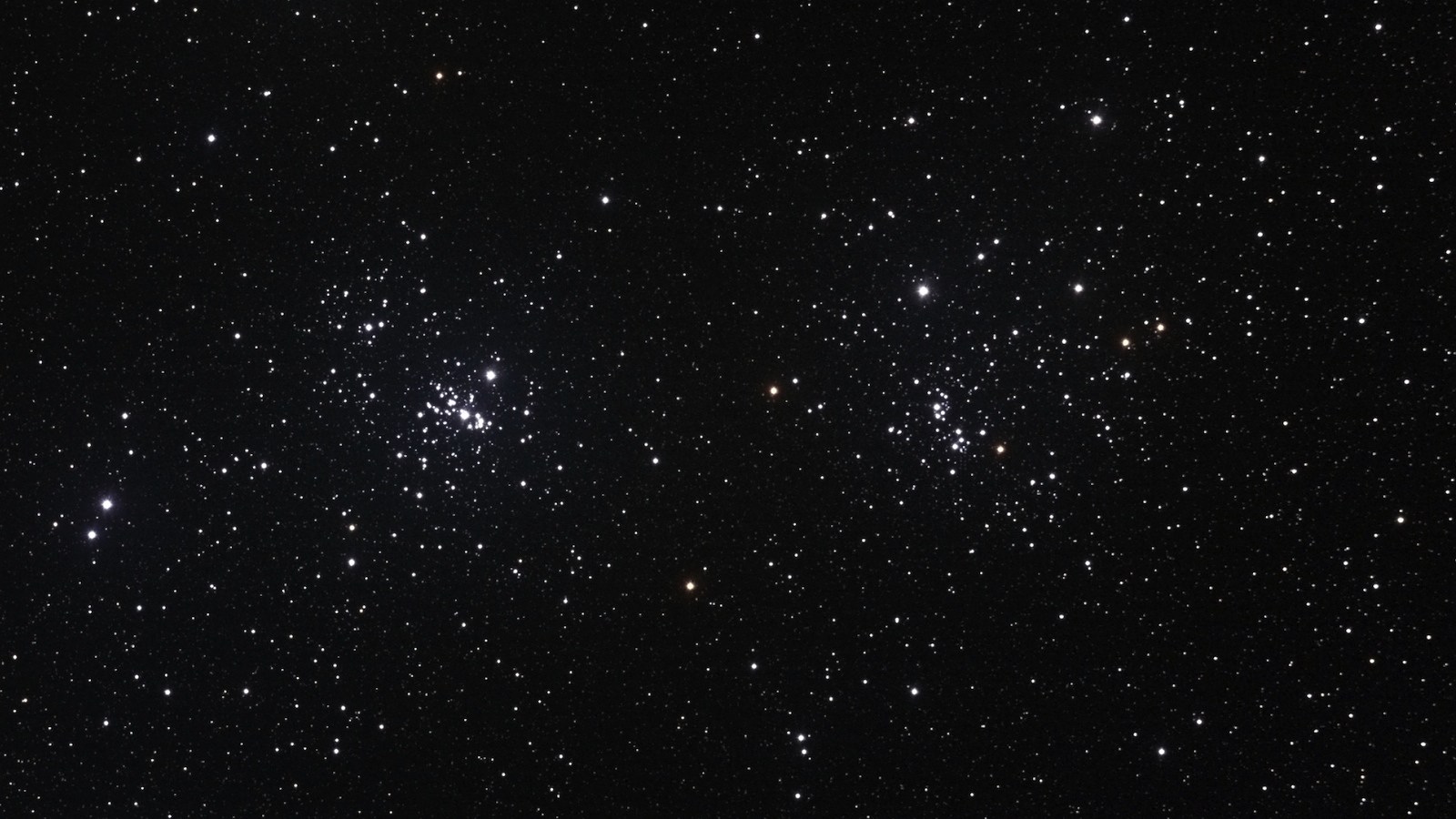
Why do other stars appear so much smaller than the sun?
a)
They are much smaller
b)
They are so far away
c)
They are not as bright
d)
They are dwarf stars
29.

What color of star is the hottest?
a)
Blue
b)
Red
c)
Yellow
d)
Orange
30.

What color of star is the coolest?
a)
Red
b)
Yellow
c)
Blue
d)
White
31.

What is the name of the largest stars?
a)
Protostars
b)
Supergiants
c)
Red Giants
d)
Dwarf Stars
32.

Why does the sun look small in the sky to us?
a)
It is 93,000,000 miles away
b)
It is smaller than Earth
c)
It is not very bright
d)
It travels around Earth
33.

What is the name of baby stars?
a)
Dwarf
b)
Supergiant
c)
Protostars
d)
Nebulas
34.
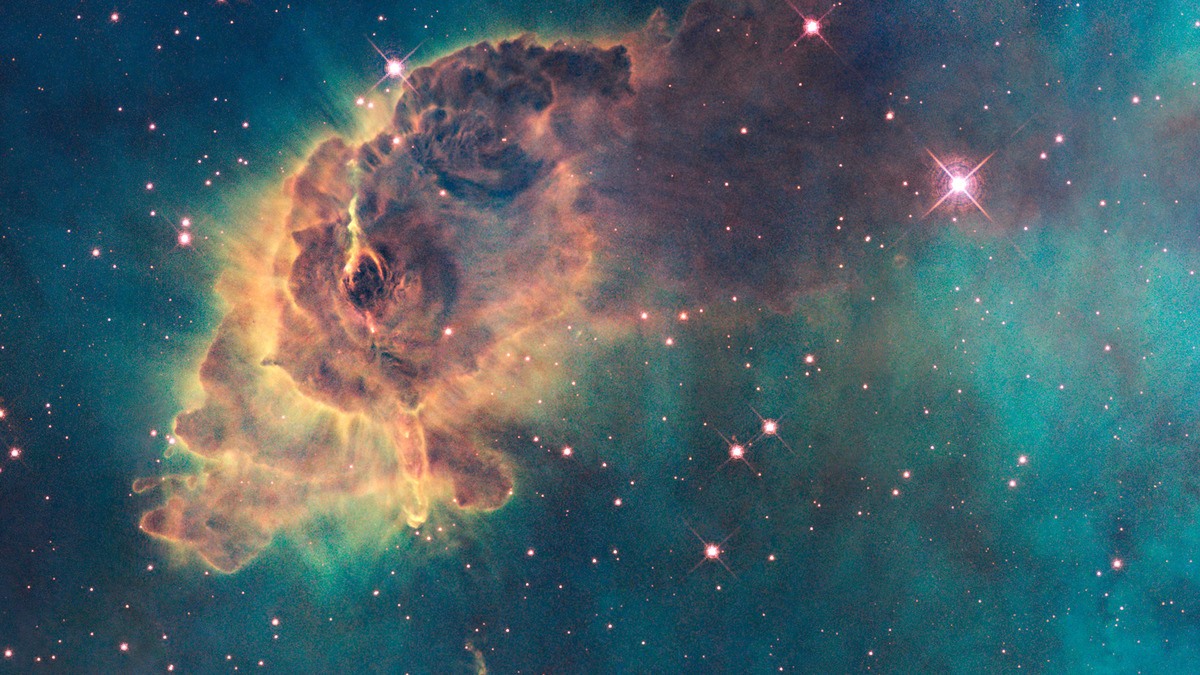
What is the name of the gas/dust clouds that form stars?
a)
Nebulas
b)
Protostars
c)
Supernova
d)
Neutron Star
35.
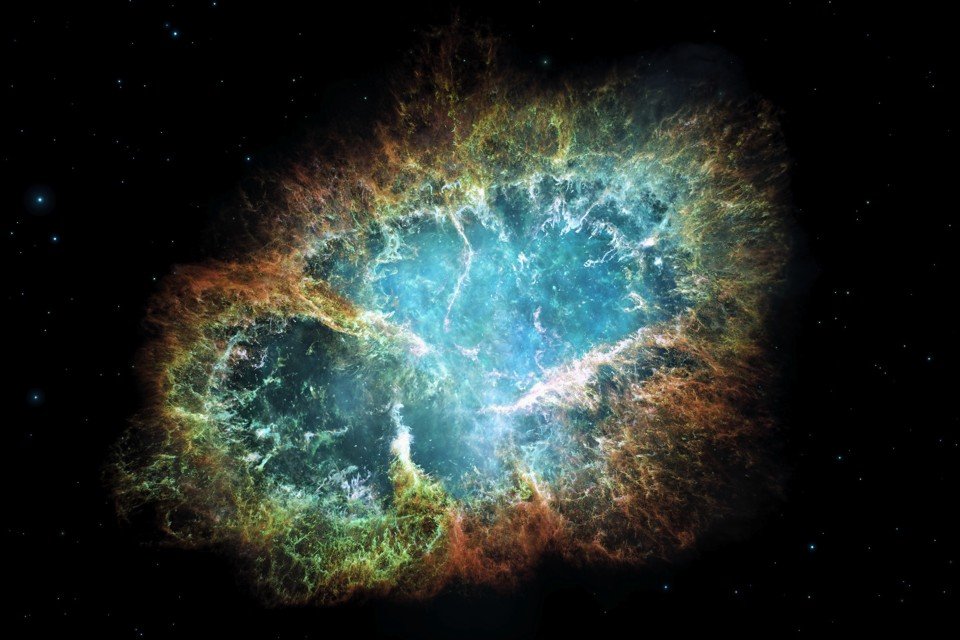
What is the name of the explosion at the death of a massive star?
a)
Supergiant
b)
Supernova
c)
Black Hole
d)
Nebula
36.

To get the sun to appear bigger in our sky, how would the distance between the sun and earth have to change?
a)
Earth would have to move closer to the sun
b)
Earth would have to move farther from the sun
37.

What are stars?
a)
Rocky bodies
b)
Hot exploding balls of gas
c)
5 pointed shapes
d)
Hollywood actors
38.

All stars begin their life in a
a)
Main Sequence
b)
Nebula
c)
Protostar
d)
Black Dwarf
39.
The H-R diagram is a graph that shows the relationship between ______________ for stars.
a)
temperature and color
b)
temperature and brightness
c)
brightness and color
d)
distance and brightness
40.

______ is a force that causes dust particles to stick together in a nebula.
a)
nuclear fusion
b)
gravity
c)
hydrogen
d)
friction
41.

A ________ is an object so dense with so much gravity that even light cannot escape.
a)
neutron star
b)
white dwarf
c)
blackhole
d)
black dwarf
42.
A supergiant might explode and become a_____.
a)
main sequence stars
b)
white dwarf
c)
supernova
d)
nebula
43.
Our galaxy is called the
a)
Earth Nebula
b)
The Hubble Galaxy
c)
The Milky Way
d)
The Snickers
44.
A small, hot star near the end of its life is a star called a
a)
white dwarf
b)
red dwarf
c)
supergiant
d)
protostar
45.
A black hole is an object so dense with so much gravity that even ________ cannot escape.
a)
gravity
b)
galaxies
c)
spaceships
d)
light
46.
The Milky Way Galaxy is a
a)
spiral
b)
lenticular
c)
elliptical
d)
irregular
47.

What type of galaxy is this?
a)
Spiral
b)
Elliptical
c)
Irregular
d)
Irrational
48.
Distance measurement used by astronomers for distant objects.
a)
Kilometers
b)
Light Years
c)
Miles
d)
Light Seconds
49.
What is not a galaxy?
a)
Optical Galaxy
b)
Spiral Galaxy
c)
Elliptical Galaxy
d)
Irregular Galaxy
50.
How many stars are in a galaxy.
a)
millions or billions
b)
thousands
c)
hundreds
d)
Ten
51.

What type of galaxy is this?
a)
Spiral
b)
Elliptical
c)
Irregular
d)
Irrational
52.

What type of galaxy is this?
a)
Spiral
b)
Elliptical
c)
Irregular
d)
Irrational
53.
What type of galaxy has no defined pattern or shape?
a)
Spiral
b)
Elliptical
c)
Irregular
d)
Constellation
54.
What galaxy do we live in?
a)
Irregular Galaxy
b)
Spiral Galaxy
c)
Elliptical Galaxy
d)
The toilet
55.
What holds a galaxy together?
a)
pressure
b)
glue
c)
gravity
d)
planets
56.

As a whole, Giants are considered hotter than White Dwarfs.
a)
True
b)
False
57.

In the diagram given, what happens as we move to the left?
a)
Stars Get Larger
b)
Stars get Colder
c)
Stars get hotter
58.

Which star is the coldest?
a)
Yellow Star
b)
Red Star
c)
Orange Star
d)
Blue Star
59.
Which category is our Sun located in?
a)
White Dwarfs
b)
Supergiants
c)
Main Sequence
d)
Giants
60.
The category that contains the most stars is...
a)
Main Sequence
b)
Supergiants
c)
Giants
61.

Look at the H-R diagram. Which star is
sort of cool, dim (not too much light), and red?
sort of cool, dim (not too much light), and red?
a)
Betelguse
b)
Sirius B
c)
Procyon B
d)
Barnard's star
62.

What is found on the x axis of an H-R diagram?
a)
Luminosity
(or brightness)
(or brightness)
b)
Temperature
c)
Star Size
d)
Distance
63.

Which is an example of a Main Sequence star?
a)
Betelgeuse
b)
our Sun
c)
Sirius B
d)
Polaris
64.

Which star has the lowest temperature?
a)
A
b)
B
c)
C
d)
D
65.

What determines the color of a star?
a)
It's size
b)
It's temperature
c)
It's composition
d)
They are all the same color
66.

As you move from the bottom to the top of the H R diagram the __________ changes.
a)
Temperature
b)
Luminosity or Brightness
67.
What is the graph that shows the relations between a star's surface temperature and absolute magnitude?
a)
H-R Diagram
b)
Star Cluster Map
c)
Einstein's Diagram
d)
Newton's Chart of Stars
68.
The Hertzprung Russell Diagram consists of two axis that are labelled...
a)
Luminosity and Size
b)
Luminosity and Temperature
c)
Luminosity and Age
69.
Our sun is currently a ______________________ then will become a _________________________ and lastly a _______________________.
a)
main sequence, red giant, super giant
b)
main sequence, red dwarf, white dwarf
c)
main sequence, red giant, white dwarf
d)
main sequence, red giant, red dwarf
70.
A white dwarf is the final stage for _________ mass stars like our Sun.
a)
small/medium
b)
large
c)
super massive
100 %

