wayground logo

Free Printable Worksheets

NEW

Font size

S
M
L
XL
Worksheets

Science Exam Review

Total questions: 70

Worksheet time: 54mins

Name
Class
Date
1.
What step does every scientific experiment begin with?
a)
hypothesis
b)
question/problem
c)
procedures
d)
conclusion
2.
During this step of the scientific method, a scientist would gather background information. 
a)
Hypothesis
b)
Research
c)
Observation
d)
Experiment 
3.
Testing a hypothesis often involves a(n):
a)
answer
b)
experiment
c)
problem
d)
safety check
4.
This variable in an experiment is the one being deliberately changed by the scientist. 
a)
dependent variable
b)
independent variable
c)
data
d)
control group
5.
If plants are exposed to sunlight, then they will grow taller.
What part of the scientific method is this an example of?
a)
Procedure
b)
Hypothesis
c)
Question
d)
Results
6.

Triple beam balances measure ________________.

a)

Volume

b)

Length

c)

Mass

d)

Weight

7.

Find the mass.

a)

253 g

b)

252.9 g

c)

522.9 g

d)

523.5 g

8.
What is this scientific tool?
a)
beaker
b)
tube
c)
graduated cylinder
d)
balance
9.
microscopes would be useful for looking at...
a)
blood cells
b)
cows
c)
candy
d)
criminals
10.
Which of the following is the smallest unit of life that can carry out all life functions?
a)
the mitochondria
b)
the vacuoles
c)
the nucleus
d)
the cell
11.
Which cell structure is found in plant and animals cells and controls what can come into or leave a cell?
a)
cell membrane
b)
cytoplasm
c)
nucleus
d)
vacuole
12.
Animal cells have_______________.
a)
cell walls
b)
chloroplasts
c)
cytoplasm
d)
large vacuoles
13.
Michael looked at a cell through a microscope.  He identified a nucleus, chloroplast, and cytoplasm.  What kind of cell did Michael observe?
a)
animal
b)
plant
c)
vertebrate
d)
bacteria
14.
What is the jelly-like substance inside of cells called?

a)
chloroplast
b)
photosynthesis
c)
cell membrane
d)
cytoplasm
15.

Which organelle produces energy?

a)

Chloroplast

b)

Mitochondria

c)

Nucleus

d)

Ribosomes

16.

Which is not a function of the skeletal system?

a)

shape and support

b)

movement

c)

protection

d)

gas exchange

17.

What is a joint?

a)

The place where 2 or more bones meet.

b)

A thin membrane that covers the surface of bone.

c)

A band of tissue that hold bones together.

d)

Connective tissue

18.

What do the bones create?

a)

minerals

b)

platlets

c)

red blood cells

d)

plasma

19.

One function of the skeletal system is _______, especially in regards to the vital organs such as the brain, heart, and lungs.

a)

Protection

b)

Storage

c)

Synthesis

d)

Movement

20.
Voluntary muscle is
a)
muscle that has to be told when to move
b)
muscle that moves automatically
c)
muscle that needs to be stretched regularly
d)
muscle that makes up the heart and stomach
21.
What is an example of an involuntary muscle? 
a)
Heart
b)
Arms 
c)
Legs
d)
Shoulders
22.

The organ system that consists of bones, their associated cartilages, ligaments and joints. Provides protection, movement, produces red blood cells, and stores minerals.

a)

Circulatory System

b)

Respiratory System

c)

Skeletal System

d)

Digestive System

23.
The nervous system is composed of the ___, ___, and ___.
a)
heart, brain, kidneys
b)
lungs, liver, stomach
c)
brain, spinal cord, nerves
d)
eyes, pancreas, veins
24.
Which systems work together when nutrients are dropped off for the cells in the brain?
a)
Circulatory, Excretory, Respiratory
b)
Circulatory, Digestive, Nervous
c)
Circulatory, Respiratory, Nervous
d)
Circulatory, Skeletal, Nervous
25.
Give and example of a stimulus.
a)
you hear screaming
b)
a loud noise like thunder
c)
feeling a spider crawling on your back
d)
all of these 
26.

What is a neuron?

a)

a nerve cell

b)

a ganglia

c)

a blood cell

d)

the control center of a cell

27.

What is considered the command center of the nervous system?

a)

Neurons

b)

Heart

c)

Spinal Cord

d)

Brain

28.

Select the INVOLUNTARY action.

a)
b)
c)
d)
29.

Select the VOLUNTARY action.

a)
b)
c)
d)
30.

Produces the hormone insulin and glucagon, which controls the level of glucose in the blood.

a)

Thyroid Gland

b)

Pancreas

c)

Thymus Gland

d)

Pituitary Gland

31.
Where are the adrenal glands located?
a)
One on each side of the larynx
b)
On top of the kidneys
c)
Behind the orbital bone
d)
The inner ear
32.

What type of product is secreted by endocrine glands?

a)

Sweat

b)

Hormones

c)

Saliva

d)

Tears

33.
controls changes in growing male's body
a)
ovaries
b)
testes
c)
pancreas
d)
thymus
34.
Which of the following is a function of the Endocrine System?
a)
growth and development
b)
maintaining homeostasis
c)
response to stress and injury
d)
all of the above
35.
Which of the following produces adrenaline?
a)
thyroid gland
b)
parathyroid glands
c)
pancreas
d)
adrenal glands
36.
What are the chemical messengers that the endocrine system produces?  
a)
proteins
b)
hormones
c)
antibodies
d)
pathogens
37.
Which of these is called the "master" gland?
a)
adrenal
b)
thyroid 
c)
pituitary
d)
pancreas
38.
What is the main female hormone ?
a)
testosterone
b)
estrogen
c)
oxytocin 
d)
adrenaline
39.
The process by which the body breaks down food so that it can be used for energy.
a)
composition
b)
digestion
c)
deposition
d)
absorption
40.
A muscular tube that helps move food from the mouth to the stomach.
a)
esophagus
b)
trachaea
c)
small intestine
d)
gall bladder
41.
The tube after the small intestine where the liquid is absorbed.
a)
large intestine
b)
small intestine
c)
rectum
d)
stomach
42.
a)
stomach
b)
pancreas
c)
large intestine
d)
small intestine
43.
Humans cannot digest food without the aid of small single-celled organisms that live in our digestive tract. Which common name is associated with these single-celled organisms that help humans digest food?
a)
algae
b)
bacteria
c)
protozoa
d)
virus
44.
The chewing and grinding of food into smaller pieces is an example of...
a)
Mechanical Digestion
b)
Chemical Digestion
45.
Nutrients from digested food are absorbed in which digestive organ?
a)
Small Intestine
b)
Stomach
c)
Large Intestine
d)
Gallbladder
46.
Enzymes (chemicals) in your saliva help break down food while chewing.  This is...
a)
Mechanical digestion
b)
Chemical digestion
47.
What is the function of the digestive system?
a)
To break down food
b)
To cool you down
c)
To help you breathe
d)
To pump blood through your body
48.

What do the villi do?

a)

Digest food in the mouth

b)

Digest food in the stomach

c)

Protect the stomach from digesting itself

d)

Absorb nutrients from food so the body has energy

49.
What is the main function of the excretory system?
a)
to collect and remove wastes from the body
b)
to strengthen skeletal muscles
c)
to protect the nervous system
d)
to bring oxygen to body cells
50.
Which organ of the excretory system stores urine until the body is ready to eliminate it?
a)
ureters
b)
urethra
c)
urinary bladder
d)
urea
51.
What term do scientists use to describe the chemical process in which oxygen and glucose react to release energy inside body cells?
a)
respiration
b)
exhaling
c)
breathing
d)
inhaling
52.

What is the main organ of the excretory/urinary systems?

a)

Lungs

b)

Kidneys

c)

Stomach

d)

Heart

53.

a flap of tissue that closes when we eat so food does not go down the trachea

a)

larynx

b)

pharynx

c)

trachea

d)

epiglottis

54.
How is carbon dioxide released from the body? 
a)
When we exhale
b)
When we urinate
c)
When we sweat
d)
When we inhale
55.
After air moves through the pharynx it continues downward. The _____, or windpipe, directs the air into 2 separate branches or tubes.
a)
mucus
b)
trachea
c)
larynx
d)
epiglottis
56.
The tubes that go from the trachea into the lungs
a)
alveoli
b)
diaphragm
c)
epiglottis
d)
bronchial tubes
57.
To take in oxygen
a)
exhale
b)
cough
c)
hiccup
d)
inhale
58.
The diaphragm is found:
a)
At the back of the throat.
b)
Below the larynx.
c)
Under the epiglottis.
d)
Under the rib cage.
59.

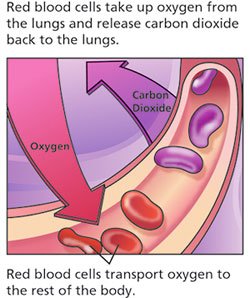
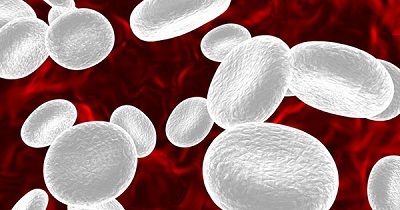
What type of cells carry oxygen?

a)

red blood cells

b)

white blood cells

c)

neurons

d)

platelets

60.

What are the tiny air sacs at the end of the bronchioles, that transfer oxygen into the blood stream?

a)

Trachea

b)

Bronchi

c)

Alveoli

d)

Larynx

61.
Which system permits blood to circulate and transports nutrients around the body?
a)
Nervous
b)
Respiratory
c)
Circulatory
d)
Digestive
62.
These cells, in the blood, carry oxygen and give the blood its color.
a)
white blood cells
b)
plasma
c)
platelets
d)
red blood cells
63.
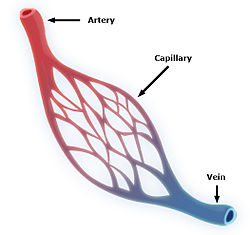
This type of vessel carries blood TO the heart:
a)
vein
b)
nerve
c)
muscle
d)
artery
64.
When oxygen-rich blood is carried AWAY from the heart, it travels through an...
a)
artery
b)
neuron
c)
vein
d)
straw
65.
The smallest type of blood vessel is the:
a)
nerve
b)
vein
c)
capillary
d)
artery
66.
The cells in the blood that help fight germs and illnesses are the...
a)
red blood cells
b)
platelets
c)
white blood cells
d)
axons
67.
The circulatory system works with the ___________ system to provide our body with oxygen.
a)
respiratory
b)
digestive
c)
muscular
d)
skeletal
68.
The circulatory system works with the __________ system to obtain energy from nutrients that we eat. 
a)
respiratory 
b)
digestive
c)
skeletal
d)
nervous
69.
A group of similar cells that perform the same function.
a)
tissue
b)
organelle
c)
mass
d)
tendon
70.

Which of the following is the LARGEST and MOST complex level of organization in the body?

a)

Cell

b)

Tissue

c)

Organ

d)

Organ System