Wayground logo

Free Printable Worksheets

Font size

S
M
L
XL
Worksheets

Skeletal System

Total questions: 90

Worksheet time: 2hrs 40mins

Name
Class
Date
1.

Bones that have complex shapes are called...

a)

Flat bones

b)

Irregular bones

c)

Sesamoid bones

d)

Long bones

2.
Which of these is a long bone?
a)
Femur
b)
Patella
c)
Scapula
d)
Carpal
3.
Which of these is an irregular bone(s)?
a)
Pelvis
b)
Humerus
c)
Phalanges
d)
Tarsals
4.
Which of these is a flat bone?
a)
Vertebra
b)
Tibia
c)
Fibula
d)
Frontal
5.
The primary mineral stored by compact bone is
a)
Calcium
b)
Selenium
c)
Zinc
d)
Magnesium
6.
This type of bone is porous, allowing blood vessels to move through it and containing bone marrow.
a)
Compact Bone
b)
Spongy or Cancellous Bone
7.
This lines the medullary cavity
a)
Periosteum 
b)
Endosteum 
c)
Diaphysis 
d)
Osteoblasts 
8.
The ends of the long bone are anatomically referred to as the: 
a)
Epiphyseal plate 
b)
Medulary Cavity 
c)
Periosteum 
d)
Epiphysis 
9.

Examples: Most bones of the skull, Ribs, Sternum, Scapula

a)

Long Bone

b)

Short Bone

c)

Irregular Bone

d)

Flat Bone

10.
Is this the axial or appendicular skeleton?
a)
Axial
b)
Appendicular
11.
Is this the axial or appendicular skeleton?
a)
Axial
b)
Appendicular
12.
Bones in the center of the body, such as the vertebrae, skull, and sternum are part of which skeleton?
a)
Axial
b)
Appendicular
13.
Bones of the arms and legs, such as the humerus, femur, and tibia are part of which skeleton?
a)
Axial
b)
Appendicular
14.

Identify cranial bone "B"

a)

Lacrimal

b)

Ethmoid

c)

Parietal

d)

Sphenoid

15.

Identify cranial bone "A"

a)

Ethmoid

b)

Sphenoid

c)

Lacrimal

d)

Temporal

16.

Identify Cranial Bone "D"

a)

Parietal

b)

Temporal

c)

Ethmoid

d)

Sphenoid

17.

Identify bone "F"

a)

Temporal

b)

Parietal

c)

Sphenoid

d)

Zygomatic

18.

Identify Bone "D"

a)

Sphenoid

b)

Ethmoid

c)

Lacrimal

d)

Nasal

19.

Identify Bone "E"

a)

Temporal

b)

Parietal

c)

Sphenoid

d)

Occipital

20.

Identify Bone "D"

a)

Ethmoid

b)

Vomer

c)

Inferior Nasal Conchae

d)

Maxilla

21.

Identify Bone "C"

a)

Ethmoid

b)

Lacrimal

c)

Sphenoid

d)

Nasal

22.

identify Bone "G"

a)

Maxilla

b)

Mandible

c)

Zygomatic

d)

Vomer

23.

This is the strongest bone in the skull.

a)

maxilla

b)

mandible

c)

frontal

d)

occipital

24.
a)

nasal

b)

frontal

c)

zygomatic

d)

occipital

25.
a)

maxilla

b)

mandible

c)

zygomatic

d)

parietal

26.
a)

frontal

b)

zygomatic

c)

nasal

d)

maxilla

27.
a)

mastoid process

b)

occipital condyles

c)

styloid process

d)

zygomatic arch

28.
a)

sagittal

b)

squamous

c)

coronal

d)

lambdoid

29.
a)

sagittal

b)

squamous

c)

coronal

d)

lambdoid

30.
a)

sagittal

b)

coronal

c)

squamous

d)

lambdoid

31.
a)

lateral condyles

b)

medial condyles

c)

occipital condyles

d)

mastoid process

32.
a)

styloid process

b)

mastoid process

c)

external auditory meatus

d)

zygomatic arch

33.
a)

temporal

b)

parietal

c)

zygomatic

d)

occipital

34.

What is the number of bones that compose the adult skeleton?

a)

205

b)

206

c)

208

d)

200

35.

Bone forming cells:

a)

osteocytes

b)

osteoblasts

c)

osteoclasts

d)

osteomasts

36.

Occurs when the bones of inactive people tend to lose mass:

a)

atrophy

b)

ossification

c)

shingles

d)

osteoarthritis

37.

Bone destroying cells:

a)

osteocytes

b)

osteoblasts

c)

osteomasts

d)

osteoclasts

38.

Must be present in the blood at all times for the nervous system to transmit messages, for muscles to contract, and for blood to clot:

a)

calcium

b)

adipose tissue

c)

phosphorus

d)

iodine

39.

Blood cell formation:

a)

ossification

b)

hemostasis

c)

hematopoiesis

d)

hemophilia

40.

Fat stored in the internal cavities of bones:

a)

red marrow

b)

osseous tissue

c)

adipose tissue

d)

spongy bone

41.

Which of the following best describes the job of the skeletal system?

a)

Gives shape and support to the body.

b)

Sends messages from the stomach to the brain.

c)

Brings in and breaks down all nutrients for the body

42.

Which system is responsible for creating red blood cells?

a)

skeletal

b)

muscular

c)

respiratory

d)

nervous

43.

The joint with a rounded end of bone fitting snug within another bone.

a)

ball and socket joint

b)

hinge joint

c)

pivot joint

d)

gliding joint

44.

The joint that moves in one direction, like a door

a)

ball and socket joint

b)

hinge joint

c)

pivot joint

d)

gliding joint

45.

The joint that consists of a bone resting atop another bone, permitting free movement.

a)

ball and socket joint

b)

hinge joint

c)

pivot joint

d)

gliding joint

46.

The joint in which bones slip over other bones, allowing free movement.

a)

ball and socket joint

b)

hinge joint

c)

pivot joint

d)

gliding joint

47.

This is at the end of a bone, cushions/tough

a)

cartilage

b)

tendon

c)

ligament

48.

This attaches bone to muscle.

a)

cartilage

b)

tendon

c)

ligament

49.

The part of the bone that makes red blood cells.

a)

cartilage

b)

tendon

c)

ligament

d)

bone marrow

50.
a)
rib
b)
spine
c)
scapula
d)
clavicle
51.
a)
ulna
b)
radius
c)
humerus
d)
clavicle
52.
a)
tibia
b)
femur
c)
fibula
d)
pelvis
53.
a)
tibia
b)
fibula
c)
radius
d)
calcaneus
54.
a)
metacarpals
b)
phelanges
c)
tarsals
d)
metatarsals
55.
a)
calcaneus
b)
tarsals
c)
metacarpals
d)
metatarsals
56.
a)
ulna
b)
humerus
c)
radius 
d)
vertebrae
57.
a)
vertebrae
b)
tibia
c)
pelvis
d)
femur
58.
a)
metacarpals
b)
metatarsals
c)
tarsals
d)
carpals
59.
a)
pelvis
b)
tibia
c)
sternum
d)
sacrum
60.
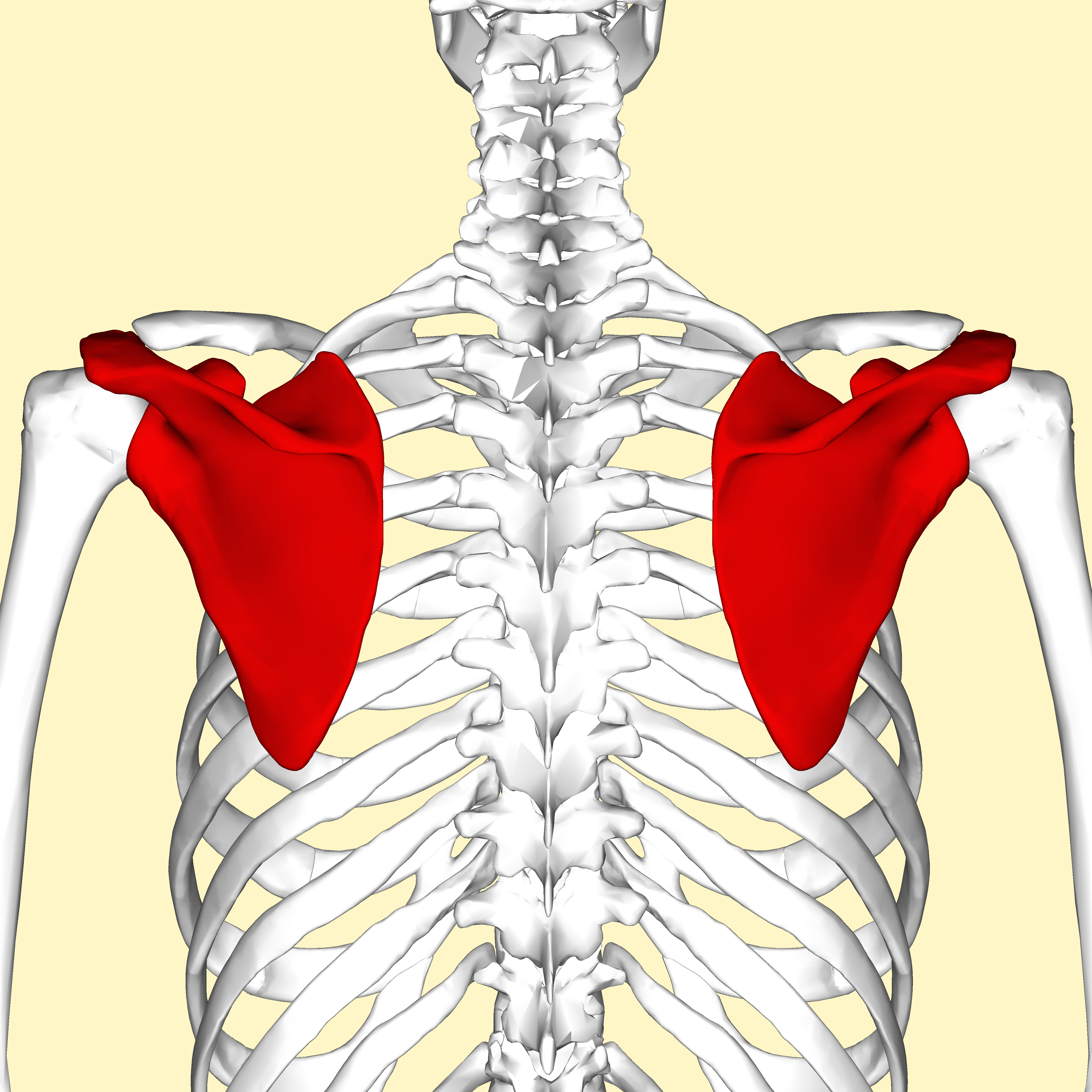
What bones is represented in the  picture?
a)
Clavicle
b)
Scapula
c)
Sternum
d)
Carpals
61.
Also known as the kneecap
a)
Patella
b)
Tibia
c)
Fibula
d)
Femur
62.
Also known as the shin bone
a)
Femur
b)
Tibia
c)
Fibula
d)
Metatarsals
63.

What bone is highlighted?

a)

Vertebrae

b)

Radius

c)

Pelvis

d)

Ribs

64.
These 8 tiny bones make up the wrist.
a)
carpals
b)
tarsals
c)
metacarpals
d)
metatarsals
65.
a)
Lumbar Vertebrae
b)
Sacrum
c)
Thoracic Vertebrae
d)
Cervical Vertebrae
66.
a)
Tarsals
b)
Metatarsals
c)
Phalanges
d)
Metacarpals
67.
Label D
a)
Ilium
b)
Ischium
c)
Sacrum
d)
Coccyx
68.
a)
costal cartilage
b)
true ribs
c)
false ribs
d)
floating ribs
69.

Name the highlighted item

a)

sacrum

b)

false rib

c)

condyloid process

d)

xiphoid process

70.

Name the highlighted bone.

a)

ilium

b)

ischium

c)

pubis

d)

iliac crest

71.

Name the highlighted bone.

a)

lumbar

b)

hyoid

c)

xiphoid

d)

scaphoid

72.

#1 (Big Toe Side / Medial Bone)

a)

Tibia

b)

Fibula

c)

Femur

d)

Talus

73.

#2 (Lateral Bone)

a)

Tibia

b)

Fibula

c)

Femur

d)

Talus

74.
Largest and most superior section of the coxal bone; flares forming the prominence of the hip
a)
ilium 
b)
ischium 
c)
pubus
d)
iliac crest 
75.
opening within each coxal bone 
a)
femur
b)
obturator foramen 
c)
patella 
d)
ischium 
76.
Which feature is C?
a)
Head
b)
Neck
c)
Intercondylar fossa
d)
Fovea capitis
77.
which is a function of the pelvic girdle
a)
supports the trunk
b)
moves the legs, trunk, and hip
c)
provides attachment for muscles that balance
d)
all of the above
78.
the articulation between the sacrum and coccyx
a)
lumbosacral joint
b)
sacrococcygeal joint
c)
sacroiliac joint
79.
the articulation between the L5 vertebral body and the body of the first sacral segment
a)
sacroiliac joint
b)
lumbosacral joint
c)
sacrococcygeal joint
80.
What bone is #1 pointing to? 
a)
atlas 
b)
axis 
c)
thoracic
d)
lumbar
81.
What bone is #2 pointing to? 
a)
atlas
b)
axis
c)
lumbar
d)
thoracic 
82.
Which section of the vertebral column is #3?
a)
cervical
b)
thoracic
c)
lumbar
d)
coccyx
83.
What is # 6 pointing to? 
a)
cervical
b)
thoracic
c)
coccyx
d)
sacrum 
84.
What is # 7 pointing to? 
a)
cervical
b)
thoracic
c)
coccyx
d)
sacrum 
85.
How many cervical vertebrae do we have ? 
a)
12
b)
5
c)
7
d)
17
86.
How many thoracic vertebrae do we have ?
a)
11
b)
12
c)
5
d)
7
87.
How many lumbar vertebrae do we have ? 
a)
5
b)
4
c)
12
d)
7
88.

What spine condition does this image show?

a)

kyphosis

b)

lordosis

c)

scoliosis

d)

Spondylolisthesis

89.

The man in the picture has an increased curvature in his spine known as _______________.

a)

lordosis

b)

kyphosis

c)

scoliosis

d)

spinal stenosis

90.

Image #1 indicates a normal spine, what does image #2 indicate?

a)

lordosis

b)

kyphosis

c)

scoliosis

d)

spinal stenosis