wayground logo

Free Printable Worksheets

NEW

Font size

S
M
L
XL
Worksheets

Wind and Heat Transfer

Total questions: 71

Worksheet time: 52mins

Name
Class
Date
1.

Which of the following models most accurately represents the air circulation patterns likely to develop on a hot summer afternoon in a coastal area?

a)
b)
c)
d)
2.

What makes global winds curve rather than move in straight lines North and South?

a)

Coriolis Effect

b)

Density of the air

c)

Temperature of the air

d)

Pressure of the air

3.

Global winds are caused by differences in pressure caused by:

a)

warm air rising at the equator and cold air sinking at the poles

b)

warm air sinking at the equator and cold air rising at the pole.

c)

Warm air rising at the equator and cold air rising at the poles

d)

warm air sinking at the equator and cold air sinking at the poles

4.

Jordan researched the hourly temperatures of an ocean and a land mass near each other. Each morning Jordan discovered the land and ocean had a similar temperature. For the rest of the day the sun continues to warm the ocean and the land. During the day, which direction will the wind MOST LIKELY blow?

a)

Toward the land

b)

Toward the ocean

c)

Remain still

d)

not enough data to tell

5.

Which of the following is NOT a contributing factor to the uneven warming of Earth’s surface?

a)

Different surfaces warm at different rates

b)

Different surfaces retain energy differently

c)

The sun is farther from the Earth during the winter

d)

The sun’s rays hit the surface at various angles

6.

Which of the following statements best explains why it is warmer at the equator than the North Pole?

a)

The equator has more daylight hours per year than the North Pole.

b)

The equator has a larger area than the North Pole.

c)

The equator is closer to the Sun than the North pole.

d)

The equator receives more direct sunlight than the North Pole.

7.

During the daytime, the land warms up faster than water causing the air above the land to be less dense and rise into the atmosphere. This causes _____________________.

a)

sea breezes

b)

land breezes

c)

global winds

d)

jet streams

8.

Meteorologists often look at differences in air pressure when they are trying to predict the weather. Why do these differences occur?

a)

The sun heats different places at different rates

b)

The Moon’s gravity has a different strength at different places

c)

Earth’s rotation makes different places move at different speeds

d)

Volcanoes add different amounts of heat and gas to the air in different places

9.

Which statement about Earth's heating patterns is true?

a)

The rate of cooling depends on the season.

b)

Large bodies of water cool more quickly than land.

c)

Land cools more quickly than large bodies of water.

d)

Land and large bodies of water cool at the same rate.

10.

Sarah has been asked by her teacher to investigate the following scientific question: Why are sea breezes felt during the day and land breezes at night? Which of the following data sources would best help Sarah to answer the question and why?

a)

The tidal charts for the month, because high tides cool off the beach, causing a sea breeze at night and a land breeze during the day.

b)

The tidal charts for the month, because high tides cool off the beach, causing a land breeze at night and a sea breeze during the day.

c)

Day and night temperatures of the beach and ocean, because the land and the air above it heats and cools faster than the water, causing a land breeze at night and a sea breeze during the day.

d)

Day and night temperatures of the beach and ocean, because the sea and the air above it heats and cools faster than the land, causing a sea breeze at night and a land breeze during the day.

11.

What is the result of an increase in greenhouse gases, such as carbon dioxide, in our atmosphere?

a)

The atmosphere is getting larger

b)

The atmosphere is getting cooler

c)

The atmosphere is getting warmer

d)

The atmosphere is getting smaller

12.
How many kinds of heat transfer are there?
a)
1
b)
2
c)
3
d)
4 or more
13.
In heat transfer, heat always flows from the _______________ substance to the _______________ substance.
a)
Hotter to colder
b)
Colder to hotter
c)
Hotter to hotter
d)
Colder to colder
14.
The type of heat transfer that happens through direct contact of molecules or particles with each other is ___________________.
a)
Convection
b)
Conduction
c)
Radiation
d)
insulation.
15.
The kind of heat transfer that travels through space in electromagnetic waves is ______________________.
a)
insulation.
b)
Radiation
c)
Conduction
d)
Convection
16.
___________________ is the type of heat transfer that occurs in fluids, such as warm air rising and cold air sinking; creating wind.
a)
Convection
b)
Conduction
c)
Radiation
d)
insulation.
17.
Which statement is true?
a)
The quicker a molecule moves, the colder it is.
b)
The slower a molecule moves, the warmer it is.
c)
The quicker a molecule moves, the warmer it is
d)
The movement on molecule don�t affect its temperature
18.
When you use a microwave, what is the main way that heat is transferred?
a)
Convection
b)
Conduction
c)
Radiation
d)
insulation.
19.
The handle of a metal spoon warms up when it is placed in a hot bowl of soup because of
a)
Convection
b)
Conduction
c)
Radiation
d)
insulation.
20.
Which of the following is the best example of conduction?
a)
A light bulb warming a lampshade
b)
An egg cooking in a frying pan
c)
Water boiling in a pot
d)
Gases circulating in the atmosphere
21.
What kind of heat transfer happens when the sun is heating your body?
a)
Conduction
b)
Radiation
c)
Convection
d)
Density
22.
Which of the following is an example of convection?
a)
A hair dryer is drying up your hair.
b)
When the AC or heater changes the temperature.
c)
When a car engine turns hot after being turned on.
d)
When you are making soup and the water is rising and lowering.
23.
Warm air rises and the cool air sinks demonstrates this type of heat transfer. 
a)
conduction
b)
convection
c)
radiation
d)
Insolation 
24.

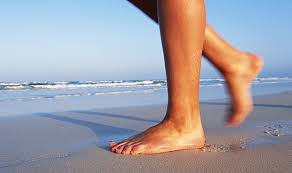
Walking on the warm sand with your bare feet demonstrates this type of heat transfer.

a)

conduction

b)

convection

c)

radiation

25.
Ironing a shirt is an example of...
a)
condensation
b)
conduction
c)
convection
d)
radiation
26.
A group of friends gather around a fire to stay warm.
a)
conduction
b)
convection
c)
radiation
27.
You get sunburned due to __________ from the sun.
a)
conduction
b)
convection
c)
radiation
28.
A toaster toasting bread is an example of 
a)
condensation
b)
conductio
c)
convection
d)
radiation
29.
The candle will slowly heat the metal and transfer the heat directly to the mans hand.
a)
conduction
b)
convection
c)
radiation
30.
A chair is placed several feet from a fireplace.  The fireplace has a glass screen.  The side of the chair facing the fireplace gets warm because of 
a)
conduction
b)
convection
c)
radiation
31.
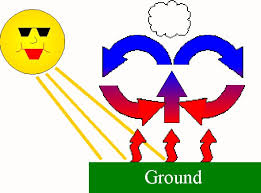
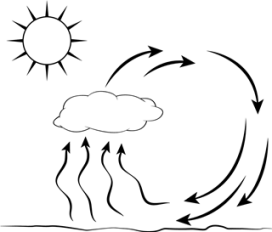
What causes the circulation of air in the atmosphere?
a)
Air in the atmosphere is heated by the sun and sinks to the ground.
b)
The ground is heated by the sun and then heats the air, causing the air to rise.
c)
Air loses heat to the ground and then rises upward to obtain more energy.
d)
The sun heats the clouds which forces the cooler air to move away and sink.
32.
Coriolis effect
a)
caused by Earth's rotation
b)
caused by Earth's revolution
c)
caused by Earth's tilt
d)
caused by Earth's winds
33.
Radiation is transferred by ____
a)
flow of energy
b)
touch
c)
rays and waves 
d)
winds
34.
What is created because land and heats and cools more quickly than the water?
a)
Trade winds
b)
Polar easterlies
c)
Sea and land breezes
d)
Doldrums
35.
Sea breeze
a)
when cool, dense air from over the water flows inland
b)
when warm air from over the water flows inland
c)
when cool, dense air from over the water flows outward
d)
when cool, dense air from over the water flows outward
36.
What causes moving air to be deflected to the right in the northern hemisphere
a)
Maritime tropicals
b)
Air masses
c)
Tradewinds
d)
Coriolis effect
37.
Heated air moves which direction
a)
up
b)
down
c)
right
d)
left
38.
What does this diagram show? 
a)
land breeze
b)
trade winds
c)
sea breeze
d)
air masses
39.
What is the definition of CONDUCTION?
a)
When heat is transferred from objects like rays of light or electromagnetically.
b)
a  hot liquid or air that  expands, becomes less dense, and rises or becomes more dense, and sinks.
c)
When heat transfers from objects that are touching.
d)
When heat transfers through the heater or AC in your house.
40.
Heat is the movement of ______.
a)
radiation
b)
thermal energy
c)
cold
d)
fire
41.
We depend on what kind of heat transfer when riding in a hot air balloon?
a)
Convection
b)
Conduction
c)
Radiation
42.
The Coriolis effect causes ___________.
a)
the Earth to rotate on its axis
b)
continental deflection
c)
global winds and surface currents to move in a curved path instead of a straight line
d)
global winds and deep ocean currents to move in a curved path instead of a straight line.
43.
Which absorbs heat faster?
a)
land
b)
water
c)
they heat up at the same rate
44.
Which loses heat faster?
a)
land 
b)
water
c)
they lose heat at the same rate
45.
Warm air _________ and cool air ___________.
a)
rises/sinks
b)
sinks/rises
46.
Heat transfer that occurs when two objects are touching each other.
a)
convection
b)
conduction
c)
radiation
47.
Heat transfer that uses magnetic waves (and not matter) is called _________.
a)
conduction
b)
radiation
c)
convection
48.
Heat transfer using the movement of fluids or gases is called ________.
a)
radiation
b)
conduction
c)
convection
d)
breathing
49.
Which statement correctly describes the properties of cold air?
a)
less dense and less pressure than warm air
b)
more dense and more pressure than warm air
c)
more dense and less pressure than warm air
d)
less dense and more pressure than warm air
50.

Wind is air moving from areas of which direction of pressure?

a)

high to low pressure

b)

low to low pressure

c)

high to high pressure

d)

low to high pressure

51.
What causes warm air to rise?
a)
the fact that it's less dense than cold air 
b)
The fact that it weighs more than cold air 
c)
The fact that it has higher pressure than cold
d)
the fact that its more dense than cold air 
52.
What creates the air pressure difference between the equator and the poles?
a)
The length of the seasons
b)
The shape of the earth 
c)
the duration of the solar year
d)
The amount of direct sunlight each area receives 
53.

When air moves it is called

a)

rain

b)

wind

c)

storms

d)

waves

54.

What causes wind to blow?

a)

Differences in longitude

b)

Shock waves from clouds

c)

Differences in air pressure

d)

The rotation of the earth

55.

What causes differences in air pressure?

a)

even heating of the Earth

b)

Even cooling of the earth

c)

uneven heating of the earth

d)

global warming

56.
What is responsible for warming the Earth’s surface and creating wind?
a)
The Moon
b)
Earth's interior (inside)
c)
Coriolis effect
d)
The Sun
57.

What causes warm air to rise?

a)

warm air is less dense than cold air

b)

it weighs more than cold air

c)

it has higher pressure than cold air

d)

warm air is more dense than cold air

58.

Local winds blow over:

a)

small areas and short distances

b)

long distances and large areas

c)

the poles

d)

the equator

59.

Air at the poles is colder and denser so it_______________.

a)

rises

b)

circulates

c)

stagnates

d)

sinks

60.

Air usually moves from areas of high pressure to areas of

a)

warm air

b)

cool air

c)

low pressure

d)

jet streams

61.

What causes differences in air pressure?

a)

uneven heating of the Earth's surface

b)

wind

c)

the rotation of the Earth

d)

storms

62.

What are the two main types of wind patterns?

a)

sea and land

b)

hot and cold

c)

cold and hot

d)

local and global

63.

The movement of air between the equator and the poles create what type of wind patterns?

a)

global

b)

local

c)

hurricanes

d)

air pressure

64.

What type of wind pattern is shown in the picture?

a)

global

b)

local

c)

storm

d)

jet stream

65.

Jet streams are examples of these types of wind patterns

a)

local

b)

storm

c)

gales

d)

global

66.

Strong air currents that circle the globe several miles above the Earth are called

a)

storms

b)

troposphere

c)

jet streams

d)

local winds

67.

Some areas of the Earth's surface heat up more than others, this is called

a)

the jet stream

b)

uneven heating

c)

global warming

d)

global winds

68.

How does uneven heating cause wind?

a)

uneven heating causes differences in air pressure which causes air to move

b)

uneven heating causes waves on the ocean which causes air to move

c)

uneven heating causes the jet streams to move creating wind

d)

uneven heating does not cause wind

69.

Wind patterns that affect small areas and change often are called

a)

global wind patterns

b)

jet streams

c)

local wind patterns

d)

storm winds

70.

Winds that affect all of the Earth's atmosphere and produce steady, predictable winds are

a)

hurricanes

b)

local wind patterns

c)

tornadoes

d)

global wind patterns

71.
What happens to the density (thickness)/air pressure of the air as you increase in altitude?
a)
density increases
b)
density decreases
c)
density stays the same
d)
density disappears