Wayground logo

Free Printable Worksheets

Font size

S
M
L
XL
Worksheets

Study Guide for Chapters 1-8

Total questions: 118

Worksheet time: 3hrs 56mins

Name
Class
Date
1.
An education guess about the results of an experiment is a _____________________
a)
Conclusion
b)
Hypothesis
c)
Experimental Plan
d)
Materials List
2.
To make sure your experimental results are reliable, you should:
a)
Write more than one hypothesis
b)
Use more than one variable
c)
Only do the experiment one time
d)
Repeat the experiment many times
3.
Testing a hypothesis often involves a(n):
a)
answer
b)
experiment
c)
problem
d)
safety check
4.
The graph below shows atmospheric carbon dioxide levels since the year 1880.Which of the following conclusions can be drawn from this graph
a)
 Atmospheric carbon dioxide levels are responsible for global temperature change.
b)
 Atmospheric carbon dioxide levels have been rising at about the same rate for the past century.
c)
Atmospheric carbon dioxide levels have remained the same over the past century.
d)
 Atmospheric carbon dioxide levels have been rising at an increasingly higher rate as the past century has progressed.
5.
An osmosis investigation was conducted using chicken eggs to represent cells with semipermeable membranes. The mass of each egg was measured to determine how much water diffused into or out of the eggs. The eggs were first soaked in vinegar to dissolve the shell. Each egg was then placed in one of three different solutions for 24 hours. The table below shows the results of the investigation. Based on this experiment, which of the following should be inferred about cells with semipermeable membranes?
a)
Substances other than water may also cross the cell membrane.
b)
Substances other than water may block pores in the cell membrane.
c)
 Water enters the cell when placed in environments of high water concentration.
d)
Water leaves the cell when placed in environments with a low concentration of solutes
6.
In order to be accepted, a scientific theory must be
a)
 widely tested and supported by extensive data
b)
 based on the results of a single experiment
c)
 controversial and cause debate
d)
 in line with all previous historical ideas
7.
An experiment was carried out to determine whether drinking caffeinated soda increases pulse rate. The pulse rates of two groups of people at rest were measured. Group A was then given caffeinated soda and group B was given caffeine-free soda. One hour after drinking the soda, the pulse rates were measured. The participants in the experiment were all the same age, and they were all given the same amount of soda. The dependent variable in this experiment is the
a)
type of soda given to each group
b)
amount of soda given to each group
c)
 pulse rate of each group
d)
age of participants in each group
8.

Write in scientific notation. 0.000024

a)

2.4 x 10⁴

b)

2.4 x 10⁵

c)

2.4 x 10⁻⁴

d)

2.4 x 10⁻⁵

9.
Which number is correctly written in scientific notation?
a)
5.67 x 10⁵
b)
56.7 x 10³
c)
0.567 x 10⁶
10.
What is scientific notation?
a)
A long way to write really short  numbers
b)
A short way to write really long numbers
c)
I don't know...
d)
None of the above
11.
Scientific Notation is made up of two number parts. The second part is a power of base 10.
a)
True
b)
False
12.
How many significant figures does the following number have: 0.002040
a)
6
b)
4
c)
3
d)
2
13.
How many significant figures does the following number have: 100.00210
a)
7
b)
5
c)
10
d)
8
14.
Multiply:
(3.4 x 10⁵)(1.2 x 10⁻³)
a)
4.08 x 10⁻⁸
b)
4.8 x 10²
c)
4.08 x 10²
d)
4.08 x 10⁻¹⁵
15.
Divide:
(6.9 x 10⁷) / (2.3 x 10⁻³)
a)
3 x 10¹⁰
b)
3 x 10⁴
c)
3 x 10⁻⁴
d)
3 x 10-11
16.

What is the correct answer for: 1.31 cm x 2.3 cm

a)

3.013

b)

3.01

c)

3.02

d)

3.0

17.

What is the correct answer for: 12.00 m +15.001m =

a)

27.001

b)

27.00

c)

27.0

d)

27

18.

What is the correct answer to: 6.201 cm + 7.4 cm + 0.68 cm +12.0 cm =

a)

26.281

b)

26.28

c)

26.2

d)

26.3

19.

What is the correct answer for: 20.2 cm ÷ 7.41 s

a)

2.726045884

b)

2.72604

c)

2.73

d)

2.7

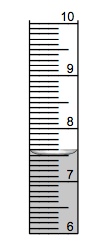
20.
What is the volume of the liquid in this graduated cylinder?
a)
8.5 mL 
b)
7.5 mL 
c)
8 mL 
d)
.1 mL
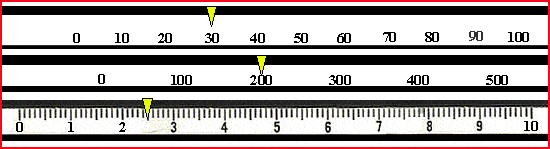
21.
What is the mass on the triple beam balance? 
a)
232.5
b)
237.0
c)
750.
22.
The amount of matter or "stuff" in an object
a)
Mass
b)
Volume
c)
Length
d)
Weight
23.
Units used to measure Mass of an object
a)
Centimeters
b)
Milliliters
c)
Grams
d)
Volume
24.
How many liters are in a kiloliter?
a)
10
b)
100
c)
1000
d)
10000
25.
Measure to the nearest milliliter.
a)
73 mL
b)
73.0 mL
c)
76 mL
d)
76.1 mL
26.
How many cm's is in a meter?
a)
1000
b)
10
c)
100
d)
1
27.
1000 millilters = _____ 
a)
5 liters
b)
2 liters
c)
10 liters 
d)
1 liter
28.

The chart below lists some substances and their symbols. How many of these substances are examples of elements?

a)

1

b)

2

c)

3

d)

4

29.

What makes elements and compounds different from mixtures? Elements & compounds-

a)

have a constant composition (pure substances)

b)

are made of gases

c)

Will not change when heated

d)

conduct electric current

30.

What is the relationship between molecules and atoms?

a)

Molecules are combinations of two or more atoms.

b)

Molecules are the parts that make up atoms

c)

Molecules are the gaseous parts of atoms

d)

Molecules are atoms that have a positive charge

31.
Which of the following represents an element?
a)
H2O
b)
H2
c)
NaCl
d)
CaCO3
32.
Which of the following is not a compound?
a)
HCl
b)
Cl
c)
NaCl
d)
CO2
33.
Salt has a chemical formula of NaCl.  Salt is a...
a)
Compound
b)
Element
c)
Mixture
d)
None of the Above
34.
In a reaction A + B ----> C,  reactant A has 5g and product  C has 9g. How many grams does reactant B should have? 
a)
4g
b)
5g
c)
9g
d)
14g
35.
Which is Chemical Equation is Balanced?
a)
CH₄+O₂------CO₂+2H₂O
b)
H₂+O₂-----2H₂O₄
c)
4Al+3O₂-----2Al₂O₃
36.
Is this equation balanced or unbalanced? 
2Fe2O3 + 3C --> 4Fe + 3 CO2
a)
balanced
b)
unbalanced
37.
If a reaction starts with a total 75g of reactants it should produce 
a)
a total of 40g of products
b)
a total of 75g of products
c)
a total of 180 g of products
d)
None of the above
38.
In the reaction AB-----> A + B reactant AB has 12g and product B has 5g. How many grams should product A have?
a)
17g
b)
2g
c)
7g
d)
None of the above
39.
Bob puts 200 grams of ice into a pitcher with 900 grams of water. He gets distracted and comes back later to find that the ice has melted in the water. How many grams of water does Bob now have in the pitcher?
a)
200 g
b)
700 g
c)
1,100 g
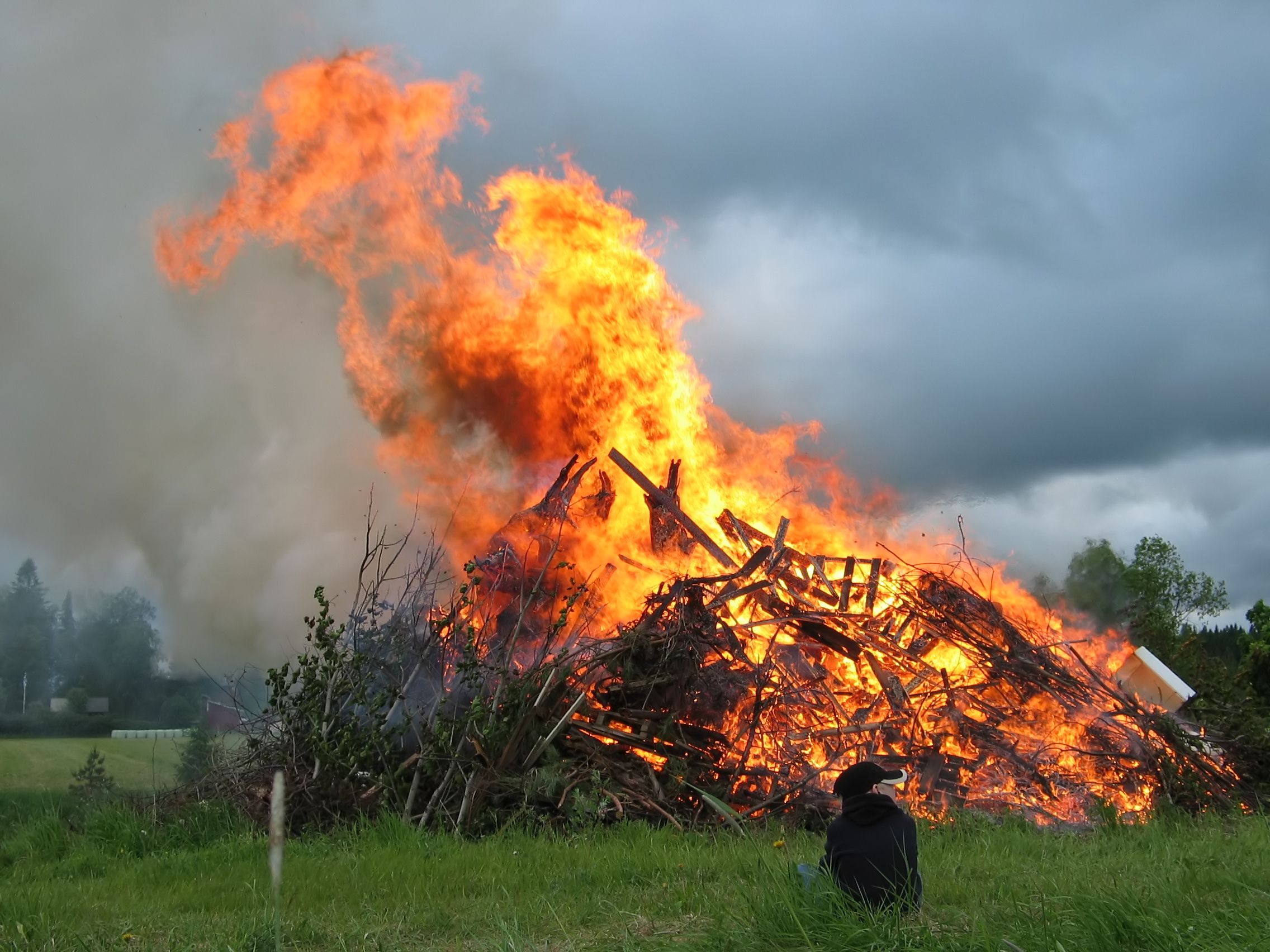
40.

Wood that is burning in a brush pile has heat, and produces ashes.

a)

Physical

b)

Chemical

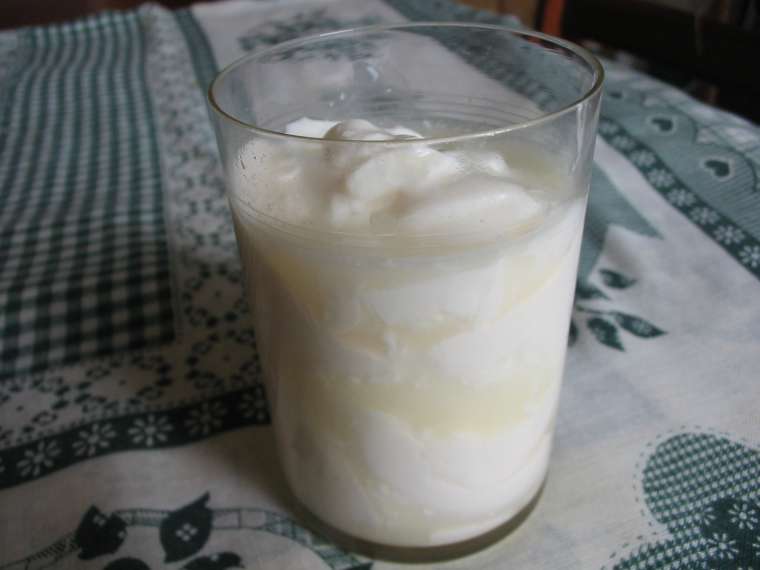
41.

Is milk going sour a physical or chemical change?

a)

Physical

b)

Chemical

42.
Is freezing juice a physical or chemical change?
a)
Physical Change
b)
Chemical Change
43.
A change that alters the physical properties of a substance without changing its composition.
a)
Physical Change
b)
Chemical Change
44.
Water freezing into ice is an example of a...
a)
Physical Change
b)
Chemical Change
45.
Any change in the state of matter of a substance is a...
a)
Physical Change
b)
Chemical Change
46.

What is the correct SI unit for energy? (provide the correct name and symbol)

a)

calorie, C

b)

temperature, C

c)

Joule, J

d)

Kelvin, K

47.

What is the correct equation that should be used for solving heat capacity problems that involve one substance?

a)

m = (Q)(C)(delta T)

b)

C = (m)(Q)(delta T)

c)

Q = (m)(C)(delta T)

d)

delta T = (m)(Q)(C)

48.

656.7 J of energy are added to a sample of iron and the temperature of the sample increases by 22.36oC. What must be the mass of this iron sample? (CFe = .4494 J/g * oC)

a)

65.34 g

b)

89.36 g

c)

48.36g

d)

35.21g

49.

a 125.3 g sample of aluminum at a temperature of 36.2oC is placed in a freezer. What will be the final temperature of the aluminum sample if the freezer extracts 896.3 j of energy? (CAl = .9025 j/g*oC)

a)

7.9 oC

b)

-7.9 oC

c)

44.1 oC

d)

28.3 oC

50.

What is energy?

a)

moving energy

b)

stored energy

c)

renewable energy

d)

The ability to do work.

51.

What is potential energy?

a)

moving energy

b)

stored energy

c)

renewable energy

d)

non renewable energy

52.

What is kinetic energy?

a)

moving energy

b)

potential energy

c)

stored energy

d)

renewable energy

53.

What is NOT a renewable energy source?

a)

coal

b)

wind

c)

solar

d)

water

54.

Which of these things are examples of renewable energy sources?

a)

wind

b)

solar

c)

water

d)

oil

55.

Which of the following transforms energy from uranium atoms into electrical energy?

a)

magnetic fields

b)

solar panels

c)

nuclear fission

d)

satellite dish

56.

How many protons are in Gold

a)

79

b)

197

c)

118

d)

276

57.

How many electrons are in Gold

a)

79

b)

118

c)

197

d)

276

58.

How many neutrons are in Gold

a)

118

b)

79

c)

197

d)

276

59.

Subatomic particles with a negative charge

a)

Electrons

b)

Neutrons

c)

Protons

d)

Quarks

60.
subatomic particles found on the outermost shell & responsible for the atom's reactivity
a)
neutrons
b)
valence electrons
c)
isotopes
d)
ions
61.
Subatomic particles with a positive charge
a)
neutrons
b)
atomic mass
c)
protons
d)
isotopes
62.
Value representing the number of protons in an element
a)
Atomic Mass
b)
Mass Number
c)
Valence Electrons
d)
Atomic Number
63.
Subatomic particles that are neutral in charge
a)
Neutrons
b)
Protons
c)
Nucleus 
d)
Electrons
64.

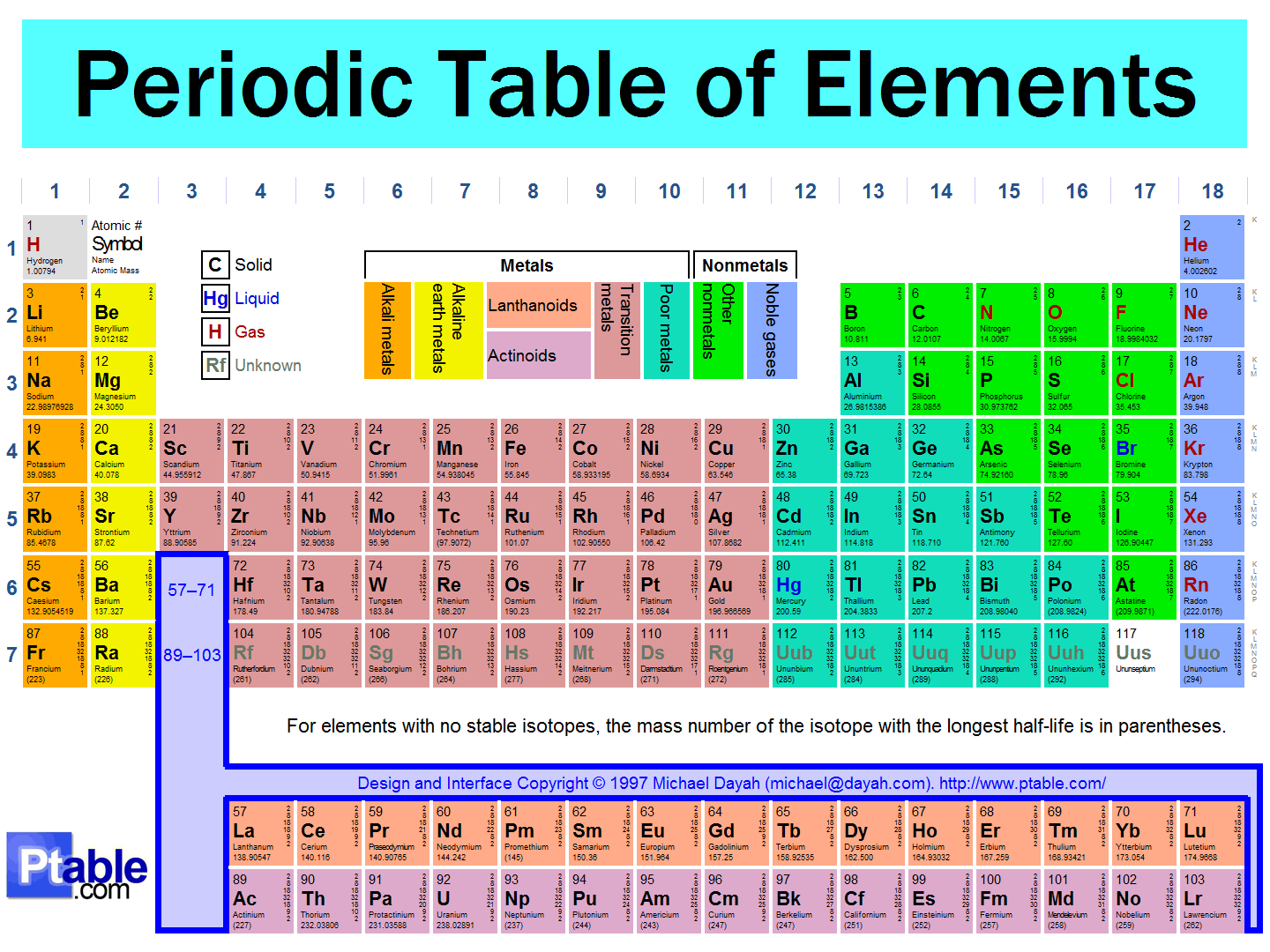
What does the number 11 stand for in the Sodium block?

a)

atomic number

b)

atomic weight

c)

Stranger Things

65.

What does the K stand for in the Potassium block?

a)

Atomic number

b)

Atomic weight

c)

Symbol for the atom

66.

What does the 40.08 stand for in the Calcium block?

a)

Atomic number

b)

Atomic weight

c)

Atomic symbol

67.

The periodic table is a chart that organizes the elements based on their atomic properties. Elements in the periodic table are organized according to the periodic law. The periodic law states that chemical and physical properties of elements are periodic functions of their atomic numbers (the number of protons in the nucleus). As the atomic number of elements increases, different elements display similar characteristics at regular intervals.


Periodic law states that elements are arranged _______________________________________________________________.

a)

in alphabetical order.

b)

from largest to smallest.

c)

as periodic functions of their atomic numbers.

d)

there is no rhyme or reason.

68.
The horizontal row on the periodic table is called a
a)
group
b)
family
c)
period
d)
atomic number
69.
A vertical column is called...
a)
group
b)
tower
c)
period
d)
crew
70.
Which of the following is the most metallic element in period 3?
a)
Boron (B)
b)
Sodium (Na)
c)
Argon (Ar)
d)
Silicon (Si)
71.
Which of these element is the least metallic?
a)
Potassium (K)
b)
Carbon (C)
c)
Sulfur (S)
d)
Neon (Ne)
72.
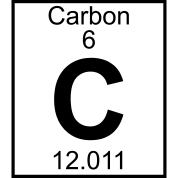
What does the 6 represent?
a)
atomic mass
b)
atomic number
c)
element name
d)
chemical symbol 
73.
What does the C represent?
a)
atomic mass
b)
atomic number
c)
element name
d)
chemical symbol 
74.
24.1% of all the isotopes of a an element have a mass of 75.23 amu, 48.7% have a mass of 74.61 amu, and 27.2% have a mass of 75.20 amu.
What is the average mass of this element?
a)
74.92 amu
b)
24.97 amu
c)
75.01 amu
d)
74.51 amu
75.
Calcium has three different isotopes. One has a mass of 35.00 amu; another has a mass of 41.00 amu; and another has a mass of 40.00 amu. Which isotope is the most abundant of the three?
a)
40.00 amu
b)
41.00 amu
c)
35.00 amu
d)
impossible to tell
76.
What number indicates the nucleus?
a)
1
b)
2
c)
3
d)
4
77.
Which of the following is an ionic compound:
a)
CH4
b)
I2
c)
LiBr2
d)
CO
78.
What would be the proper chemical formula for combining Al3+ and Cl- :
a)
AlCl3
b)
Al3Cl
c)
AlCl
d)
Al3Cl3
79.
Name the following ionic compound: BeCl2
a)
beryllium chlorine
b)
beryllium II chloride
c)
beryllium chloride
d)
beryllium dichloride
80.
Name the following ionic compound: MgSO4
a)
magnesium sulfoxide
b)
magnesium sulfide
c)
magnesium sulfate
d)
magnesium oxide
81.
Name the following ionic compound: LiNO3
a)
lithium nitrate
b)
lithium III nitrate
c)
lithium nitride
d)
lithium oxide
82.

Which of the following is a binary

compound?

a)

O2

b)

HCN

c)

H2SO4

d)

H2S

e)

NaOH

83.

The correct name for LiCl is _______.

a)

lithium monochloride

b)

lithium(I) chloride

c)

monolithium chloride

d)

lithium chloride

e)

monolithium monochloride

84.
Which of the following is considered an empirical formula?
a)
CH3COOH
b)
C6H12O6
c)
H2O
85.
A compound consists of 72.2% magnesium(Mg) and 27.8% nitrogen(N) by mass. What is the empirical formula?
a)
Mg4N3
b)
MgN2
c)
Mg3N2 
d)
MgN
86.
What is the definition of molar mass?
a)
number of grams per one mole of a substance
b)
whole number ratio that is a multiple of a chemical formula
c)
simplest, whole number ratio of a chemical formula
d)
6.02 x 10^23 particles per one mole of a substance
87.
What is the molar mass of AuCl3?
a)
96 g
b)
130 g
c)
232.5 g
d)
303.3 g
88.
What is the definition for Avogadro's number?
a)
number of grams per one mole of a substance
b)
whole number ratio that is a multiple of a chemical formula
c)
simplest, whole number ratio of a chemical formula
d)
6.02 x 10^23 particles per one mole of a substance
89.
Which would have more atoms?
a)
1 mole of Li
b)
1 mole of Au
c)
1 mole of Si
d)
None, all are equal
90.
How many moles are present in 32.3 grams of carbon dioxide (CO2)?
a)
44.01 moles
b)
1421.52 moles
c)
32.3 moles
d)
0.73 moles
91.
What is the mass in grams of 5.90 mol C8H18?
a)
.0512 g
b)
19.4 g
c)
673 g
d)
389 g
92.
What is the percent by mass of oxygen in MgO?
a)
20%
b)
40%
c)
50%
d)
60%
93.
What is the percent by mass of calcium in CaF2 (gram-formula mass = 78 g/mol)?
a)
24%
b)
49%
c)
51%
d)
65%
94.
In this image, the information in red is called the_______.
a)
Products
b)
Reactants
c)
Chemical Subscript
d)
Ingredients
95.
In this image, the information to the right of the arrow (in black) is called the_______.
a)
Product
b)
Reactant
c)
Chemical Subscript
d)
Final chemical
96.
What is the arrow in a chemical equation say to us as chemists...
H2 + O --> H2O
a)
Reactants
b)
Products 
c)
"Makes" or "Yields" 
d)
Chemical Equation 
97.
Is the following equation balanced or unbalanced ? 
Al + O2 --> Al2O3
a)
Balanced
b)
Unbalanced
98.
Is the following equation balanced or unbalanced ? 
N2 +3 H2 --> 2NH3
a)
Balanced
b)
Unbalanced
99.
Balance this equation,            Al2O3 ---> Al + O2 
a)
Cannot be balanced
b)
2Al2O3 ---> 2Al + 3O2 
c)
2Al2O3 ---> 4Al + 3O2 
d)
3Al2O3 ---> 2Al + O2 
100.

What is the mass of one mole of silver?

a)

32.06 g

b)

107.87 g

c)

14.01 g

d)

22.99 g

101.

How many molecules of water are in a 821.3 g sample?

a)

45.58 molecules

b)

8.232 x 1025 molecules

c)

8.909 x 1027 molecules

d)

2.744 x 1025 molecules

102.

What is the mass of 4.98 x 1024 atoms of Zn?

a)

541 g

b)

8.27 g

c)

.122 g

d)

4.59 x 1046 g

103.

How many atoms are in 1 mole of any material?

a)

63.584

b)

12

c)

6.022 x10²³

d)

6 x10¹²

104.

How many atoms are in 4.5 moles of copper?

a)

4.5 atoms

b)

6.022 x10²³ atoms

c)

2.7 x1024 atoms

d)

1.34 x10²³

105.
What is the first thing you must do to solve a stoichiometry problem?
a)
Write a Balanced Equation
b)
Panic
c)
Write an Unbalanced Equation
d)
Avogadro's Number
106.
Balance the following reaction :
 
CaC₂(s)   +   H₂O(l)   -->   C₂H₂(g)   +   Ca(OH)₂(aq)
a)
1,2,2,2
b)
1,2,1,1
c)
2,1,1,1
d)
2,1,2,1
107.
What is the mole ratio of H2O to H3PO4 in the following chemical equation?   P4O10 + 6 H2O --> 4 H3PO4 
a)
6:4
b)
4:6
c)
1:3
d)
3:1
108.
2Al + 3H2SO4 -> Al2(SO4)3 + 3H2
How many grams of aluminum sulfate would be formed if 250g H2SO4 completely reacted with aluminum?
a)
0.85 g
b)
290 g
c)
450 g
d)
870 g
109.
For the reaction represented by the equation Cl2 + 2KBr → Br2 + 2KCl, how many grams of potassium chloride can be produced from 356 grams potassium bromide?
a)
749 g
b)
225 g
c)
479 g
d)
814 g
110.

A student burns 1.50 mol C3H8 according to the following reaction:

C3H8 + 5O2 → 3CO2 + 4H2O

How many grams of carbon dioxide are produced?

a)

44.0 g

b)

66.1 g

c)

132 g

d)

198 g

111.
CH4  +  2O2  →  CO2  +  2H2O
24 grams of CH4 was added to the above reaction. Calculate the theoretical yield of CO2.
a)
66 grams
b)
132 grams
c)
33 grams
d)
8.72
112.

When reacting Na with Cl2, we calculated that the theoretical yield should be 13 grams. Our actual yield was 12.5 grams. What is the percent yield?

a)

90.4%

b)

104%

c)

96.15%

d)

1.04%

113.
The SI unit of heat and energy is the __________.
a)
calorie
b)
heat
c)
joule
d)
watt
114.
ΔH value in an endothermic reaction is a positive number.
a)
True
b)
False
115.
Enthalpy
a)
heat content of a system, at a constant pressure
b)
reaction that gives heat to the surroundings
c)
part of the Universe that is being studied
d)
temperature of the system
116.

Endothermic Reaction

a)

reaction that takes heat from the surroundings

b)

reaction that gives heat to the surroundings

c)

reaction at constant pressure

d)

reaction at a constat speed

117.

Exothermic Reaction

a)

reaction that gives heat to the surroundings

b)

reaction that takes heat from the surroundings

c)

reaction at constant pressure

d)

reaction at a constat speed

118.

Define the term Exothermic by picking the correct statements

a)

Products have less energy than the reactants

b)

ΔH is negative

c)

ΔH is positive

d)

Energy is given out to the surroundings (temperature goes up).

e)

products have more energy than the reactants