wayground logo

Free Printable Worksheets

Font size

S
M
L
XL
Worksheets

Arthropods and Echinoderms Test 2020

Total questions: 80

Worksheet time: 1hrs 28mins

Name
Class
Date
1.
What type of environments do arthropods live?
a)
Marine
b)
Freshwater
c)
Land
d)
All of the above
2.
Spiders, ticks, scorpions all belong to...
a)
Crustacean
b)
Arachanids
c)
Chilopoda
d)
Insecta
3.
Which group of arthropods have 3 body segments: head, thorax, and abdomen?
a)
Diplopoda
b)
Chilopoda
c)
Arachnids
d)
Insecta
4.
What two characteristics do all Arthropods have?
a)
two legs per body segment
b)
jointed legs and a cephalothorax
c)
three body segments and metamorphosis
d)
jointed legs and segmented bodies
5.
Beetles, grasshoppers and moths are all examples of...
a)
Arachnids
b)
Crustaceans
c)
Insecta
d)
Diplopoda
6.
What type of symmetry do Arthropods have?
a)
Radial
b)
Bilateral
c)
Asymmetrical
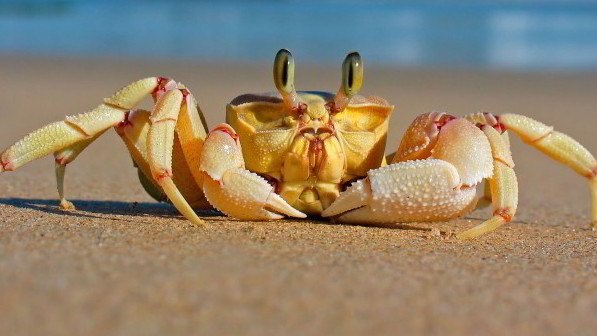
7.
Lobster, shrimp, and crabs are examples of what group of Arthropods?
a)
Chilopoda
b)
Diplopoda
c)
Crustaceans
d)
Arachnida
8.
All arthropods have segmented bodies, jointed appendages, and ________________. 
a)
tails
b)
lungs
c)
wings
d)
an exoskelton
9.
?
a)
Crustacea
b)
Arachnida
c)
Insecta
d)
Myriapoda
10.
?
a)
Arachnida
b)
Insecta
c)
Crustacea
d)
Myriapoda
11.
?
a)
Myriapoda
b)
Insecta
c)
Arachnida
d)
Crustacea
12.
All spiders are:
a)
vegetarians
b)
omnivores
c)
herbivores
d)
carnivores
13.
The removing and replacing of old exoskeleton is called
a)
metamorphosis
b)
replacement
c)
molting
d)
exoing
14.
The stages of incomplete metamorphosis are
a)
egg, larva, pupa, adult
b)
egg, larva, nymph, adult
c)
egg, nymph, adult
d)
egg, larva, adult
15.
The stages of complete metamorphosis are
a)
egg, larva, pupa, adult
b)
egg, larva, nymph, adult
c)
egg, nymph, adult
d)
egg, larva, adult
16.
Arachnids are the largest class in the animal kingdom.
a)
true
b)
false
17.

What has 4,200 species?

a)

Beetles

b)

Mammals

c)

Ants

d)

Insects

18.

What has 388,000 species?

a)

Beetles

b)

mammals

19.

What is this?

a)

Tribal centipede

b)

Masked cephalopod

c)

Peacock spider

20.

What is this?

a)

Horseshoe crab

b)

Trilobite

c)

Marine spider

21.

What is this baby cricket?

a)

A larva

b)

A nymph

c)

A pupua

d)

A adult

22.
A characteristic of an echinoderm would be..
a)
It's a vertabrate
b)
Only one cell layer
c)
Vascular system
d)
Slow regeneration
23.
Which is an example of an Asteroidea member?
a)
sea star
b)
sea cucumber
c)
sea urchin 
d)
sand dollar 
24.
Which is an example of a Holothuroidea member? 
a)
sea star
b)
sea cucumber
c)
sand dollar
d)
sea urchin 
25.
Which is an example of an Echinoidea member? 
a)
sea star
b)
sand dollar
c)
sea cucumber
d)
sea lilies 
26.
Which is an example of a crinoid? (lily-like)
a)
brittle star
b)
sear star
c)
sea lily
d)
sea cucumber
27.
Which side of the sea star is the top side?
a)
oral surface
b)
aboral surface
28.
What are the 5 class names for Echinoderms?
a)
Star brittle, sea urchins, sea horse, sea cucumber, starfish
b)
Starfish, sea urchin, star brittle, sea cucumber, feather star
c)
Fish, sea brittle, sea urchin, sea horse, sea cucumber, starfish
d)
None of the above
29.
What does the term echinoderm mean?
a)
tube feet
b)
star shaped
c)
spiny skin
d)
stomach foot
30.
A seastar can hold tightly to the surface it is touching because of the _____
a)
sieve
b)
endoskeleton
c)
tube feet
d)
eye spots 
31.
By what process will starfish regrow an arm torn off by a predator?
a)
Reconstructive meiosis
b)
Regeneration
c)
Tissue regenesis
d)
Mitotic restoration
32.
What is this a picture of?
a)
Sand dollar
b)
Sea horse
c)
Sea urchin
d)
Starfish
33.
What are these?
a)
Mouth
b)
Anus
c)
Madreporite
d)
Tube foot
34.

The sea cucumber does what ingenious move to protect its self from predators?

a)

Shoots poison

b)

Runs away

c)

Releases internal organs

d)

Produces an ink screen

35.

Which of the following is NOT a characteristic of arthropods?

a)

Exoskeleton

b)

Jointed appendages

c)

Segmented body

d)

Endoskeleton

36.

Which of the following is NOT a function of the exoskeleton

a)

Protection

b)

Prevents water loss

c)

Attachment of muscles

d)

Aids in digestion

37.

Which of the following does not belong in subphylum Crustacea?

a)

Crayfish

b)

Crabs

c)

Shrimp

d)

Millipedes

38.

This term means arthropods lose their exoskeleton to grow larger

a)

molt

b)

melt

c)

break

d)

slide

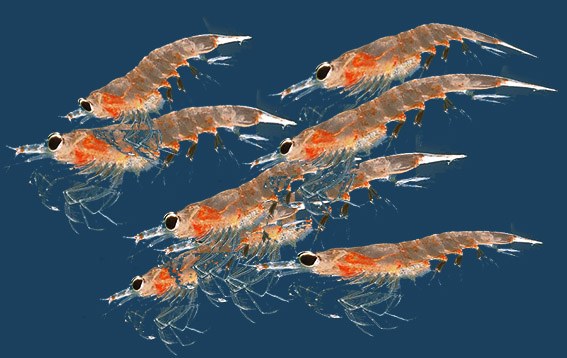
39.

this crustacean is common food for whales and fish in polar waters

a)

amphipods

b)

copepods

c)

krill

d)

barnacles

40.

decapods have ______ legs.

a)

8

b)

10

c)

12

d)

20

41.

The term 'arthropod' literally means

a)

bent leg

b)

jointed foot

c)

bent foot

d)

jointed skeleton

42.

Barnacles are arthropods that are:

a)

Sessile

b)

Microscopic

c)

Benthic

d)

Toxic

43.

The phylum arthropoda is the largest animal group on the planet.

a)

True

b)

False

44.
Arthropods make up about _______ of all animals on Earth. 
a)
80%
b)
90%
c)
50%
d)
10%
45.
Which group of arthropods have 3 body segments: head, thorax, and abdomen?
a)
Diplopoda
b)
Chilopoda
c)
Arachnids
d)
Insecta
46.
Why do arthropods have to shed their exoskeletons?
a)
it wears out
b)
they don't shed
c)
it limits the size they can grow
d)
to go from water to land environments
47.
What is the advantage of metamorphosis?
a)
It enables arthropods to exchange genetic information
b)
It enables arthropods to grow larger
c)
It reduces competition
d)
It reduces disease
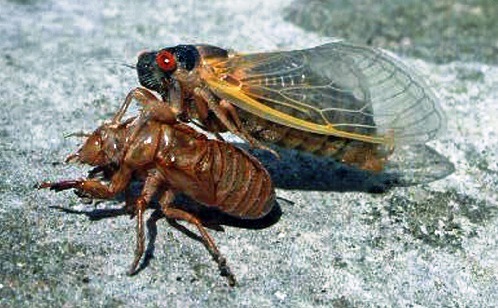
48.
This process is...
a)
Hibernation
b)
Metamorphasis
c)
Life Cycle
d)
Polination
49.
What is one way insects are harmful?
a)
They spread diseases.
b)
They eat other insects.
c)
They make honey, beeswax, and silk.
d)
They are food for other animals. 
50.
Which of the following is NOT a benefit of insects?
a)
biological control
b)
disease carriers
c)
pollinators
d)
source of food
51.
Which group contains the largest number of animal species?
a)
Arthropods
b)
fish
c)
vertebrates
d)
jellyfish
52.
An insect that looks like a small adult when it hatches from the egg is called a
a)
larva
b)
nymph
c)
pupa
d)
adult
53.

Where is an exoskeleton located?

a)

in the head

b)

inside the body

c)

inside the bones

d)

outside the body

54.

How are arthropods grouped together?

a)

by the way they see

b)

by the kinds of body parts they have

c)

by number of legs

d)

by their shells

55.

A feeler that senses touch, taste, or smell is known as a(n)

a)

mandible

b)

antenna

c)

chelicerae

d)

cephalothorax

56.

A mouth part that can pierce and suck food is called a(n)

a)

mandible

b)

antenna

c)

chelicerae

d)

cephalothorax

57.

An animal with six legs and two antennae is called a(n)

a)

insect

b)

cephalothorax

c)

gills

d)

antenna

58.

How many pair(s) of antennae do insects have?

a)

one

b)

two

c)

none

d)

four

59.

Which letter represents the caterpillar becomes a pupa?

a)

A

b)

B

c)

C

d)

D

e)

E

60.

One of these is not a characteristic that Arthropods share

a)

segmented body with specialized parts

b)

jointed legs

c)

radial symmetry

d)

exoskeleton

e)

well developed nervous system

61.

Which of these arthropods has two pairs of antennae, gills, and eyes on eyestalks

a)

centipedes and millipedes

b)

crustaceans

c)

arachnids

d)

insects

62.

Which of these arthropods has a cephalothorax, an abdomen, and claw-like mouthparts

a)

centipedes and millipedes

b)

crustaceans

c)

arachnids

d)

insects

63.
body of Crustacea and Arachnids
a)
head, thorax, abdomen
b)
cephalothorax, abdomen
64.
Organs on the tip of the abdomen on spiders used to create silk threads
a)
swimmerets
b)
spinnerets
c)
chelicera
d)
chelipeds
65.

This s the study of insects:

a)

Arthropoloy

b)

Entomology

c)

Insectology

d)

Herpetology

66.
What echinoderm is this? 
a)
sand dollar
b)
sea urchin 
c)
sea star
d)
brittle star
67.
The larva of echinoderms have _____ symmetry.
a)
Asymmetrical
b)
Bilateral
c)
Radial
d)
None
68.
Which of the following organisms is NOT an echinoderm?
a)
sea cucumber
b)
sand dollar
c)
nudibranch
d)
brittle starfish
69.
The sievelike, disc-shaped opening in an echinoderm's body through which water enters and leaves is called the _________
a)
Mouth
b)
Anus
c)
Madreporite 
70.

Echinoderms have a system of fluid-filled tubes called the

a)

water vascular system

b)

nervous system

c)

notochord

d)

ampulla

71.

Sand dollars have radial symmetry.

a)

true

b)

false

72.
The larva of echinoderms have _____ symmetry.
a)
Asymmetrical
b)
Bilateral
c)
Radial
d)
None
73.
Tiny pincers that surround the spines that help keep foreign objects off the sea star are called ________
a)
tube feet
b)
pedicellariae
c)
madreporite
d)
ampulla 
74.
What echinoderm is this?
a)
sea urchin 
b)
sea lily 
c)
brittle star
d)
sand dollar 
75.
What echinoderm is this?
a)
sea lily 
b)
sea urchin 
c)
sea cucumber 
d)
sand dollar 
76.

The shell of a sea urchin is called a

a)

quiz

b)

test

c)

sacral

d)

madreporite

77.

Echinoderms have ____________ symmetry.

a)

radial

b)

bilateral

c)

asymmetrical

78.
What does the term arthropod mean?
a)
soft
b)
little rings
c)
jointed foot
d)
cephalization
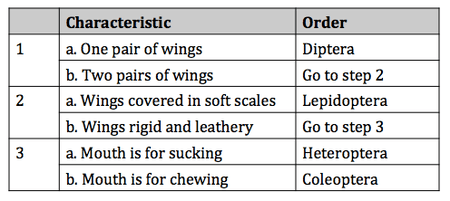
79.
A dichotomous key for insects is given. To what order does an insect with two pairs of scaly wings belong?
a)
Coleoptera
b)
Heteroptera
c)
Diptera
d)
Lepidoptera
80.

Spiders have _______ legs

a)

10

b)

8

c)

6