
 Worksheets
Periodic Table
Total questions: 38
Worksheet time: 24mins
the basic structural unit of matter
atom
matter
element
nucleus
the positively charged subatomic particle contained in the nucleus of an atom
proton
neutron
electron
matter
a subatomic particle, contained in the nucleus of an atom, having the same mass as a proton but no electrical charge
proton
neutron
electron
matter
a negatively charged subatomic particle that orbits the nucleus of an atom
proton
neutron
electron
matter
an arrangement of the elements according to their atomic numbers so that elements with similar properties are in the same column and properties repeat from row to row
Periodic Table of Elements
Atomic Theory
Isotopes
Subatomic Particles
one or two letters that represent the name of an element
element name
element symbol
atomic number
atomic mass
a unique number for each element that equals the number of protons in an atom of that element
element name
element symbol
atomic number
atomic mass
the mass of an atom, calculated by adding the number of protons and neutrons in the nucleus of the atom
element name
element symbol
atomic number
atomic mass
a row on the Periodic Table of Elements
family
period
row
isotope
a grouping of elements based on similar properties, arranged by columns in the periodic table; also known as a group
family
period
row
isotope
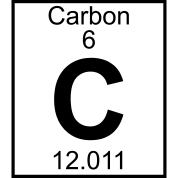
what is the biggest group on the table
metals
nonmetals
metaloids
halogens
what is the name of group number 1
halogens
noble gases
alkali
alkaline earth
what is the name of group number 2
transition metals
halogens
metaloids
alkaline earth
what group number are the halogens
18
1
2
17
what group number are the noble gases
17
18
14
15


What is the atomic mass?
58.693
28


How many neutrons are in Uranium-238?
92
330
146
238

If a copper atom had an overall charge of +2, how many electrons would it have?
33
35.546
27
29
If a copper atom had a neutral charge, how many electrons would it have?
33
35.546
27
29
Why do atoms usually have the same number of electrons as protons?
Because protons are positive and attract negatively charged electrons
Because protons are negative and attract positively charged electrons
Because electrons are negative and are attracted by neutrons
Because electrons are neutral and are attracted by neutrons
Which subatomic particle has the smallest mass?
Protons
Electrons
Neutrons
Why are electrons not included in the calculation of an atom's mass?
Because they are negatively charged
Because they are on the outside
Because they are so small
Because they are in the nucleus
If an atom has more protons than electrons, what is its charge overall?
Negative
Positive
Neutral
If an atom has more electrons than protons, what is the charge overall?
Negative
Positive
Neutral

