wayground logo

Free Printable Worksheets

Font size

S
M
L
XL
Worksheets

Plate Tectonics

Total questions: 162

Worksheet time: 2hrs 12mins

Name
Class
Date
1.
The cracks in Earth's crust are called ___________.
a)
tectonic plates
b)
faults
c)
magma
d)
lava
2.
What are the puzzle pieces of the Earth's surface called?
a)
Tectonic plates
b)
Puzzles
c)
Earthquakes
3.
What is the outermost layer of the Earth called?
a)
Core
b)
Mantle
c)
Crust
4.

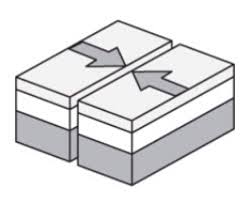
What type of boundary is shown in the diagram?

a)

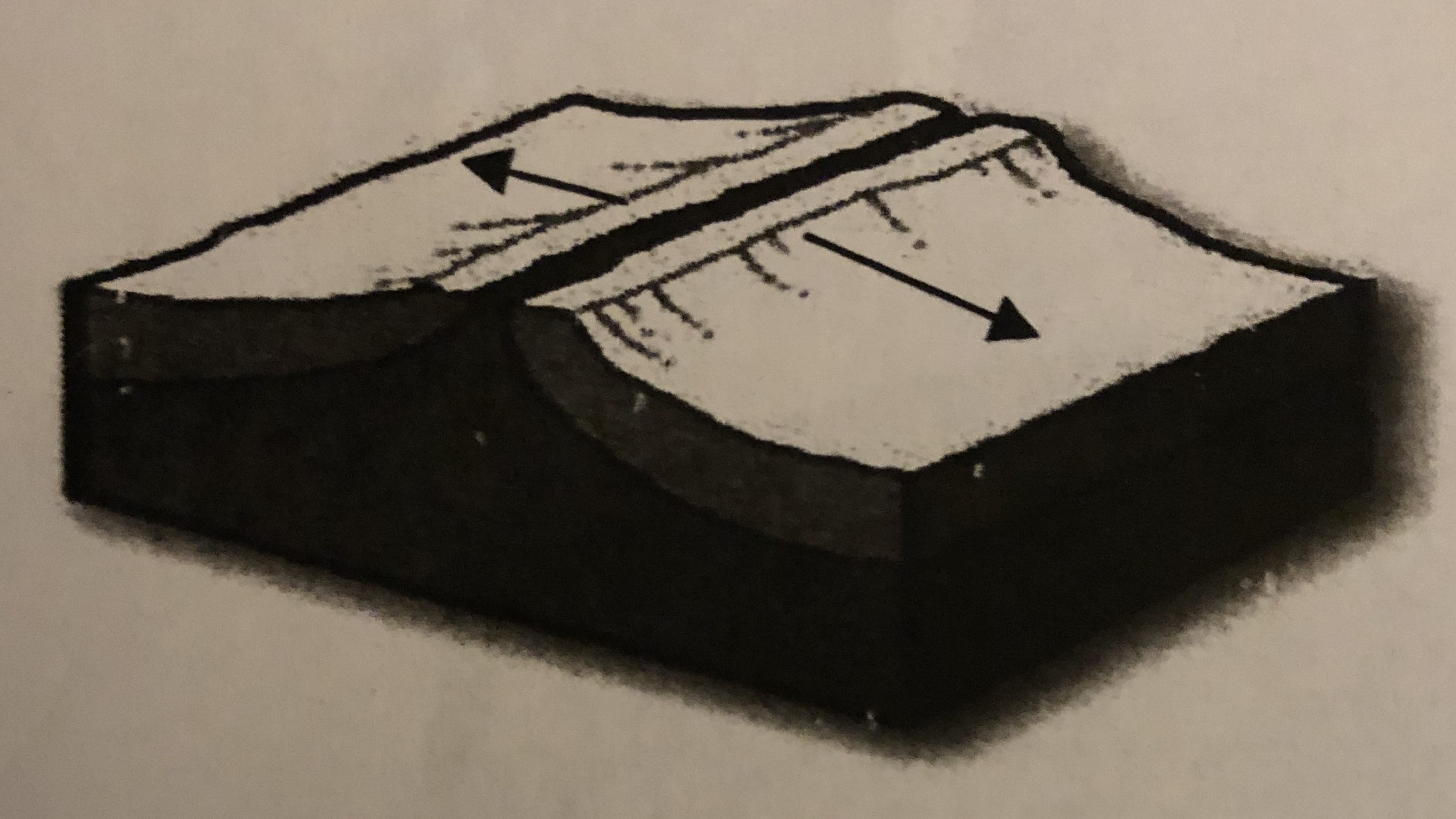
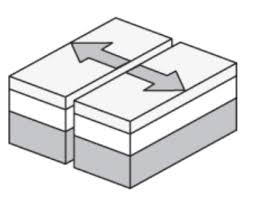
Divergent

b)

Convergent

c)

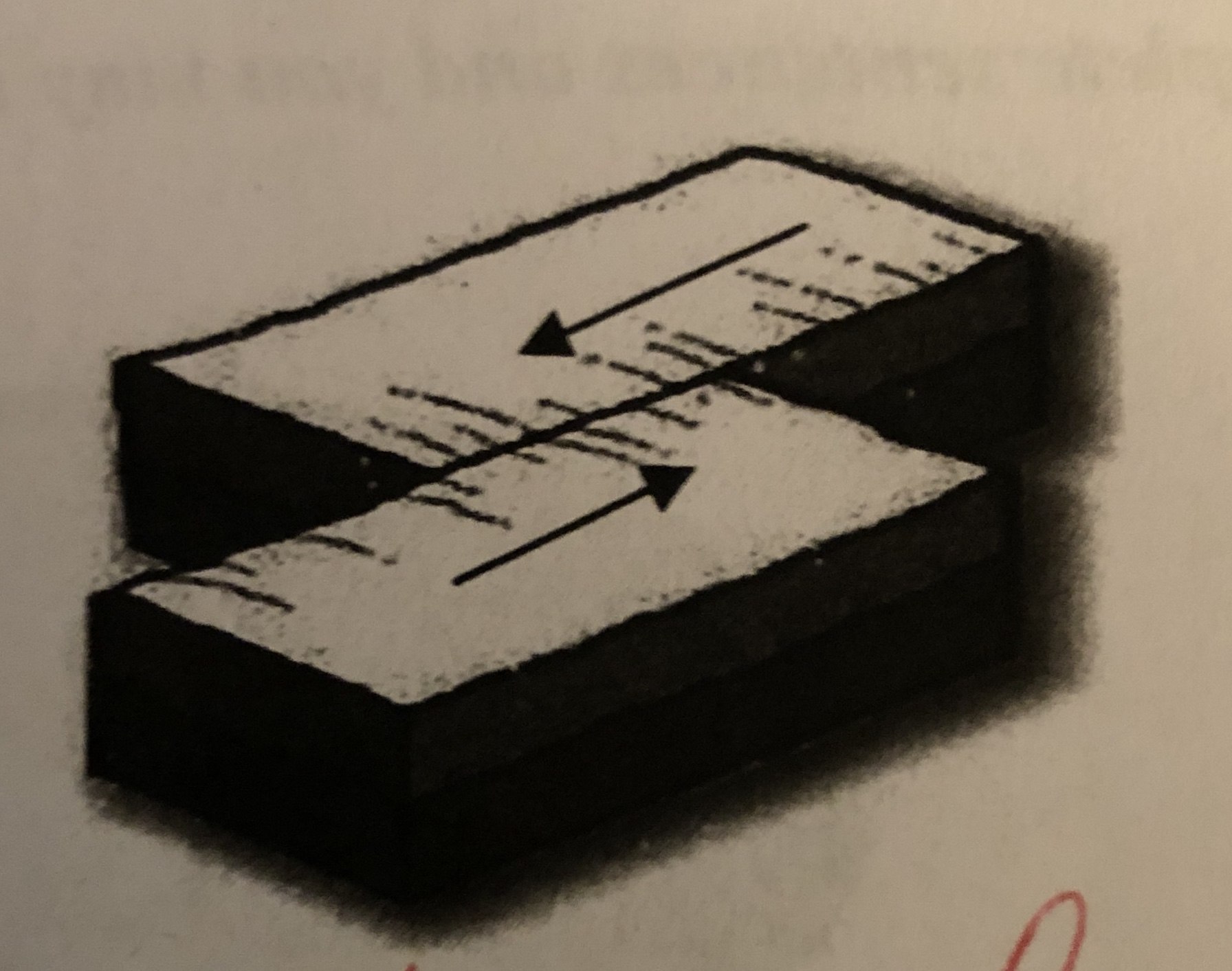
Transform

5.

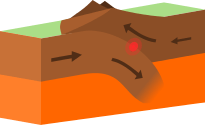
What type of boundary is shown in the diagram?

a)

Divergent

b)

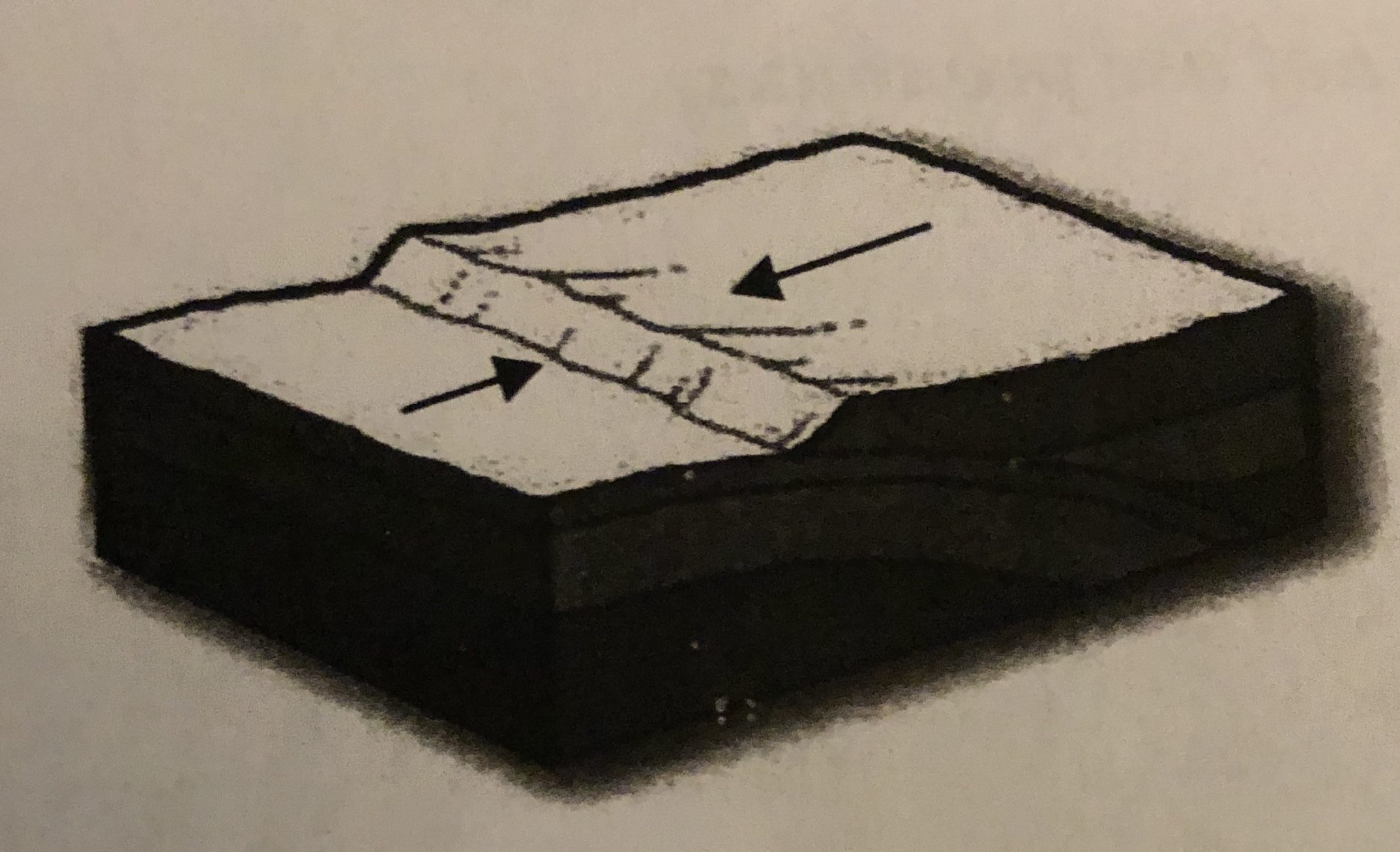
Convergent

c)

Slide/Transform

6.

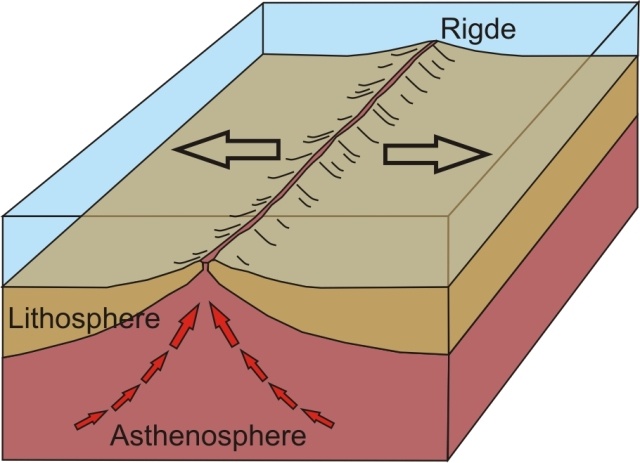
What type of boundary is shown in the diagram?

a)

Divergent

b)

Convergent

c)

Slide/Transform

7.
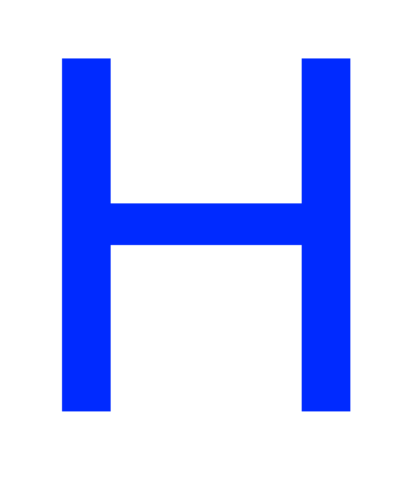
Identify the Major Plate labeled B
a)
African Plate
b)
Antarctic Plate
c)
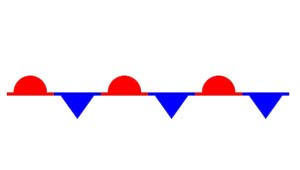
Pacific Plate
d)
Eurasian Plate 
8.
Identify the Major Plate labeled I
a)
African Plate
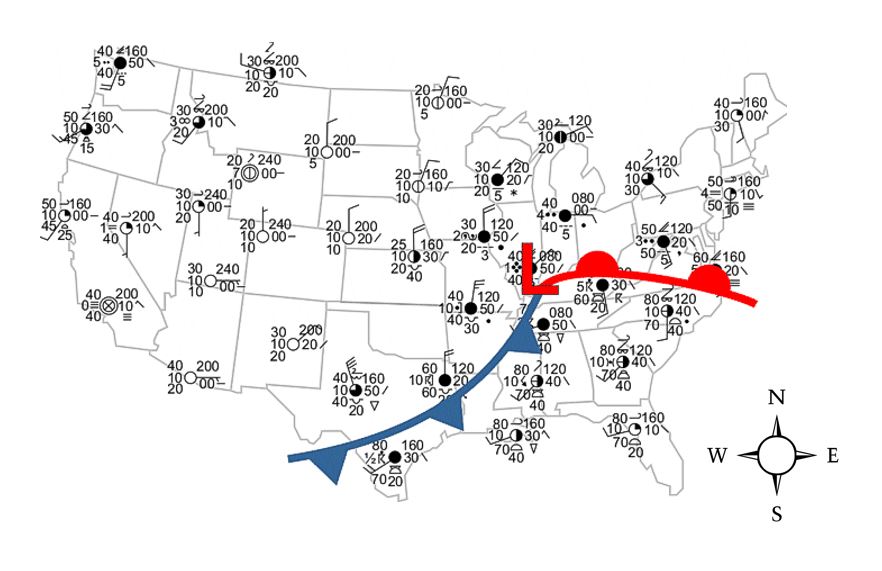
b)
Antarctic Plate
c)
Pacific Plate
d)
Eurasian Plate 
9.
This boundary is described as two plates moving past eachother ALONG THE EDGES horizontally.  These boundaries will get stuck or lock against eachother causing earthquakes when they slip and release. 
a)
Convergent Boundary
b)
Divergent Boundary
c)
Transform Boundary
10.
Trenches, deep underwater canyons on the sea floor are created at this type of boundary 
a)
Divergent
b)
Convergent, Subduction Zone
c)
Transform 
11.
New crust is created at this type of  boundary.
a)
Divergent
b)
Convergent, Subduction Zone
c)
Transform 
12.
Mid Ocean Ridge Formation  is created at this type of  boundary.
a)
Divergent 
b)
Convergent
c)
Transform 
13.

Earth's plates meet at ____________.

a)

plate tectonics

b)

plate boundaries

c)

continental drift

d)

oceans

14.

Breaks in the crust called __________ form where plates meet.

a)

mountains

b)

rift valleys

c)

faults

d)

trenches

15.
Name the boundary.
a)
convergent boundary
b)
divergent boundary
c)
transform boundary
d)
sergent boundary
16.
Name the boundary
a)
convergent boundary
b)
divergent boundary
c)
transform boundary
d)
sergent boundary
17.
What movement causes an ocean rift?
a)
divergent boundary
b)
transform boundary
18.
What boundary creates mountains?
a)
convergent
b)
divergent
c)
transform
d)
fast
19.

What type of boundary is this?

a)

convergent

b)

divergent

c)

transform

20.

What type of boundary is this?

a)

convergent

b)

transform

c)

divergent

21.

What type of boundary is this?

a)

convergent

b)

divergent

c)

transform

22.

What is a plate boundary where both plates move away from each other?

a)

divergent

b)

plate

c)

convergent

d)

transform

23.

Any trace of an ancient organism that has been preserved in rock is called a

a)

landform

b)

continent

c)

fossil

d)

landmass

24.

What is Pangea?

a)

the name of a German scientist

b)

the name of a supercontinent that existed millions of years ago

c)

another name for continental drift

d)

the name of an ancient fossil

25.

What is a plate boundary where two plates move toward each other?

a)

transform

b)

convergent

c)

divergent

26.

What type of landform is at C?

a)

mid-ocean ridge

b)

continental crust

c)

deep ocean trench

d)

sea floor spread

27.

Identify the landform labeled A

a)

mid-ocean ridge

b)

deep ocean trench

c)

sea floor spread

28.

What is the process by which the ocean floor sinks beneath a deep ocean trench and back into the mantle?

a)

continental drift

b)

mid-ocean ridge

c)

faults

d)

subduction

29.

The geological theory that states that pieces of Earth's plates are in constant, slow motion, driven by convection currents is the theory of

a)

subduction

b)

plate tectonics

c)

deep ocean trenches

d)

sea floor spreading

30.
What causes the plates to move?
a)
volcanoes
b)
earthquakes
c)
heat from inside the earth
d)
oceans
31.
Plate Tectonics is the study of______________
a)
continental drift
b)
lava and magma
c)
ocean and water
d)
air and wind
32.
The plate tectonics theory explains __________
a)
how the continents are drifted
b)
the cause of volcanoes and earthquakes
c)
how mountains are formed
d)
all of the above
33.
Which layer of the earth is the thinnest?
a)
inner core
b)
mantle
c)
crust
d)
outer core
34.
The earth's crust is made up of____________ and ___________
a)
oceanic crust and continental crust
b)
lava and magma
c)
sand and water
d)
air and wind
35.

What type of EVENT will occur at this boundary?

a)

Earthquake

b)

Volcano Eruption

c)

Tornado

d)

Mountain Building

36.

Which of the following causes Earth's tectonic plates to move?

a)

Energy from the Sun

b)

Convection currents in the mantle

37.
Name the boundary
a)
convergent boundary
b)
divergent boundary
c)
transform boundary
d)
sergent boundary
38.
Name the boundary
a)
convergent boundary
b)
divergent boundary
c)
transform boundary
d)
sergent boundary
39.
Who is known as the "Father of Continental Drift"?
a)
Harry Hess
b)
Abraham Ortelius
c)
Alfred Wegner
d)
John Tuzo Wilson
40.

Which of the following is the name of the ancient supercontinent formed 28 Million Years ago.

a)

Pangea

b)

Gondwanda

c)

Laurasia

d)

Neverland

41.
Which of the following is NOT evidence to support the theory of plate tectonics?
a)
Fossils
b)
Mountains
c)
Glaciers
d)
Sand Erosion
42.
What is the outermost layer of the Earth called?
a)
core
b)
lithosphere
c)
asthenosphere
d)
mesosphere
43.
What type of boundary is formed when plates separate?
a)
convergent
b)
horizontal
c)
divergent
d)
transform
44.
What type of plate boundary is this?
a)
Plate
b)
Divergent
c)
Convergent
d)
Transform
45.

A mid-ocean ridge (plates separating) occurs at a ________ plate boundary.

a)

transform

b)

convergent

c)

divergent

46.

A break (crack) in Earth's crust along which rocks move.

a)

Boundary

b)

Rift

c)

Fault

d)

Canyon

47.

A section of the lithosphere that slowly moves over the asthenosphere, carrying large slabs of continental and oceanic crust.

a)

Pangaea

b)

Plate

c)

Continent

d)

Crust

48.

A plate boundary where two plates move away from each other.

a)

Convergent

b)

Divergent

c)

Transform

d)

Normal fault

49.
Scientists think that convection currents that move the plates flow in Earth's
a)
Mesosphere
b)
Outer core
c)
Asthenosphere
d)
Lithosphere
50.
Where does the heat come from that drives this convection current in the mantle? 
a)
The sun
b)
Electricity
c)
the mantle
d)
the core
51.
What type of plate boundary is this?
a)
Plate
b)
Divergent Boundary
c)
Convergent Boundary
d)
Transform Boundary
52.
What kind of plate boundary is shown here?
a)
divergent
b)
convergent
c)
transform
d)
submergent
53.
What kind of plate boundary is shown here?
a)
divergent
b)
convergent
c)
transform
d)
subducting
54.
What kind of plate boundary is shown here?
a)
divergent
b)
convergent
c)
transform
d)
strike slip
55.
On which layer do tectonic plates float on? 
a)
Astheosphere
b)
Lithosphere
c)
Mesosphere
d)
Outer Core
56.
What would you be most likely to find at a convergent boundary between a continental and oceanic plate?
a)
Mountains
b)
Volcanoes
c)
Mid-Ocean Ridge
d)
Rift
57.
What would you be most likely to find at a convergent boundary between two pieces of continental crust?
a)
Volcano
b)
Mountain
c)
Rift
d)
Island Arc
58.
A subduction zone is formed...
a)
when one tectonic plate sinks below another
b)
at every type of convergent plate boundary
c)
at every type of divergent plate boundary
d)
at transform boundaries
59.
What is the deepest layer of the Earth a person has ever gotten to?
a)
the crust
b)
the upper mantle
c)
the mantle
d)
the outer core
60.
What is the core made of?
a)
steel
b)
iron 
c)
aluminum
d)
iron and nickel
61.
Tectonic plates are made up of continental crust and ________ crust.
a)
continental
b)
oceanic
c)
plates
d)
mantle
62.
What type of boundary occurs when two tectonic plates collide?
a)
divergent
b)
convergent
c)
transform
63.
Warm air rises and the cool air sinks demonstrates this type of heat transfer. 
a)
subduction
b)
convection
c)
convergent
64.
name this symbol
a)
warm front
b)
cold front
c)
stationary front
d)
occluded front
65.
What does this symbol on a weather map indicate? 
a)
High pressure system
b)
Low pressure system
c)
Cold front
d)
Warm front
66.
What does this symbol on a weather map indicate? 
a)
High pressure system
b)
Low pressure system
c)
Cold Front
d)
Warm Front
67.
What does this symbol on a weather map indicate? 
a)
High pressure system
b)
Low pressure system
c)
Cold front
d)
Warm front
68.
Where the warm and cold air meet and stall, clouds and fog form, and it may rain or snow.  It could bring many days of clouds and precipitation.  
a)
Warm Front
b)
Cold Front
c)
Occluded Front 
d)
Stationary Front 
69.
What does this symbol represent on a weather map?
a)
Sunny
b)
Partly Cloudy
c)
Cloudy
d)
Thunderstorm
70.
What does this symbol show? 
a)
High pressure
b)
Low pressure
c)
Low humitidy
d)
Longing for someone (strong feelings)
71.
What does this image represent?
a)
Cold front
b)
Red bulbous things
c)
Warm front
d)
Sarah Ju
72.
a)

cold air moving into an area

b)

warm air moving into an area

c)

humid air over an area

d)

dry air over an area

73.
a)

Cold air is approaching Location A

b)

Warm air is approaching Location A

c)

Cold air is approaching Location B

d)

Warm air is approaching Location B

74.
a)

Cold air is approaching Location A

b)

Warm air is approaching Location A

c)

Cold air is approaching Location B

d)

Warm air is approaching Location B

75.
a)

Cold air is approaching Location A

b)

Warm air is approaching Location A

c)

Cold air is approaching Location B

d)

Warm air is approaching Location B

76.
a)

It's warmer at location A

b)

It's warmer at location B

77.
a)

It's cooler at location A

b)

It's cooler at location B

78.
What direction is the cold front moving?
a)
Northwest
b)
Southeast
c)
Northeast
d)
Southwest
79.
What direction is the warm front moving?
a)
Northeast
b)
Northwest
c)
Southeast
d)
Southwest
80.
What does this image represent? 
a)
TJ
b)
Thunderstorms
c)
Rain
d)
Partly cloudy
81.

What is this weather symbol?

a)

Partly Cloudy

b)

Cloud

c)

Sunny

d)

Storm

82.

What is this weather symbol?

a)

Sunny

b)

Rainy

c)

Partly Cloudy

d)

Stormy

83.

What does this weather symbol mean?

a)

Rain

b)

Thunderstorm

c)

Partly Cloudy

d)

Sunny

84.

What is this weather symbol mean?

a)

Snow

b)

Rain

c)

Sunny

d)

Partly Cloudy

85.
A cold front is approaching Minneapolis. What will happen to the air temperature?
a)
stay the same
b)
increase
c)
decrease
86.

LABEL THE FOLLOWING FRONTS AND/OR WEATHER MAP SYMBOLS.

a)

warm front

b)

cold front

c)

stationary front

d)

occluded front

87.

Based on the weather map, which city will most likely experience increasing temperatures during the next 24 hours?

a)

Denver, because it is raining there

b)

Minneapolis, because a cold front is approaching

c)

Atlanta, because a warm front is approaching

d)

Houston, because it is in a high pressure area
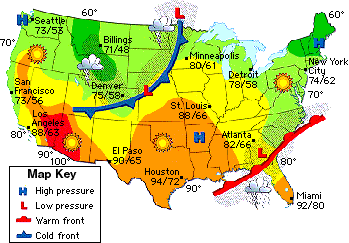
88.
A low pressure system is located over Georgia. What type of weather will they have?
a)
clear, sunny skies
b)
cloudy and rainy
89.
A high pressure system is located north of New York City. What type of weather will be experienced there?
a)
clear, sunny skies
b)
cloudy and rainy
90.
After a cold front passes through, what type of weather will there be?   
a)
Rainy or stormy, and cloudy
b)
Clear, dry, and sunny
91.
After a warm front passes through what type of weather will there be?
a)
Rainy or stormy, and cloudy
b)
Clear, dry, and sunny
92.
What type of weather is associated with areas of low pressure?
a)
Low pressure = humid, because there is room in the air for moisture to get in 
b)
Low pressure = dry, because there is not room in the air for moisture to get in
93.
What type of weather is associated with areas of low pressure?
a)
Low pressure = humid, because there is room in the air for moisture to get in 
b)
Low pressure = dry, because there is not room in the air for moisture to get in
94.
What type of weather is associate with areas of high pressure?
a)
High pressure = dry, because there is not room in the air for moisture to get in
b)
High pressure = humid, because there is room in the air for moisture to get in 
95.
In convection, COOL air
a)
Rises
b)
Sinks
96.
In convection, WARM air
a)
Rises
b)
Sinks
97.

What type of pressure system is represented in the picture?

a)

low pressure

b)

high pressure

98.

What type of pressure system is represented in the picture?

a)

low pressure

b)

high pressure

99.

name this front

a)

warm front

b)

cold front

c)

stationary front

d)

occluded front

100.

What type of front shown in the picture?

a)

warm front

b)

air mass

c)

cold front

d)

water vapor

101.

A large body of air that has a same temperature and humidity is called ___________________

a)

front

b)

air mass

c)

water vapor

d)

poles

102.

What type of front shown in this picture?

a)

cold front

b)

warm front

c)

air mass

d)

stationary front

103.

What represent this image?

a)

weather

b)

weather forecast

c)

weather map

d)

front

104.

What represent this image?

a)

weather forecast

b)

weather symbols

c)

weather map

d)

weather data

105.
 When an air mass moves into a new location it brings
a)
changes in temperature and altitude.
b)
changes in temperature and humidity
c)
A  changes in altitude and air pressure.
d)
A  changes in humidity and energy.  
106.
 What conditions can lead to the formation of a hurricane?
a)
 low-pressure over warm tropical ocean 
b)
low-pressure system over artic tundra
c)
 high-pressure over warm tropical ocean
d)
high-pressure system over hot, dry land
107.
Which weather system is characterized by counter-clockwise movement of air and generally poor weather? 
a)
cold front
b)
low pressure
c)
high pressure
d)
warm front 
108.
Which system results in rainy or stormy weather?
a)
high pressure
b)
low pressure
c)
hurricane
d)
weather system
109.
The uneven heating of the surface results in 
a)
in seasons 
b)
ocean currents
c)
differences in weather
d)
differences in organisms
110.
LABEL THE FOLLOWING FRONTS AND/OR WEATHER MAP SYMBOLS.
a)
 warm front
b)
cold front
c)
stationary front
d)
occluded front  
111.
 Which BEST describes a front?
a)
a large mass of moving air
b)
a boundary between 2 air masses
c)
a high pressure system
d)
a low pressure system  
112.
This is the symbol for which type of front?
a)
cold front
b)
warm front
c)
stationary front
d)
occluded front
113.
This is the symbol for which type of front?
a)
cold front
b)
warm front
c)
occluded front
d)
stationary front
114.
What direction is the cold front moving on the map? 
a)
Southwest
b)
Northwest
c)
Southeast
d)
Northeast
115.
What direction is the cold front moving on the map? 
a)
Southwest
b)
Northwest
c)
Southeast
d)
Northeast
116.
How many atoms are there TOTAL in:
H2SO4
a)
6
b)
5
c)
7
d)
3
117.
How many Sodium (Na) are in 6NaCl?
a)
1
b)
12
c)
6
118.
How many O's are in Al₂(SO₄)₃
a)
4
b)
12
c)
7
d)
24
119.
Number of N in (NH₄)₂CrO₄
a)
1
b)
2
c)
8
d)
16
120.
How many Magnesium are in 10MgCl2?
a)
10
b)
5
c)
20
121.
How many total atoms are in the compound C2H8O ?
a)
11
b)
2
c)
8
d)
1
122.
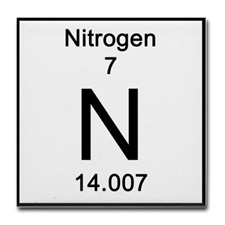
What is the number of protons that the element in this image contain?
a)
14
b)
7
c)
15
d)
18
123.
What number indicates an electron?
a)
1
b)
2
c)
3
d)
4
124.

What goes in place of the question marks?

a)

Element name

b)

Atomic Mass

c)

Atomic Number

d)

Electrons

125.

APE MAN stands for

a)

Atomic Number=Protons=Electrons

Atomic Mass-Atomic Number=Neutrons

b)

Atomic Mass=Pictures=Eating

Mass- Atomic Number= Element Name

c)

Atomic Number= Periodic Table=Elements

Atomic Mass-Atoms=Notes

126.
How many atoms are there TOTAL in:
H2SO4
a)
6
b)
5
c)
7
d)
3
127.
How many Aluminum are in Al2O3?
a)
3
b)
2
c)
5
128.

What is the symbol for hydrogen?

a)

Hy

b)

H

c)

He

d)

Ho

129.

What is the symbol for helium?

a)

Hy

b)

H

c)

He

d)

Ho

130.

What is the symbol for beryllium?

a)

Be

b)

B

c)

Ba

d)

Br

131.

What is the symbol for lithium?

a)

L

b)

Lt

c)

Li

d)

Lr

132.

What is the symbol for boron?

a)

Be

b)

B

c)

Ba

d)

Br

133.

What is the symbol for carbon?

a)

Ca

b)

Cr

c)

Co

d)

C

134.

What is the symbol for nitrogen?

a)

N

b)

Ni

c)

Ne

d)

No

135.

What is the symbol for oxygen?

a)

Ox

b)

O

c)

Og

d)

Oh no

136.

What is the symbol for neon?

a)

N

b)

Ni

c)

Ne

d)

No

137.

What is the symbol for magnesium?

a)

Mg

b)

Ma

c)

M

d)

Mn

138.

What is the symbol for aluminum?

a)

A

b)

Al

c)

Au

d)

Am

139.
What element is represented in this Bohr Model? 
a)
Carbon
b)
Hydrogen
c)
Aluminum
d)
Lithium
140.
Which is an electron?
a)
A
b)
B
c)
C
141.
How many valence electrons does Sodium (Na) have?
a)
1
b)
2
c)
3
d)
4
142.
Each row in the periodic table is called a 
a)
group
b)
period
c)
cluster
d)
unit
143.
Each column in the periodic table is called a 
a)
period
b)
group
c)
cluster
d)
unit
144.
Which is the correct formula for:
 three hydrogen (H)
one sulfur (S)
four oxygen (O)
a)
H3SO4
b)
HSO4
c)
H4S3O
d)
H2O
145.
How many elements are in C6H12O6?
a)
1
b)
2
c)
3
d)
4
146.
How many elements are in C6H12O6?
a)
1
b)
2
c)
3
d)
4
147.
 Which is NOT an example of chemical change?
a)
production of gas.
b)
change in color.
c)
change in size.
d)
transfer of energy.
148.
Which box has a higher density?  
a)
Box A
b)
Box B
c)
cannot be determined
d)
they are the same
149.
What is found in the nucleus of atoms?
a)
Protons and electrons.
b)
Protons, neutrons, and electrons.
c)
Protons and neutrons.
d)
Neutrons and electrons.
150.
If two forces act on an object in the same direction, the net force is the _____________
a)
the difference between the two forces
b)
the sum of the two forces
c)
Only one of the forces acts on the object
d)
DOOMSDAY!
151.
A wheeled cart is moving to the right at a constant speed.  Two forces of equal magnitude are acting upon the cart. Which of the following best describes the forces and motion of the cart?
a)
Balanced Forces, Constant Speed
b)
Balanced Forces, Acceleration
c)
Unbalanced Forces, Constant Speed
d)
Unbalanced Forces, Acceleration
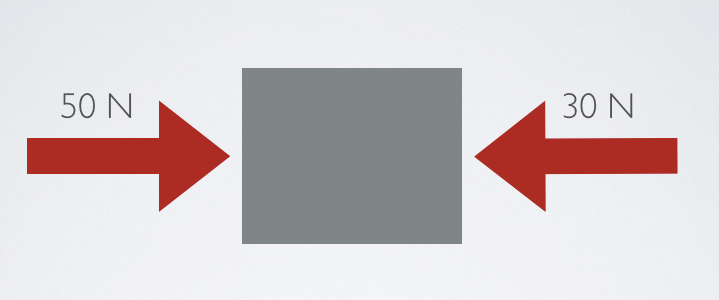
152.
How will this object move? 
a)
It won't move. 
b)
It will move to the right. 
c)
It will move to the left. 
d)
It will move up. 
153.
How will this object move? 
a)
It won't move. 
b)
It will move to the right. 
c)
It will move to the left. 
d)
It will move in both directions. 
154.
What is the net force?
a)
40 N left
b)
0 N Balalnced
c)
400 N right
d)
40 N right
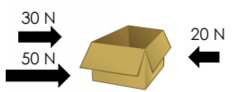
155.
Calculate the Net Force. 
a)
60N, Left 
b)
40N, Right 
c)
0N
d)
60N, Right
156.
Calculate the Net Force. 
a)
40N, Left
b)
40N, Right
c)
0N, Balanced
d)
75N, Right
157.
You and your dad are moving the couch from one side to another. Your dad pushes with a force of 35 N to the right and you push with a force of 25 N right. What is the net force on the couch?
a)
60 N right
b)
10 N left
c)
60 n right
d)
50 N left
158.
What is the net force?
a)
10 N
b)
0 N
c)
25 N
d)
1 N
159.
The tendency of an object at rest to stay at rest unless it is acted upon by a force is called ___________________
a)
inertia
b)
motion
c)
gravity
d)
lubricant
160.

Which of the following is an example of a balanced force?

a)

An aeroplane taking off.

b)

Kicking a football.

c)

A car slowing down.

d)

A boy standing still.

161.

Which of the following is an example of an unbalanced force?

a)
b)
c)
d)
162.

What is the force acting in the opposite direction of an object in motion called?

a)

Friction Force

b)

Gravity Force

c)

Normal Force

d)

Net Force