wayground logo

Free Printable Worksheets

NEW

Font size

S
M
L
XL
Worksheets

Earth Systems Part 1

Total questions: 41

Worksheet time: 36mins

Name
Class
Date
1.
Metamorphic rock can become magma through the process of _______________________.
a)
cementation
b)
weathering
c)
freezing 
d)
melting
2.
Layering butter, cookie crumbs and chocolate chips to make Goodie Bars is an example of the formation of what type of rock?
a)
Igneous
b)
Sedimentary
c)
Metamorphic
d)
All of the Above
3.
Rain and Wind are two geological processes that cause sediments to form
a)
weathering
erosion
b)
erosion
c)
compacting
d)
cementation
4.
The processes for the formation of sedimentary ROCK are
a)
heat and pressure
b)
weathering and erosion
c)
cooling and  hardening
d)
compacting and cementing
5.
When rock is recycled under the surface of the earth and melts it becomes
a)
sediments
b)
magma
c)
lava
d)
mud
6.
Johnny uses a hard boiled egg to represent the layers of the earth.  What part of the egg would represent the crust?
a)
The thick white part
b)
The hard thin shell
c)
The inner yellow yolk
7.
Small, solid pieces of material that come from rocks or the remains of organisms are called ___________.
a)
Sediment
b)
Shedding
c)
Minerals
d)
Fragment
8.
What is the type of rock that forms from an existing rock that is changed by heat, pressure, or chemical reactions?
a)
Sedimentary
b)
Igneous
c)
Metamorphic
d)
Fossil Fuel
9.
This layer of Earth is the thickest part
a)
crust
b)
outer core
c)
mantle
d)
inner core
10.
Temperature _____________________ as you go deeper into the earth.
a)
increases
b)
decreases
c)
goes up and down depending on the layer
d)
stays the same
11.
Pressure ______________________ as you go deeper into the Earth
a)
increases
b)
decreases 
c)
goes up or down depending on the layer
d)
stays the same
12.
Rock that forms sediment from older rocks get pressed and cemented together.
a)
Sedimentary Rock
b)
Metamorphic Rock
c)
Igneous Rock
13.
What is the process that picks up and moves weathered rocks?
a)
deposition
b)
landslide
c)
weathering
d)
erosion
14.
Scientists think that convection currents flow in Earth's
a)
continents
b)
mantle
c)
lithosphere
d)
inner core.
15.
What are the two kinds of crust?
a)
lithospheric and asthenospheric
b)
silicon based and iron based
c)
continental and oceanic
d)
outer and inner
16.
Which layer of Earth is the thinnest?
a)
crust
b)
mantle
c)
outer core
d)
inner core
17.
Which layer of Earth has the GREATEST density?
a)
crust
b)
mantle
c)
outer core
d)
inner core
18.

A student made lemon drop candy by melting sugar, water, and lemon flavoring in a sauce pan until the mixture was at a very high temperature. Next, the student poured the clear yellow mixture onto a baking sheet to cool.


The process of making lemon drop candy is most like the formation of what type of rock?

a)

Igneous

b)

Metamorphic

c)

Sedimentary

d)

Conglomerate

19.

A rock sitting on the Earth's surface gets pushed down into the Earth over time. The rock is also exposed to extreme heat and pressure over time. Although, the rock does not melt, it does change into a new type of rock.


How would the NEW rock be classified?

a)

Igneous

b)

Metamorphic

c)

Sedimentary

d)

Magma

20.

To make peanut butter bars, you press a layer of graham cracker crumbs into a baking pan. Next, add a layer of peanut butter and then a layer of crushed peanuts. Finally, top off with a layer of chocolate frosting. YUMMMMM!


The process of making peanut butter bars, best simulates what type of rock?

a)

Igneous

b)

Metamorphic

c)

Sedimentary

d)

Magma

21.

Our Earth has many layers...

Which layers is made up of part crust and part mantle material?

a)

Lithosphere

b)

Inner core

c)

Outer Core

d)

Asthenosphere

22.

Which of the following is NOT involved in the sedimentary rock process?

a)

heat

b)

pressure

c)

sediments

d)

rocks

23.
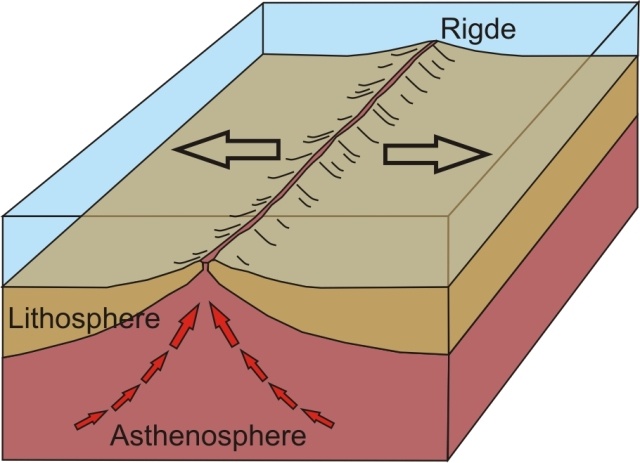
What kind of plate boundary is shown here?
a)
divergent
b)
convergent
c)
transform
d)
subducting
24.
What kind of plate boundary is shown here?
a)
divergent
b)
convergent
c)
transform
d)
submergent
25.
What kind of plate boundary is shown here?
a)
divergent
b)
convergent
c)
transform
d)
strike slip
26.
What geologic feature/event you be most likely to find at a transform boundary?
a)
Earthquakes
b)
Volcanoes
c)
Mountains
d)
Rift Valleys
27.
A subduction zone is formed...
a)
when one tectonic plate sinks below another
b)
at every type of convergent plate boundary
c)
at every type of divergent plate boundary
d)
at transform boundaries
28.
What geologic feature/event would you most likely to find at a convergent boundary between two pieces of continental crust?
a)
Volcano
b)
Mountain
c)
Rift
d)
Island Arc
29.
The area where two or more plates meet is called a __________________.
a)
fault
b)
plate boundary
c)
plate edge
d)
ring of fire
30.

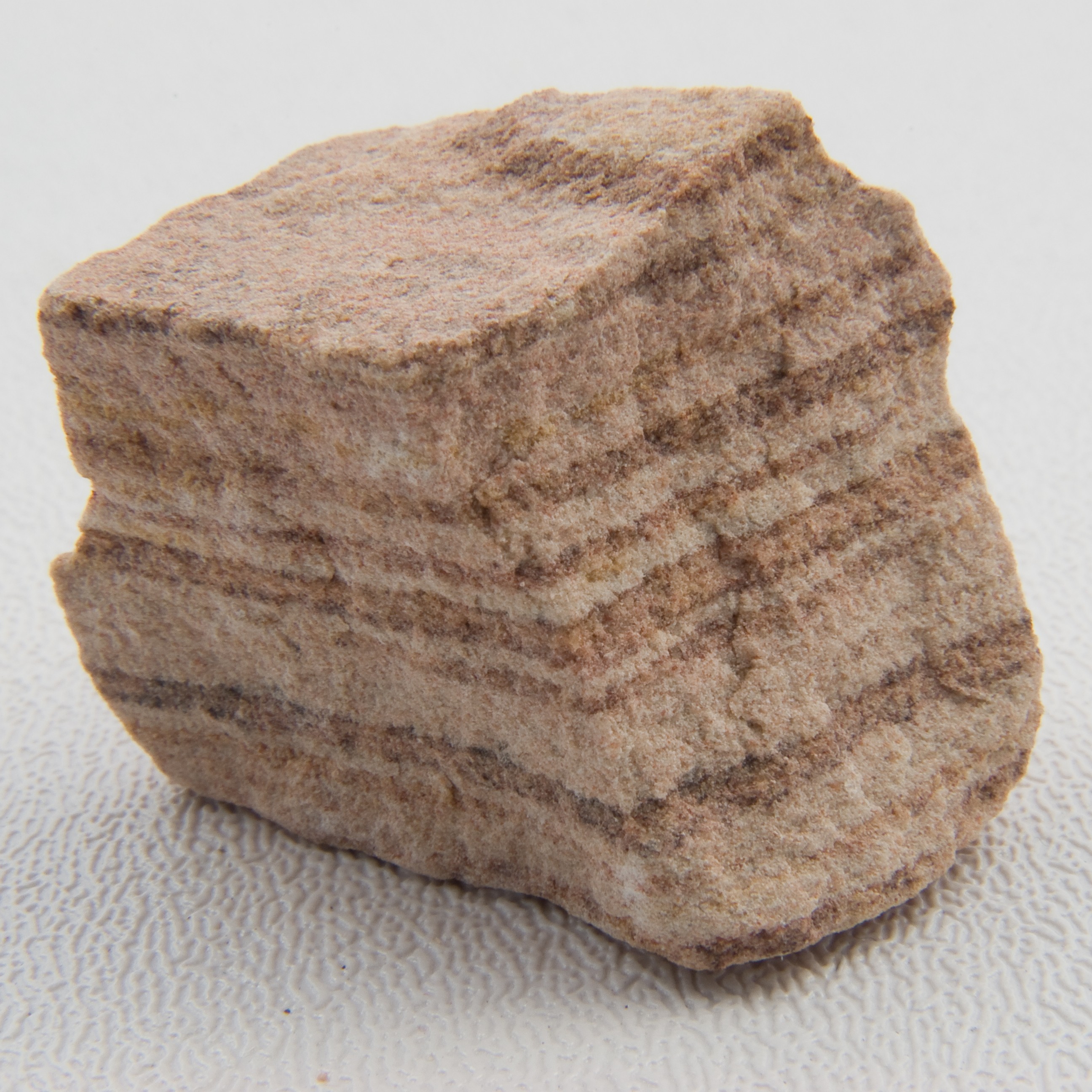
Describe the method of lithification for sandstone.

a)

melting and solidification

b)

compaction and cementation

c)

evaporation and precipitation

d)

extreme heat and pressure

31.
What geological forces might be responsible for this range of mountains?
a)
diverging tectonic plates
b)
erosion of the land by the ocean
c)
converging tectonic plates
d)
deposition of sediments by the ocean
32.
Which geological features MOST LIKELY prompted the development of the theory of plate tectonics?
a)
river deltas
b)
mountain ranges
c)
glacier fields
d)
tropical rainforests
33.
Who is the person credited with developing the theory of continental drift?
a)
Harry Hess
b)
Galileo
c)
Alfred Wegener
d)
Newton
34.
What two specific continents fit together most noticeably?
a)
Africa and North America
b)
South America and Europe
c)
South America and Africa
d)
 Antartica and Africa
35.
What is this a picture of?
a)
plate tectonics
b)
continental drift
c)
pangea
d)
glacier scaring
36.
Why was Wegener's theory not accepted?
a)
He had no proof of how they were moving
b)
He had no evidence
c)
He was married
d)
He was not a Scientist
37.
Pangaea has not been the only supercontinent on Earth.
a)
True
b)
False
38.

These are remains of dead plants or animals preserved in rock.

a)

Glaciers

b)

Dinosaurs

c)

Bones

d)

Fossils

39.

Wegener noticed that the Appalachian Mountains and Caledonian Mountains line up and are made of the same rock types. This was a type of ....

a)

Fossil Evidence

b)

Rock Formation Evidence

c)

Climate Evidence

d)

Objective Evidence

40.

Wegener found fossils of land reptiles on two different continents. This was important because

a)

Land reptiles are often found all over the world, showing that they can survive in most climates

b)

Land reptiles cannot swim, so the continents must have been connected for them to get across

c)

Land reptiles are never moved around the Earth by humans, so they must have travels to these continents by themselves

d)

Land reptiles fossilized much better than other animal species

41.

What was not a piece of evidence Wegener used to support continental drift theory?

a)

Rock Formation Evidence

b)

Climate Evidence

c)

Soil Evidence

d)

Fossil Evidence