wayground logo

Free Printable Worksheets

NEW

Font size

S
M
L
XL
Worksheets

Forensics test review

Total questions: 55

Worksheet time: 34mins

Name
Class
Date
1.
Natural fibers can be harvested from:
a)
Plants and animals
b)
Plants only
c)
Animals only
d)
Plants, animals, and minerals
2.
All of the following are characteristics of synthetic fibers except:
a)
They are formed by combining monomer compounds into polymer molecules
b)
They’re manufactured
c)
Used in production of carpet fibers
d)
Produced by plants, animals, or other organisms
3.

Which of the following is NOT a natural fiber?

a)

Linen

b)

Bamboo

c)

Wool

d)

Nylon

4.

Which of the following is made from an animal?

a)

Cotton

b)

Bamboo

c)

Angora

d)

Silk

5.

Nylon was created as an alternative to which natural fiber?

a)

Silk

b)

Acetate

c)

Acrylic

d)

Wool

6.

Which of the following is a manufactured fiber?

a)

Acetate

b)

Mohair

c)

Linen

d)

Cotton

7.

The smallest indivisible unit of a textile:

a)

Weft

b)

Fiber

c)

Yarn

8.

The most commonly used synthetic fiber:

a)

Rayon

b)

Polyester

c)

Nylon

9.
A continuous strand of fibers that have been spun together is a...
a)
Fiber
b)
Fabric
c)
Yarn
d)
Thread
10.
This weave pattern results in shiny fabric with little friction...
a)
Twill
b)
Plain
c)
Satin
d)
Basket
11.
Scientists use this test to analyze the dyes in fabric evidence:
a)
Stain test
b)
Solvent test
c)
Infrared Spectroscopy
d)
Chromatography
12.
Fibers are considered what kind of evidence? 
a)
Individual
b)
Class
c)
Direct
d)
Indirect
13.

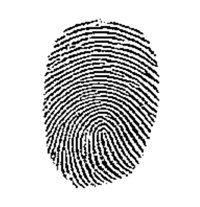
What pattern is this? (Right hand)

a)

Ulnar Loop

b)

Radial Loop

c)

Plain Whorl

d)

Tented Arch

14.

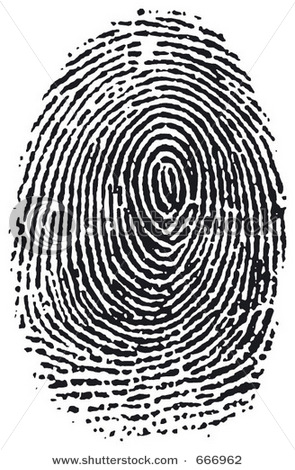
What pattern is this? (Left Hand)

a)

Radial Loop

b)

Ulnar Loop

c)

Plain Whorl

d)

Plain Arch

15.
The area indicated by "A" in the diagram is known as a(n)
a)
Core
b)
Delta
c)
Whorl
d)
Arch
16.
The area indicated by "B" in the diagram is known as a(n)
a)
Core
b)
Delta
c)
Whorl
d)
Arch
17.

A fingerprint is considered individual evidence.

a)

False

b)

True

18.

IAFIS is a(n):

a)

method used to determine the age of latent print

b)

computer software designed to track fingerprint evidence within the chain of custody

c)

assay technique used to identify drugs

d)

computerized system for storing and retrieving fingerprint records

19.
Which of the following types of fingerprints are more likely to be found impressed in soft wax? 
a)
visible
b)
latent
c)
hidden 
d)
plastic
20.
Under which circumstances have two people been found to have identical fingerprints? 
a)
identical twins
b)
fraternal twins
c)
members of the same immediate family
d)
none to date
21.
An invisible print that must be developed using powder or chemicals is called
a)
plastic
b)
latent
c)
patent
d)
underdeveloped
22.
A print that comes in and out on the same side is called
a)
An arch
b)
A loop
c)
A whorl
23.
Which type of fingerprint cannot be seen  the naked eye?
a)
patent fingerprint
b)
latent fingerprint
c)
visible fingerprint
d)
plastic fing
24.
When are fingerprints formed?
a)
When you are a teenager
b)
During fetal development
c)
By the time you are two years old
d)
At birth
25.
Type of fingerprint that is left by a person with soiled or stained fingertips
a)
plastic
b)
visible
c)
latent
26.

When a fingerprint expert takes the witness stand and says he's absolutely certain two fingerprints match, he means he's found

a)

at least 5 or more matching minutiae

b)

at least 12 or more matching minutaie

c)

at least 20 or more matching minutiae

d)

at least 50 or more matching minutiae

27.

What protein is found in red blood cells that binds to and transports oxygen?

a)

peptidoglycan

b)

iron

c)

hemoglobin

d)

plasma

28.
What antigens are present in a person with type B- blood?
a)
B, only
b)
B and Rh
c)
A and Rh
d)
A, only
29.
What types of antigens are present in a person with O+ blood?
a)
A and B
b)
Rh, only
c)
A, B and Rh
d)
None
30.
What types of antibodies are found in a person with AB- blood?
a)
None
b)
Anti-Rh, only
c)
Anti-A and Anti-B
d)
Anti-A, 
31.

In 1795,

a)

Decastello discovers blood type AB

b)

Physick preforms the first blood transfusion

c)

Blumberg develops method of antibody detection

32.

Most crime labs are now relying on ________________________ to characterize bloodstains.

a)

DNA analysis

b)

Blood type

c)

Blood color

33.

In 1901,

a)

Leeuwenhoek / Viewed blood cells with microscope

b)

Physick/ Preformed first blood transfusion

c)

Landsteiner discovers three blood types : A, B, O

d)

Perutz / Described the structure of hemoglobin

34.

In 1940,

a)

Landsteiner discovers the Rh Protein in blood

b)

Perutz describes the structure of hemoglobin.

c)

Kastle develops first presumptive blood test.

35.

In 1902

a)

Decastello discovers blood type AB

b)

Physick preforms the first blood transfusion

c)

Perutz describes the structure of hemoglobin

36.

In the 1900's

a)

Landsteiner discovers three blood types

b)

Kastle develops first presumptive blood test

c)

Blumberg develops method of antibody detection

37.

The composition of blood includes...

a)

Plasma, red blood cells, white blood cells and platelets

b)

Plasma, sperm cells, nerve cells and cilia

c)

Plasma and red blood cells

d)

Plasma, red blood cells, white blood cells, platelets and root hair cells

38.

What is the name of the straw coloured liquid that carries the components in the blood?

a)

Plasma

b)

Urine

c)

Water

d)

Urea

39.

Red blood cells are...

a)

Specialised cells that transport carbon dioxide around the body.

b)

Specialised cells that transport oxygen to the lungs.

c)

Very special cells that transport glucose and oxygen around the body.

d)

Specialised cells that transport oxygen around the body.

40.
What type of blood is the universal donor?
a)
O
b)
AB
41.

How many antigens does O- blood type have?

a)

3

b)

2

c)

1

d)

6

e)

0

42.
Who discovered the ABO and Rh blood groups?
a)
Oliver
b)
Decastello
c)
Landsteiner
d)
Balthazard
43.
Blood Typing is considered what type of evidence?
a)
Indiviual
b)
Class
c)
Trace
d)
Physical
44.
What is the study of bodily fluids called?
a)
toxicology
b)
serology
c)
physiology
d)
histology
45.
There are how many blood types in the ABO system?
a)
2
b)
3
c)
4
d)
5
46.
Blood is composed of plasma, serum, and cells
a)
true
b)
false
47.
Blood has how many parts?
a)
1
b)
2
c)
3
d)
4
48.
These blood cells are the protectors and help fight off disease.
a)
Red blood cells
b)
White blood cells
c)
Plasma
d)
Platelets 
49.
This part of blood helps it clot, when you get cut.
a)
Red blood cells
b)
Plasma
c)
Platelets
d)
White blood cells
50.
These blood cells deliver oxygen to the parts of the body.
a)
Red
b)
White
c)
Patelets
d)
Plasma
51.
_______ is made mostly of water and makes up about 55% of the blood
a)
Plasma
b)
Platelets 
c)
Red blood cells
d)
White blood cells
52.
What part of blood is responsible for carrying wastes, nutrients, and minerals?
a)
Red Blood Cells
b)
White Blood Cells
c)
Platelets
d)
Plasma
53.
What part of blood is responsible for carrying oxygen and carbon dioxide to or from body cells?
a)
Red Blood Cells
b)
White Blood Cells
c)
Platelets
d)
Plasma
54.
What part of blood is responsible for fighting infections?
a)
Red Blood Cells
b)
White Blood Cells
c)
Platelets
d)
Plasma
55.
How many pints of blood are in the average human?
a)
1
b)
20
c)
10