wayground logo

Free Printable Worksheets

NEW

Font size

S
M
L
XL
Worksheets

SLP review 2019-2020 GROWTH??

Total questions: 75

Worksheet time: 59mins
Name
Class
Date
1.
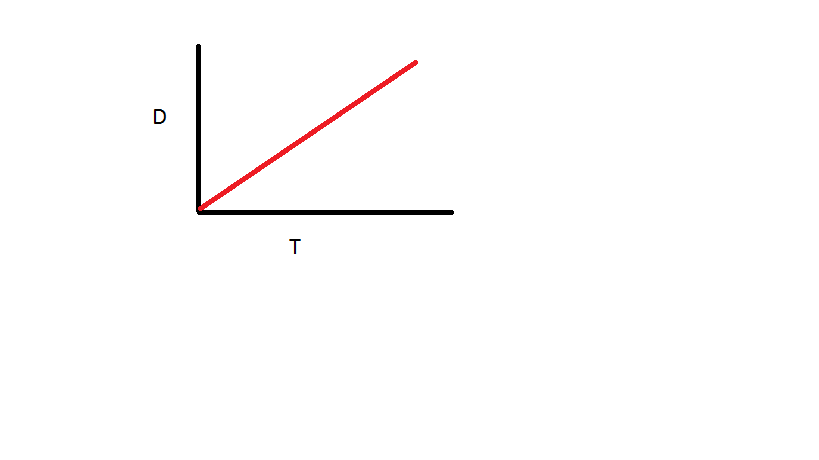
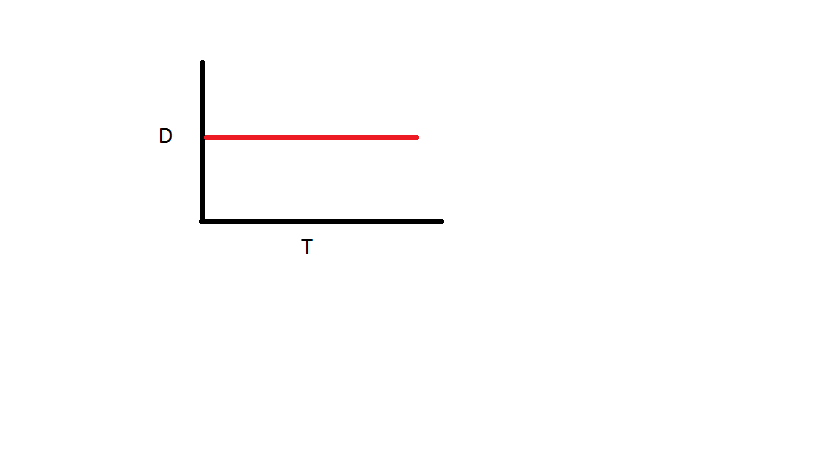
In the distance vs. time graph, what type of motion does the line represent?
a)
No motion
b)
Constant velocity
c)
Acceleration
d)
Deceleration
2.
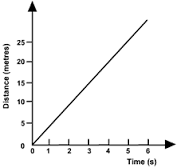
In the distance vs. time graph, what type of motion does the line represent?
a)
Acceleration
b)
No motion
c)
Deceleration
d)
Constant Velocity
3.
What is the object doing from 10-12.5 seconds?
a)
Slowing down 
b)
Returning to the starting position
c)
Speeding up
d)
Not moving
4.
Which time section is the object moving the fastest?
a)
0-10 seconds
b)
10-20 seconds
c)
20-30 seconds
d)
30-40 seconds
5.
Which graph represents the greatest acceleration?
a)
A
b)
B
c)
C
d)
D
6.
Which runner complete the 100 meter race in the least amount of time?
a)
Albert
b)
Bob
c)
Charlie
7.
What do you think the cyclist is doing between 11am and 1pm?
a)
The cyclist has stopped for lunch
b)
The cyclists is riding at a constant speed on flat ground
c)
The cyclist is practicing sprints
d)
The cyclist is riding up a hill
8.
What is the total distance covered by 2 pm?
a)
40 miles
b)
30 miles
c)
60 miles
d)
10 miles
9.
What is the line on this graph showing?
a)
moving away from starting point at a constant speed
b)
moving back towards the starting point at a constant speed
c)
acceleration (getting faster)
d)
deceleration (getting slower)
10.
A runner races in the 100 meter dash.  It takes her 10 seconds to finish.  What is her average speed?
a)
10 m/s
b)
1000 m/s
c)
100 seconds
d)
10 seconds
11.
If it takes Heather 3 seconds to run from the batter's box to first base at an average speed of 6.5 meters per second, what is the distance she covers in that time?
a)
19.5 m
b)
0.46 m
c)
2.2 m
d)
3.5 m
12.
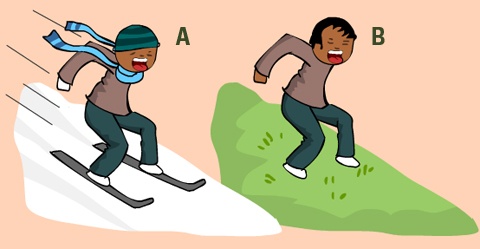
Why is it harder for the boy in Image B to get down the hill?
a)
Motion
b)
Friction
c)
Work
d)
Displacement
13.
How is gravity affected by mass?
a)
the larger the mass of the object, the greater the gravity
b)
small objects have no gravity
c)
gravity is not affected by mass of objects, whether large or small
14.
8 N to the left , and 4 N to the right. Find the net force. Is this balanced?
a)
12 N Right;  No
b)
4 N Left;  No
c)
12 N Right;  Yes
d)
4 N Left;  Yes
15.
Which one is balanced?
a)
top
b)
bottom
c)
both
d)
neither
16.
Find the net force: 15 N to the right, and another 15 N to the right.
a)
0 N Right
b)
0 N Left
c)
30 N Left
d)
30 N Right
17.

You and your friend are playing tug of war. Your friend pulls with a force of 55 N to the right. You pull with a force of 65 N to the left. What is the net force on the rope?

a)

120 N

b)

20 N

c)

10 N left

d)

10 N right

18.
What is the net force?
a)
17 N Right
b)
3 N Right
c)
3 N Left
d)
17 N Left
19.
Which  of the following best describes the tilt of the earth during the spring and fall equinoxes?
a)
The earth is tilted away from the sun (Northern hemisphere)
b)
The earth is tilted neither toward or away from the sun (tilt is side to side)
c)
The earth is tilted toward the sun (Northern hemisphere)
d)
The earth is not tilted during spring and fall
20.
What season is it in the Southern Hemisphere when it is fall in the Northern Hemisphere?
a)
winter
b)
spring
c)
summer
d)
fall
21.
What season is letter A in the northern hemisphere?
a)
Winter
b)
Summer
c)
Spring
d)
Fall
22.
In winter, the axis of the earth is pointed away or toward the sun?
a)
towards
b)
up
c)
down
d)
away
23.
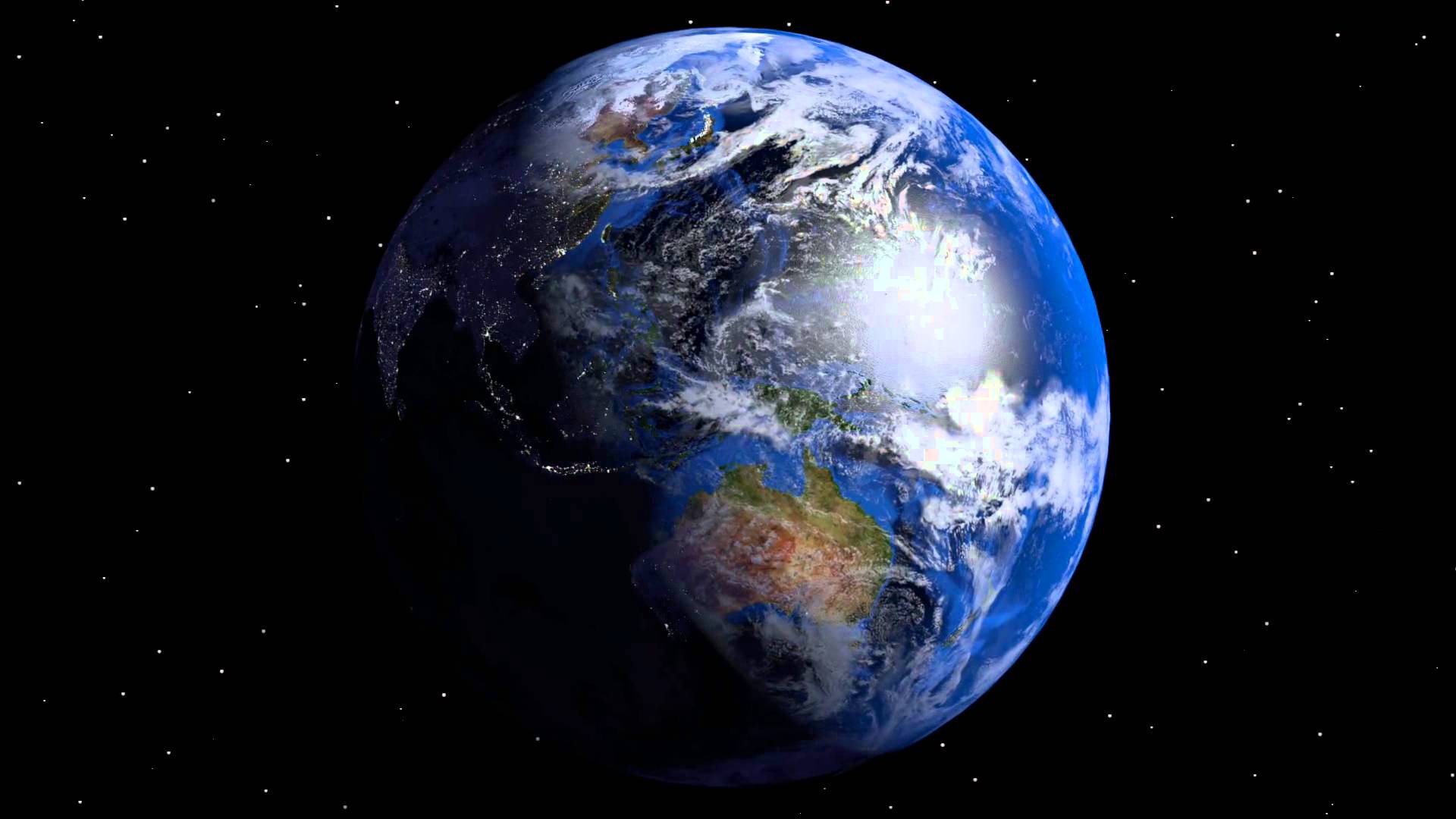
Spinning of the Earth on its axis is called...
a)
rotation
b)
revolution
c)
orbit
d)
double axis
24.
Which season is taking place in the Northern Hemisphere in Position 1?
a)
Winter
b)
Spring
c)
Summer
d)
Fall
25.
If its ____ in the Northern hemisphere, then its summer in the Southern hemisphere. 
a)
spring
b)
summer
c)
fall
d)
winter
26.
Why do globes lean sideways?
a)
To allow them to spin easier.
b)
To demonstrate the tilt of Earth's axis.
c)
To demonstrate the effects of gravity.
d)
To demonstrate day and night.
27.

What's the difference between comets and asteroids?

a)

Asteroids are made of metal and rock, while Comets are ice and rock

b)

Asteroids are made of ice and rock, while Comets are made of metals and rock

c)

There is no difference

d)

Asteroids are made of stardust, while Comets are made up of water

28.

What's the difference between meteoroid, meteor, and meteorite?

a)

Meteoroids are sand size, meteors are streaks of light in the sky, and a meteorite is the meteors that has landed

b)

Meteoroids are huge, Meteors are the pieces that land, and Meteorites are shooting stars

c)

There are no differences

d)

Meteoroids are small, Meteors are another name for comets, and Meteorites are shooting stars

29.

What is the composition of most Comets?

a)

Rock, Ice, Salt, Carbon

b)

Rock, Ice, Magma, Frozen Gases

c)

Ice, Dust, Rock, Frozen Gases

d)

Ice, Dust, Rock, Soil

30.
The belt between Mars and Jupiter
a)
Comets
b)
Asteroids
c)
Meteors
d)
Stars
31.
The definition of eclipse is:
a)
The planets line up
b)
The Sun, Earth and Mars line up
c)
The Sun, Earth and Moon line up
d)
The Earth, Moon and Venus line up 
32.
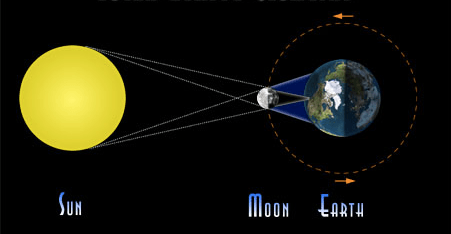
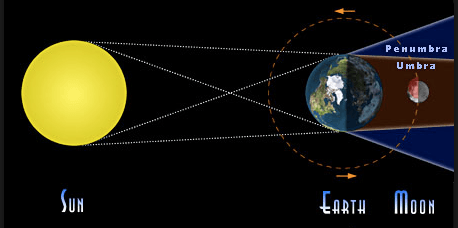
A lunar eclipse occurs when the line up is this:
a)
Sun -Earth-Moon
b)
Moon, Sun, Earth
c)
Earth-Sun-Moon
d)
Sun-Moon-Earth
33.
The line up for a solar eclipse is: 
a)
Sun-Earth-Moon
b)
Earth-Sun-Moon
c)
Sun-Moon-Earth
d)
Earth-Moon-Mars
34.
A solar eclipse only happens during a ________ moon.
a)
New
b)
Cresent
c)
Gibbous
d)
Full
35.
Which type of eclipse is shown in this picture?
a)
Solar Eclipse
b)
Orbit
c)
Lunar Eclipse
d)
Total Eclipse
36.
Which type of eclipse is shown in the diagram?
a)
Solar Eclipse
b)
Lunar Eclipse
c)
Total Eclipse
d)
Partial Eclipse
37.
a)
solar eclipse
b)
lunar eclipse
38.
a)
solar eclipse
b)
lunar eclipse
39.
What two factors combine to keep the planets moving in orbit?
a)
Gravity and Mass
b)
Gravity and Weight
c)
Inertia and Gravity 
d)
Inertia and Mass
40.

____________are areas of gas on the sun that are cooler than the gas around them.

a)

Solar Wind

b)

Solar Flares

c)

Sunspots

d)

Core

41.
When we look at the sun, what layer are we viewing?
a)
photosphere
b)
chromosphere
c)
corona
d)
convection zone
42.
a brief burst of energy from the sun’s photosphere
a)
corona
b)
solar flare
c)
solar wind
d)
photosphere
43.
When prominences erupt into space releasing gas and energy we call this: 
a)
solar winds
b)
coronal outburst
c)
solar flares
d)
auroras
44.

The reason that most solar winds do not disrupt electricity on the Earth is due to the Earth’s ______.

a)

poles

b)

magnetic field

c)

stratosphere

d)

auroras

45.
What kind of waves that are mostly used in communication on Earth can be interrupted by solar flares?
a)
radio
b)
ultraviolet
c)
gamma
d)
infrared
46.

A refracting telescope uses _______ to focus light.

a)

Lenses

b)

Mirrors

c)

Lasers

d)

Water

47.

Reflecting telescopes use _______ to focus light.

a)

Lenses

b)

Flat mirrors

c)

Curved Mirrors

d)

A lens and lasers

48.

What type of telescope can work 24 hours a day and even be used in the rain?

a)

Refracting Telescope

b)

Radio Telescope

c)

Newtonian Telescope

d)

Solar Telescope

49.
Why is the Hubble telescope located in space?
a)
So it can be closer to the stars it magnifies
b)
They have very large optical lenses
c)
So its images arent distorted by Earth's atmosphere 
d)
So it can be operated by astronauts 
50.
Why are many large optical telescopes located on mountains?
a)
to be closer to the stars
b)
to be above part of the atmosphere
c)
because it is easier to build telescopes on mountains
d)
to be closer to city lights
51.
Radio telescopes biggest advantage is that they:
a)
Can be used during the day
b)
Can be used in any type of weather
c)
Almost all radio waves make it to the surface
d)
All of these
52.
A light year is...
a)
The speed light travels
b)
How long it takes light to get to you from the sun
c)
The distance light can travel in a year
d)
How many years it takes light to be emitted
53.
What is the speed of light in air?
a)
140,000 miles/sec
b)
186,000 miles/sec
c)
60 miles/hour
d)
120 miles/hour
54.
What does the Red-shift tell us about the universe
a)
the universe is expanding
b)
the universe is contracting
c)
the big bang is false
d)
nothing
55.
Galaxies that are redshifted are:
a)
actually blue.
b)
really far away.
c)
invisible.
d)
moving away from us.
56.
A light year is related to ...
a)
Time
b)
Energy
c)
Distance
d)
Mass
57.
A light year is...
a)
The speed light travels
b)
How long it takes light to get to you from the sun
c)
The distance light can travel in a year
d)
How many years it takes light to be emitted
58.

As the galaxy moves away from us, we see it as:

a)

white shift

b)

blue shift

c)

dark matter

d)

red shift

59.

During the moon phases shown in the image Earth will experience a -

a)

Spring Tide

b)

Neap Tide

60.

During the moon phases shown in the image Earth will experience a -

a)

Spring Tide

b)

Neap Tide

61.

During the moon phase shown in the image Earth will experience a -

a)

Spring Tide

b)

Neap Tide

62.

During the moon phase shown in the image Earth will experience a -

a)

Spring Tide

b)

Neap Tide

63.

During which moon phases will Earth experience the strongest, or greatest difference between high and low tides?

a)

First Quarter and Full Moon

b)

First Quarter and Last Quarter

c)

New Moon and Full Moon

d)

New Moon and Last Quarter

64.
Research question: does the distance a person kicks a soccer ball effect how well they will do on their math test.  What is the dependent variable?
a)
How far they kick the soccer ball
b)
who the person is
c)
how well they do on the math test
d)
Type of soccer ball.
65.
When experimenting with the growth of a plant, a scientist uses three (of the same type of) plants, two different fertilizers, equal light, and equal water. What type of variable is the fertilizer?
a)
Dependent
b)
Independent
c)
Control
d)
Compound
66.
An experiment is performed on plants to see how different liquids affect plant growth. Each plant in the experiment is given a different liquid; water, apple juice, or milk. Each plant has the same amount of soil, sunlight, and listens to the same music. In this investigation, the independent variable is ...
a)
The type of plant
b)
The amount of sunlight
c)
The type of music
d)
The type of liquid
67.

These kind of observations are made using instruments such as rulers, balances and thermometers.

a)

qualitative

b)

quantitative

68.

These kind of observation use your senses to observe results.

a)

qualitative

b)

quantitative

69.

The leaf is 5 mm wide.

a)

qualitative

b)

quantitative

70.

The clouds are grey and ground is wet.

a)

qualitative

b)

quantitative

71.
BooBoo believes that his plants grow so well because he is always playing music in his room. What is a question he might ask to test this?
a)
Does music have an affect on plant growth?
b)
Which music groups like plants?
c)
Does plant growth make music sound better?
d)
Why do dying plants hate music?
72.
What would be an independent variable in an experiment where the testable question is, "Which paper towel brand is the strongest?"
a)
brand of paper towel
b)
amount of weight placed on each towel
c)
number of times each brand is tested
d)
strength of the paper towel
73.
The size of the plant would be the dependent variable for an experiment for which of the following testable questions?
a)
What light brightness makes plants grow the largest?
b)
Does plant size affect the amount of carbon dioxide that is absorbed?
c)
Which fertilizer makes plants grow the fastest?
d)
Which types of plants will die in mercury-polluted soil?
74.
Kay Kay believes that studying is for suckers. What would be a testable question to test whether studying is worth wasting all that valuable time?
a)
How many people agree that studying is for suckers?
b)
How does the amount of time spent studying affect test grades?
c)
What do cool people like me do in their spare time?
d)
Which class do kids cheat in the most?
75.
What would be a dependent variable in an experiment where the testable question is, "What level of salt works best to hatch brine shrimp?"
a)
The number of brine shrimp eggs placed in each salt solution
b)
The amount of salt used in each solution
c)
The number of brine shrimp that hatch in each solution
d)
The temperature of each salt solution