
Font size
 Worksheets
Renaissance to the Enlightenment Review
Total questions: 54
Worksheet time: 36mins
What does the word Renaissance translate to?
Rebirth
New Born
Secular
Dowry
What was the theory that said that the Earth and all the planets revolve around the sun?
Geocentric
Heliocentric
Geographic
The Earth is flat


Why did the Reformation begin?
Luther wanted to start a new religion.
The Church was poor and needed a new leader.
Calvin wanted to head the Church.
There were abuses in the Church that needed changing.
The idea that God has already decided who was saved from the beginning
Theology
Presdestination
Paranoia
Conform
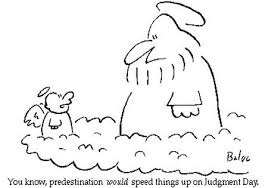
What is Predestination?
Belief that you are in control of your own destiny
Belief that God has already decided your destiny

Machiavelli wrote, "The Prince" a book on how to...
develop the perfect feudal kingdom.
be an ideal, "Renaissance man".
start a protestant reformation.
acquire and maintain political power by all means necessary.

Leonardo Da Vinci was an expert painter, architect, mathematician, inventor, sculptor, etc., this made him known as...
The greatest genius of all time.
An influential inventor
An ideal "Renaissance Man"
An undeniable contributor to human growth and development.

Calvinism focused on the concept of "___________". This idea meant that God had already determined whether or not you would go to heaven or hell.
Prepapacy
Preobservance
Predestination
Prelimination

Anabaptists were considered dangerous and radical because of their belief that....
The Christian church should wage another holy war on Muslim practitioners.
The Protestant church was the only truth in the Christian religion.
The church and state government should be separated, they felt that the church should not dictate peoples lives.
Jesus was set down only to save followers of the Protestant religion.
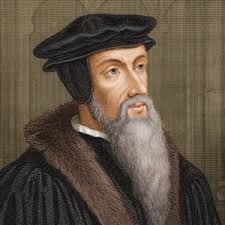
What is Calvinism?
Religious beliefs based on the teachings of John Calvin
Religious beliefs based on the teachings of the Pope
Religious beliefs based on the teachings of Calvin Coolidge

The Amish trace their roots to the
Lutherans
Congregationalists
Methodists
Anabaptists
_________________ came together in Zurich, Switzerland in 1525 because they wanted radical reform of the Catholic Church. They did not believe in baptizing (a ritual, or ceremony, to admit a person into the church community) children like the Christians did. They thought that only adult believers could be baptize.
Lutheran
Anglican
Anabaptist
Calvinist
________________ believed in “predestination.” This was the idea that at the beginning of time, when God created the world and everything in it, God had already decided everyone who would ever be born and each person’s destiny (whether or not people would be allowed into heaven at their deaths).
Lutherans
Anglicans
Anabaptists
Calvinists
people opposed to the use of war or violence to settle disputes
pacifists
patroons
indentured servant
debtor
In the ____ model of the solar system the Earth is in the center.
Heliocentric
Geocentric (Ptolemaic)
Anthropocentric
Egocentric
Which scientist is responsible for the discovery of gravity and creating laws of motion.
Robert Boyle
Isaac Newton
Francis Bacon
Nicolaus Copernicus
Which scientists worked on proving the heliocentric theory of the universe?
Bacon, Boyle and Broski
Kepler, Galileo and Copernicus
Newton created it on his own
Luther, Calvin and Machiavelli
What is Francis Bacon most known for?
creation of the telescope
father of modern chemistry
creation of the scientific method
father of astronomy
What did Descartes believe about his own thoughts?
His thoughts proved he existed
People's ability to learn to live together peacefully
People become what they are because of the events
life, liberty, and property
If the stereo is on, then the volume is loud.
If the volume of the stereo is loud, then the neighbors will complain.
Which Philosopher liked the idea of laws being made by "Majority Vote?"
Locke
Hobbes
Montesquieu
Rousseau
Select each of the 3 Natural Rights Locke said everyone was born with......
Life
Property
Law
Liberty
Protection
Which Philosopher liked a SPLIT POWER gov't, one with a leader AND CHECKS and BALANCES?
Locke
Montesquieu
Rousseau
Hobbes
Select the 3 Philosophers who's ideas CLEARLY are present in our system of Gov't today.....
Locke
Newton
Hobbes
Montesquieu
Rousseau
According to John Locke, if the government didn't protect the people's natural rights, what could the people do?
Overthrow the government
Petition the government for their rights
Nothing, the people don't have rights
Which American Founding Father did John Locke influence the most?
Ben Franklin
George Washington
John Adams
Thomas Jefferson
What role did the government have, according to John Locke?
Protect the people's natural rights
Take away people's natural rights
Help determine the people's natural rights

who defended freedom of speech and religion?
Locke
Voltaire
Rousseau
Who developed laissez-faire economics as an economic philosophy?
Adam Smith
Karl Marx
John Locke
Louis XVI
Laissez-faire capitalism as attributed to Adam Smith called for
heavy taxation of manufacturers
strict government control of the economy
minimal government involvement in the economy
government investments in major industries
Described how blood and the circulatory system functioned
Galileo Galilei
Sir Isaac Newton
Antony van Leeuwenhoek
William Harvey

Enlightenment philosopher who believed men and women were equally rational so they should have equal rights to education.
Voltaire
Denis Diderot
Mary Wollstonecraft
Adam Smith

