wayground logo

Free Printable Worksheets

Font size

S
M
L
XL
Worksheets

Medical Terminology Midterm

Total questions: 125

Worksheet time: 2hrs 10mins

Name
Class
Date
1.
Which term means below?
a)
Inferior
b)
Superior
c)
Posterior
d)
Lateral
2.
The head is considered to be ________ compared to the chest?
a)
Anterior
b)
Lateral
c)
Inferior
d)
Superior
3.
You find a patient laying face down, which position is this?
a)
Supine
b)
Anterior
c)
Prone
d)
Superior
4.
A 47 year has fallen and is laying on her back, what position is this?
a)
Lateral
b)
Prone
c)
Superior
d)
Supine
5.
Which medical term means to the front?
a)
Supine
b)
Anterior
c)
Lateral
d)
Inferior
6.
The standard position used when referring to location on the body.
a)
Anatomical Position
b)
Anatomical Reference
c)
Anatomical Direction
d)
Anatomical Indexing
7.
Which cavity includes the heart and lungs?
a)
Thoracic
b)
Cranial
c)
Abdominal
d)
Retroperitoneal
8.
Which cavity contains the liver and gall bladder?
a)
Thoracic
b)
Abdominal
c)
Cranial
d)
Retroperitoneal
9.
Which of the following organs are located in the abdominal cavity?
a)
Liver, Gall Bladder, Kidney, Spleen, Stomach
b)
Appendix, Liver, Gall Bladder, Spleen, Stomach
c)
Stomach, Spleen, Gall Bladder, Liver, Lungs
d)
Gall Bladder, Liver, Bronchial, Spleen, Appendix
10.
Which of the following locations can the liver be found located in?
a)
Left Upper Quadrant
b)
Right Lower Quadrant
c)
Right Upper Quadrant
d)
Left Lower Quadrant
11.
A 27 year old was stabbed multiple times in the upper left quadrant. Which organ could be injured?
a)
Liver
b)
Spleen
c)
Appendix
d)
Gall Bladder
12.
In the word cardiology, cardio would be considered a __________?
a)
Suffix
b)
Prefix
c)
Pronoun
d)
Affix
13.
In the word sinusitis, the word itis would be considered a _________?
a)
Pronoun
b)
Prefix
c)
Affix
d)
Suffix
14.
A 32 year old has severe bruising to the right lower quadrant of her abdomen, which organ could be injured?
a)
Spleen
b)
Liver
c)
Gall Bladder
d)
Appendix
15.

You find a 16 year old female on her right side, this is known as which position?

a)

Lateral

b)

Supine

c)

Prone

d)

Inferior

16.

Oral means ________

a)

Eyes

b)

Ears

c)

Mouth

d)

Nose

17.

Nasal means ______.

a)

Mouth

b)

Ears

c)

Mouth

d)

Nose

18.

In the word tachycardia, which part is considered the suffix?

a)

Tach

b)

Cardia

c)

Tachy

d)

Car

19.

In the Hypoglycemia, which part is considered the prefix?

a)

Hyp

b)

Hypo

c)

Cemia

d)

Glycemia

20.
A combining form consists of a word root and combining vowel.
a)
TRUE
b)
FALSE
21.
Ancillary Reports are written by the anesthesiologist and surgeon.
a)
true
b)
false
22.
Ambulatory care and outpatient clinics both provide services that do not require overnight hospitalization.
a)
true
b)
false
23.
Which is NOT one of the word parts in a medical term?
a)
combining vowel
b)
word root
c)
combining form
d)
suffix
24.
Which medical terminology word part provides the general meaning of the word?
a)
combining vowel
b)
word root
c)
suffix
d)
prefix
25.
In which situation is a combining vowel never used?
a)
between two word roots
b)
between a word root and the suffix when the suffix begins with a consonant
c)
between a prefix and word root
d)
all of the above
26.
Which of the following is NOT the type of information provided by a prefix?
a)
procedure
b)
location of organ
c)
number of parts
d)
time
27.
Which of the following is the type of information provided by a suffix?
a)
procedure
b)
location of an organ
c)
number of parts 
d)
time
28.
Which of the following statements regarding abbreviations is NOT correct?
a)
Abbreviations are commonly used.
b)
Using your personal abbreviations is acceptable if approved by your supervisor.
c)
Use of abbreviations can be confusing.
d)
Spell out abbreviations if confusion is a possibility.
29.
Which of the following records the patient's care throughout the day?
a)
physician's orders
b)
discharge note
c)
nurse's notes
d)
history & physicial 
30.
The ________ is a comprehensive outline of the patient's entire hospital stay.
a)
nurse's notes
b)
discharge summary
c)
consultation report
d)
history and physical
31.
Which healthcare setting provides services in a prepaid system?
a)
physician's office
b)
health maintenance organization
c)
specialty care hospital
d)
home health care
32.
Which combining form is spelled incorrectly?
a)
dermat/o
b)
hemat/o
c)
nephr/o
d)
opthalm/o
33.
Which combining form means skin?
a)
dermat/o
b)
gynec/o
c)
immun/o
d)
rhin/o
34.
Which combining form means to cut?
a)
enter/o
b)
path/o
c)
hydr/o
d)
cis/o
35.
Which prefix does NOT stand for a number?
a)
bi-
b)
per-
c)
quadri-
d)
tri-
36.
Which suffix means pain?
a)
-cele
b)
-algia
c)
-ectasis
d)
-oma
37.
Which suffix means tumor or mass?
a)
-itis
b)
-iasis
c)
-oma
d)
-osis
38.
Which of the following suffixes is NOT an adjective suffix?
a)
-rrhea
b)
-rrhage
c)
-rrhexis
d)
-rrhaphy
39.
Which of the following suffixes does NOT refer to an instrument?
a)
-gram
b)
-meter
c)
-graph
d)
-scope
40.
Which suffix means the process of measuring?
a)
-graphy
b)
-scopy
c)
-metry
d)
-otomy
41.
Which of the following suffixes does NOT refer to a surgical procedure?
a)
-megaly
b)
-ectomy
c)
-plasty
d)
-ostomy
42.
Which suffix means inflammation?
a)
-ia
b)
-iasis
c)
-ism
d)
-itis
43.

The epidermis is which layer of skin?

a)

The center layer

b)

The outermost layer

c)

The lower layer

44.

What is the term for a dark brown or black pigment found in parts of the body?

a)

Melanocytes

b)

Sebum

c)

Melanin

d)

Sweat glands

45.

This combining form means, white

a)

albin/o

b)

cyanosis

c)

bulla

d)

fissure

46.

A fat cell is a/an_________

a)

yellow tumor

b)

cyst

c)

pustule

d)

adipocyte

47.

An oily substance secreted by sebaceous glads is:

a)

Sebum

b)

cerumen

c)

melanin

d)

collagen

48.

Another name for the dermis, a layer of skin is:

a)

stratum corium

b)

hypodermis

c)

stratum corneum

d)

stratum basale

49.

What is the medical term for abnormal condition of lack of sweat?

a)

xanthoma

b)

anihidrosis

c)

alopecia

d)

mycosis

50.

The middle layer of skin is called___

a)

dermis

b)

epidermis

c)

hopodermic

d)

adipose layer

51.

What is a benign tumor made of fat tissue

a)

adenoma

b)

liposarcoma

c)

carcinoma

d)

lipoma

52.

The suffix -rrhea means

a)

flow or discharge

b)

across or through

c)

left or right

d)

above or upon

53.

The combining form jaund/o means

a)

green

b)

orange

c)

yellow

d)

red

54.

LUQ

a)

Left upper quadrant

b)

lower umbilical region

c)

left leg

d)

left arm

55.

ac

a)

after meals

b)

before meals

c)

post meals

d)

acquired

56.

What term below means: existing over a long period of time?

a)

acute

b)

diagnosis

c)

chronic

d)

final

57.

What term below means sole of foot?

a)

plantar

b)

pedal

c)

pelvic

d)

pectorial

58.

What is a skin rash notable for pale red, raised, itchy bumps

a)

tinea

b)

urticaria

c)

warts

d)

impetigo

59.

What is the study of blood called?

a)

Oncology

b)

Hematology

c)

Cardiology

d)

physiology

60.

What plane of movement does NOT belong?

a)

Sagittal

b)

Transverse

c)

Coronal

d)

Horizontal

61.

What action is being performed here?

a)

Adduction

b)

Abduction

c)

Flexion

d)

Extension

62.

Which one of these pictures shows protraction of the jaw?

a)
b)
c)
d)
63.

If I were to push my toes and ball of my foot down, it would be called what?

a)

Inversion

b)

Plantar flexion

c)

Dorsi flexion

d)

Flexion

64.

What is a myocardial infarction?

a)

Stroke

b)

Blood clot

c)

Angina

d)

Heart attack

65.

'Costs' pertains to the what in medical terms?

a)

Bones

b)

Ribs

c)

Medical rebates

d)

Carcinogenic osteopathy

66.

Widening blood vessel

a)

Aneurysm/o

b)

Varic/o

c)

Angi/o

d)

Embol/o

67.

Vein

a)

phleb/o, my/o

b)

ven/o, vascul/o

c)

angi/o, phleb/o

d)

ven/o, phleb/o

68.

To hold back; block

a)

Embol/o

b)

Thromb/o

c)

Isch/o

d)

Scler/o

69.

Two bones are held together in a joint by:

a)

tendon

b)

ligament

c)

cartilage

d)

muscle

70.
Which letter(s) are marking Ventricular contraction?
a)
P wave
b)
QRS Complex
c)
T wave
71.
Which of the following organs is NOT part of the cardiovascular system?
a)
artery
b)
spleen
c)
vein
d)
capillary
72.
Which of the following abbreviations stands for a surgical procedure?
a)
CABG
b)
MI
c)
HTN
d)
CHF
73.
Which of the following abbreviations stands for high blood pressure?
a)
HTN
b)
BP
c)
BBB
d)
bpm
74.
In which of the following conditions is the heart muscle too weak to pump efficiently?
a)
congestive heart failur
b)
myocardium
c)
endocarditis
d)
MI
75.
Which of the following is a floating clot that has broken off of a clot somewhere else in the body?
a)
thrombus
b)
embolus
c)
thrombophlebitis
d)
hemerrhoids
76.
Which of the following therapeutic devices is used to treat ventricular fibrillation?
a)
endarterectomy
b)
implantable cardioverter-defibrilator
c)
extracorporeal circulation
d)
pacemaker
77.
Which of the following terms is misspelled?
a)
atherosclerosis
b)
myocardial
c)
phleboitis
d)
interventricular
78.
Which of the following terms means process of recording a vessel?
a)
angiogram
b)
angiography
c)
artreiography
d)
hemangiography
79.
The heart recieveds blood from the:
a)
aorta
b)
vena cava
c)
coronary arteries
d)
pulmonary arteries
80.

Abnormal hardening:

a)

itis

b)

ostomy

c)

sclerosis

d)

dys

81.

A record of the electrical activity of the heart is:

a)

EKG- electrocardiology

b)

ECG-electrocardiogram

c)

EGD-Esophagogastroduodenoscopy

82.

Term meaning tissue death:

a)

osis

b)

malacia

c)

necrosis

d)

hepato

83.

The abnormal narrowing of an artery or arteries is called:

a)

arteriosclerosis

b)

arteriostenosis

c)

arthrostenosis

d)

atherosclerosis

84.

Blood specialist

a)

cardiologist

b)

hempologist

c)

hematologist

d)

hemostasis

85.

SA Node

a)

secondary pacemaker of heart

b)

backup pacer of heart

c)

hearts natural pacemaker

86.

leuk/o

a)

red

b)

blue

c)

white

87.

small thin arteries that carry blood to capillaries

a)

capilli/o

b)

arterioles

c)

venules

88.

Inflammation of pericardium

a)

myocarditis

b)

endocarditis

c)

pericarditis

89.

2 upper chambers of heart

a)

ventricles

b)

atria

90.

angina pectoris

a)

chest pain

b)

chest disorder

c)

aneurysm

91.

2 lower chambers of heart

a)

atria

b)

ventricles

92.

CHF

a)

Congestion Health Disorder

b)

Congestive Heart Diagnosis

c)

Congestive Heart Failure

93.

CAD

a)

coronary act disease

b)

coronary artery diagnosis

c)

coronary artery disease

94.

rhythmic pressure against walls of artery due to contraction of heart

a)

heart beating

b)

pulse

c)

respiration

95.

white blood cells

a)

erythrocytes

b)

leukocytes

96.
Two main organs of the lymph system:
a)
Thymus & Pancreas
b)
Pancreas & Thyroid
c)
Spleen & Thymus
d)
Tonsils & Thyroid
97.
Which type of cells make antibodies?
a)
A cells
b)
B cells
c)
M cells
d)
T cells
98.
In which condition does the body turn against itself and mistakenly attack normal cells?
a)
autoimmune disease
b)
allergy
c)
Hodgkin's disease
d)
cardiovascular disease
99.
Which tissue produces lymphocytes and filters out impurities and harmful substances from the lymph?
a)
spleen
b)
tonsils
c)
thymus
d)
lymph nodes
100.
What is the body's hypersensitive response to an outside substance that is otherwise harmless?
a)
autoimmune disease
b)
allergy
c)
Hodgkin's disease
d)
cardiovascular disease
101.
An immune response that does not involve antibodies but rather involves the activation of macrophages and natural killer cells:
a)
Acquired Passive Immunity
b)
Natural Immunity
c)
Acquired Active Immunity
d)
Cell-Mediated Immunity
102.

Softening of bone

a)

Osteomalacia

b)

Chrondrocyte

c)

Encephalitis

d)

Tendotomy

103.

Structure around bone.

a)

Cephalometer

b)

Calcane/o

c)

Periosteum

d)

Adduction

104.

Branch of medicine concerned with prevention, diagnosis, care and treament of musculoskeletal disorders.

a)

Arthroscope

b)

Arthropathy

c)

Osteomalacia

d)

Orthopedics

105.

The line of fracture does not include the whole bone

a)

Complicated fracture

b)

Impacted fracture

c)

Cole’s fracture

d)

Incomplete fracture

106.

Autoimmune neuromuscular disorder characterized by severe musclar weakness and progressive fatigue.

a)

Open fracture

b)

Myasthenia gravis

c)

Greeenstick fracture

d)

Closed fracture

107.

A place where bones meet.

a)

Synarthroses

b)

Arthritis

c)

Articulation

d)

Enterorrhexis

108.

Which of the following is NOT a type of muscle?

a)

smooth

b)

rough

c)

cardiac

d)

skeletal

109.

Which part of the skeletal system protects the heart and lungs?

a)

cranium/skull

b)

pelvis

c)

scapula

d)

ribs

110.

Muscles that you have NO conscious control over, such as the muscles that line the digestive system, are classified as ___________.

a)

voluntary

b)

involuntary

c)

skeletal

d)

cardiac

111.

The type of involuntary muscle that lines the heart is the ___________ muscle.

a)

skeletal

b)

cardiac

c)

smooth

d)

bicep

112.

The muscles that line the digestive system are _____________ muscles.

a)

cardiac

b)

skeletal

c)

smooth

d)

intestinal

113.

Muscles that move an arm or leg contract and relax. These muscles are called _________________ muscles.

a)

cardiac

b)

skeletal

c)

connective

d)

smooth

114.
Bone marrow produces
a)
red blood cells 
b)
White blood cells 
c)
platlets 
d)
all of the above
115.
a)
rib
b)
spine
c)
scapula
d)
clavicle
116.
What is another name for the kneecap?
a)
Patella
b)
Tibia
c)
Fibia
117.
a)
ulna
b)
humerus
c)
radius 
d)
vertebrae
118.
a)
ulna
b)
humerus
c)
radius
d)
vertebrae
119.
a)
metatarsals
b)
carpals
c)
tarsals
d)
metacarpals
120.
a)
metacarpals
b)
phelanges
c)
tarsals
d)
metatarsals
121.
The lateral motion TOWARDS the midline is called ______.
a)
adduction
b)
abduction
c)
internal rotation
d)
external rotation
122.
Movement away from the mid-line is called _____________.
a)
abduction
b)
adduction
c)
internal rotation
d)
external rotation
123.
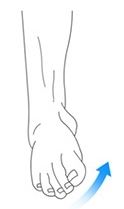
Turning the foot so the plantar surfaces faces medially.
a)
plantar flexion
b)
eversion
c)
inversion
d)
dorsiflexion
124.
Which of the following best describes extension?
a)
The straightening of a joint where the angle of movement increases
b)
The bending of a joint where bones get closer together
c)
The rotation of a joint or spinning of one bone on another
d)
The lateral movement away from the midline
125.
Pointing your toe
a)
dorsiflexion
b)
plantar flexion
c)
flexion
d)
extension