wayground logo

Free Printable Worksheets

Font size

S
M
L
XL
Worksheets

Circulatory Unit Test

Total questions: 56

Worksheet time: 42mins

Name
Class
Date
1.

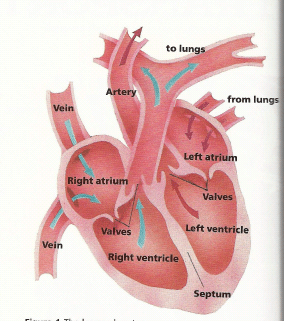
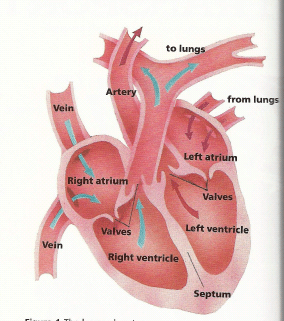
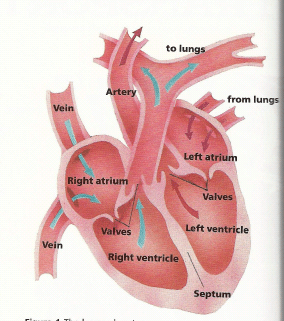
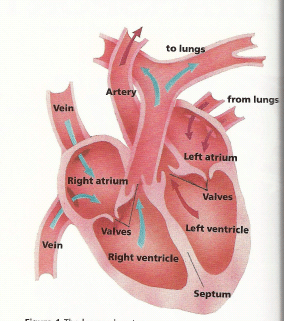
what is number 12

a)

Right Atrium

b)

Right Ventricle

c)

Left Atrium

d)

Left Ventricle

2.

what is number 8

a)

Right Atrium

b)

Right Ventricle

c)

Left Atrium

d)

Left Ventricle

3.

what is number 4

a)

Right Atrium

b)

Right Ventricle

c)

Left Atrium

d)

Left Ventricle

4.

what is number 6

a)

Right Atrium

b)

Right Ventricle

c)

Left Atrium

d)

Left Ventricle

5.

what is number 11

a)

tricuspid Valve

b)

bicuspid valve

c)

semilunar valve

6.

what is number 5

a)

tricuspid Valve

b)

bicuspid valve

c)

semilunar valve

7.

what is number 10

a)

tricuspid Valve

b)

bicuspid valve

c)

semilunar valve

8.

what is number 15

a)

aorta

b)

superior vena cava

c)

Inferior vena cava

9.

what is number 1

a)

aorta

b)

superior vena cava

c)

Inferior vena cava

10.

what is number 9

a)

aorta

b)

superior vena cava

c)

Inferior vena cava

11.

what is number 13

a)

right pulmonary artery

b)

left pulmonary artery

c)

right Pulmonary vein

d)

Left pulmonary vein

12.

what is number 14

a)

right pulmonary artery

b)

left pulmonary artery

c)

right Pulmonary vein

d)

Left pulmonary vein

13.

what is number 2

a)

right pulmonary artery

b)

left pulmonary artery

c)

right Pulmonary vein

d)

Left pulmonary vein

14.

what is number 3

a)

right pulmonary artery

b)

left pulmonary artery

c)

right Pulmonary vein

d)

Left pulmonary vein

15.

The _______________divides the heart into left and right sides.

a)

septum

b)

atria

c)

ventricles

16.

The upper chambers of the heart are called______________.

a)

atria

b)

ventricles

c)

septum

17.

There are _____________chambers in the heart.

a)

3

b)

4

c)

5

18.

The ______________pump blood into the body.

a)

septum

b)

atria

c)

ventricles

19.

What keeps blood from flowing backwards in the heart?

a)

atrium

b)

valves

c)

artery

20.
______ carry blood to the heart.
a)
Arteries
b)
Veins
c)
Capillaries
d)
Vena Cava
21.
_____ carries blood away from the heart.
a)
Blood cells
b)
Veins
c)
Capillaries
d)
Arteries
22.

The movement of blood through the heart and body is called

a)

circulation

b)

locomotion

c)

ventriculation

d)

heart pump

23.

With circulation, the heart provides your body with:

a)

Oxygen

b)

Nutrients

c)

A way to get rid of waste

d)

All of the above

24.

The atria are the “upstairs” chambers of the heart and these parts are the “downstairs” chambers

a)

Valves

b)

Ventricles

c)

Blood

d)

Candy hearts

25.
Largest artery in the human body:
a)
Pulmonary artery
b)
femoral artery
c)
aorta
d)
carotid artery
26.
The pressure exerted on the arterial walls when the heart relaxes is called the
a)
diastolic pressure
b)
systolic pressure
c)
hydrostatic pressure
d)
osmotic pressure
27.
The pressure exerted on the arterial walls when the heart contract is called
a)
diastolic pressure
b)
systolic pressure
c)
hydrostatic pressure
d)
osmotic pressure
28.
Which side of the heart pumps blood into the lungs?
a)
Right
b)
Left
29.
______ carry blood to the heart.
a)
Arteries
b)
Veins
c)
Capillaries
d)
Vena Cava
30.
This is the pointed end of the heart.
a)
Superior and Inferior Vena Cava 
b)
Aorta
c)
Apex 
d)
Base 
31.
There are 3 layers to the heart.  This is the outermost layer of the heart wall.
a)
Visceral pericardium (aka: epicardium)
b)
Myocardium
c)
Endothelium
d)
Mediastinum 
32.
There are 3 layers to the heart.  This is the middle layer of the heart wall.  It is the thickest of the 3 layers and is made of cardiac muscle arranged spirally around the heart which creates a “wringing” motion to the heart.
a)
Visceral pericardium (aka: epicardium)
b)
Myocardium
c)
Endothelium
d)
Mediastinum 
33.
There are 3 layers to the heart.  This is the innermost layer of the heart wall.  
a)
Visceral pericardium (aka: epicardium)
b)
Myocardium
c)
Endothelium
d)
Mediastinum 
34.
This encloses the heart (like a bag) and has two layers.
a)
Auricles
b)
Left and right coronary arteries
c)
Pericardium
d)
Interventricular groove or sulcas
35.
These are vessels that are very small and collect blood from the capillaries.
a)
Veins 
b)
Venules 
c)
Arteries 
d)
Arterioles 
36.
These are vessels that are very small and delivers blood to the capillaries.
a)
Veins 
b)
Venules 
c)
Arteries 
d)
Arterioles 
37.
These are vessels that return oxygen-poor blood to the heart.  They are thin walled.
a)
Veins 
b)
Venules 
c)
Arteries 
d)
Arterioles 
38.
These are vessels that carry oxygen-rich blood from the heart.  They are thick walled.
a)
Veins 
b)
Venules 
c)
Arteries 
d)
Arterioles 
39.

The proteins found on the surface of RBCs that allow us to type blood as A, B, O or AB are called

a)

antigens

b)

antibodies

c)

aggluntates

d)

Rh factors

40.

What is produced by your body in response to foreign antigens, such as the wrong type of blood?

a)

agglutinates

b)

clotting factors

c)

phagocytes

d)

antibodies

41.

What is the reaction between antigens and antibodies that allow you to determine blood type?

a)

clotting

b)

agglutination

c)

aggregation

d)

antibody production

42.

Tyler has blood type AB+, he can donate blood to a person that has blood type?

a)

AB+

b)

AB-

c)

O-

d)

O+

43.

Which blood type has Type A antibodies?

a)

Type AB

b)

Type O

c)

Type B

d)

Type B and Type O

44.

Laney is the universal donor, what blood type does she have?

a)

O-

b)

O+

c)

AB+

d)

AB-

45.

Destiny has blood type B, what antigen is present?

a)

None

b)

A

c)

B

d)

A and B

46.
If a red blood cell has no antigens on its surface, what is its blood type?
a)
A
b)
B
c)
AB
d)
O
47.
Someone who has Type O blood has what for antibodies (clumping proteins)?
a)
No antibodies
b)
A antibodies
c)
B antibodies
d)
A and B antibodies
48.

What are the components of blood?

a)

white blood cells

b)

red blood cells

c)

platelets

d)

plasma

49.

What are erythrocythes?

a)

red blood cells

b)

white blood cells

c)

plasma

d)

platelets

50.

What are thrombocythes?

a)

heart vessels

b)

platelets

c)

white blood cells

d)

pulmonary vein

51.

What are leukocytes?

a)

red blood vessels

b)

plasma

c)

white blood cells

d)

platelest

52.

What are the 4 major blood types?

a)

Blood type A

b)

Blood type B

c)

Blood type C

d)

Blood type AB

e)

Blood type O

53.

Where are antibodies located?

a)

surface of red blood cells

b)

surface of white blood cells

c)

plasma

d)

surface of platelets

54.
Which blood type is the universal recipient?
a)
AB+ 
b)
AB-
c)
O+
d)
O-
55.
Which blood type is the UNIVERSAL DONOR?
a)
O+
b)
O-
c)
AB+
d)
AB-
56.

What blood type is this?

a)

A+

b)

B+

c)

AB+

d)

AB-