
 Worksheets
NCFE PE
Total questions: 50
Worksheet time: 25mins
Which of these bones is not found in the arm?
Ulna
Femur
Humerus
Radius
Where in the body are the metacarpals found?
Leg
Feet
Arm
Hand
Which of these is not a function of the skeleton?
Support
Running
Movement
Blood Cell Production
A joint is....
Where two or more bones meet
Attaches muscles together
On a football pitch
A bad tackle
A ligament...
Is a bone
Help cushion at a joint
attaches two muscles together
Attaches bones to bones
An example of a hinge joint is?
The knee
The hand
The neck
In your back
A ball and socket joint are found?
At the knee
At the hip
At the elbow
Ankle
What is Flexion?
Pulling a muscle
Extending a joint
Bending a joint
Straightening a joint
Extension is?
Bending a joint
Straining a muscle
Throwing a ball
Straightening a joint
Abduction is?
Breaking a muscle
Movement away from the midline of the body
Movement away from the midline of the body
Losing a muscle
Which one of these is an immediate effect of exercise?
Improvement in muscular endurance
Improvement in stamina
Increase in aerobic fitness
Increase in heart rate
Which one of these performers relies most heavily on their cardiovascular endurance?
200m runner
10 000m runner
Discus thrower
Long jumper
Which one of these describes flexibility?
Changing direction at speed with control
Combination of strength and speed
Range of movement possible at a joint
Supplying oxygen to the working muscles
Which bones are found at the shoulder joint?
Femur and tibia
Humerus and radius
Scapula and humerus
Tibia and fibula
Which one of the following statements best describes the term ‘progression’ when training?
Training is increased gradually as the
body adjusts to the increased demands
Training that is suited to a particular
sport or activity
Training benefits are lost when
training stops
Training to make the body work harder
than normal in order to improve it
What is the function of blood?
To transport nutrients
To increase your Tidal volume
To transport gases (Oxygen, Carbon dioxide)
To increase your blood pressure
Which of the following are blood vessels?
Capillaries
Brain vessels
Veins
Arteries
I am one cell thick and allow gaseous exchange. What am I?
Vein
Artery
Capillary
Nerve cell
What are the veins responsible for?
Carrying blood away from the heart
Taking blood to the brain
Carrying blood back to the heart
Allowing gaseous exchanges
What is the function of valves in the veins?
To block blood flow
To make sure blood doesn't travel backwards when blood pressure is low
Increase your heart rate
Create a one-way system for the blood to travel through
Arteries have ...
muscles that will contract and relax automatically
thin walls made up of muscle
valves to help prevent backward flow
thick walls made up of muscle
Why do arteries have a thicker wall then the veins?
As it transports blood to the heart
It transports blood away from the heart, therefore it needs stronger(thicker) walls so it can withstand the pressure
As it faces a weaker pressure then the veins
They may be Red?
What is vascular shunting?
Blood being redirected from muscles that don't need them at that moment in time.
Your heart rate increases meaning that more oxygenated blood can reach your working muscles
Stopping blood flow to all muscles
Giving more blood to the muscles that don't require it
What is vasoconstriction?
Your stomach is using to much blood
Your blood vessels are clear
You have cut yourself on your thumb
Your blood vessels becoming constricted
What range is a good resting heart rate?
10-30 BPM
0-10 BPM
60-100 BPM
20-40 BPM
How do i find my target Heart rate
220 - my current age
220 + my current age
Guess
220 / my age
According to the principle of specificity if I want to build strength in my legs. I should work on what ?
Arm workouts
Core body workouts
Back workouts
Leg workouts
According to the Principle of overload to build strength i must?
Put more on the muscle to grow it
Not workout to build muscle
Eat more chicken
What does the "F" stand for in the FITT principle
Full
Fight
Frequency
Floop
What does the "I" stand for in the FITT principle
Intensity
Interdisciplinary
Integrated
Incomplete
What does the first"T" stand for in the FITT principle
Tickle
Time
Typo
Toenail
What does the second "T" stand for in the FITT principle
Tukes
Tiny
Toddlers
Type
What are the components of skill-related fitness? (Select all answers)
Speed
Coordination
Balance
Power
Agility, and Reaction
ability to quickly and accurately change direction and still keep control of the whole body
Agility
Power
Speed
ability to perform movement quickly
Speed
Coordination
Balance
Which of the following are the blood vessels that have a wall that is 1 cell thick?
Veins
Arteries
Capillaries
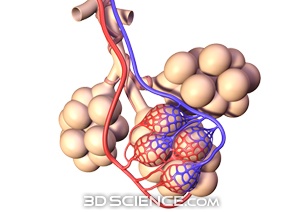
The drawing in of breath; inhalation.
Inspiration
Expiration
What is the site of gas exchange?
alveoli
nose
lung
bronchi
A capillary is a form of...
Gas exchange
Respiration
Blood vessel
Alveoli
Diffusion is...
Movement of gas from an area of high concentration to high
Movement of gas from an area of high concentration to low
Movement of gas from an area of low concentration to high
Movement of gas from an area of low concentration to low
What is gaseous exchange?
The movement of Oxygen and Carbon Dioxide between the bronchi and pulmonary artery
The movement of Oxygen and Carbon Dioxide between the alveoli and bloodstream
The movement of Oxygen and Carbon Dioxide between the heart and lungs
The movement of Oxygen and Carbon Dioxide between the nasal cavity and heart

