
 Worksheets
Unit E Midpoint Review
Total questions: 70
Worksheet time: 2hrs 47mins
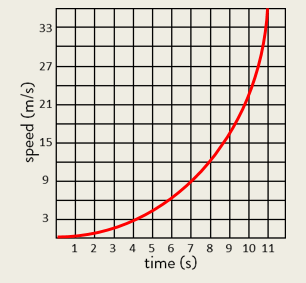
What is this graph showing?
Gradually slowing down
Gradually speeding up
Constant speed
Stopped

What is this graph showing?
At rest
Acceleration
Constant speed of 1 m/s
Gradually speeding up

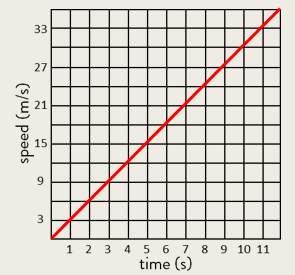
What is this graph showing?
Constant speed
Gradually speeding up
Gradually slowing down
At rest
Accelerating gradually
Stopping
Slowing down constantly
Speeding up constantly

What is this graph showing?
Constantly slowing down
Constantly speeding up
Acceleration
Returning to starting point

What is this graph showing?
Two objects speeding up constantly
Two objects slowing down constantly
Two objects accelerating
Two objects at rest

What is this graph showing?
Fast constant speed
Slow constant speed
Accelerating
At rest

What is the graph showing?
Slowing down moving toward start
Speeding up moving toward start
Slowing down moving away from start
Speed up moving away from start

What is the graph showing?
Constant speed towards start
Constant speed away from start
Acceleration away from start
Acceleration towards start

Slows down toward start
Slows down away from start
Speeds up while toward start
Speeds up away from start
Slows down toward start
Slows down away from start
Speeds up while toward start
Speeds up away from start

What is the graph showing?
Constant speed away from start
Constant speed toward start
Accelerating away from start
Stopped toward start

What is the graph showing?
Constant high speed
Stopped
Accelerating
Constant low speed


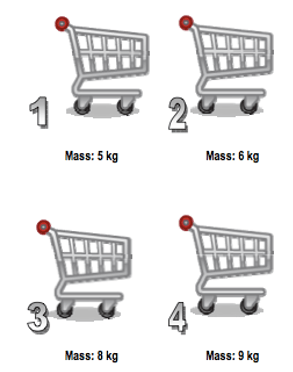

Some skateboarders use a structure called a half-pipe, like the one shown, to perform impressive tricks. Which of the positions will provide a skateboarder with the GREATEST potential energy?
1
2
3
4
Some skateboarders use a structure called a half-pipe, like the one shown, to perform impressive tricks. Which of the positions will provide a skateboarder with the GREATEST kinetic energy?
1
2
3
4
Mechanical energy is the sum of two types of energy—kinetic energy and potential energy of position. Which of the following is an example of an object that has kinetic energy?
a snail crawling across a leaf
a computer monitor sitting on a desk
a tightly wound spring in a windup toy
a roller coaster car just before it goes downhill
Mechanical energy is the sum of two types of energy—kinetic energy and potential energy of position. Which of the following is an example of an object that has potential energy?
a snail crawling across a leaf
a computer monitor sitting on a desk
a jumping windup toy
a roller coaster car going downhill

The table shows the speed and height over time of a ball that starts at rest, then is dropped from the top of a building, which is 60 meters (m) tall. Use the table to answer any questions that follow.
At which time is the ball's potential energy at its maximum?
0.0 s
0.5 s
2.0 s
2.5 s

The diagram illustrates four phases of a model rocket's flight. Use the diagram to answer any questions that follow.
When is the rocket's potential energy decreasing and its kinetic energy increasing?
when the rocket's motor is burning and when the rocket is free falling
when the rocket's motor is burning and when the rocket is ascending
when the rocket is at the peak of flight, only
when the rocket is free falling, only
The diagram illustrates four phases of a model rocket's flight. Use the diagram to answer any questions that follow.
When is the rocket's potential energy increasing and its kinetic energy decreasing?
when the rocket's motor is burning and when the rocket is free falling
when the rocket's motor is burning and when the rocket is ascending
when the rocket is at the peak of flight, only
when the rocket is free falling, only
The table shows the speed and height over time of a ball that starts at rest, then is dropped from the top of a building, which is 60 meters (m) tall. Use the table to answer any questions that follow.
What is happening to the ball's energy at a time of 1.5 seconds?
The ball's kinetic energy is decreasing and its potential energy is decreasing
The ball's kinetic energy is increasing and its potential energy is decreasing
The ball's kinetic energy is decreasing and its potential energy is increasing
The ball's kinetic energy is increasing and its potential energy is increasing

The picture shows the path of a ball on a track. Use the picture to answer any questions that follow. Which series shows decreasing potential energy and increasing kinetic energy?
T, Y, Z
W, X, Y
S, T, U
V, X, Z
The picture shows the path of a ball on a track. Use the picture to answer any questions that follow. Which series shows decreasing kinetic energy and increasing potential energy?
T, Y, Z
W, X, Y
S, T, U
V, X, Z

1. Damon made the graph below to compare the speed limits on four different roads in his county. He converted the speed limits from miles per hour to miles per minute to get a closer comparison. Which road has the slowest speed limit?
Road A
Road B
Road C
Road D

The graph shows the distance the object traveled from its starting point in 5 seconds. How would the graph look of the object were moving at a slower speed?
The line would be steeper.
The line would be less steep.
The line would remain the same.
The line would be curved like an upside down ‘U’.



1. Gordon is making a list of forces for his science class. Which of the following should Gordon not list as a force?
Gravity
Friction
Push or Pull
Mass

1. The ball in the diagram below is thrown up into the air and follows the path shown. What causes the ball to follow the path beyond Point B?
Power
Gravity
Electrical Charge
Magnetic Attraction
1. Luis rubbed a balloon on his hair and held the balloon next to the wall. He observed the balloon stick to the wall. Which of the following is responsible for the balloon sticking to the wall?
Gravity
Friction
Magnetic Force
Electrical Force
1. Forces that act at a distance include electrical force and gravitational force. What other type of force acts at a distance?
Friction
Contact Force
Magnetic Force
Conduction


When placed at equal distances apart, the greatest gravitational attraction will be between two
skateboards
bowling balls
school buses
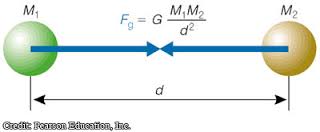
Which is needed to determine the amount of gravitational force between two objects?
distance and mass
weight and time
area and weight
The gravitational force exerted by an object depends on its
volume
mass
weight
Cindy decided to rearrange her bedroom by moving her dresser to the opposite wall. She tried pushing it, but found that the dresser would not move.
What force was Cindy NOT able to overcome?
electrical force
magnetic force
balanced force
frictional force
A contact force is from
objects physically touching
far apart objects
not touching object
always a pull
A non-contact force is between
two objects that aren't touching
two objects that are touching
the ground and wheels
you and me

The three examples pictured are of
Non-contact Forces
Contact Forces

Which runner has the fastest constant speed?
A
B
C
Not enough information to tell
Which runner has the slowest constant speed?
A
B
C
Not enough information to tell

Using the table, which graph shows Emanuel's bike trip?


How long is the object returning to start?
2 seconds
3 seconds
5 seconds
8 seconds



