
 Worksheets
APHG Unit 7 Industry/Economic Dev. Patters/Processes
Total questions: 76
Worksheet time: 43mins

Prior to the Industrial revolution, people made household tools, clothing, and agricultural equipment in their homes, which is known as the_________
Home-Bound Industry
Sustainable Development
Fair Trade Industry
Cottage Industry
What were the first industries to be impacted by the industrial revolution?
Iron, Coal, Transportation, Textiles, chemicals, food processing
Petroleum, natural gas, hydroelectricity, aerospace engineering
Subsistence farming, cottage industry, animal domestication
automotive, steel, telecommunications, railroads
A company faces 2 geographic costs- __________ in which a firm seeks to reduce the cost of transporting inputs to factories and finished products to market; and _______ which firms seek a location with unique characteristics
situation factors; site factors
Input factors; output factors
More developed factor; less developed factor
bulk-gaining factors; bulk reducing factors

Which sector has grown the fastest in developed countries?
primary
secondary
tertiary
Which level of development is a country where most people work at the subsistence level?
More Developed
Newly Industrialized
Less Developed

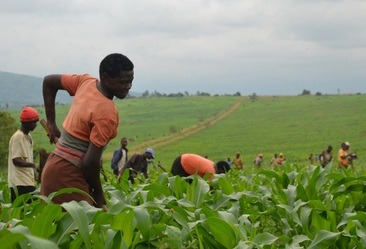
Countries in this level of economic development have most of their people living in rural areas.
More Developed
Newly Industrialized
Less Developed

Which level of economic development are countries where people are beginning to move from rural to urban areas in search of factory jobs?
More Developed
Newly Industrialized
Less Developed
The Industrial Revolution
was geographically dispersed
was a transformation that was solely industrial
is a term commonly used to define a process that began in Eastern Europe
was a gradual diffusion of new ideas and techniques
first developed in the United States

One reason some companies choose to participate in outsourcing is
lack of essential servies
opportunity to lower production costs
need to establish labor unions
support for new technology

Which is a resource that allows nations to develop a high per-capita Gross Domestic Product (GDP)?
State-owned farms
Humanitarian aid
Skilled workforce
Governmental restrictions
The European Union has most benefited its member nations by
reducing barriers to trade and travel
sharing expense of a common defense
promoting the use of a common language
providing funds and materials for education
The movement of jobs from the U.S to countries like India is an example of which of the following?
Offshoring
Outsourcing
What is economics?
The decrease in the value of money.
The production, distribution, and consumption of goods and services.
The collection and use of natural resources by a single country over a year.
How much money a country makes each year.
What important challenge faces many developing nations today?
Farmers losing their jobs to fishermen
different programs have reduced military spending
a high calorie diet causes widespread obesity and a short life expectancy
low literacy rates and a lack of education slow the pace of economic development
In a socialist economic system, the government ______.
guarantees all consumers a high income
often owns major businesses and controls industries
does not influence the distribution of goods and services
has little say in what goods are made
What happens in the secondary sector?
Coffee beans are farmed.
Coffee beans are cooked and packaged.
Coffee is sold at Starbucks.
The effects of coffee are researched.
Competition drives ____________________.
Nothing
Communism
Globalization
Innovation
A location where transfer is possible from one mode of transportation to another.
Acid deposition
Break-of-bulk point
Bulk-gaining industry
Site factors
An industry in which the final product weighs more or comprises a greater volume than the inputs.
Bulk-gaining industry
Cottage industry
Bulk-reducing industry
Apparel
An industry in which the final product weighs less or comprises a lower volume than the inputs.
Just-in-time delivery
Bulk-gaining industry
Bulk-reducing industry
Right-to-work law
A form of mass production in which each worker is assigned one specific task to preform repeatedly
Green House
Break-of-bulk
Air Pollution
Fordist Production
Ferrous
A series of improvements in industrial technology that transformed the process of manufacturing goods.
New international division of labor
Air pollution
Apparel
Industrial Revolution
Shipment of parts and materials to arrive at a factory moments before they are needed
Just-in-time delivery
Labor-intensive industry
Cottage Industry
Bulk-reducing industry
Transfer of some types of jobs, especially those requiring low-paid, less-skilled workers, from more developed to less developed countries.
Apparel
Acid deposition
Greenhouse effect
New International Division of Labor
A decision by a corporation to turn over much of the responsibility for production to independent suppliers.
Ozone
Photochemical smog
Outsourcing
Textile

