wayground logo

Free Printable Worksheets

Font size

S
M
L
XL
Worksheets

Unit 3 Review

Total questions: 96

Worksheet time: 47mins

Name
Class
Date
1.

________________ culture is conceived as small, incorporating a homogeneous population, typically rural and cohesive in cultural traits.

a)

Material

b)

Popular

c)

Folk

d)

d) Local

2.

The ________ of a group of people includes the things they construct.

a)

non-material culture

b)

folk culture

c)

material culture

d)

pop culture

3.

Which is an example of a non-material aspect of culture?

a)

church building

b)

religious decoration

c)

burning of incense

d)

an altar

4.

In terms of popular culture, cities like Paris, New York, and Milan are referred to as

a)

capitals.

b)

local cultures.

c)

world cities.

d)

hearths.

5.

Efforts to conserve local cultures often focus on the local ____________.

a)

landmarks

b)

boundaries

c)

mobility

d)

customs

6.

Anabaptist, Hutterites, and Amish groups have tried to restrict contact with the outside world by

a)

migrating to rural areas.

b)

joining the National Council of Churches.

c)

adopting distinctive modes of dress.

d)

political protest.

7.
Which of the following is true of popular culture?
a)
It is practiced among a homogeneous group of people in the world
b)
It is more static (unchanging) than folk culture
c)
It promotes regional diversity
d)
It incorporates traits that diffuse quickly to a wide variety of places
8.
The fact that trends in popular culture (e.g. fashion) proceed from large global centers (Milan, Paris, New York) through a series of progressively smaller cities is an example of 
a)
diffusion
b)
migration
c)
hierarchical diffusion. 
d)
relative location.
9.

A policy of the U.S. government in the 1800s and into the 1900s to force indigenous peoples into the dominant culture in order to make American Indians into “Americans” rather than “Indians.”

a)

cultural empowerment

b)

cultural assimilation

c)

cultural compassion

10.

The process by which other cultures adopt customs and knowledge of cultures and use them for their own benefit.

a)

cultural appreciation

b)

reterritorialization

c)

cultural appropriation

d)

neolocalism

11.

A group of people in a particular place who see themselves as a collective or a community, who share experiences, customs, and traits, and who work to preserve those traits and customs in order to claim uniqueness and to distinguish themselves from others.

a)

pop culture

b)

local culture

c)

culture

d)

sub culture

12.

Recently, Puerto Ricans living in Spanish Harlem in New York feel themselves challenged by the influx of Mexican immigrants to the neighborhood. This would be an example of the threat of _____________ to an ethnic neighborhood.

a)

popular culture

b)

other ethnic groups

c)

assimilation

d)

Gentrification

13.

The commodification process of a local custom or artifact often leads to the development of an image of “authenticity” which amounts to an example of

a)

cultural relativism.

b)

cultural parasitism.

c)

cultural stereotyping.

d)

local autonomy.

14.
Distance decay.....
a)
has not been altered by technology.
b)
has been altered by transportation and communication technologies.
c)
explains the success of RenRen in China.
d)
explains where the Dave Mathews Band schedules concerts.
15.
Which of the following in NOT an example of a cultural landscape
a)
The street patterns around a mosque
b)
A rain forest
c)
Agricultural terracing up a mountainside
d)
An airport runway
16.
________________ culture is conceived as small, incorporating a homogeneous population, typically rural and cohesive in cultural traits. 
a)
Material 
b)
Popular
c)
Folk 
d)
Ethnic
17.
What is one way local cultures keep pop culture out and keep their own culture in tact?
a)
live in close communities
b)
isolation
c)
maintain customs 
d)
all of these
18.
Which cultural component is generally NOT associated with folk culture? 
a)
music
b)
television 
c)
architecture 
d)
food 
19.
Complete the following analogy: Habit is to individual as 
a)
custom is to group 
b)
diffusion is to region 
c)
folk is to popular 
d)
place is to space 
20.
Which of the following would be considered non-material culture?
a)
A church
b)
A belief
c)
A holy book
d)
A hat
21.

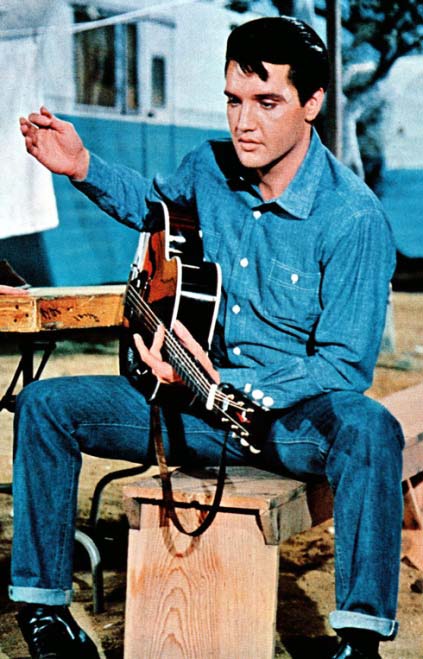
The process through which something (a name, a good, an idea, or even a person) that previously was not regarded as an object to be bought or sold becomes an object that can be bought, sold, and traded in the world market (see IMAGES above)

a)

capitalism

b)

glocalization

c)

commodification

d)

just plain loco

22.

South Korea is a hearth of global popular culture that influences surrounding regions

a)

foods

b)

music

c)

sports

d)

fashion

23.

The loss of uniqueness of place in the cultural landscape created by the spread of popular culture........Especially in the USA

a)

popular landscape

b)

cultural landscape

c)

placelessness

d)

McLandscape

24.

Which is NOT an aspect of cultural landscape convergence?

a)

globalized architectural forms

b)

globalization of particular businesses and products

c)

borrowing of idealized landscape images

d)

development of regional architectural styles

25.

Which of the following religions is the fastest spreading religion today?

a)

Christianity

b)

Buddhism

c)

Hinduism

d)

Islam

26.

All of the following are characteristics of a universalizing religion except

a)

connected to a specific founder

b)

generally widespread

c)

seeks to convert

d)

followers are highly clustered

27.

Which of the following religions are considered to be universalizing religions?

a)

Buddhism, Christianity, & Islam

b)

Islam, Hinduism, & Buddhism

c)

Hinduism, Judaism, & Christianity

d)

Judaism, Islam, Buddhism

28.

Which religion has the most followers?

a)

Islam

b)

Judaism

c)

Christianity

d)

Buddhism

29.

Who is considered the "Patriarch" or father of the Semitic (monotheistic) religions?

a)

Isaac

b)

Noah

c)

Jesus

d)

Abraham

30.

Which of the following believes that all things possess a "kami" or divine spirit?

a)

Islam

b)

Shintoism

c)

Bahai

d)

Zoroastranism

31.
Which of the following is not generally a characteristic of an ethnic religion?
a)
found within a particular culture
b)
always polytheistic 
c)
spatially concentrated
d)
does not seek outside converts
32.

One of the unique characteristics of Hinduism is that it:

a)

is so young

b)

is a very simple religion

c)

emerged without a prophet or book of scriptures

d)

has so few followers

33.
The Shinto faith is found mostly in which country?  
a)
Israel 
b)
China 
c)
India 
d)
Japan 
34.
Which world religion is the oldest that practices the belief of monotheism? 
a)
Christianity 
b)
Hinduism 
c)
Judaism  
d)
Islam
35.

The map shows the distribution of what major world religion?

a)

Hinduism

b)

Judaism

c)

Christianity

d)

Islam

36.
All of the following are traits common to Muslim regions of the world except:
a)
fasting
b)
pilgrimage
c)
polytheism
d)
daily ritual prayers
37.
In some societies, an organized form religion has:
a)
become more traditional 
b)
become more diverse
c)
experienced strong revival
d)
become less important
38.
Ethnicity is associated with _____ ancestry, while race is associated with _____ ancestry. 
a)
cultural: biological 
b)
biological: cultural 
c)
cultural: religious 
d)
religious: cultural 
39.
Folk cultures are typically associated with _____ groups of people in __________.
a)
homogeneous : isolated areas 
b)
heterogeneous : isolated areas 
c)
homogeneous : large societies 
d)
heterogeneous: large societies 
40.
Which of the following is an element of material culture?
a)
clothing 
b)
behavioral norms 
c)
religious beliefs 
d)
family beliefs 
41.
The popularity of American bands in Europe is an example of:
a)
globalization of culture 
b)
assimilation 
c)
ethnocentrism 
d)
transculturation 
42.
In the face of globalization, folk cultures face _____ challenges
a)
sustainability 
b)
ethnocentrism 
c)
geographic 
d)
relativism 
43.

A country with a low percentage of women in its adult labor force might be

a)

Sweden

b)

Lesotho

c)

Qatar

d)

Russia

44.
_____ diffusion occurred when Muslim missionaries spread Islam to sub-Saharan Africa.
a)
relocation 
b)
contagious 
c)
hierarchical 
d)
stimulus 
45.

A simplified lingua franca created to facilitate communication is known as a:

a)

pidgin language

b)

dialect

c)

creole language

d)

isolated language

46.
People in Chicago call it pop. People in Charlotte call it coke. This is an example of:
a)
creole dialects 
b)
differences due to dialects 
c)
lingua franca influencing vocabulary 
d)
isolated languages 
47.
In terms of speakers, the two largest language families are:
a)
Indo-European & Sino-Tibetan
b)
Indo-European & Niger-Congo
c)
Austric & Niger-Congo
d)
Niger-Congo & Sino-Tibetan
48.
In terms of diffusion, what is a hearth?
a)
The point of origin
b)
The final destination
c)
The mid-way point
d)
All points along the diffusion route
49.
practice of judging another culture by the standards of one’s own culture and generates misunderstanding, ignorance and conflict 
a)
Ethnosuperiorism
b)
Egotism
c)
Ethnocentrism
d)
Human nature
50.
The presence of similar restaurants, gas stations, and stores throughout the United States 
a)
is an example of possibilism
b)
illustrates how popular culture can create a uniform landscape
c)
increases cultural awareness
d)
is a prime example of regionalization
51.
Which of the following best accounts for the universal appeal of blue jeans?
a)
Adoption of unique folk culture
b)
Need for durable clothing
c)
Impact of high income on clothing habits
d)
Diffusion of popular culture
52.

Which of the following countries has the largest percentage of Roman Catholics?

a)

United States

b)

Great Britain

c)

Indonesia

d)

Brazil

53.

Which of the following is an example of a cultural landscape?

a)

A coral reef

b)

A stand of pine trees

c)

Terraced fields of crops up a mountainside

d)

Glaciers

54.

Which of the following is NOT an ethnic religion?

a)

Hinduism

b)

Judaism

c)

Shintoism

d)

Buddhism

55.

Isoglosses are used to mark

a)

Creation of pidgins

b)

Extent to which a lingua franca is used in a certain area

c)

Limits for an area in which certain words or other language features are used

d)

Area in which an extinct language is used

56.

Acculturation is a process whereby

a)

A more dominant culture adopts most of the traits of the less dominant culture

b)

The dominant culture completely absorbs the less dominant one

c)

Cultural traits are equally exchanged between cultures

d)

The less dominant culture adopts some of the traits of the more influential one

57.

Which language has become the world's primary lingua franca?

a)

Mandarin

b)

Hindi

c)

German

d)

English

58.
Which are the first and second most-spoken languages in the world?
a)
Spanish and English
b)
Cantonese and French
c)
German and Mandarin
d)
Mandarin and English
59.
A nation in which many languages are spoken. In Switzerland 4 Official Languages are used.
a)
Monolingual
b)
Bi-lingual
c)
Multilingual
d)
Indo-European
60.
Canada is an example of a Bi-Lingual Nation made up of English and most French speakers located in...
a)
the western provinces
b)
Quebec
c)
Northern Territories
d)
near the Hudson Bay
61.
Spanglish...would most likely be found in areas with higher Hispanic populations located in the ______ region of the United States.
a)
Northeast
b)
Midwest
c)
Southwest
d)
Gulf Coast
62.
This Romance Language would dominate the highlighted regions.
a)
English
b)
Spanish
c)
French
d)
Italian
63.
What is culture?
a)
Set of beliefs/values/practices a group has in common
b)
People who share similar culture traits
c)
Activity/behavior in which people take part
d)
Area in which people share culture traits
64.

A frequent repetition of an act, that can become a characteristic of a group of people is known as:

a)

Custom

b)

Popular Culture

c)

Folk Culture

d)

physical trait

65.

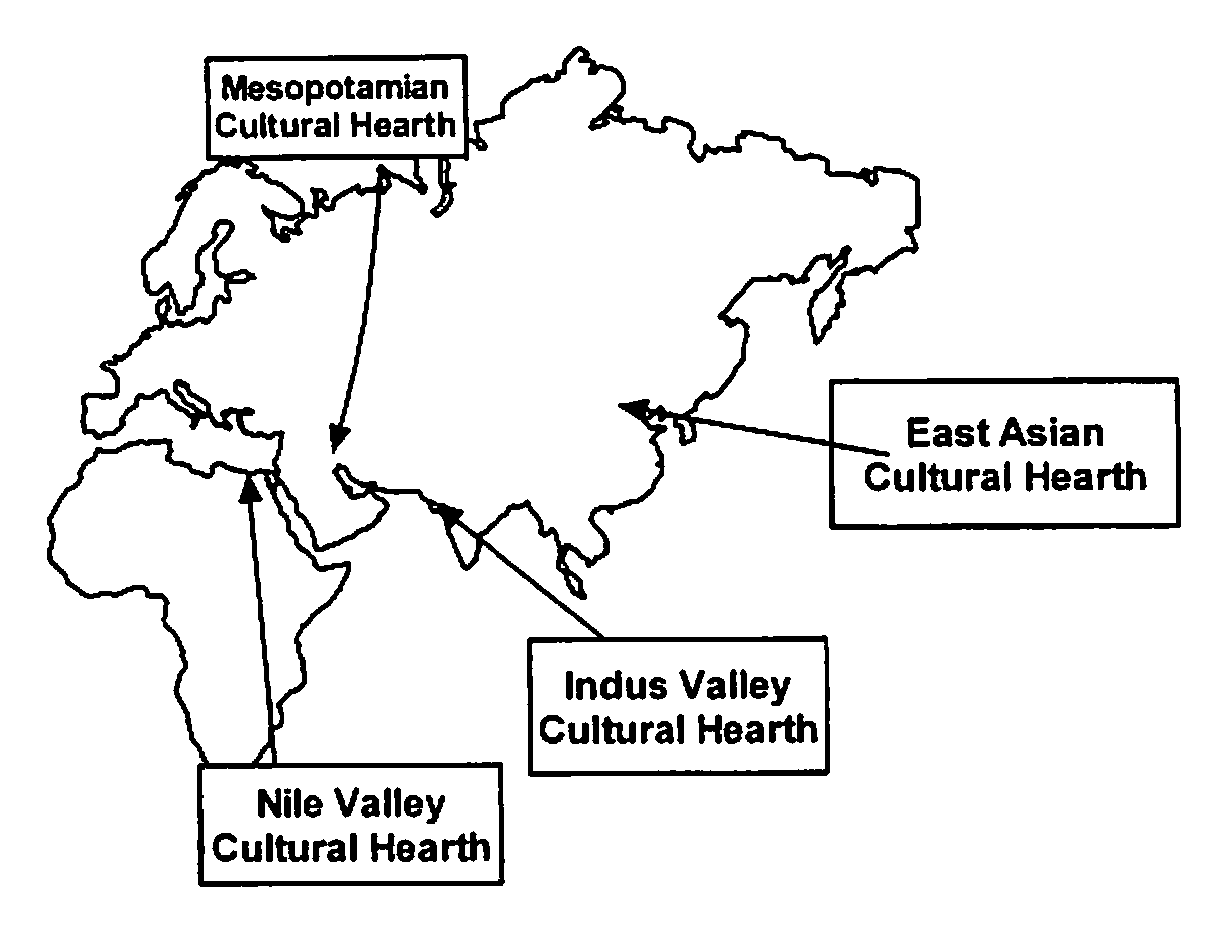
The geographical locations of all four cultural hearths illustrate on the map (right) were in

a)

Areas with abundant rainfall

b)

Coastal areas

c)

Cold climates

d)

River valleys

66.
Folk culture is most likely to spread by _____.  
a)
contagious diffusion 
b)
relocation diffusion 
c)
hierarchical diffusion 
d)
stimulus diffusion 
67.
Animism is the belief that objects
a)
are to be used
b)
have a spirit
c)
have nothing to do with religion
d)
have power
68.
Cultural diffusion describes
a)
how culture is used
b)
how culture affects peoples
c)
how culture spreads
d)
how culture develops
69.
Relocation diffusion often occurs when a people
a)
a relative moves
b)
shop at the same name brand store in different cities
c)
bring their cultural traditions with them 
d)
change the dialect of their language
70.
One of the strongest connections that tie people to a certain environment is what?
a)
 clothing
b)
building materials
c)
food supply
d)
weapons
71.
Why is wine production so low in Africa and the Middle East?
a)
lack of sophistication and fine dining
b)
they can't grow grapes
c)
Islam discourages alcohol consumption
d)
they don't know how to make wine
72.
Cultural traditions, such as Carnaval (Brasil, Barranquilla...), are ________________ since they are a celebration that blends elements of African, European, and Indigenous cultures.
a)
wicked awesome
b)
exotic
c)
terrifying
d)
syncretic
73.
A language ____________ is a collection of languages related through a common ancestral language that existed long before recorded history.
Hint: The trunk of the tree
a)
branch
b)
family
c)
dialect
d)
group
74.
A language ____________ is a collection of languages related through a common ancestral language that existed several thousand years ago.
a)
family
b)
branch
c)
dialect
d)
group
75.
What is the largest language branch in terms of spoken by most people?
a)
Afro-Asiatic
b)
Indo-European
c)
Sino-Tibetan
d)
Austronesian
76.
A language _________ is a collection of languages within a branch that share a common origin in the relatively recent past.  
a)
family
b)
branch
c)
group
d)
dialect
77.

The following are reasons for the origin and diffusion of Romance languages EXCEPT

a)

The spread of the Roman Empire and its lingua franca Latin

b)

The collapse of the Roman Empire and its lingua franca Latin

c)

The isolation of many forms of Latin and their evolution into dinstinct languages

d)

The mountainless uniform topography which kept cultures similar and united

78.
a language developed from a mixture of different languages, usually through colonization. 
a)
creole language
b)
mix language
c)
hybrid language
79.
a creole language based largely on 18th-century French with influences from Portuguese, Spanish, Taíno, and West African languages. The largest creole-speaking community in the world.
a)
Haitian creole
b)
Jamaican creole
c)
Sanandresano creole
d)
Swahili
80.
the language used by the government for laws, reports, and public objects, such as road signs, money, and stamps...
a)
creole language
b)
pidgin language
c)
official language
d)
standard language
81.
Why is English the official language in 57 countries? 
a)
The Beatles!
b)
Most effective at destroying other cultures
c)
diffusion of Disney movies
d)
Colonization
82.
Why is English the official language in 57 countries? 
a)
The Beatles!
b)
Most effective at destroying other cultures
c)
diffusion of Disney movies
d)
Colonization
83.
The French government has _________ to protect French language and culture.
a)
banned foreign words in advertising and on radio&television
b)
established the Académie Française to standardize the language
c)
passed a law levying fines on those using foreign terms
d)
all of the above
84.
Dialects are distinguished by differences in
a)
accents and pronunciation
b)
vocabulary
c)
 syntax
d)
all of the above
85.
A force or process that involves the entire world and results in making something worldwide in scope. 
a)
space-time compression
b)
distance decay
c)
globalization
86.
Time-distance decay influences relocation diffusion, contagious diffusion, hierarchical diffusion and stimulus diffusion.
a)
True
b)
False
87.
What is monotheism?
a)
The belief or worship of more than one god.
b)
The belief of the existence of only one god.
c)
The belief that objects or natural events have a discrete spirit and conscious life.
d)
The belief that an aspect of a living being starts a new life in a different physical body/form after death.
88.
What are the names of the two religions who have a taboo against pork?
a)
Judaism and Islam
b)
Islam and Hinduism
c)
Judaism and Buddhism
d)
Buddhism and Hinduism
89.
What is polytheism?
a)
The belief or worship of more than one god.
b)
The belief of the existence of only one god.
c)
The belief that objects or natural events have a discrete spirit and conscious life.
d)
The belief that an aspect of a living being starts a new life in a different physical body/form after death.
90.
English is part of which language family?
a)
Indo-European
b)
Sino-Tibetan
c)
Romance
d)
North Germanic
91.
This is the process by which one group of people try to eliminate the presence of another ethnic group either through relocation of elimination.
a)
Genocide
b)
Balkanization
c)
Assimilation
d)
Ethnic Cleansing
92.
Hasidic Jews in Brooklyn, New York; Italian Americans in the North End of Boston, Massachusetts are examples of... 
a)
Ethnic neighborhoods
b)
Authenticity
c)
Commodification
d)
Neolocalism
93.
Pidgin language is...
a)
When people speak two or more languages are in contact and they combine parts of their language in a simplified structure and vocabulary
b)
a language used among speakers of different languages for the purposes of trade and commerce. 
c)
Variants of a standard language along regional or ethnic lines
d)
A language that is published, widely distributed, and purposely taught is most common in technologically advanced 
94.
This can help identify an area's religion, like in Quebec 
a)
Toponym
b)
Globalization
c)
Lingua France
d)
Global Language
95.
How are religious groups different from ethnic groups?
a)
Religious groups are not dependent on ancestry.
b)
Religious groups always share the same culture.
c)
Religious groups are the same as ethnic groups.
d)
They have different symbols.
96.
A historical term used to reference where an ethnic minority is forced to live
a)
Concentration Camp
b)
Asylum
c)
Ghetto
d)
Prison