wayground logo

Free Printable Worksheets

Font size

S
M
L
XL
Worksheets

Review Olympics Day 03

Total questions: 81

Worksheet time: 7hrs 45mins

Name
Class
Date
1.

What two things are required to turn decaying plant material into coal?

a)

Heat and Moisture

b)

Pressure and Moisture

c)

Heat and Pressure

d)

Heat and Gravity

2.

What happens to the carbon bonds in coal as it ages?

a)

Just gets older with compression

b)

The bonds get weaker with compression

c)

The bonds get tighter with compression

d)

The bonds explode and cause rampant destruction

3.

Which is the biggest pollution contributor from coal burning?

a)

Carbon Dioxide

b)

Carbon Monoxide

c)

Nitrous oxide

d)

Sludge

4.
Today, most of the coal is used to:
a)
power steamships and steam trains
b)
heat homes and businesses
c)
produce electricity
d)
make iron and steel
5.
Which BEST describes how coal forms?
a)
dead plant material completely decomposes in a desert environment
b)
tiny sea animals and plants die and are buried by sediment 
c)
dead plant material temporarily decays in a swamp environment
d)
dead animals partially decay in a desert environment
6.
Which of these is true about surface coal mining?
a)
the "room and pillar" method is used often to surface mine
b)
only a small percentage of coal is mined this way
c)
overburden must be removed before mining and replaced after 
d)
longwall mining has become a more efficient technique used
7.

Coal can form in as little as 100 years.

a)

True

b)

False

8.

Coal can only be found in China and the U.S.

a)

True

b)

False

9.

Which of these is NOT a fossil fuel? (can be more than one right answer)

a)

Wind

b)

Solar

c)

Oil

d)

Coal

10.

Which of these mining techniques is more dangerous?

a)

Surface mining

b)

Deep mining or underground mining

11.

Coal is cheap compared to other forms of energy.

a)

True

b)

False

12.

Is coal a renewable source of energy?

a)

Yes

b)

No

13.

What is NOT a renewable energy source?

a)

coal

b)

wind

c)

solar

d)

water

14.

Which is NOT a non-renewable energy source?

a)

coal

b)

oil

c)

wind

d)

gas

15.

What does it mean to extract an energy resource?

a)

to clean

b)

to move

c)

to sell

d)

to gather

16.

What is given off from energy?

a)

water

b)

heat

c)

smoke

d)

ash

17.

Which of the following transforms energy from plant and animal matter into electrical energy?

a)

rotating windmills

b)

burning biomass

c)

splitting atoms

d)

mining coal

18.

Which of the following transforms energy from uranium atoms into electrical energy?

a)

magnetic fields

b)

solar panels

c)

nuclear fission

d)

satellite dish

19.
Which is a nonrenewable source of energy?
a)
nuclear
b)
wind
c)
sunlight
d)
biomass
20.
Which is a renewable source of energy?
a)
coal
b)
uranium
c)
ocean tides
d)
natural gas
21.
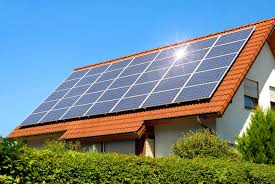
The picture shows sunlight shining on solar panels. 
Which statement best describes this energy source?
a)
Sunlight is a renewable energy source used to produce hydropower.
b)
Sunlight is a nonrenewable energy source used to produce nuclear power.
c)
Sunlight is a renewable energy source used to produce electricity.
d)
Sunlight is a nonrenewable energy source used to produce natural gas.
22.
The picture shows a geothermal power plant. 
Which statement best describes this energy source?
a)
Geothermal power plants are renewable energy sources used to remove magma.
b)
Geothermal power plants are nonrenewable energy sources used to produce natural gas.
c)
Geothermal power plants are renewable energy sources used to produce electricity.
d)
Geothermal power plants are nonrenewable energy sources used to dig for oil.
23.
The fossil fuels formed hundreds of millions of years ago from the remains of dead ?
a)
Animal and plants
b)
Plants and bones
c)
Fungus and animal
d)
Rock and Plants
24.

Law holding perpetrator liable for clean-up of hazardous waste

a)

RCRA

b)

CERCLA

c)

CWA

d)

ANWR

25.

Source of energy that causes noise pollution and increase death in birds

a)

wind energy

b)

solar energy

c)

geothermal energy

d)

biomass energy

26.

What is the half-life of Iodine 131?

a)

32 days

b)

24 days

c)

16 days

d)

8 days

27.
Which is NOT an example of biomass?
a)
wood
b)
crop leftovers (the part of the plant that isn't consumed)
c)
manure and/or trash
d)
petroleum
28.
How does biomass reduce our carbon footprint by producing less CO2 than fossil fuels?
a)
Plants absorb the same amount of CO2 that is released when it is burned.
b)
Plants remove CO2 from the atmosphere and put it permanently into the ground.
c)
Biomass filters CO2 to make it more environmentally stable.
d)
Biomass doesn't release any CO2 when burned.
29.
Which of the following energy sources has the lowest negative environmental impacts?
a)
Biomass
b)
Nuclear
c)
Natural Gas
d)
Solar
30.
Which of the following DOES NOT use a turbine?
a)
Hydroelectric
b)
Wind
c)
Solar
d)
Nuclear
31.
The poster shown below advertises tours of a power plant.
This power plant produces electricity most likely by using-
a)
fossil fuels
b)
biofuels
c)
solar energy
d)
geothermal energy
32.
Put the items below in correct sequence for the generation of electricity using the wind
1 – generator converts mechanical energy into electrical energy
2 – wind turns the wind turbine blade
3 – the gear box transfers mechanical energy to the generator
4 – electricity is transferred to the grid
a)
1-2-3-4
b)
2-1-3-4
c)
2-3-1-4
d)
2-4-3-1
33.
a downside to relying on biomass as a primary fuel source for a nation is that
a)
it can cause soil erosion, water pollution, and habitat loss
b)
it requires little land use
c)
it produces no pollution
d)
it produces more pollution than coal 
34.
According to the second law of thermodynamics, whenever one form of energy is transformed into another,
a)
all of the energy is put to work
b)
all of the energy is converted into a less usable form, like heat
c)
some of the energy is converted to a less usable form, like heat
d)
50% of the energy is put to work, the rest is lost as heat
35.
What is an advantage  of nuclear energy?
a)
radioactive waste
b)
no air pollution
c)
we will never run out
d)
it is the safest way to make energy
36.
Which type of power plant is this?
a)
Coal Power Plant
b)
Nuclear Power Plant
c)
Solar Power Plant
d)
Hydroelectric Power Plant
37.

The time needed for half of a radioactive sample to decay is called its __________.

a)

decay period

b)

period

c)

transmutation time

d)

half-life

38.
A radioactive isotope has a half life of 30 years.  At year 0, there are 400 radioactive atoms.  How many are left after 120 years of decay
a)
50 atoms
b)
30 atoms
c)
25 atoms
d)
12.5 atoms
39.

Which of the following are often-cited reasons as the downsides, or "costs" of nuclear energy?

a)

long construction periods

b)

dependent on mining a finite resource (uranium)

c)

lots of safety concerns

d)

challenges with waste storage/management

e)

all of the above

40.

Using the diagram, which of the forms of coal would be the hardest?

a)

lignite

b)

subbituminous

c)

bituminous

d)

anthracite

41.
Hydroelectric power produces electricity using.....
a)
Wind
b)
Sunlight
c)
Moving water
d)
Dung
42.
Petroleum and natural gas form from...
a)
strong winds
b)
cooled magma
c)
radioactive materials
d)
remains of plants and animals 
43.
The careful use of a resource is....
a)
recycling
b)
pollution
c)
depositing
d)
conservation
44.
The energy resource that is most affected by change in weather is_____________?
a)
geothermal 
b)
wind
c)
nuclear
d)
natural gas
45.
One problem with ____ energy is that it produces radioactive waste. 
a)
nuclear
b)
solar
c)
tidal
d)
wind
46.
Which of the following is NOT an alternative energy source?
a)
fossil fuels
b)
geothermal energy
c)
hydroelectric energy
d)
wind energy
47.
Hot water is pumped up from deep inside Earth and is used to heat homes or to generate electricity. This describes...
a)
biofuels
b)
hydroelectric energy
c)
geothermal energy
48.
Why are not American's roofs crammed with more solar panels? 
a)
They are ugly.
b)
They are uninformed.
c)
Expensive start-up cost
d)
People enjoy paying bills. 
49.
This Picture Represents Which Type of Alternative Energy?
a)
Wind
b)
Solar
c)
Biofuels
d)
Geothermal
50.
What are the 3 main fossil fuels?
a)
Coal, Oil, and Gasoline
b)
Coal, Oil, and Natural Gas
c)
Electricity, Gasoline, Petroleum
d)
Coal, Oil, Non-renewable Resources
51.
Coal often forms where once there was swamps.  What characteristic of swamps is important to the formation of coal?
a)
High Temperature
b)
Abundant Plant Life
c)
Frequent Rains
d)
Reptile Predators
52.
Which device produces electricity?
a)
generator
b)
turbine
c)
lightbulb
d)
television
53.
Based on the data collected, which source of alternative energy is most efficient?
a)
Coal
b)
Wind
c)
Natural gas
d)
Solar
54.
This Picture Represents Which Type of Alternative Energy?
a)
Wind
b)
Solar
c)
Hydroelectric
d)
Geothermal
55.

What is biomass energy?

a)

any organic matter that can be used by burning wood and other plant life.

b)

Radiant energy emitted by the sun.

c)

a combustible black or dark brown rock consisting mainly of carbonized plant matter, found mainly in underground deposits and widely used as fuel.

d)

made by tapping into steam or hot water reservoirs underground; the heat is used to drive an electrical generator.

56.

What is a primary drawback to using biomass as an energy source?

a)

It produces more sulfur dioxide emissions than coal.

b)

Access to biomass is variable depending on location.

c)

No waste materials can be used.

d)

Removing the crops or trees for burning deprives the soil of nutrients used to grow them, resulting in lowered soil fertility.

57.
Water stored behind the dam is known as …………..
a)
Dam
b)
Penstock
c)
Water reservoir
d)
Spillway
58.

An advantage of hydroelectric power station.

a)

It produces thermal pollution

b)

Only a few dams have been built

c)

They produce no carbon dioxide when making electricity

d)

They are cheap to build

59.

Which of the following is a Pro for hydroelectricity?

a)

It is renewable

b)

It is clean

c)

It is efficient

d)

All are Pros for hydroelectricity

60.

Which of the following is a Con for hydroelectricity?

a)

Destroys habitat

b)

Decimates natural salmon migration routes

c)

Disturbs flooding cycles and nutrient deposition

d)

All are Cons for hydroelectricity

61.
4. Which of the following is one of the disadvantages of geothermal energy?
a)
Geothermal energy only works on windy days.
b)
Geothermal energy doesn't work everywhere since you need a volcano nearby.
c)
Geothermal does not work if there are no rivers or moving water nearby.
62.
5. What is one one disadvantage of hydroelectric energy?
a)
It does not work if you don't have volcanoes nearby.
b)
It doesn't work if the it is not windy.
c)
It doesn't work if you don't have rivers or moving water nearby.
63.

With wind-electric turbines, electric energy is turned into rotational energy.

a)

True

b)

False

64.

How is wind caused?

a)

There's a giant fan in Afghanistan where it cools the earth

b)

Unequal heating

c)

When clouds cover a certain area

d)

Hot air rises

65.

What are wind farms and what do they do?

a)

It's a power plant.

b)

A bunch of wind turbines that generates power everywhere.

c)

A bunch of windmills that generates power everywhere

d)

A bunch of people that blow to create wind energy

66.

True or False; Wind energy is the most expensive energy in the world

a)

True

b)

False

67.

True or False: Wind energy is a renewable source of energy

a)

True

b)

False

c)

It is partially both renewable and nonrenewable

68.

How do wind turbines affect the environment.

a)

Birds and bats may be injured.

b)

Cuts the clouds which affects the water cycle.

c)

Hits trees around them which blows up the wind turbine.

d)

They are perfect for the environment.

69.
The step needed for sea plants and animals to become hydrocarbons is
a)
enormous heat and pressure
b)
shallow burial by sediments
c)
refining and processing
d)
drilling and distillation
70.
Distillation occurs where crude oil is separated into fuels by
a)
mixing it with corn starch and letting it settle
b)
putting it under intense pressure until it becomes solid
c)
heating it to different boiling points
d)
removing the sulfur particles from it
71.
Which of these countries is NOT a member of OPEC?
a)
Venezuela
b)
Iraq
c)
Saudi Arabia
d)
Mexico
72.
The top 2 crude oil producing US states are
a)
Michigan and California
b)
Alaska and Texas
c)
Florida and Washington
d)
Oklahoma and Kansas
73.
Drilling, refining, and using petroleum is responsible for which environmental hazard?
a)
air pollution
b)
water pollution
c)
groundwater pollution
d)
all 3 types of pollution
74.
Fossil fuel consisting of methane that occurs naturally underground
a)
Coal 
b)
Natural Gas
c)
Nuclear 
d)
Petroleum 
75.
Fossil fuel used to produce gasoline and oil 
a)
Coal 
b)
Natural Gas 
c)
Petroleum 
d)
Solar Energy 
76.
Nonrenewable energy source formed from remains of living organisms, , which cause pollution ( coal, natural gas, petroleum) 
a)
Fossil Fuel 
b)
Rocket fuel 
c)
Renewable Energy 
d)
Sugar
77.
Fossil fuel made of mostly carbonized plant matter. 
a)
Petroleum 
b)
Solar Energy 
c)
Natural Gas
d)
Coal 
78.

Which of the following is the major use for petroleum?

a)

Transportation

b)

Electricity production

79.

Which of the following are environmental consequences of using coal? Select all that apply.

a)

Acid Rain

b)

Methane release

c)

High mercury levels in all freshwater systems in Kentucky

80.
What are the two main elements (gases) that make up the Sun? 
a)
Carbon and Helium
b)
Iron and Hydrogen
c)
Hydrogen and Helium
d)
Carbon and Hydrogen 
81.
What was the name of the area in 1986 in which there was a nuclear explosion at a power plant?
a)
Chernobyl
b)
Fukushima
c)
New York City
d)
Three Mile Island