Worksheets
Chemical Equations
Total questions: 70
Worksheet time: 2hrs 10mins
4Ca(OH)2
2KI + ____Cl2 → 2KCl + I2
2Al +____ HCl → 2AlCl3 + 3H2

What state of matter is this substance?
solid
liquid
gas
aqueous

Identify the number in blue.
Product
Reactant
Coefficient
Subscript
Fe + O2 -> Fe2O3
Mg + __HCl ---> MgCl2 + H2
_CH4 + _O2 --> _CO2 + _H2O
_Al +_HCl --> _H2 +_AlCl3

How many molecules of KNO3 are shown?
1
2
3
4
Example: H2
(Check ALL answers)
Is the equation balanced?: 2H2O + O2 --> 4MgO + 3Fe
yes
no

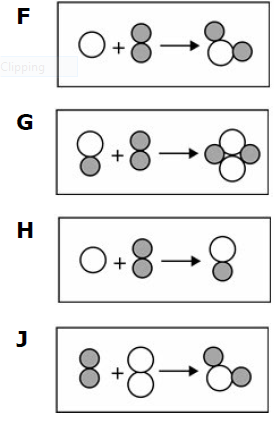
Is this equation balanced?
Yes
No
Metal + Oxygen yields __________________________
Metal Oxide + Water
Metal Oxide + Hydrogen
Metal Oxide
Metal Hydroxide + Hydrogen
Acid + Carbonate yields _____________________
Salt + Hydrogen
Salt + Water + Carbon Dioxide
Salt + Water
Salt + Alkali
Acid + Alkali yields _____________________
Salt + Hydrogen
Salt + Water + Carbon Dioxide
Salt + Water
Salt + Alkali
Which Salt is form with the following acid- Hydrochloric Acid
Chloride
Sulfate
Nitrate
What is the chemical formulae for Hydrochloric acid?
H2SO4
HNO3
HCl
What is the chemical formulae for Nitric acid?
H2SO4
HNO3
HCl
What is the word equation for Neutralization?
Acid + Alkali ---> Salt + Water
Acid + Carbonate ---> Salt + Water + Carbon Dioxide
Acid + Alkali ---> Salt + Water + Carbon Dioxide
Acid + Carbonate ---> Salt + Water
Which is a way Salt can be formed?
Acid + Alkali
Neutralization
Metal + Acid
All of the above
A chemical reaction in which a compound is broken down into two or more smaller substances.
Addition
Decomposition
Single Displacement
Double Displacement
A chemical reaction in which ions from TWO compounds in solution exchanges places to produce two new compounds
Addition
Decomposition
Single Displacement
Double Displacement
A chemical reaction that results in large amounts of energy being released along with carbon dioxide and water.
Combustion
Decomposition
Single Displacement
Double Displacement
A chemical reaction in which two or more substances combine to form a new compound.
Addition
Decomposition
Single Displacement
Double Displacement
A principle that states that the total mass of the reactants equals the total mass of the products in a chemical reaction.
combustion reaction
avogodro's number
mole
Law of conservation of mass
This is the number of atoms or molecules in a mole of any substance and it is also equal to 6.02 x 10²³
Avogadro's number
Coefficients
Bill Nye's Underpants
Armageddon
What do the lower letters of (s), (aq), and (g) stand for in equations?
sand, aquarium, grape
solid, aqueous, gas
sausage, acquaintance, giraffe
Find the molar mass of C4H12
(Hint: Use the periodic table and add them) The timer is set for 15 minutes. You have lots of time.
48 grams
60 grams
35 grams
16 grams
Find the molar mass of MgSO4
(Hint: Use the periodic table and add them) The timer is set for 15 minutes. You have lots of time.
120 grams
72 grams
60 grams
92 grams
What type of equation is this?
KClO3 → KCl + O2
Addition
Decomposition
Single Displacement
Double Displacement
What type of equation is this?
H2O + Fe → Fe2O3 + H2
Addition
Decomposition
Single Displacement
Double Displacement
What type of equation is this?
2Na + Br2 → 2NaBr
Addition
Decomposition
Single Displacement
Double Displacement
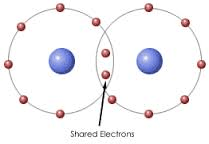
How are chemical bonds formed?
Atoms duplicate themselves
Electrons move from one atom to another
The number of protons and electrons in an element is changed
Through changes in an atom's nucleus

These are all models of the same molecule. What would this molecule look like in a chemical/molecular formula?
CH
C4H
CH4
4CH
Bacteria in milk causes it to curdle over time. What type of change is this?
Chemical
Physical
Both
Neither
Which type of reaction pulls in thermal energy from the environment around it?
Endothermic
Exothermic

The y-axis shows the energy that is being stored/released during the reaction. What type of reaction is this?
Exothermic
Endothermic
Which of the following type of chemical reaction builds larger compounds from smaller ones?
Synthesis
Combustion
Decomposition
Exothermic


A teacher asks her students to examine titles of four scientific articles. Which titled article is specifically about a chemical change?
How Baking Soda Reacts with Vinegar
How Rust Can Be Scraped off of Metal
How Metals Respond to Electrical Currents
How Elements Can Change Phase When Heated
A chemistry teacher combines 20 grams of lemon juice with 25 grams of baking soda in a flask covered with a balloon. The flask and balloon have a combined mass of 105 grams. What is the mass of the entire setup after a reaction has occurred?
45 g
150 g
605 g
Which best explains why the total mass of the product(s) would be less than the total weight of the reactant(s) after a chemical reaction?
A physical change occurred.
Atoms involved in the reaction lost mass
Precipitates were created in the new solution
Gases were released into the atmosphere.
An ice cube is put into a heated pan. What will most likely happen to the molecules in the ice as the ice is heated?
The molecules will begin to move slower.
The molecules will begin to move faster.
The molecules will begin to increase in density.
The molecules will begin to condense in air.
Two clear solutions are mixed together in a beaker. Which result would indicate a chemical reaction had occurred between these solutions?
increase of volume in the beaker
decrease of volume in the beaker
increase in temperature of the beaker
A solid produced by a chemical reaction.
slush
gel
aqueous solution
precipitate

This symbol indicates_____________
reacts to yield
beware of sharp edges
a reversible reaction
reactivity increases with items to

This symbol indicates ______________________.
heat is required for the reaction.
the reaction releases heat.
the reaction involves multiple steps
the reaction is a single step reaction
Which of the following elements are NOT diatomic?
Oxygen
Chlorine
Argon
Hydrogen
Lime water turns to milky and a black solid is formed. Which of the following equations correctly represents the reaction?


A chemical reaction is represented by the following equation.
If 12 g of magnesium powder is reacted completely with hydrochloric acid, calculate the mass of magnesium chloride formed.
[ Relative atomic mass : Mg, 24 ; Cl, 35.5 ]
95 g
59.5 g
47.5 g
29.75 g

CH4 + 2 O2 -> CO2 + 2 H2O
H=4
O=4
H=4
O=2
H=4
O=2
H=4
O=4