wayground logo

Free Printable Worksheets

Font size

S
M
L
XL
Worksheets

Anatomy & Physiology review

Total questions: 100

Worksheet time: 1hrs 12mins

Name
Class
Date
1.

Which of the following is the best example of an organism maintaining homeostasis?

a)

a wolf panting after a chase

b)

a spider catching an insect in a web

c)

a cricket becoming infected by a virus

d)

a mole digging tunnels in the ground

2.

The most important function of the skin is

a)

protection

b)

storing fat

c)

sweating

d)

insulation

3.

What two layers make up skin?

a)

keratin and dermis

b)

epidermis and melanin

c)

epidermis and dermis

d)

melanin and keratin

4.

What is structure e?

a)

sweat gland

b)

sebaceous gland

c)

epidermis

d)

dermis

e)

subcutaneous layer

5.

What does the sebaceous gland do?

a)

secretes sweat

b)

secretes oil

c)

causes the hair to stand on end or goosebumps

d)

sensory receptor of the skin

6.

How are anatomy and physiology related?

a)

function can determine structure

b)

sturcture and function work independently of each other

c)

structure can determine function

d)

function helps form the structure of the body

7.

The basic unit of all living things is:

a)

bacteria

b)

plasma

c)

blood

d)

cells

8.

which are the largest of the blood vessels in the body

a)

arteries

b)

arterioles

c)

veins

d)

venules

9.

what connects bone to bone ?

a)

tendon

b)

muscle

c)

ligament

10.

adipose tissue is

a)

fatty tissue

b)

cartilage tissue

c)

elastic tissue

d)

blood cells

11.
Where are the phalanges located?
a)
Face
b)
Back
c)
Head
d)
Fingers and Toes
12.
Where are the Metatarsals located?
a)
Foot
b)
Hand
c)
Chest
d)
Head
13.
Where is the Fibula located?
a)
Outside of Lower Leg
b)
Near Chest
c)
Head
d)
Mouth
14.
Where is the Patella located?
a)
Back
b)
Chest
c)
Knee
d)
Elbow
15.
a)
Mandible
b)
Parietal
c)
Temporal
d)
Sphenoid
16.

A lower, thick- walled chamber of the heart is:

a)

atrium

b)

mitral valve

c)

pericardium

d)

ventricle

17.

The largest and most complex nerve tissue is the:

a)

spinal chord

b)

neurons

c)

brain

d)

axon

18.

Insulin, adrenaline, and estrogen are examples of:

a)

digestive enzymes

b)

waste products

c)

hormones

d)

proteins

19.

what is the primary function of ribosomes

a)

to look pretty

b)

removal of waste

c)

energy production

d)

protein synthesis

20.

through which chamber does deoxygenated blood return to the heart

a)

right atrium

b)

left atrium

c)

right ventricle

d)

left ventricle

21.

where does the pulmonary artery take blood to

a)

the whole body

b)

the heart

c)

the brain

d)

the lungs

22.

what do valves do

a)

force blood through veins

b)

increase pressure

c)

tighten veins

d)

prevent backflow

23.

what is a cilia cell

a)

one that has a tail for movement

b)

one that has small hairs on it

c)

one that produces mucous

24.
Cell organelles that are responsible for digesting food, worn out organelles and other cellular wastes are called ___________________.
a)
Mitochondria
b)
Vacuoles
c)
Lysosomes
d)
Chlororplasts
25.

The muscle projecting from a ventricle wall attaches directly to the

a)

papillary muscle.

b)

chordae tendineae.

c)

bicuspid valve.

d)

coronary sinus.

26.

The right side of the heart carries which type of blood?

a)

oxygenated

b)

deoxygenated

27.
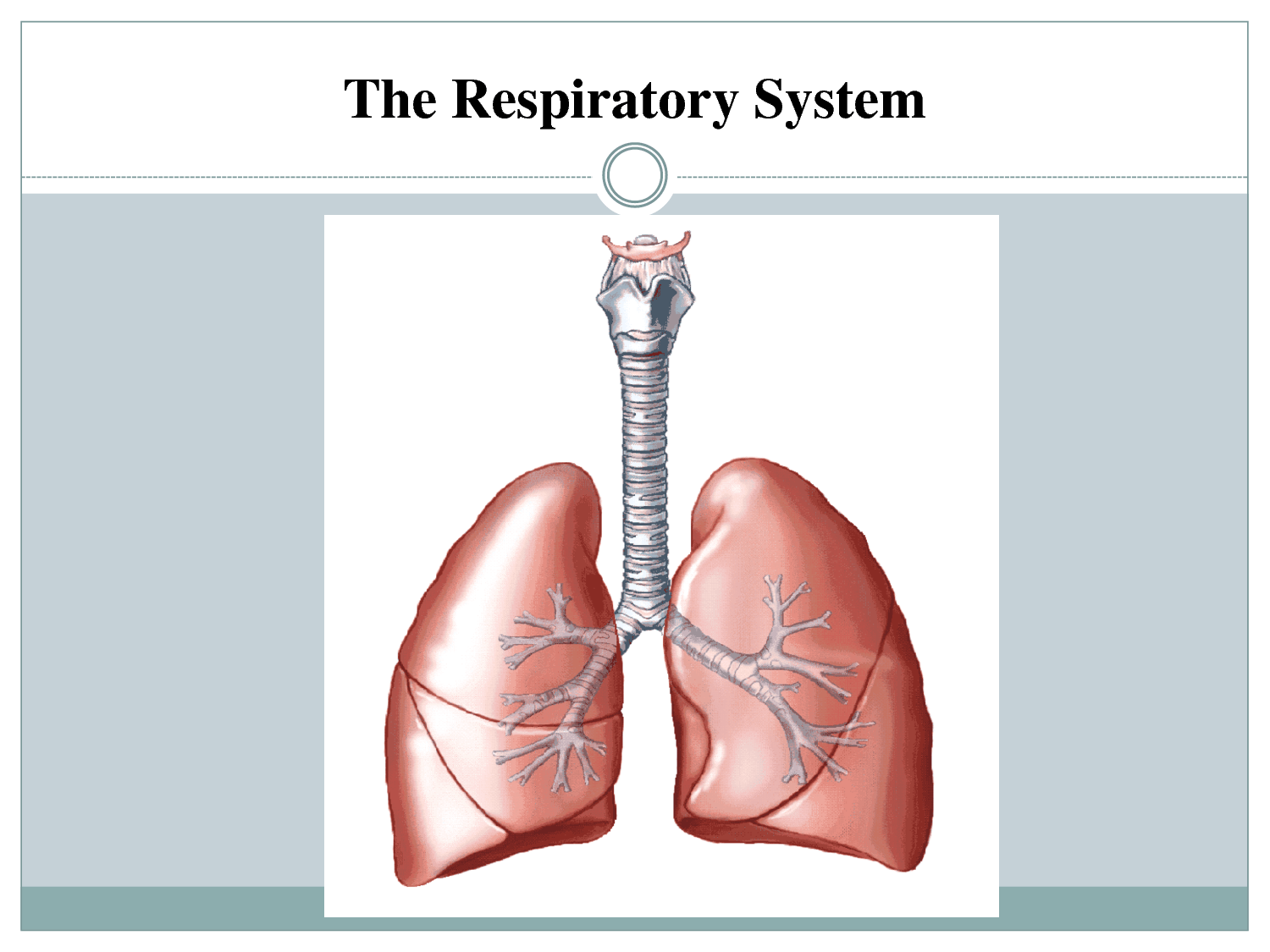
What is the main function of the respiratory system?
a)
to provide oxygen and remove carbon dioxide from the body
b)
to bring oxygen to the body
c)
to break down food and absorb nutrients
d)
to remove oxygen from the body and deliver carbon dioxide
28.
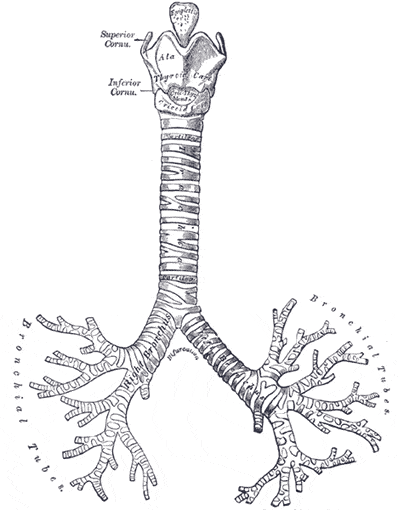
The two main branches from the trachea (one to each lung)
a)
bronchi
b)
alveoli
c)
capillaries
d)
bronchioles
29.
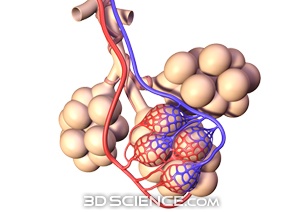
The air sacs that are covered with capillaries where gas exchange takes place
a)
bronchi
b)
lungs
c)
oxygen
d)
alveoli
30.
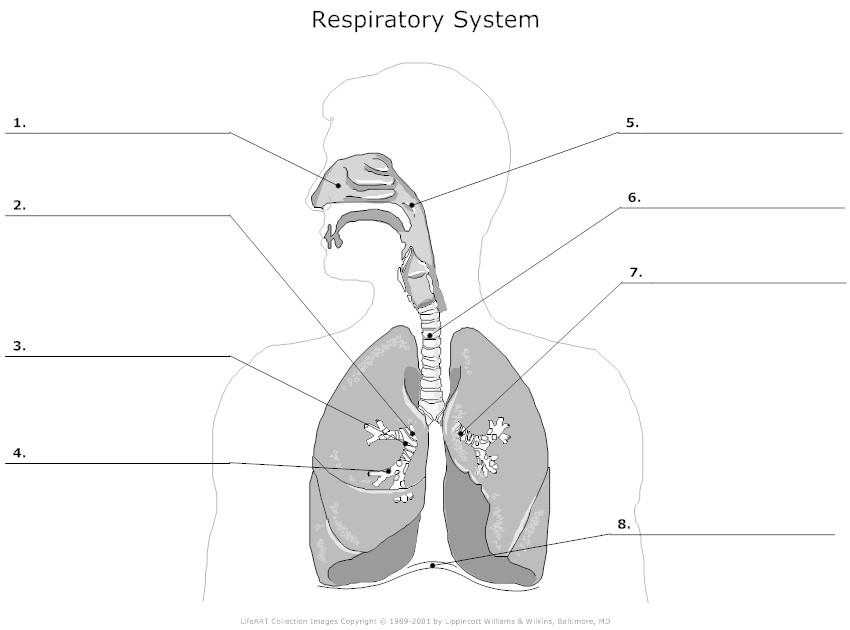
Name the structure labeled 8 
a)
lungs 
b)
trachea 
c)
diaphragm 
d)
alveoli 
31.
Flap of skin that covers the opening to the windpipe during swallowing
a)
Stomach
b)
Trachea
c)
Pancreas
d)
Epiglottis
32.
The passageway that is shared by both the digestive and respiratory system is the....
a)
larynx
b)
pharynx
c)
trachea
d)
nose
33.
What is a skeleton?
a)
Tissues that contract to create movement
b)
Tissues that relax to create movement
c)
A framework that supports and protects an animal 
d)
Small tubes that help vertebrae support the spinal cord
34.
The three types of muscle tissue are
a)
skeletal, smooth, and cardiac
b)
dense, loose, and striated
c)
squamous, cuboidal, and columnar
d)
skeletal, smooth, and connective
35.
What is a group of similar cells?
a)
Tissue 
b)
Organ
c)
Cell group
d)
Organ system
36.
What is a group of similar tissues?
a)
Tissue 
b)
Organ
c)
Cell group
d)
Organ system
37.
Another word for back is
a)
ventral
b)
anterior
c)
dorsal
d)
sagital
38.
Another word for front is
a)
ventral
b)
posterior
c)
dorsal
d)
sagital
39.

A disease acquired at a hospital

a)

Nosocomial

b)

Epidemiology

c)

Prognosis

d)

Diagnosis

40.

Disease spread country or worldwide

a)

Pandemic

b)

Epidemic

c)

Endemic

41.

Disease spread over specific region

a)

Pandemic

b)

Epidemic

c)

Endemic

42.

Maintaining a stable internal environment

a)

Metabolism

b)

Anabolism

c)

Catabolism

d)

Homeostasis

43.

All of the chemical processes that occur in the body to create energy

a)

Metabolism

b)

Anabolism

c)

Catabolism

d)

Homeostasis

44.

Which of these is NOT required for life?

a)

water

b)

food

c)

blood

d)

oxygen

e)

pressure

45.

Which of these is NOT a characteristic of life?

a)

movement

b)

growth

c)

excretion

d)

sleeping

e)

reproduction

46.

What term describes a body part that is closer to point of attachment?

a)

anterior

b)

proximal

c)

superior

d)

distal

e)

inferior

47.

The system that produces offspring is the

a)

digestive

b)

endocrine

c)

reproductive

d)

muscular

e)

nervous

48.

Regarding direction terms that describe the positions of body structures, which of the following is correct?

a)

The fingers are proximal to the wrist.

b)

The right arm is medial to the left arm.

c)

The umbilicus (belly button) is superior to the thoracic region.

d)

The ears are lateral to the nose.

49.

The _____ separates the thoracic from abdominal cavities.

a)

pelvis

b)

rib cage

c)

diaphragm

d)

peritoneum

50.
Blood cell production occurs in this system. 
a)
Cardiovascular
b)
Nervous
c)
Lymphatic
d)
Skeletal 
51.
contains heart and lungs
a)
cranial
b)
spinal
c)
orbital 
d)
thoracic
52.
contains stomach, intestines, liver, pancreas, gallbladder, and kidneys
a)
abdominal
b)
abdominopelvic
c)
pelvic
d)
thoracic
53.
Towards the Front. 
[The eyes are _______ to the brain].
a)
Inferior
b)
Deep
c)
Lateral
d)
Anterior
54.
Where is the femoral region located?
a)
The thigh 
b)
Lumbar region
c)
Orbital
d)
The chest
55.
What is the region called between the thigh and abdomen, where the legs connect to the trunk of the body?
a)
Inguinal region
b)
Otic
c)
Pedal
d)
Popliteal
56.
Which system acts as a barrier against infection and UV radiation and helps regulate body temperature?
a)
integumentary
b)
muscular
c)
digestive
d)
cardiovascular
57.
The movement of water from an area of high concentration to an area of lower concentration is called
a)
facilitated diffusion
b)
active transport
c)
osmosis
d)
dialysis
58.
The procedure to remove waste from the blood
a)
homeostasis
b)
dialysis
c)
electrolytes
d)
dysuria
59.
Drugs or substances that cause a person to urinate more frequently
a)
catheterization
b)
incontinence
c)
calculus
d)
diuretics
60.
How does the glomerulus filter blood into the Bowman's capsule? 
a)
High pressure 
b)
Concentration Gradient 
c)
Active transport 
d)
Passive transport 
61.
In the collecting duct, what is reabsorbed? 
a)
Ions like Na+ and Cl-
b)
Nutrients like glucose and amino acids 
c)
Substances like drug metabolites and waste 
d)
Water 
62.

Recall where in the nephron reabsorption of glucose occurs.

a)

Loop on Henle

b)

Bowman's capsule

c)

Proximal convoluted tubule

d)

Distal convoluted tubule

63.

Recall where in the kidney the Bowman's capsules are found.

a)

Renal Medulla

b)

Renal Cortex

c)

Renal Pelvis

64.

Recall where in the kidney the loops of Henle are found.

a)

Renal Cortex

b)

Renal Pelvis

c)

Renal Medulla

65.

Recall where in the nephron reabsorption of water using a counter current system occurs.

a)

Collecting duct

b)

Bowman's capsule

c)

Loop of Henle

d)

Urethra

66.

Recall what structure carries filtrate from the renal pelvis to the bladder.

a)

Loop of Henle

b)

Distal convoluted tubule

c)

Ureter

d)

Urethra

67.

Recall what structure carries urine from the bladder out of the body.

a)

Ureter

b)

Urethra

c)

Distal convoluted tubule

d)

Proximal convoluted tubule

68.

Recall which hormone controls the levels of water reabsorbed from the collecting ducts.

a)

Testosterone

b)

Anti-diuretic hormone

c)

Adrenaline

d)

Progesterone

69.
Identify Letter A
a)
Adrenal Gland
b)
Renal Artery
c)
Renal Vein
d)
Renal Pelvis
70.
What waste is eliminated by your lung?
a)
Oxygen
b)
Carbon Dioxide
c)
Nitrogen
d)
Potassium 
71.
This takes "clean" blood from the kidneys to the heart.
a)
Renal Vein
b)
Capillaries
c)
Aorta 
d)
Renal Artery
72.

#3 Refers to the circular structure that surrounds the pupil and regulates the amount of light entering the eye.

a)

Cornea

b)

Pupil

c)

Retina

d)

Iris

73.

#1 Refers to the clear tissue that covers the front of the eye

a)

Retina

b)

Cornea

c)

Pupil

d)

Iris

74.

# 5 refers to the layer of receptor cells at the back of the eye in which the image is focused

a)

Retina

b)

Lens

c)

Optic Nerve

d)

Lens

75.

The white part of the eye made of a tough material

a)

lens

b)

sclera

c)

retina

d)

optic nerve

76.

carries messages from the eye to the brain

a)

lens

b)

vitreous humor

c)

retina

d)

optic nerve

77.

black circle, allows light to enter the eye

a)

iris

b)

pupil

c)

optic nerve

d)

retina

78.

gel substance that gives the eye shape

a)

optic nerve

b)

iris

c)

vitreous humor

d)

retina

79.
Without the ____ the two sides of our brain couldn't communicate. 
a)
Frontal Lobe
b)
Cerebral Cortex
c)
Thalamus
d)
Corpus Callosum 
80.
The Medulla Obolongata controls our ___.
a)
Blood Pressure 
b)
Muscle Memory 
c)
Pain reaction
d)
Memory 
81.
What is this?
a)
Cerebrum
b)
Cerebellum
c)
Brain Stem
d)
Diencephalon
82.
The lobe responsible for vision
a)
Frontal Lobe
b)
Temporal Lobe
c)
Parietal Lobe
d)
Occipital Lobe
83.

Which lobe is this?

a)

Occipital Lobe

b)

Parietal Lobe

c)

Temporal Lobe

d)

Frontal Lobe

84.
Oxygen from the air enters the blood stream at what location?
a)
Cardiac Notch
b)
Pulmonary Vein
c)
Alveoli
d)
Paranasal Sinuses
85.
Which lung has 3 lobes?
a)
Right
b)
Left
c)
Purple
d)
Big
86.
Air moves into the lungs due to 
a)
decreased air pressure in lungs
b)
pressure of diaphragm on lungs
c)
throat muscles contracting
d)
active transport
87.
spasm of the diaphragm
a)
cough
b)
sneeze
c)
hiccup
d)
yawn
88.

When you sneeze, how fast do your nose particles travel?

a)

5 miles per hour

b)

100 miles per hour

c)

1000 miles per hour

d)

100000000 miles per hour

89.
Arteries carry blood ______ from the heart.
a)
Away
b)
To
c)
Across
d)
Around
90.
How many bones are in the human body?
a)
200
b)
602
c)
206
d)
106
91.
What bone protects the brain?
a)
Rib Cage
b)
Skull
c)
Femur
d)
Face
92.
How many chambers are in the heart?
a)
4
b)
2
c)
6
d)
8
93.
Which part of the brain controls our heartbeat, breathing, and digestive system?
a)
Brain Stem
b)
Cerebellum
c)
Cerebrum
d)
Skull
94.
What is the largest bone in the body?
a)
Skull
b)
Ribs
c)
Femur
d)
Vertebrae
95.
Your heart beats faster when you 
a)
rest
b)
exercise
c)
sleep
d)
think
96.
Your heart is the size of ______________
a)
your 2 fists
b)
1 fist
c)
your brain
d)
a baseball
97.

Red blood cells are made in the?

a)

heart

b)

bone marrow

c)

kidneys

d)

brain

98.

Which on of these represents from smallest to largest in which all organisms are organized?

a)

Organism, cell, organ, organ system, tissue

b)

Cell, tissue, organ, organ system, organism

c)

Cell, organism,organ system, organ, tissue

d)

Tissue, organ, organ system, cell, organism

99.

What body system is shown in the picture?

a)

Muscular System

b)

Skeletal System

c)

Nervous System

d)

Respiratory System

100.

Why does our pupil get larger when it is dark?

a)

Because it is too bright

b)

Our pupil doesn't change size, only animals

c)

To let in more light to help us see