wayground logo

Free Printable Worksheets

NEW

Font size

S
M
L
XL
Worksheets

U3M2L2 "The Theory of Evolution by Natural Selection"

Total questions: 40

Worksheet time: 58mins

Name
Class
Date
1.

Variations in a population occur through __________.

a)

transcription

b)

translation

c)

mutations

d)

dictations

2.

An inherited trait that helps those organisms that have it to survive

a)

niche

b)

structure

c)

characteristic

d)

adaptation

3.

According to natural selection, light colored tree trunks would favor

a)

light colored moths

b)

dark colored moths

c)

red colored moths

d)

red and light colored moths

4.
Why are advantageous traits more likely to be passed onto offspring?
a)
Because they are more likely to survive and reproduce.
b)
Because they come from dominant alleles.
c)
Because they come from recessive alleles.
d)
Because the trait is an acquired phenotype.
5.
Mutations are a change in what?
a)
DNA
b)
tRNA
c)
genotype
d)
phenotype
6.
Which organisms are most likely to survive?
a)
the best adapted
b)
the fastest
c)
the strongest
d)
the most domesticated (tamed)
7.
Change over time
a)
Natural Selection
b)
Selective Breeding
c)
Homeostasis
d)
Evolution
8.
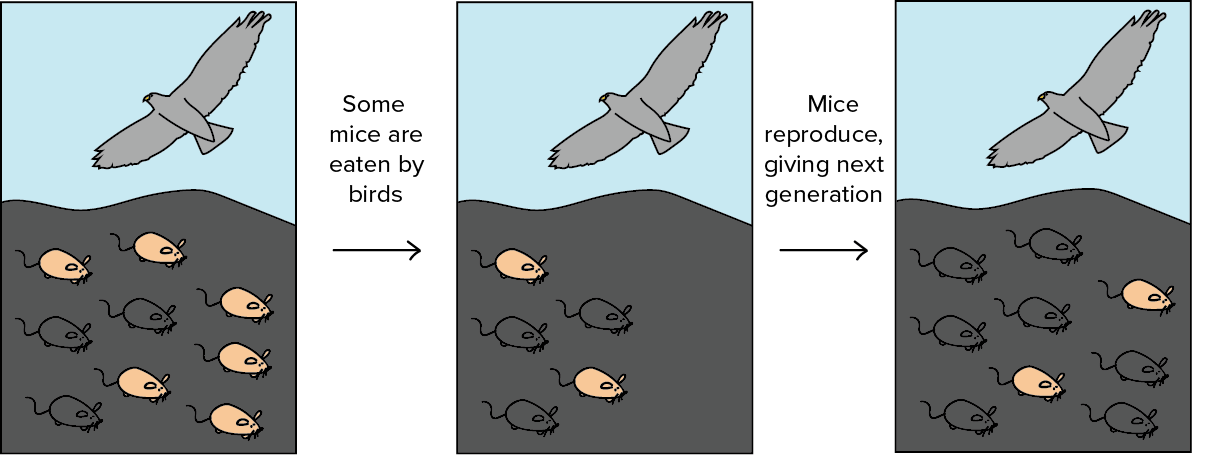
Why is the mouse population changing over time?
a)
The light mice can reproduce more successfully than the dark mice
b)
The hawks eat more dark mice than light mice because the dark mice taste better
c)
The hawks eat more light mice than dark mice because they can see the light mice more easily
d)
The hawks eat more dark mice than light mice because they can see the dark mice more easily
9.
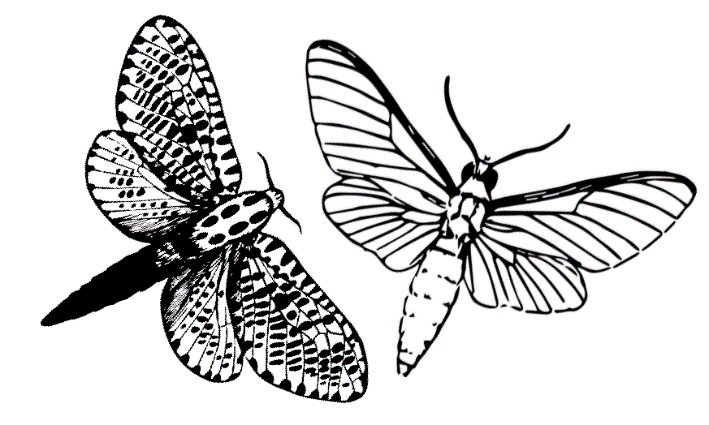
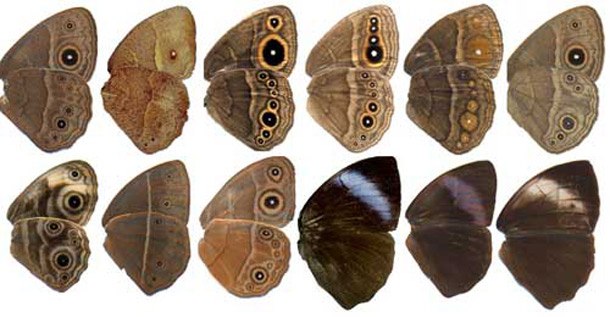
These moths are all the same species. The differences between their wings is an example of ________________
a)
Natural Selection
b)
Variation
c)
Homeostasis
d)
Extinction
10.
Humans, birds, whales, and lizards all have similar arm bones. What is the reason for this?
a)
The function of these bones is the same in all animals
b)
They live in similar environments
c)
They have a common ancestor
d)
All organisms resemble humans
11.
Bird wings and butterfly wings are an example of
a)
Homologous structure
b)
Analogous structure
c)
Mimicry
d)
Camoflague
12.
Structures that are inherited from a common ancestor are homologous.
a)
True
b)
False
13.
Analogous structures show common ancestry.
a)
True
b)
False
14.
Which of the following pieces of evolution evidence contain both homologous and vestigial structures?
a)
fossil record
b)
comparing embryology
c)
comparing biochemistry
d)
comparing anatomy
15.
Some organisms that share a common ancestor have features that have different functions, but similar structures.  These are known as
a)
vestigial structures
b)
analogous structures
c)
homologous structures
d)
fossil structures
16.

The fossil record help scientists

a)

better understand the kinds of organisms that lived in the past

b)

better understand how the environment has changed over time

c)

better understand how organisms have evolved over time

d)

all of the above

17.

What is common ancestry?

a)

When a species no longer exists

b)

When organisms are descended from a single ancestor

18.

The earliest organisms were ___________; the more recent organisms are ____________.

a)

simple; more complex

b)

complex; more simple

19.

What is the value of a transitional fossil?

a)

Transitional forms show the evolutionary steps between species.

b)

Transitional forms are evidence of punctuated equilibrium.

20.

What is the study of the similarities and differences in unborn fetuses, or developing organisms?

a)

Paleoclimatology

b)

Comparative embryology

21.

Which of the following terms describes when a new species evolves or develops?

a)

Unifornitarianism

b)

Speciation

22.
Study of embryos of various organisms to show a common ancestor because of similarities in development
a)
natural selection
b)
embryology
c)
speciation
d)
evolution
23.
Two organisms that are closely related would have
a)
very similar DNA sequence
b)
exactly the same DNA sequences
c)
no proteins in common
d)
completely different DNA sequence
24.
What does Darwin's theory of evolution suggest?
a)
species change over time
b)
extinct species are not related to living species
c)
different species can interbreed
d)
animals that look alike are most closely related
25.
What characteristic did Darwin observe about the finches on the Galapagos Islands?
a)
Their feathers 
b)
Genotypes 
c)
Their beaks
d)
Their body sizes
26.

Because whales have a pelvis and femurs, it shows whales are descended from an ancestor that was able to _____________________.

a)

walk

b)

sing

c)

swim

d)

polka

27.

Which evidence for evolution is shown below?

a)

Comparative embryology

b)

Homologous structures

c)

Biochemical evidence

d)

Vestigial structures

28.

An example of a structual adaptation is...

a)

a turtle hiding inside its shell

b)

The spikes on a porcupine fish

c)

a rabbit burrowing underground

d)

a viper biting when threatened

29.
Penguins huddle close together to keep warm.
a)
Structural
b)
Behavioral
30.

What are fossils?

a)

Are the remains or evidence of once-living organisms

b)

Is the change over time in populations of related organisms

c)

A chart that divides Earth’s history into different time units

d)

Occurs when the last individual organism of a species dies

31.

What is the fossil record?

a)

Are the remains or evidence of once-living organisms

b)

Is the change over time in populations of related organisms

c)

Is made up of all the fossils ever discovered on Earth

d)

Occurs when the last individual organism of a species dies

32.

What are trace fossils?

a)

A fossil copy of an organism in a rock

b)

Is the preserved evidence of the activity of an organism

c)

The impression of an organism

d)

Is made up of all the fossils ever discovered on Earth

33.

What is a mold?

a)

The impression of an organism

b)

Is the preserved evidence of the activity of an organism

c)

A fossil copy of an organism in a rock

d)

A chart that divides Earth’s history into different time units

34.
A group of similar organisms that can breed and produce fertile offspring.
a)
Fossils
b)
Species
c)
Descendants
d)
Evolution
35.
Change over time describes.....
a)
Speciation 
b)
Selective Breeding 
c)
Evolution 
d)
Adaptation 
36.
What is the advantage of having different shaped beaks?
a)
To look different from other species.
b)
To be able to eat the food readily available in the environment.
c)
To protect itself against predators.
d)
To protect itself against prey.
37.
Natural selection
a)
process by which individuals that are better suited to their environment survive and reproduce most successfully; also called survival of the fittest
b)
Humans select which animals live and die
c)
both 
d)
IDK
38.
The finches on the Galapagos island were similar in form except for variations of their beaks. Darwin observed that these variations were useful for:
a)
 attracting a mate
b)
 defending territory
c)
 building nests
d)
 gathering food
39.
Why are advantageous traits more likely to be passed on to the offspring?
a)
Because parents with those traits can teach their offspring
b)
Because parents with those traits can surive and reproduce better
c)
Because parents with those traits care more about their offspring
40.
Do organisms "decide" to adapt?
a)
Yes, if they don't adapt they will die
b)
No, they can't adapt.  They either have adaptations or they don't
c)
No, they adapt by random mutations during their lifetime
d)
Yes, they can force mutations in one lifetime