
 Worksheets
Introduction to Wave
Total questions: 74
Worksheet time: 2hrs 41mins
The type of waves that require a medium to transfer energy
Mechanical Waves
Electromagnetic Waves
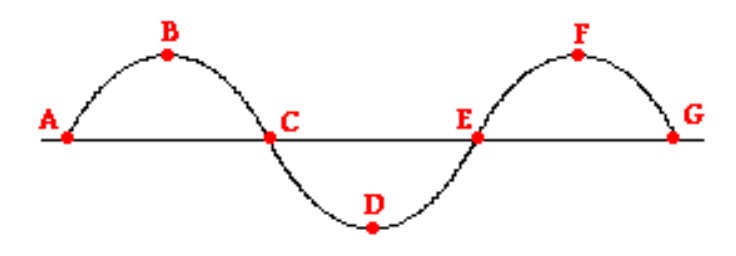
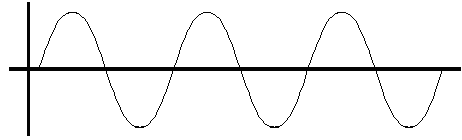
Which letter(s) represent the trough of the wave?
A
B
D
G
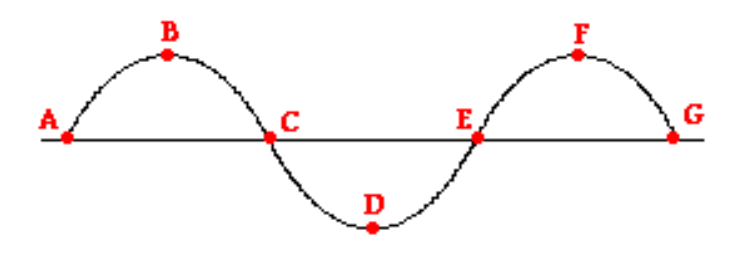
Which letter(s) represent the crest of the wave?
A & G
B & D
B & F
Seismic waves are mechanical waves.
What is TRUE of a mechanical wave?
It must travel in empty space
It can travel in a vacuum
It must have a medium
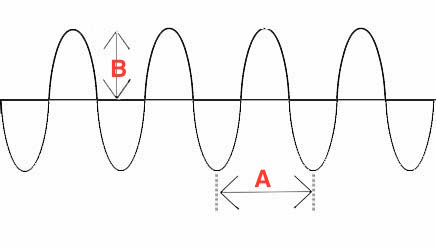
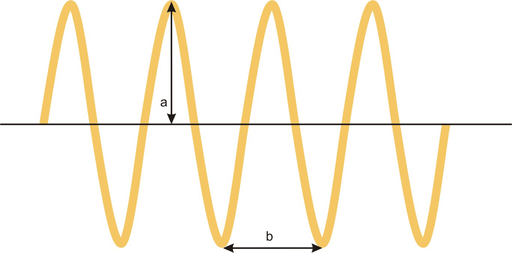
What property of this wave is represented by the letter "A"
amplitude
crest
wavelength
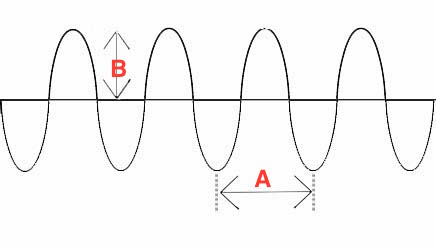
What property of the wave is represented by the letter "B"?
amplitude
crest
trough
What is transferred in waves?
Energy
Objects
Matter
Light
A wave in which the movement of the wave’s medium is perpendicular (at a right angle) to the movement of the wave traveling through the medium
Transverse waves
Compression waves
Nodular Waves
Ocean Waves
A wave in which the wave’s medium moves in the same direction that the wave travels
Transversal wave
Transverse wave
Frequency wave
Compressional (longitudinal) wave
Sound is an example of which type of wave?
Transverse
Longitudinal (compressional)
Both
Neither
How do you measure the wavelength of a longitudinal (compressional) wave?
Crest to crest
Middle of one compression to the middle of next compression
You cannot measure the wavelength.
It does not have a wavelength.
Which wave is pictured?
Transverse
Longitudinal (compressional)
Both
Neither

Which wave is pictured?
Transverse
Longitudinal (compressional)
Both
Neither
In a compressional wave, what is the area in which the medium is spread apart?
amplitude
period
compression
rarefaction
What is the area of a compressional wave in which the particles are crowded together?
amplitude
compression
rarefaction
period

The arrows are pointing to which part of this compressional wave?
crest
compression
rarefaction
amplitude

The arrows are pointing to which part of this compressional wave?
crest
compression
rarefaction
amplitude


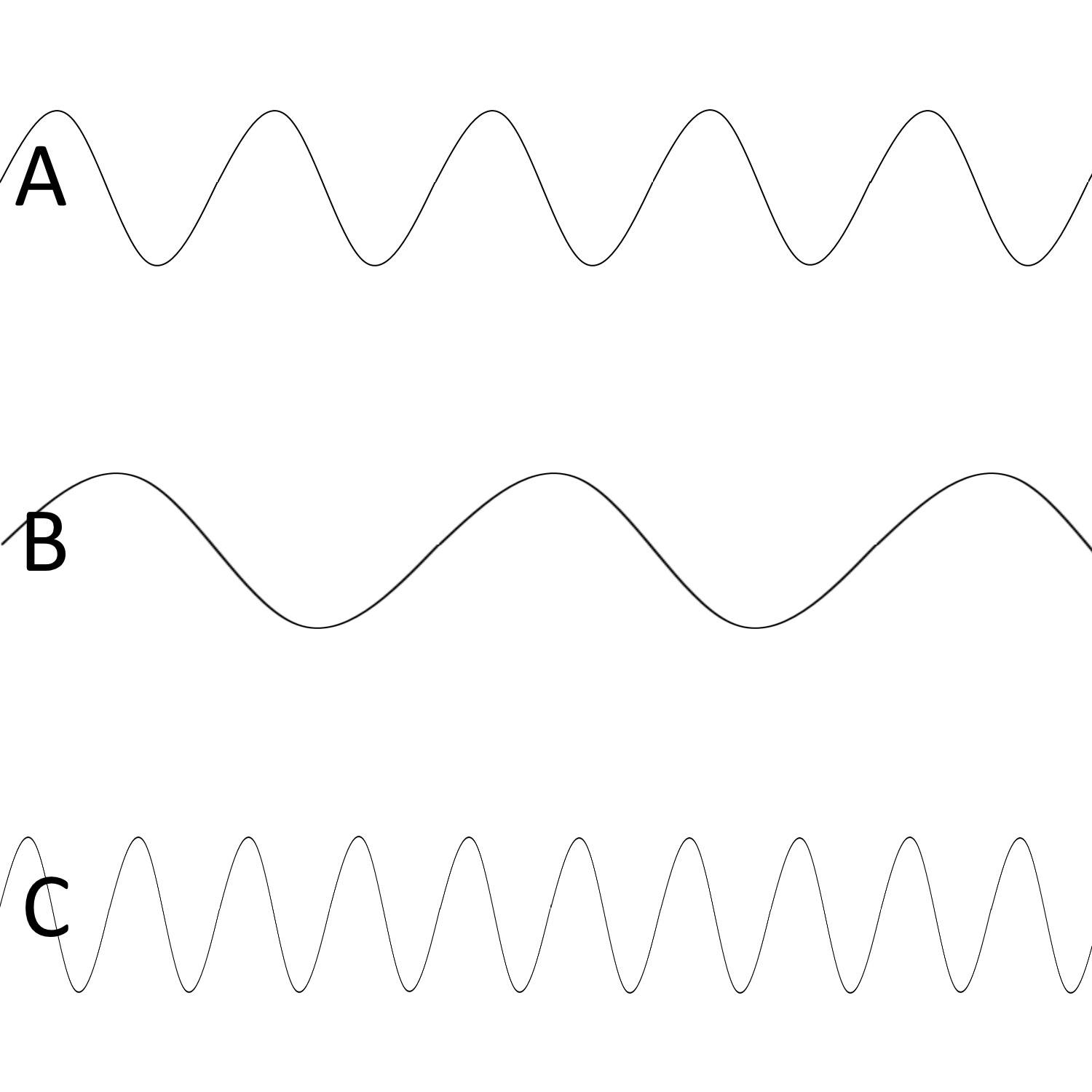
If this wave chain represents 1 second, What is the frequency of the waves?
1 Hz
9 Hz
3 Hz
6 Hz
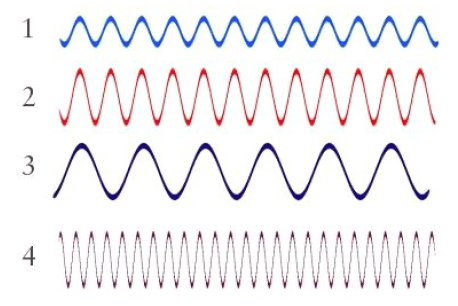
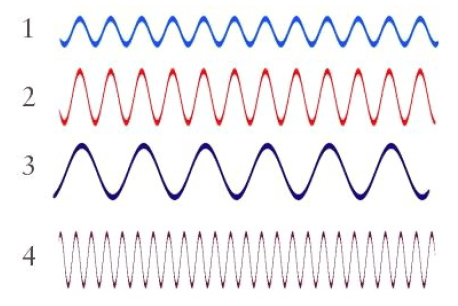
A guitar string vibrates with a frequency of 320 hz. If the wavelength of the vibration is 0.23 meters what is the speed of the wave?
320.23 m/s
1391.3 hz
73.6 m/hz
73.6 m/s

What does a wave carry from place to place?
energy
matter
people
Mechanical waves usually travel fastest through:
solids
liquids
gases
The number of waves that pass somewhere in a second is:
amplitude
frequency
wavelength
What are properties of electromagnetic waves?
carry energy
can move through space
can move through matter
include x-rays
Water waves are unique because they:
are transverse waves
are longitudinal waves
carry energy
move matter from place to place
As a longitudinal wave moves forward, the particles move:
perpendicular to the wave's motion
parallel to the wave's motion
stand in one place
move completely down the spring
A guitar string vibrates with a frequency of 320 hz. If the wavelength of the vibration is 0.23 meters what is the speed of the wave?
320.23 m/s
1391.3 hz
73.6 m/hz
73.6 m/s

What are the spaced out sections of this wave called?
Reflections
Rarefactions
Wavelength
Compressions
The lowest part of the wave is called the ?
Frequency
Amplitude
crest
trough

Sound waves are which type of waves?
transverse
seismic
longitudinal
frequency
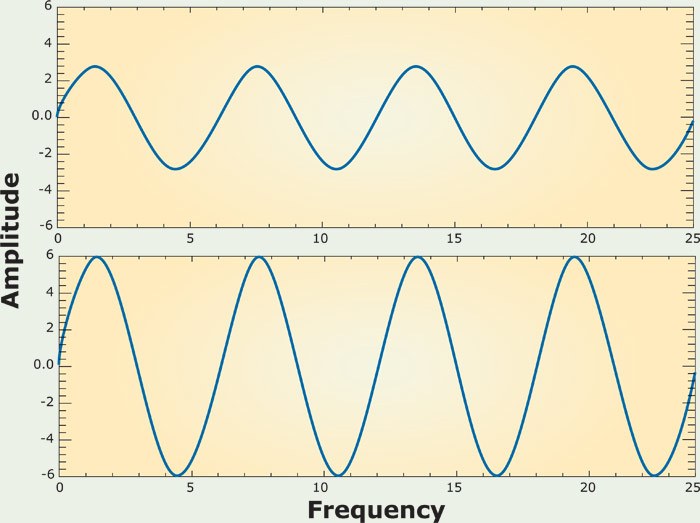

Diagram below shows the displacement-time graph of an oscillating spring.
The oscillating spring undergoes …
damping
resonance
interference
forced oscillation

Damping causes the ------- to decay with time.
Amplitude
Frequency
Period
Phase
----- forces remove energy from an oscillating system
Frictional
Restoring
Gravitational
Net Forces
Which damping type makes amplitude decrease to zero in the shortest time?
Heavy
Light
Critical
Undamped

A guitar string is plucked and set into oscillation. over time the amplitude of oscillation of the string decreases. The oscillation of the string is said to be ...
damped
forced
natural
resonant
The damping force acting on an oscillationg system is always
in the opposite direction to the acceleration
in the opposite direction to the velocity
in the same direction as the acceleration
in the same direction as the velocity
When a forced oscillation is damped, the amplitude
builds up quite slowly
constantly rises and falls
is always small
is reduced

