
 Worksheets
Understanding Motion: Quiz on Physics Concepts
Total questions: 70
Worksheet time: 49mins
What is the definition of distance in physics?
The shortest path between two points
The total length of the path traveled, regardless of direction
The rate at which an object changes its position
The change in velocity over time
Which of the following best defines displacement?
The total path length traveled
The change in position from the starting point to the ending point
The speed of an object
The time taken to travel a distance
Which of the following is a scalar quantity?
Displacement
Velocity
Distance
Acceleration
What is the SI unit of speed?
Meter (m)
Meter per second (m/s)
Second (s)
Kilometer per hour (km/h)
Which of the following statements is true about velocity?
Velocity is always positive
Velocity is a scalar quantity
Velocity has both magnitude and direction
Velocity is the same as speed
What does the slope of a position vs. time graph represent?
Acceleration
Displacement
Velocity
Distance
Which of the following is the correct formula for average velocity?
vˉ=td
vˉ=ts
vˉ=dt
vˉ=uv
Acceleration is defined as:
The rate of change of distance
The rate of change of velocity
The total distance traveled
The time taken to travel a distance
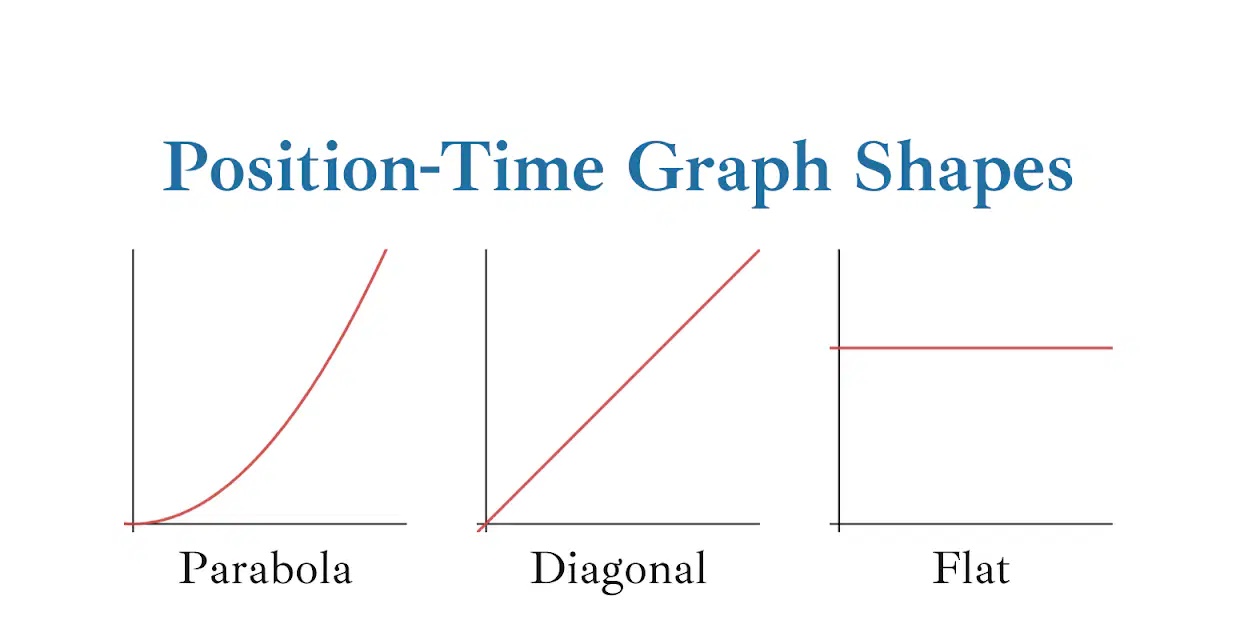
Which graph would show an object moving at constant velocity?
Graph A: parabolic line
Graph B: A straight, sloped line
Graph C: A flat line
If a car travels 100 meters north and then 100 meters south, what is its displacement?
0 meters
100 meters
200 meters
50 meters
A runner completes one lap around a 400 m track. What is the runner’s displacement at the end of the lap?
0 meters
400 meters
800 meters
200 meters
A cyclist travels 30 km in 2 hours. What is the average speed of the cyclist?
15 km/h
30 km/h
60 km/h
2 km/h
If a car’s velocity changes from 10 m/s to 30 m/s in 5 seconds, what is its average acceleration?
2 m/s²
4 m/s²
5 m/s²
10 m/s²

Given the velocity vs. time graph of an object moving in a straight line, how can you determine the object’s displacement over a time interval?
By finding the slope of the graph
By finding the area under the graph
By finding the y-intercept of the graph
By finding the maximum value of the graph
A car moves with a constant velocity of 20 m/s for 10 seconds. How far does it travel?
100 m
200 m
20 m
2 m
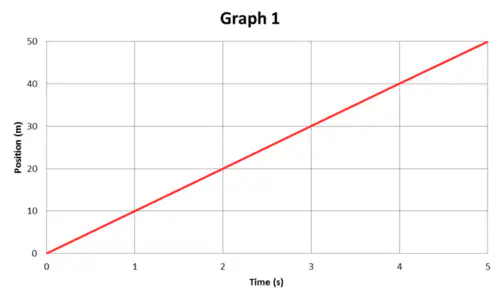
A position vs. time graph shows a straight line with a positive slope. What does this indicate about the object’s motion?
The object is at rest
The object is moving at a constant velocity
The object is accelerating
The object is moving backward
A car accelerates uniformly from rest to 25 m/s in 5 seconds. What is the car’s acceleration?
5 m/s²
10 m/s²
2.5 m/s²
0.2 m/s²
A train travels 60 km north in 1 hour, then 60 km south in 2 hours. What is the train’s average velocity for the entire trip?
0 km/h
20 km/h north
30 km/h south
10 km/h north

A velocity vs. time graph shows a straight line sloping upward from left to right. What does this indicate about the object’s motion?
The object is moving at a constant velocity
The object is accelerating at a constant rate
The object is decelerating
The object is at rest
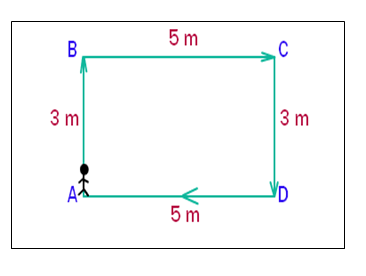

Suzie goes from Home to shopping to lunch to the movies to the gas station. What was her DISPLACEMENT?
5 miles
13 miles
4 miles
8 miles

What kind of line on a P-T graph would create the segment B - C on this V-T graph?
Straight, linear line
Horizontal line
Curved line
Wouldn't happen

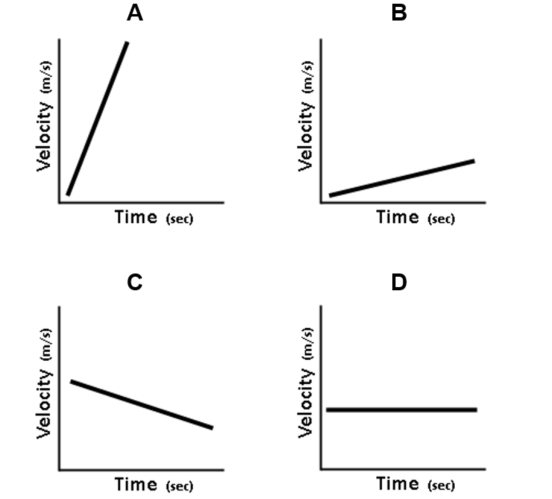





What is motion?
the stopping of an object to a frame of reference
a change in position relative to a frame of reference
the middle ground between light and shadow, between science and superstition, and it lies between the pit of man's fears and the summit of his knowledge
a change in the time in which it takes to get an office referral
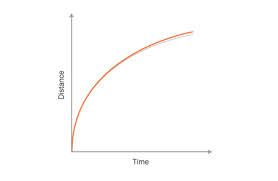
Slowing Down

What is this?
"This airplane is traveling at 500 mph, West"
Speed
Velocity
Acceleration


What is the rate of acceleration of the object between 0 and 4 seconds?
1 m/s
0 m/s2
-1 m/s2
1 m/s2

Use the graph to help you answer the question. According to the graph, how does the motion of the car compare to the motion of the truck?
The car is showing a greater rate of positive acceleration than the truck.
The truck is showing a greater rate of positive acceleration than the car.
The truck is showing a greater rate of negative acceleration than the car.
The car is showing a greater rate of negative acceleration than the truck.

Which time interval shows a constant velocity and no acceleration?
18 s to 24 s
4 s to 18 s
0 s to 24 s
0 s to 3 s

Object B is ______.
moving at a constant velocity
at rest
speeding up
slowing down
Which of the following quantities is a scalar?
Speed
Velocity
Displacement
Acceleration
Which of the following statements is true about an object moving with constant acceleration?
Its velocity changes by equal amounts in equal time intervals
Its position does not change
Its speed remains constant
Its acceleration decreases over time
When an object is thrown up in the air, its velocity at the top of its motion is temporarily...

Select the description of motion from A - B.
Slowing down away from the origin
Speeding up away from the origin
Constant velocity away from the origin
Constant velocity towards the origin

Calculate the distance travelled in section B.
(a)
A runner completes 5 kilometers in 20 minutes. Calculate the average velocity in meters per second.
4.2 m/s
A cyclist slows down from 15 m/s to 5 m/s in 4 seconds. Determine the acceleration.
2.5 m/s²
A ball is thrown upward with an initial velocity of 25 m/s. What is its velocity after falling 30 meters down? (Take downward displacement as positive and acceleration as 9.8 m/s²)
A skier moving at 15 m/s slows down uniformly and stops over 50 meters. Find the acceleration.
2.25 m/s²
A bike accelerates at 3 m/s² for 7 seconds from an initial velocity of 4 m/s. What is the final velocity?
A car starts at 2 m/s and accelerates at 3 m/s². It covers 65 meters. How long did it take?
3.25 seconds
4.75 seconds
5.95 seconds
A runner covers 100 meters in 8 seconds, starting at 3 m/s. What was the acceleration?
A bike slows from 20 m/s to 5 m/s over 60 meters. What is the acceleration?
3.125 m/s²
A ball is thrown upward at 18 m/s and slows down at 9.8 m/s². How far does it go before its velocity reaches zero?
20.15 m
16.53 m
Why can we use v2 =u2+2as to find velocity without knowing the time?
It directly relates velocity, acceleration, and displacement.
A car moving at 10 m/s accelerates uniformly at 2 m/s² over 50 meters. Find its final velocity.
If you travel 150 meters east and then 150 meters west in 1 minute, what is your average velocity? Average speed?
If an object’s acceleration is negative, does that always mean it’s slowing down?

Match the position time graph to the velocity time graph. PLEASE STUDY THIS!

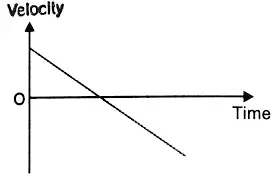
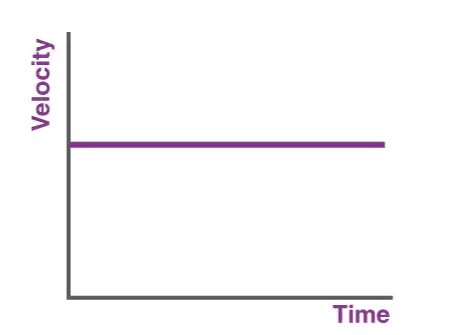
A motorcycle accelerates from 5 m/s at 4 m/s² for 6 seconds. How far does it travel?
102m
1,000m
1.2 m
120m
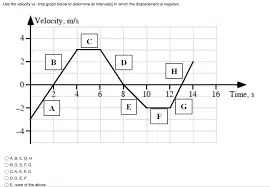
Select the answer choice that best describes the motion shown in interval E.
The object is not accelerating
The object is moving backwards and slowing down.
The object is moving forward and speeding up.
The object is moving backwards and speeding up.
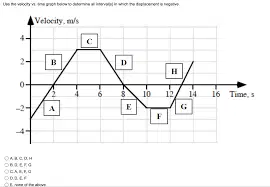
Select the answer choices that best describes the motion of an object at interval C. CHOOSE 2
The object is not accelerating
The object is stationary.
The object is moving forward at constant velocity.
The object is accelerating constantly.
An object covers 150 meters in 6 seconds, starting at 3 m/s with constant acceleration. Find the acceleration.
The kinematic equation for position and the kinematic equation for velocity can only be used when acceleration is...
Increasing
Decreasing
Zero
Constant

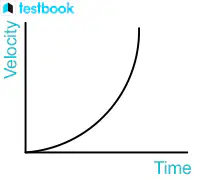
What does this graph tell you about the objects acceleration?
Positive acceleration (increasing velocity)
Constant velocity
Negative acceleration
Average acceleration
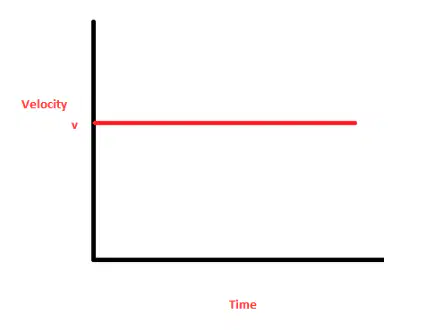
Select the answer choices that best describes the motion of this graph. Select 2
NO acceleration
Constant acceleration
Constant velocity
Zero velocity
A cyclist travels 600 meters in 2 minutes 30 seconds. What is their average velocity in m/s?
A runner accelerates from 0 to 9 m/s over 40 meters. Find the acceleration.

