Wayground logo

Free Printable Worksheets

Font size

S
M
L
XL
Worksheets

Earth Science Final Exam

Total questions: 35

Worksheet time: 35mins

Name
Class
Date
1.
Which best describes a fossil that helps determine the relative age of a rock layer?
a)
trace fossil
b)
index fossil
c)
radioactive fossil
d)
unconformity fossil
2.
Which characteristic of carbon-14 dating helps scientists determine the approximate time a species became extinct?
a)
Carbon-14 is not present in more recent fossils
b)
Carbon-14 increases at a constant rate over time
c)
Carbon-14 decreases at a constant rate over time
d)
Carbon-14 can only be found in fossils of a certain period
3.
Fossil remains of a trilobite are most likely to be found in which type of rock?
a)
igneous
b)
volcanic
c)
sedimentary
d)
metamorphic
4.

The period of geologic time when the biodiversity of life on the planet increased dramatically was

a)

Jurassic

b)

Triassic

c)

Permian

d)

Cambrian

5.

The worst mass extinction event in the history of the Earth wiping out 96% of all life was the

a)

Permian-Triassic

b)

Holocene

c)

Triassic-Jurassic

d)

Ordovician-Silurian

6.

Known as the age of reptiles

a)

Mesozoic

b)

Cenozoic

c)

Phanerozoic

d)

Cambrian

7.

How old do Paleontologists believe the Earth is?

a)

2019 years old

b)

3.6 billion years old

c)

4.6 billion years old

d)

4.6 million years old

8.

What type of event usually marks the end of an Era

a)

A Mass Extinction

b)

A Quinceanera

c)

An earthquake

d)

A Volcanic Eruption

9.

What are the four eras in order from OLDEST to NEWEST?

a)

Pre-Cambrian, Paleozoic, Mesozoic, Cenozoic

b)

Pre-Cambrian, Mesozoic, Paleozoic, Cenozoic

c)

Cenozoic, Mesozoic, Paleozoic, Pre-Cambrian

d)

Mesozoic, Pre-Cambrian, Cenozoic, Paleozoic

10.

90% of Earth’s history occurred during which era?

a)

Precambrian

b)

Paleozoic

c)

Mesozoic

d)

Cenozoic

11.
The diagram shows an organism that lives in the ocean.What is true about the organism shown?
a)
It is algae.
b)
It is benthos.
c)
It is nekton.
d)
It is plankton.
12.
Which organism is an example of a benthos?
a)
jellyfish
b)
seal
c)
shark
d)
starfish
13.
A group of students developed a model to represent the different zones of an ocean. Which factor prevents the growth of aquatic plants in the aphotic zone?
a)
absence of tides
b)
absence of sunlight
c)
underwater volcanoes
d)
salinity of water
14.
Which process occurs in the ocean and contributes large amounts of oxygen to the atmosphere?
a)
digestion by fish
b)
decomposition by bacteria
c)
respiration by zooplankton
d)
photosynthesis by phytoplankton
15.
Which of following is the world's largest ocean? 
a)
Indian
b)
Pacific
c)
Artic
d)
Atlantic
16.
What is salinity?
a)
the amount of sodium in liquid
b)
the amount of water that has evaporated
c)
the amount of dissolved salts in a liquid
d)
the amount of solids in a liquid
17.
The steeply inclined section of the continental margin
a)
Continental Shelf
b)
Continental Slope
c)
Continential Rise
d)
Abyssal Plain
18.
drift freely near the ocean surface
a)
plankton
b)
nekton
c)
benthos
d)
pelagic
19.
When one ocean  plate is forced underneath another one a(n) forms _________________________.
a)
Ocean Trench
b)
Rift Valley
c)
Seamounts
d)
Mid-Ocean Ridge
20.
Mountain chain called_______________are formed by magma coming through rift zones.
a)
Ocean Trench
b)
Rift Valley
c)
Seamounts
d)
Mid-Ocean Ridge
21.
What does this symbol represent?
a)
warm front 
b)
occluded front
c)
cold front
d)
stationary front
22.
This is a warm front symbol.
a)
true
b)
false
23.
Where does weather occur?
a)
mesosphere
b)
thermosphere
c)
troposphere
d)
stratosphere
24.
What is it called when you have a rising air mass?
a)
high pressure
b)
low pressure
c)
convection
d)
wind
25.
what can you associate with an area of high pressure?
a)
rain
b)
nice weather
26.
What do the black lines called isobars represent?
a)
pressure/wind
b)
humidity/wind
c)
wind/precipitation
27.

Which prevailing wind can be found between 30 and 60 degrees latitude?

a)

trade winds

b)

horse winds

c)

eaterlies

d)

westerlies

28.

Which gas makes up the largest portion of air?

a)

oxygen

b)

nitrogen

c)

carbon dioxide

d)

methane

29.

Which type of cloud is this?

a)

cirrus

b)

stratus

c)

cumulus

30.
Movement of Earth around the sun.
a)
Rotation
b)
Revolution
31.

Occurs when Earth is positioned between the moon and the sun and when Earth's shadow crosses the lighted half of the moon.

a)

Solar Eclipse

b)

Eclipse

c)

Lunar Eclipse

d)

Perigee

32.
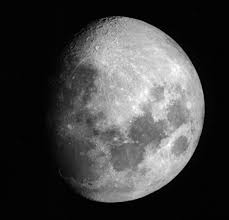
Name the moon phase
a)
waning crescent
b)
waxing crescent
c)
waning gibbous
d)
waxing gibbous
33.
The GAS GIANTS or Outer planets are:
a)
Mercury, Earth, Jupiter, Saturn
b)
Saturn, Neptune, Pluto, Mars
c)
Saturn, Jupiter, Uranus, Neptune
d)
Earth, Mars, Saturn, Neptune
34.

Energy is produced within a star's core by the process of

a)

nuclear fusion

b)

insolation

c)

conduction

d)

radioactive decay

35.
After leaving the main sequence small stars become
a)
Red Giants
b)
Red Super Giants
c)
White Dwarfs
d)
Black Dwarfs