

wayground logo

Free Printable Worksheets

NEW

Font size

S
M
L
XL
Worksheets

2nd Law of Thermodynamics

Total questions: 20

Worksheet time: 5mins
Name
Class
Date
1.
The second  law of thermodynamics states that entropy of a system  tends to ______________. 
a)
increase
b)
decrease
c)
stay constant
d)
fluctuate wildly
2.
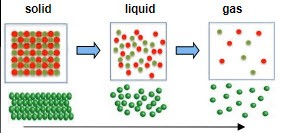
Entropy increases from solid, liquid to gas. Why?
a)
Molecular disorder increases
b)
Molecular randomness decreases
c)
Molecules are more energetic
d)
Molecules are more reactive
3.
How many laws of thermodynamics are there?
a)
a lot
b)
3
c)
4
d)
1
4.

Many thermodynamic processes in nature occurs in one direction but not the opposite

a)

True

b)

False

c)

Maybe

d)

I do not know

5.

Heat flow from a cool body to a hot body would not violate the 1st Law, energy would be still conserved

a)

True

b)

False

c)

Maybe

d)

Sometimes

6.

During adiabatic, internally reversible process, what is true about the change in entropy?

a)

it is temperature dependent

b)

it is always greater than zero

c)

it is always zero

d)

it is always less than zero

7.

What is the difference between adiabatic process and isentropic process?

a)

Adiabatic: heat transfer is not equal to zero

Isentropic: heat transfer is zero

b)

Both: heat transfer = 0

Isentropic : reversible

c)

Both: heat transfer is not equal to zero

Isentropic: irreversible

d)

Adiabatic: heat transfer = 0

Isentropic: heat transfer not equal to zero

8.

For a heat engine operating between two temperatures (T2 > T1), what is the maximum efficiency attainable?

a)

1 - (T1/T2)

b)

1 - (T2/T1)

c)

T1 - T2

d)

1 - (T12/T2)

9.

What is the value of work done for a closed, reversible, isometric system?

a)

zero

b)

positive

c)

negative

d)

+ / -

10.
What is "Entropy"?
a)
The tendency of objects to warm up
b)
The tendency of energy to spread out
c)
The tendency of energy to make heat
d)
The tendency of objects to do work
11.
Why can't a heat engine be 100% efficient?
a)
Heat must be constantly created
b)
No work can be done
c)
Entropy is lost
d)
Thermal energy decreases
12.
Which would have more entropy?
a)
Frozen ice cream
b)
Liquid Ice cream
13.
In which of the following systems is entropy increasing?
a)
Putting together a puzzle
b)
Putting books on a shelf
c)
Breaking a plate
d)
Filling a jar of salt
14.
How can energy be transferred from a cool object to a warm object?
a)
Work must be done
b)
Increase thermal energy
c)
Use convection
d)
Q=mTC
15.
What is the name of a device that converts thermal energy into work?
a)
Heating system
b)
Heat engine
c)
Entropy
d)
Power
16.
The efficiency of this heat engine is
a)
.2
b)
.60
c)
.50
d)
.40
17.
What type of gas process is this?
a)
Isothermal
b)
Isobaric
c)
Adiabatic
d)
None of those
18.

A refrigerator is

a)

A heat engine

b)

An air cooler

c)

An electric motor

d)

A heat engine working in the reverse order

19.
Entropy is a
a)
State function
b)
path fuction
c)
intensive variable
d)
none of these
20.
At absolute zero entropy of a system tends to
a)
maximum
b)
zero
c)
infinity
d)
none of theses