Wayground logo

Free Printable Worksheets

Font size

S
M
L
XL
Worksheets

Ecology--Honors Bio Review for Test

Total questions: 78

Worksheet time: 3hrs 36mins

Name
Class
Date
1.

Members of a species in a defined area

a)

ecosystem

b)

community

c)

biome

d)

population

2.
Consumer that eats plants
a)
heterotroph
b)
herbivore
c)
producer
d)
community
3.
Organisms that relies on other organisms for food; consumer
a)
herbivore
b)
decomposer
c)
heterotroph
d)
species
4.
All the organisms in a particular location, including their nonliving environment
a)
ecosystem
b)
carnivore
c)
niche
d)
population
5.
Study of interactions between organisms and their environment 
a)
niche
b)
community 
c)
ecology
d)
ecosystem
6.

Green plants are

a)

producers (autotrophs)

b)

consumers

c)

herbivores

d)

heterotrophs

7.
The image provided is an example of a(n):
a)
Carnivore
b)
Herbivore
c)
Producer
d)
Autotroph
8.
Organisms that breaks down and absorbs nutrients from dead organisms 
a)
consumer
b)
trophic level
c)
decomposer
d)
species
9.

Organisms that feed on both plants and animals

a)

Carnivores

b)

Omnivores

c)

Herbivores

d)

Detritivores

10.

What is the difference between the biotic and abiotic factors?

a)

Biotic factors are living things and abiotic factors are nonliving things.

b)

Biotic factors are nonliving things and abiotic factors are living things.

11.

What is a example of an abiotic factor?

a)

Panda

b)

Bacteria

c)

Butterfly

d)

Weather

12.
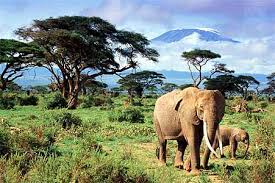
What are the biotic factors in this image?
a)
sunlight, elephants, and grasses
b)
sunlight, water,  and air
c)
elephants, plants, trees 
13.
The idea that no two species within an ecosystem can occupy the exact same niche
a)
niche overlap
b)
niche differentiation
c)
competitive exclusion
d)
niche decay
14.
An organism's _________ is defined as the environment in which it lives.
a)
habitat
b)
niche
c)
social structure
d)
ecosystem
15.
plants, rocks, air, sunlight, water, 
a)
ecosystem 
b)
population 
c)
community 
16.
all the snakes in the area 
a)
organism 
b)
ecosystem 
c)
population 
17.

What does this picture show?

a)

Organism

b)

Population

c)

Community

d)

Ecosystem

18.
What is it called when a group of the same organisms living together in the same place at the same time?
a)
An organism
b)
A population
c)
A community
d)
A biome
19.
What are groups of different populations living togther in the same place at the same time called?
a)
An organism
b)
A population
c)
A community
d)
A biosphere
20.
What is it called when you have groups of different populations along with their abiotic factors?
a)
An organism
b)
A population
c)
A community
d)
An ecosystem
21.

The temperate deciduous forest, the tropical rain forest, the desert, and the tundra are all examples of...

a)

the biopshere.

b)

biomes.

c)

ecosystems.

d)

communities.

22.
Jacob is going out to his grandparents fram.  On the farm is a stream that he likes to fish at. When he is fishing he sees many differernt speacies of fish as well as maple and oak trees and dragonflies.  What Jacob is seeing is an example of what level of organization?
a)
organism
b)
population
c)
community
d)
ecosystem
23.
What is a group of ecosystems that share similar climates and types of organisms called?
a)
A community
b)
A biome
c)
An ecosystem
d)
A biosphere
24.
What are the ecological levels of organization from smallest to the largest?
a)
organism, population, community, ecosystem, biome, biosphere
b)
organism, community, population, ecosystem, biome, biosphere
c)
organism, population, community, biome, ecosystem, ecosphere.
d)
organism, community, population, biome, ecosystem, ecosphere
25.
Organisms that look similar and can produce fertile offspring
a)
Species
b)
Fish
c)
Community
d)
Trees
26.
When put together, one organism outcompetes the other for resources.  This is an example of:
a)
competitive exclusion principle
b)
speciation
c)
biological niche
d)
evolution
27.

A consumer that feeds off the remains left by a decomposer is a

a)

scavenger

b)

detritivore

c)

keystone species

d)

carnivore

28.

Sea otters feed on sea urchins to maintain the kelp population. Therefore, sea otters are very important to keeping the balance of the marine ecosystem. What is the name for this important species?

a)

keystone species

b)

invasive species

c)

pioneer species

29.

Cattle egrets forage (feed) in fields among cattle. The egret gets easy access to flying insects stirred up by the cattle, and the cattle don't care if they are there or not.

a)

mutualism

b)

commensalism

c)

competition

d)

predation

30.
What type of symbiosis?  Hummingbirds feed on nectar from flowers.  The flowers are pollinated by hummingbirds as they move from flower to flower.
a)
commensalism
b)
mutualism
c)
parasitism
d)
predation
31.
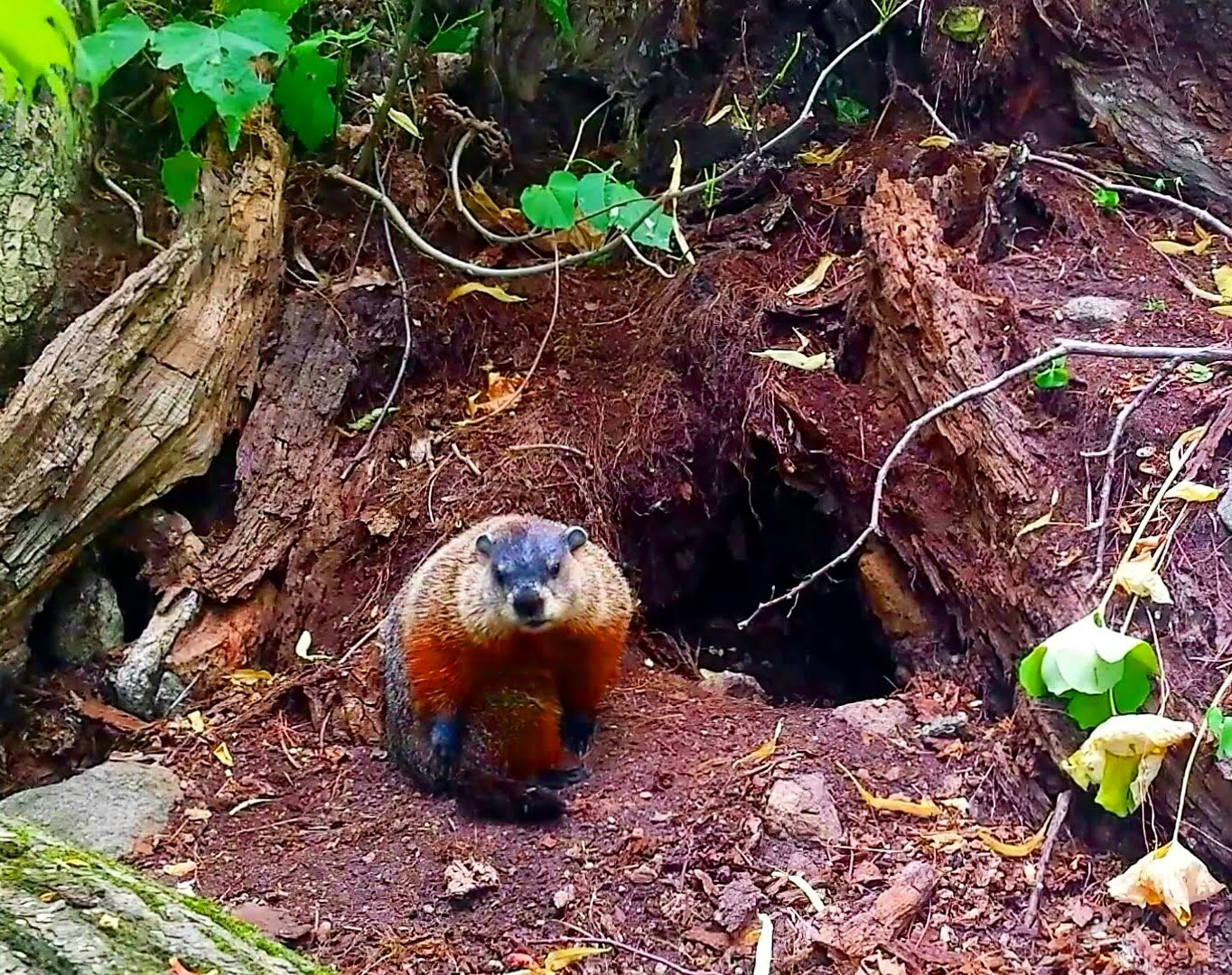
What type of symbiosis?  Skunks often live in burrows that have been dug and abandoned by woodchucks.  
a)
commensalism
b)
mutualism
c)
parasitism
d)
predation
32.

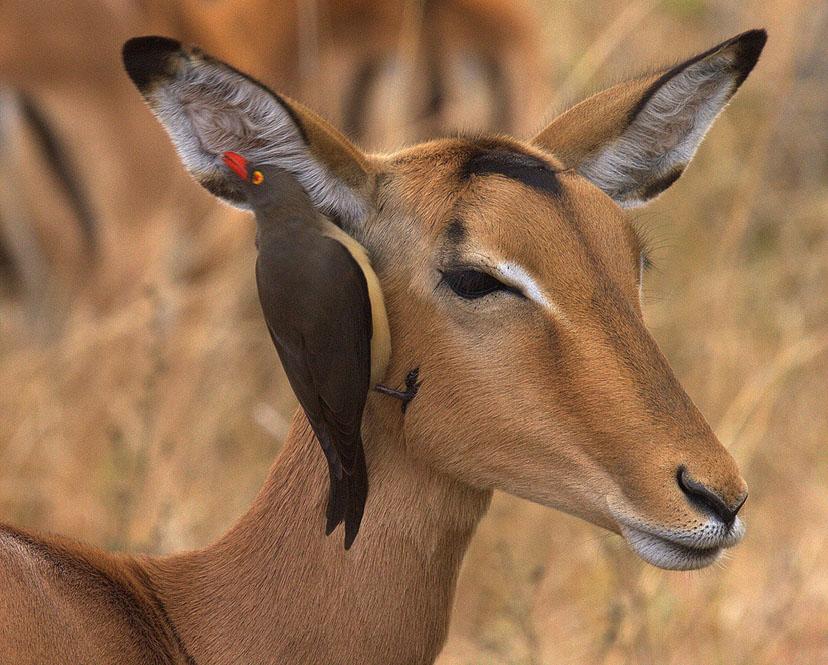
Red-billed oxpeckers are birds that often feed on parasites that infest impala. This is an example of _______.

a)

commensalism

b)

mutualism

c)

parasitism

d)

predation

33.

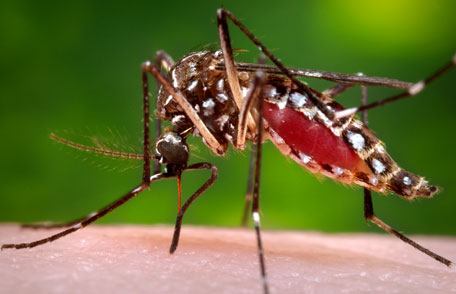
When a mosquito bites you, you are the __________ and the mosquito is the ____________.

a)

host, endoparasite

b)

endoparasite, host

c)

host, ectoparasite

d)

ectoparasite, host

34.

Aphids are tiny insects that live on and eat the leaves of plants, removing vital nutrients from the plants.

a)

Mutualism

b)

Ectoparasitism

c)

Commensalism

d)

Endoparasitism

35.
What type of symbiosis is this?
*
Hermit crabs find shells left by snails that have died and move in.
*
  Snails die and leave behind their shells.
a)
commensalism
b)
mutualism
c)
parasitism
d)
predation
36.

A tick and a dog have this type of relationship.

a)

mutualism

b)

commensalism

c)

predation

d)

parasitism

37.
Barnacles create home sites by attaching themselves to whales. This relationship neither harms nor benefits the whales. 
a)
parasitism
b)
commensalism
c)
mutualism
38.
Mistletoe extracts water and nutrients from a spruce tree. The spruce tree is harmed. 
a)
parasitism
b)
commensalism
c)
mutualism
39.
Ostriches and gazelles feed next to each other. They both watch for predators and alert each other to danger. Because their visual abilities are different, they can identify threats that the other animal would not see as readily. 
a)
parasitism
b)
commensalism
c)
mutualism
40.
Honey guide birds alert and direct badgers to bee hives. The badgers then expose the hives and feed on the honey first. Next the honey guide birds eat. Both species benefit. 
a)
parasitism
b)
commensalism
c)
mutualism
41.
Oxpeckers feed on the ticks found on a rhinoceros. The oxpeckers get a meal and the rhinoceros is helped by the removal of the ticks.
a)
parasitism
b)
commensalism
c)
mutualism
42.
As bison walk through grass, insects become active and are seen and eaten by cowbirds. The relationship neither harms nor benefits the bison.
a)
parasitism
b)
commensalism
c)
mutualism
43.
In a parasitic relationship, one organism is ___________ and one organism is benefiting. 
a)
helped
b)
harmed
c)
not effected
d)
happy
44.

A tapeworm and a cat have this type of relationship.

a)

mutualism

b)

endoparasitism

c)

commensalism

d)

ectoparasitism

45.
A wrasse fish feeds on the parasites found on the black sea bass's body. Both species benefit. 
a)
Mutualism 
b)
Parasitism 
c)
Commensalism 
46.
A mite lives in the base of the eyelashes of people who use mascara. It feeds on the mascara; it does not seem to harm people. What type of symbiotic relationship is this?
a)
mutualism
b)
commensalism
c)
parasitism
d)
predation
47.
Which kind of dispersion is #1?
a)
clumped
b)
random
c)
uniform
48.
Which dispersion pattern is described by organisms being spaced out equally?
a)
Uniform
b)
Random
c)
Clumped 
d)
None of these
49.

Which term refers to the largest number of individuals of a population that the environment can support over a long period of time?

a)

carrying capacity

b)

age structure

c)

limiting factor

d)

keystone limit

50.

Which survivorship curve do many birds follow in nature?

a)

Type I

b)

Type II

c)

Type III

d)

Type IV

51.

The movement of a single elephant into a herd is an example of

a)

competition

b)

emigration

c)

immigration

d)

population

52.

Which type of organism would be most likely to have a type III survivorship curve?

a)

one that protects and cares for its young

b)

one that preys on small mammals

c)

one that is preyed upon at the same rate throughout its life

d)

one that has high birth and infant mortality rates

53.

A pack of wolves that live and move together are an example of what type of dispersion?

a)

territorial

b)

clumped

c)

uniform

d)

random

54.

Which of the following will decrease the size of a population?

a)

immigration and births

b)

emigration and births

c)

immigration and deaths

d)

emigration and deaths

55.

Disease may spread more rapidly when an area is crowded, so disease is considered to be a

a)

requirement for logistic growth

b)

density-independent limiting factor

c)

type I survivorship curve

d)

density-dependent limiting factor

56.

This graph shows a _______________- curve

a)

dispersion growth

b)

density dependent growth

c)

exponential growth

d)

logistic growth

57.

What type of population growth is shown in the graph?

a)

carrying capacity growth

b)

density-dependent growth

c)

exponential growth

d)

logistic growth

58.
If the number of births in a population is the same as the number of deaths in a population, what will happen to the growth of the population?
a)
It will increase.
b)
It will decrease.
c)
It will stay the same.
d)
It will fluctuate.
59.

Which factor would be considered density independent?

a)

an intestinal parasite

b)

a fatal virus

c)

a severe drought

d)

severe overcrowding

60.

What term refers to the number of males and females in various reproductive age groups?

a)

age structure

b)

carrying capacity

c)

reproductive dispersal

d)

birth rates

61.

Type III survivorship is characterized by

a)

extremely high juvenile mortality

b)

mortality that is not age dependent

c)

most mortality occurring among the elderly

d)

most juveniles surviving to a critical age

62.

The size of a population compared to the amount of space available is called the _________________.

a)

biotic potential

b)

population density

c)

limiting factor

d)

carrying capacity

63.

What are two ways to add to a population's growth rate?

a)

Mortality and Emigration

b)

Mortality and Natality

c)

Immigration and Emigration

d)

Natality and Immigration

64.
What is an invasive species?
a)
A native (naturally found) species which are added to an area. 
b)
A non-native (not naturally found) species added to an area. 
c)
A keystone species in an environment
d)
none of the above
65.

In the food web shown, who is the secondary consumer?

a)

grass

b)

mouse

c)

rabbit

d)

fox

66.

For an energy pyramid, the 10% rule states that

a)

10% of the energy is transferred from one organism to the next.

b)

10% of the energy is gained.

c)

10% of the animals will starve.

d)

10% of the producers are eaten.

67.

What does a primary consumer eat?

a)

tertiary consumers

b)

secondary consumers

c)

producers

d)

decomposers

68.
What does a food web represent?
a)
All connections of energy flow throughout all organisms in a ecosystem.
b)
The specific ways that mutualism is carried out.
c)
A single pathway or energy flow between organisms. 
d)
How carnivores get their food. 
69.
In the energy pyramid here, how much of the energy in the producers gets passed to the herbivores?
a)
10%
b)
20%
c)
80%
d)
90%
70.

If the producer has 20,000 kJ of energy, how much energy should the secondary consumer have?

a)

2,000 kJ

b)

500 kJ

c)

200 kJ

d)

1,000 kJ

71.

Why might an organism have more than one arrow coming from them in a food web?

a)

More than one organism may eat them.

b)

They may eat more than one other organism.

c)

This organism gets its energy from multiple sources.

72.
The primary consumer in this food chain is the ____________.
a)
Frog
b)
Eagle
c)
Grasshopper
d)
Python
73.
Which of the animals in this food web is a secondary consumer?
a)
Hawk
b)
Lizard
c)
Mouse
d)
Snake
74.
The largest part of an ecosystem is always the ________________.
a)
Primary Consumers
b)
Primary Producers
c)
Quarternary Consumers
d)
Secondary Consumers
75.
The smallest part of the ecosystem is always the ____________.
a)
Primary Producers
b)
Secondary Consumers
c)
Primary Consumers
d)
Tertiary Consumers
76.
Which of these organisms are in a trophic level that receives a larger percentage of the energy captured by the producers than the percentage received at the bats’ trophic level?
a)
Mountain Lion
b)
Snake
c)
Hawk
d)
Ground Squirrel
77.
Which organism do the owl and the weasel compete for in the food web?
a)
Hawk
b)
Spider
c)
Grasshopper
d)
Shrew
78.
Which of the following would be the most likely effect, if there were a sudden increase in the cricket population?
a)
There would be a decrease in the small bird population.
b)
There would be a decrease in the grass/flowers population.
c)
There would be a decrease in the mice population.
d)
There would be an increase in the grass/flowers population.