Worksheets
HASS Quizz Term 2 Week 3
Total questions: 94
Worksheet time: 55mins
How long ago did Otzi live?
About 500 years ago.
Almost 4,000 years ago.
About 2,500 years ago.
Over 5,000 years ago.
According to forensic evidence, how old was Otzi when he died?
About 40 years old.
Not quite 30 years old.
He was still a teenager.
Almost 70 years old.
What year did 2 hikers find the body of Otzi?
2001
2001
1991
1971
Where was Otzi shot by an arrow?
In the arm.
In the chest.
In the back.
In the leg.
Why do scientists believe that Otzi died alone?
There were no other footprints around his body.
He died in a very small cave.
He left a message written in blood.
A valuable copper axe was found beside him.
What was one of the things found in Otzi's stomach?
goat cheese
goat meat with fur
dried fish
bear meat
What was an unexpected thing found in Otzi's stomach?
Medicine for an upset stomach.
Fish from a faraway sea.
Poison from the hemlock tree.
Small pieces of chocolate.
What was evidence that Otzi had been in a close fight with another person?
He had been shot in the back.
He had a deep cut on his right hand.
He had a broken leg.
He had lost all of his belongings.
Where was Otzi's body found?
In a prehistoric graveyard.
In a deep cave.
In the ice of a frozen lake.
In a melting snowfield.
What modern day country did Otzi come from?
The United States
Germany
Italy
France
Besides being frozen for thousands of years, what is another reason that Otzi's body did not rot?
Somebody had cleaned up his body after he died.
He had lost so much blood from his wounds.
His body had been covered up by wild animals.
He had fallen into a lake and sunk to the bottom.
What weapon did Otzi have next to his hand when he was found?
A stone knife.
A broken spear.
His last arrow.
A copper knife.
Where is Otzi's body being kept now?
In a museum in New York.
It was put back in its grave on the mountain.
In a museum in Italy.I
In a casket with the mummies of Egypt.
About how tall was Otzi?
A little over 5 feet.
A little over 6 feet.
Not quite 5 feet.
Not quite 6 feet.
Based on DNA testing, what color of eyes did Otzi have?
grey
blue
green
brown
Based on DNA testing, what color of hair did Otzi have?
red
grey
brown
blond
About how many tattoos can still be seen on Otzi's body?
At least 60.
Just 2.
There are no tattoos on this mummy.
There are 25 tattoos.
After conducting a careful arrow test, what was the distance from which Otzi had been shot?
3 yards
30 yards
15 yards
He was not shot with an arrow.
How had Otzi been dressed on the day that he died?
He was wearing a type of sandal and long shirt.
He was wearing clothing made from fur.
He was wearing wool clothing that had been sewn together.
His clothes had been stolen and no one knows what he had been wearing.
Why was Otzi given the name Otzi?
That's what it said on his driver's license.
His wife told scientists that was his name.
Scientists named him that after the people who discovered him.
Scientists named him that after where he was found.
The location where Otzi was found can be described as
the summit of a mountain.
the bottom of the mountain.
deep in a swamp.
near a village in the desert.
True or false: One theory was that Otzi died from hypothermia.
True
False
True or false: One theory is that Otzi died from starvation.
True
False
True or false: Otzi is considered to be a well-preserved mummy.
True
False
Some clothing found by Otzi were
jeans and a t-shirt
cloak and leggings
jacket and socks
leggings and a sweater
A shepherd is
someone who makes arrows
a group of sheep
someone who cares for sheep
a group of pecking birds
The arrowhead is a huge piece of evidence because
it had fingerprints on it and told us who killed him.
it tore through his shoulder causing him to bleed to death.
it's the same arrowhead that killed Abraham Lincoln.
was made by Otzi in 3000 BCE.
Deterioration means
to get confused.
to wear out.
to wear as a hat.
to get lost in the mountains.
True or false: One theory is that Otzi was killed by robbers who wanted his shoes.
False: they may have wanted his sheep.
False: they may have wanted his leggings.
True: his shoes were trending on Twitter.
True: his shoes were very valuable.
Otzi had mushrooms with him and that may show that he
really liked to eat mushrooms.
used them for medicine.
was allergic to rice.
was bringing them to his grandmother.
True or false: The copper axe was the most important artifact found with Otzi.
True: Knowing he used a copper axe helped scientists figure out when he lived.
True: Copper was only used by kings.
False: The arrows were the most valuable.
False: The bear hat shows us that he was cold.
Based on the evidence, Otzi may have been one of these occupations (jobs):
a train conductor, librarian, shepherd, and doctor.
a teacher, mechanic, soccer player and zoo keeper.
a shaman, shepherd, shoe maker, and cook.
a warrior, village leader, shaman and shepherd.
The copper axe was valuable during Otzi's lifetime because
it was sent by magical fairies and very rare.
copper was difficult to mine (get out of the earth), so only the wealthy could afford it.
it is a pretty color.
it was difficult to mold into objects.
"__________" means death or Deceased; the end or the failure of an institute.
Demise
Intricate
Embed
Dismal
"__________" means to surround tightly or firmly; to fix something tightly and firmly
Demise
Intricate
Embed
Dismal
"__________" means causing gloom or dejection; Gloomy
Demise
Intricate
Embed
Dismal
"__________" means thought to be true
Presumed
Anthropologists
Integral
Forensic
"__________" means connected with the science to solve crimes
Presumed
Anthropologists
Integral
Forensic
"__________" means people who study human beings and their physical changes and cultur.
Presumed
Anthropologists
Integral
Forensic
"__________" means belonging as a part of a whole; Necessary to the completeness of the whole.
Presumed
Anthropologists
Integral
Forensic
"__________" means to prove false by argument or evidence
Presumed
Anthropologists
refute
Forensic
Who found the Iceman?
a German scientist
an Austrian scientist
an Italian scientist
a German tourist
When was the Iceman found?
1991 AD
1991 BC
nobody knows
Where was the Iceman found?
between Italy and Australia
between Italy and Austria
between Germany and Austria
Would they have used radiocarbon dating on the Iceman?
yes
no
Carbon dating can only be used on items that are:
organic
inorganic
Scientists were able to determine that the Iceman lived
a century ago
53 centuries ago
12 centuries ago
A century is how many years?
10
100
1000
The Iceman lived during the
Industrial Revolution
Stone Age
Age of Enlightenment
The Iceman was found in the
Blue Ridge Parkway
Alps
Rocky Mountains
The Iceman was FOUND in what century?
18th
19th
20th
21st
Scientists believe Otzi was killed by
a woolly mammoth
a mastodon
a hatchet
an arrow
Scientists preserve Otzi by
Storing him in a large Ziploc bag
placing him on a heated table
surrounding him with blocks of ice
wrapping him in muslin
The hardest part of keeping Otzi preserved is keeping him
cold
warm
happy
physically active
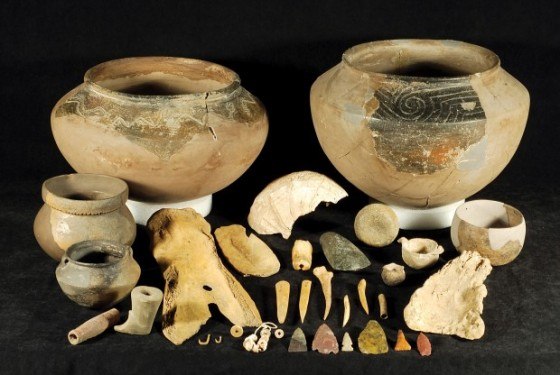
An unproved scientific conclusion drawn from known facts.
theory
hypothesis
carbon-14
midden
Archaeologists study these five things to in order to make theories about the people or artifacts they are studying.
communication, culture, community, religion, bones
religion, bones, churches, media, communication
language, bones, artifacts, community, culture
community, media, culture, religion, language
culture, community, communication, religion, traditions

Excavate means to
look at something.
dig something up.
label something.
name something.

Fossil or artifact?
Fossil
Artifcat
The customs, art , language and achievements of a group of people is their
artifacts
ethnicity
culture
To recognize or notice something
infer
record
observe
A conclusion based on an observation
Observation
Theory
Inference
A _______________ source is a source that was created at the time an event happened
Primary
Secondary
Which of the following words means, "A source of information that was created at the time an event happened. For example, a diary"?
inference
archaeology
Secondary Source
Primary source
What do archaeologist use to study human behavior and cultures?
Tools
Dirt
Artifacts
Shovels