

wayground logo

Free Printable Worksheets

Font size

S
M
L
XL
Worksheets

AP World History: Unit 5 (Revolutions)

Total questions: 44

Worksheet time: 22mins

Name
Class
Date
1.

Which movement in the 1700s promoted reason, liberty, and self determination?

a)

The Scientific Revolution

b)

The Renaissance

c)

The Enlightenment

d)

The American Revolution

2.

Which philosopher believed people were born with unalienable rights and that the government should protect them?

a)

Thomas Hobbes

b)

John Locke

c)

Robert Owen

d)

Voltaire

3.

What is the name of the movement that promotes the interests of a particular nation due to intense pride?

a)

A revolution

b)

Protestantism

c)

Enlightenment

d)

Nationalism

4.

Which TWO nations unified due to nationalistic movements?

a)

Italy

b)

America

c)

Germany

d)

France

5.

Which nation was the first to industrialize?

a)

Britain

b)

France

c)

Germany

d)

Japan

6.

All of the following helped countries to industrialize EXCEPT

a)

Access to waterways

b)

Natural resources like coal

c)

Access to foreign resources and markets

d)

Being colonies of other nations

7.

Select ALL of the following that characterized the Second Industrial Revolution.

a)

Oil

b)

Electricity

c)

Steam

d)

Steel

8.

After Britain industrialized, all of these nations followed suit EXCEPT

a)

Japan

b)

United States

c)

Russia

d)

India

9.

Select ALL of the accurate social effects of the Industrial Revolution.

a)

Poor working and living conditions for the lower class

b)

Increased standard of living for middle and upper classes

c)

Lower class families working closer together in their homes

d)

More accessible and cheaper goods

10.

All of the following were reactions to industrialization's negative effects on workers EXCEPT

a)

Labor unions

b)

Communism

c)

The invisible hand

d)

Utilitarianism

11.

As countries embraced Adam Smith's capitalism laissez-faire policies, what new forms of business were promoted? Select ALL that apply.

a)

corporations

b)

monopolies

c)

socialism

d)

transnational businesses

12.

Mexico was liberated from

a)

the United States

b)

the Spanish

c)

the Portuguese

d)

the Brazilians

13.

Bolivar envisioned

a)

a Grand Colombia, which united all the liberated South American states

b)

a united Portugal and Spain

c)

a Spanish takeover of Portuguese Brazil

d)

a loosely knit confederation of South American States

14.

Toussant L'Ouverture

a)

was a member of the Committee of Public Safety under Robespierre

b)

rose to the rank of General under Napoleon

c)

was a complete revolutionary failure

d)

helped free slaves in Haiti

15.

Some of the machines invented in the 18th and 19th centuries are:

a)

telephones, geographic positioning system, radios, airplanes

b)

steam engine, railroads, flying shuttle, phonograph, steam ships, light bulb

c)

sailboats, automobiles, wheel barrels, clocks, word processors

d)

automatic washer, hair dryer, rockets, space shuttles

16.

Select ALL of the following that are considered an impact of industrialization during the 18th and 19th centuries.

a)

Increased competition between industrialized nations

b)

Rise of global inequalities

c)

Transformation of society.

d)

Decolonization of Africa

17.

Capitalism is

a)

An economic system in which the means of production are privately owned and money is invested to make profits.

b)

An economic system in which the means of production are owned by the public (government) and operate for the welfare of all.
18.
Socialism is
a)
an economic system in which the factors of production are owned by the public and operate for the welfare of all.
b)
an economic system in which the factors of production are privately owned and money is invested in business ventures to make a profit.
19.
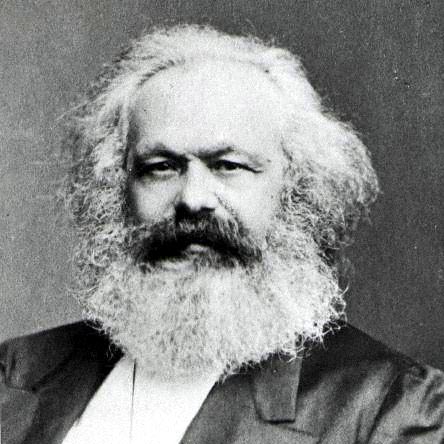
Who is the famous historical figure shown below? He wrote the famous phrase: "Workers of the world unite!"
a)
John Adams 
b)
Thomas Smith
c)
Karl Marx
d)
Edward Jenner
20.
Who designed the first efficient steam engine?
a)
James Hargreaves
b)
John Kay
c)
Richard Arkwright
d)
James Watt
21.

Which of the following scientific concepts had the greatest role in providing a justification for imperialism in the late 19th and early 20th centuries?

a)

Louis Pasteur's germ theory of disease

b)

Charles Darwin's theory of evolution

c)

Albert Einstein's theory of relativity

d)

Marie Curie's theory of radio activity

22.
By 1830 revolutions in the Atlantic world resulted in which of the following changes?
a)
The political independence of colonies in both North and South America
b)
The emancipation of slaves everywhere in t he Atlantic world
c)
Political and economic domination of the Western Hemisphere by the United States
d)
The creation of a politically unified South America
23.
Which of the following describes the effect of skin color, ethnicity, and former slave status in Latin America in the late 19th century?
a)
There was little effect for most people
b)
Marriage alliances among all classes and castes eliminated the effect on all three
c)
Large numbers of people of color migrated to the newly "Reconstructed" southern United States
d)
There continued to be discrimination on the basis of all three factors.
24.
Which of the following best characterizes Western imperialist expansion in the late 19th century?
a)
Western fears of the spread of Japanese influence
b)
Western investment to create self-sufficient economies in the new colonies
c)
An unprecedented amount of territory colonized in a short period of time
d)
The decline of British and United States influence in international affairs
25.
The American desire for a trade relationship with Japan in 1853 led to
a)
The overthrow of the shogun and the modernization of the country
b)
Increased tensions between China and Korea
c)
Greater Russian influence in Manchuria
d)
The colonization of Taiwan
26.
In the 18th century, MOST revolutionary leaders tended to be members of the
a)
Slave class
b)
Working class
c)
Catholic clergy
d)
Educated middle class
27.
Liberalism should be viewed as a political ideology that
a)
Supported the transition to an industrial, capitalist society
b)
Is the ideological predecessor to socialism
c)
Developed in response to European colonialism
d)
Grew out of the labor movement
28.
The beginning of the Industrial Revolution in Great Britain was most influenced by which of the following factors?
a)
The amount and location of British petroleum reserves
b)
The location and large number of British coal deposits
c)
The aggressive promotion of industrialization by George III
d)
The spread of cotton cultivation in southern England
29.
The Haitian revolution was the only revolution of the period 1750 to 1900 that was initiated and fought by
a)
Creoles
b)
Mestizos
c)
Foreign mercenaries
d)
Slaves
30.
Which of the following was NOT a reason India had become Britain's most important colony by about 1800?
a)
India offered crucial port facilities for the British navy.
b)
India was a major outlet for British manufactured goods.
c)
India was an important supplier of British raw materials.
d)
India was an important location for British textile factories.
31.
In which rebellion in India in the mid-1800s did natives challenge British power?
a)
Zulu
b)
Taiping
c)
Boxer
d)
Sepoy
32.
The American and French Revolutions were both caused in part by
a)
Food shortages owing to poor harvests
b)
Problems of royal succession
c)
High taxation that bred discontent
d)
Lack of social mobility in the peasant class
33.
The Berlin Conference of 1885 was able to
a)
Partition China so that Germany benefited
b)
Deal with economic problems in Asia
c)
Resolve issues of European rivalry in Africa
d)
Bring all of Africa under European control
34.
A major factor in the expansion of industrialization was the development of
a)
Socialism
b)
Feudalism
c)
Land grants
d)
Railroads
35.
Which of the following is most likely to have influenced 18th century population trends in both Europe and China?
a)
A sharp decline in average global temperatures
b)
Introduction of Western Hemisphere crops
c)
Innovation in birth control measures
d)
Improvement in surgical procedures
36.

Which of the following was the most important cause of discontent among the French peasantry in the decades leading up to the French Revolution?

a)

The failure of the government to encourage significant emigration to Canada

b)

The efforts by many landowners to revive various kinds of taxes and feudal dues

c)

The spread of Enlightenment critiques of organized religion

d)

The drafting of large numbers of peasants to serve in the French army

e)

The creation of large numbers of robe nobles by the French monarchy

37.
What was the main factor in determining a person's social status in Spain's colonies in Latin America?
a)
Race
b)
Wealth
c)
Politics
d)
Religion
38.
Which social class did Bolivar belong to?
a)
Peninsulares
b)
Creoles
c)
Mestizos
d)
Enslaved Persons
39.

Italian unification had as its architect

a)

Bismarck coupled with opportunity

b)

Louis Napoleon Bonaparte

c)

Giuseppe Mazzini

d)

Count Cavour together with the support of Garibaldi

40.

Under the Tokugawa Japan was

a)

a major trading nation

b)

rapidly industrializing

c)

bankrupt

d)

isolated

41.

Commander Perry is connected to

a)

the opening of Japan for trade

b)

the attack on China during the Opium wars

c)

Russia's rapid growth as a power

d)

the defeat of the Napoleon

42.
The Meiji reforms in Japan resulted in
a)
The strengthening of hte power of regional lords at the expense of the emperor
b)
A shift of power away from regional lords and to the emperor
c)
The Tokugawa shogunate's adoption of a unified civil code
d)
The overthrow of the imperial system for a democratic republic
43.
Efforts at industrialization in Russia and Japan were similar in that 
a)
Both began in the early 19th century
b)
Both followed the termination of long-established institutions
c)
Both countries developed more centralized governments
d)
Both countries widely adopted Western practices
44.
In the late 19th century, European imperialism in both Africa and China was characterized by
a)
Widespread trade in opium
b)
The encouragement of slavery
c)
Small military enclaves along coastlines
d)
Competition among imperialist powers
