
Font size
 Worksheets
Biology 2nd Semester Final Exam
Total questions: 70
Worksheet time: 4hrs 30mins

Name the two major parts of the central nervous system.
The brain and the skull.
The brain and the body.
The spinal cord and the brain.
The spinal cord and the body.

What are the two divisions of the nervous system?
The brain and spinal cord.
The central nervous system and the skeletal system.
The central and peripheral nervous systems.

The brain is made up of three major parts. What are they?
The occipital lobe, the parietal lobe, and the frontal lobe.
The spinal cord, the cerebrum, and the cerebellum.
The brain stem, the cerebrum, and the cerebellum.


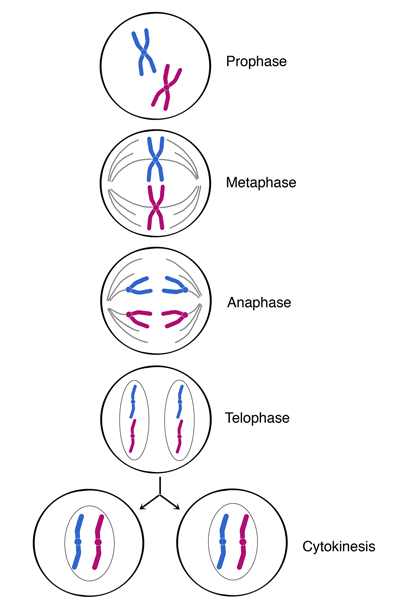
Identify the following phase of Mitosis.
Cytokinesis
Interphase
Anaphase
Metaphase

Identify the following phase of Mitosis.
Anaphase
Telophase
Metaphase
Prophase

In what organelle is the genetic material found inside?
Endoplasmic Reticulum
Golgi Complex
Nucleolus
Nucleus

The longest phase of the cell cycle
prophase
interphase
metaphase
mitosis

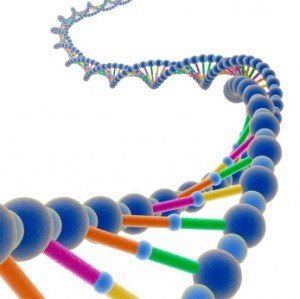
What is the complimentary strand for the following:
ATC--GAG
TAC--GAG
ATC--GAG
TAG--CTG
TAG--CTC

What are the three components of a nucleotide?
a sugar, a hydrogen and a nitrogen base
a sugar, an oxygen and a nitrogen base
a sugar, a phosphate group and a nitrogen base
a sugar, a phosphate group and a protein

What does mRNA do?
provides information from DNA to ribosomes
transfers amino acids to the ribosomes
makes up ribosomes
builds proteins

What does rRNA do?
provides information from DNA to ribosomes
transfers amino acids to the ribosomes
makes up ribosomes
builds proteins

What does tRNA do?
provides information from DNA to ribosomes
transfers amino acids to the ribosomes
makes up ribosomes
builds proteins
If mRNA has the codon CUG, what is the tRNA anticodon?
GAC
GTC
CTG
CAG
In DNA Adenine binds with Thymine, but in RNA what does Adenine bind with?
uracil
cytosine
thymine
adenine

What is produced by B cells and designed to mark antigens for destruction?
Antigens
Active Immunity
Antibodies
Antibiotics


What micro-organism is responsible for causing disease?
Pathogen
Antibodies
B-cells
Lymphocyte

Name 3 parts of the body that keep pathogens out ("The First Line of Defense").
White blood cells, tears, T-cells
Saliva, inflammation, Lymphocytes
Skin, tears, saliva
Mucous membranes, fever, B-cells

In what phase of meiosis do the homologous chromosome form a tetrad and exchange genetic information?
Metaphase I
Telophase I & Cytokinesis
Prophase I
Anaphase II
Most of the cells in the human body are produced by...
mitosis
meiosis
Involves crossing over
Mitosis
Meiosis
Both
Forms gametes
Mitosis
Meiosis
Both
A gene located on the sex chromosome is...
autosome
sex-linked
genetic disorder
sex gene

Complex inheritance pattern that occurs when neither allele is dominant and both alleles are expressed.
Codominance
Sex-linked trait
Telomere
Epitasis


The alleles of a gene pair in a heterozygote are both expressed with no blending.
codominance
incomplete dominance
polygenic
multiple alleles

Neither allele is dominant. Heterozygote has a blended phenotype.
incomplete dominance
codominance
multiple alleles
sex linked
What is the proper base pairing
Adenine(A) and Guanine(G) Thymine(T) and Uracil(U)
Adenine(A) and Thymine(T) Guanine(G) and Cytosine(C)
Thymine(T) and Cytosine(C) Adenine(A) and Guanine(G)
Thymine(T) and Adenine(A) Cytosine(C) and Guanine(G)
____ is when members of a species that are best suited for their environment survive and reproduce at a higher rate than other members of the species
Natural selection
Artificial selection
Speciation
Adaptation
Which of the following is considered a behavioral adaptation?
Wolves hunting in packs
Long trunks of elephants
Birds wings that allow them to fly
The white underbelly of a shark

When an organism has a trait that allows it to blend in with its environment, we call that ____.
Mimicry
Camouflage
Lucky
Generating
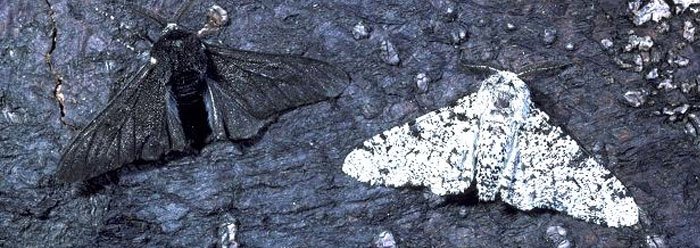

Identify the displayed form of natural selection?
Stabilizing Selection
Directional Selection
Disruptive Selection
the answer is not here
What is Reproductive Isolation?
When organisms reproduce.
When populations need to reproduce.
When organisms no longer reproduce and have fertile offsring
When organisms produce many offspring.

An illustration that uses arrows to show the MANY possible directions in which matter and energy can pass through the organisms in an ecosystem.
Food chain
Food web
Energy Pyramid
Succession Map

Which of the following best defines an ecosystem?
a group of species living in a given area
all of the living and nonliving factors in an environment
all of the species living in a given area
the regions on Earth that can support life
A volcanic eruption destroys all biotic organisms. Over the next few years, some small lichens (very small plants) began to colonize the remaining rock and soil. This is an example of which of the following?
climax community
secondary succession
natural selection
primary succession
A food chain is represented below.
Phytoplankton -->Krill--> Mackerel--> Sea Gull
Which organisms in the food chain is a primary consumer?
sea gull
phytoplankton
krill
mackerel
Which of the following human actions could have a positive impact on local ecosystems?
clearing forests to make way for new farms
using renewable resources
producing waste during technology development
increasing the use of pesticides to protect crops
Which of these is the main source of energy on Earth?
the Sun
producers/plants
consumers/animals
decomposers/fungi
Evaporation and Transpiration will most likely appear in which of these cycles?
Nitrogen
Carbon
Water
Which of these are negative consequences of farming?
Nitrogen/Fertilizer run off causing an algae bloom
Loss of habitat for animal homes
Loss of territory for animals to hunt
Birds will be able to find seeds in fields
Which two items are used to identify the type of biome?
Temperature
Precipitation
Geology
Animals that live there
A relationship in which both species benefit is called...
Parasitism
Commensalism
Mutualism
Limiting factors ...
are resources that are in short supply and limit the size of a population.
are a cause of too much nitrogen in the water.
are hosts for parasites.
only found in the jungle.
Which of the following is a predator/prey relationship?
Owls eating mice
Bunnies eating shrubs
Bears eating berries
Worms eating decaying matter
Which of the following is an example of secondary succession?
An island emerging from the sea
A farmland regrowing after a tornado
A volcano spewing lava on land
A glacier retreats to reveal new land


