wayground logo

Free Printable Worksheets

NEW

Font size

S
M
L
XL
Worksheets

Electricity

Total questions: 71

Worksheet time: 1hrs 26mins

Name
Class
Date
1.

Which of the following is a conductor?

a)

wood

b)

rubber

c)

metal

d)

plastic

2.

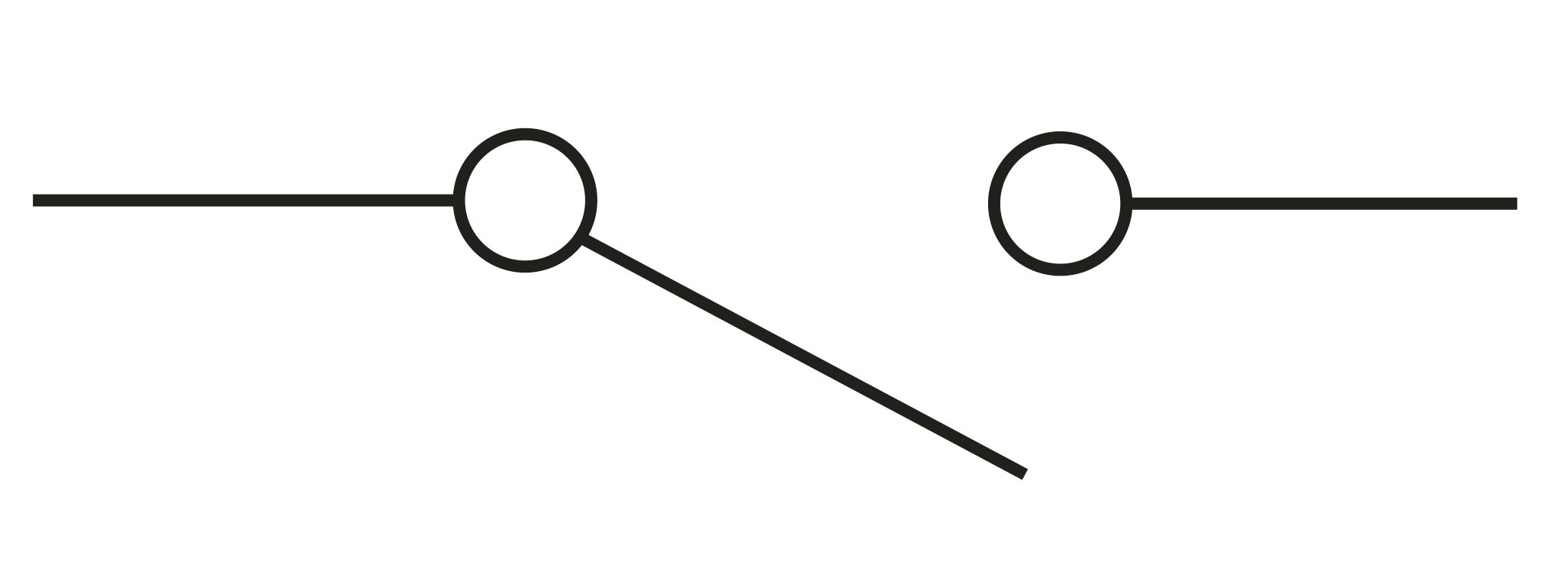
This picture shows a circuit that is

a)

closed

b)

open

c)

an insulator

d)

static electricity

3.

Imagine you are creating a circuit. It works and the light bulb turns on. Then you add a piece of plastic to the circuit, and the light bulb does not turn on. We can infer that the plastic is

a)

an insulator

b)

a conductor

c)

an electron

d)

static electricity

4.

What needs to be done to this circuit so that the lamp lights up?

a)

Close the switch

b)

Add a source and close the switch

c)

Add another lamp

d)

Add another lamp and a switch

5.

Why is electrical wiring usually made from copper?

a)

Because copper is shiny

b)

Because copper conducts electricity

c)

Because copper is not magnetic

d)

Because copper insulate electricity

6.

If lamp 1 is unscrewed from its holder, what will happen to lamp 2?

a)

It will get brighter

b)

It will stay the same brightness

c)

It will go out

d)

Nothing will happen

7.
A series circuit has ____ path(s) that the electric current can take. 
a)
One
b)
Two 
c)
Three 
d)
Four
8.
In a parallel circuit, if one connection is broken, all of the connections stop working.
a)
True
b)
False
9.
What kind of circuit is this?
a)
series
b)
parallel
10.
this is the symbol for a _____?
a)
switch
b)
light 
c)
battery
d)
wires
11.
What kind of circuit is this?
a)
Series
b)
Consecutive
c)
Parallel
d)
Training
12.
What is a Parallel circuit? 
a)
Has only one path 
b)
Has more than one path 
c)
Allows energy to travel through easily 
d)
Has only one light bulb
13.
This is the symbol for a _____?
a)
Lamp
b)
Water wheel
c)
Loudspeaker
d)
Motor
14.
a)
Motor
b)
Milliammeter
c)
Machine
d)
Microphone
15.
In a parallel circuit if one of the light bulbs burns out the rest _________.
a)
stop the flow of electricity
b)
 can still light up
c)
 will go out
d)
of the light bulbs burn out also
16.
This is the symbol for a _____?
a)
Thermistor
b)
Resistor
c)
Diode
d)
Cell
17.
This is the symbol for a _____?
a)
an AC current source
b)
a DC current source
c)
an ammeter
d)
a voltmeter
18.
This is the symbol for a _____?
a)
an AC current source
b)
a DC current source
c)
an ammeter
d)
a voltmeter
19.
This is the symbol for a _____?
a)
an AC current source
b)
a DC current source
c)
a battery
d)
a single cell
20.
This is the symbol for a _____?
a)
an AC current source
b)
a DC current source
c)
a battery
d)
a single cell
21.
This is the symbol for a _____?
a)
Variable resistor
b)
Thermistor
c)
Resistor
d)
Fuse
22.
This is the symbol for a _____?
a)
Variable Resistor
b)
Thermistor
c)
Light Dependent Resistor
d)
Resistor
23.
This is the symbol for a _____?
a)
Diode
b)
LED
c)
Microphone
d)
Loudspeaker
24.
This is the symbol for a _____?
a)
Fixed resistor
b)
Variable resistor
c)
Fuse
d)
Box
25.
This is the symbol for a _____?
a)
LED
b)
LDR
c)
Lamp
d)
Loudspeaker
26.
This is the symbol for a _____?
a)
Fuse
b)
Resistor
c)
Heater
d)
Strip light
27.

This symbol represents a ..........

a)

Bulb

b)

Battery

c)

Buzzer

d)

Microphone

28.
Voltage is measured in __.
a)
volts.
b)
watts.
c)
coulombs. 
29.
The movement of electrons from atom to atom in a line results in a flow of _____. 
a)
amperage.
b)
electric current.
c)
electromagnetic connectors. 
30.
As the resistance of a circuit increases, the current will
a)
increase
b)
decrease
c)
stay the same
31.
Current has units: 
a)
kilowatt·hour 
b)
ampere 
c)
coulomb 
d)
volt 
32.
A voltmeter should be placed ........... in a circuit
a)
in parallel
b)
in series
c)
in order
d)
upside down
33.
What would the voltmeter read
a)
1V
b)
2V
c)
3V
d)
6V
34.
Which Voltmeter will give the lowest reading?
a)
V1
b)
V2
c)
V3
35.

Current can be measured using ............

a)

ammeter

b)

light bulb

c)

resistor

d)

voltmeter

36.

Voltage can be measured using ............

a)

ammeter

b)

light bulb

c)

resistor

d)

voltmeter

37.

SI unit of resistance is

a)

ampere

b)

metre

c)

ohm

d)

volt

38.

Effective resistance increases when in .............. circuit.

a)

Parallel

b)

Series

39.

Effective resistance decreases when in .............. circuit.

a)

Parallel

b)

Series

40.

A student uses a length of wire as a resistor. He makes a second resistor from the same material.

To be certain of making a second resistor of higher resistance, he should use a piece of wire that is:

a)

longer and thicker.

b)

longer and thinner.

c)

shorter and thicker.

d)

shorter and thinner.

41.

Which equation can be used to calculate the resistance R of a resistor?

a)

V = I / R

b)

I = V x R

c)

R = V x I

d)

V = I x R

42.

The diagrams show four current-voltage graphs.


Which two graphs show the characteristics of an ohmic resistor and of a filament lamp?

a)

ohmic resistor : W

filament lamp : Y

b)

ohmic resistor : X

filament lamp : Y

c)

ohmic resistor : W

filament lamp : Z

d)

ohmic resistor : X

filament lamp : Z

43.
If the current through a circuit is 2 A and the resistance of a light bulb in the circuit is 10 Ohms, what is the voltage difference across the light bulb?
a)
5 V
b)
12 V
c)
0.2 V
d)
20 V
44.
What would the circuit resistance be if a 7.5 Amp draw was present with the engine running and the charging system producing 15 Volts
a)
15 Ohms
b)
4 Ohms
c)
0.3333 Ohms
d)
2 Ohms
45.

Which of the following does this graph apply to?

a)

A diode

b)

A fixed resistor

c)

A filament lamp

46.

Which of the following does this graph apply to?

a)

diode

b)

filament lamp

c)

fixed resistor

47.

Which of the following does this graph apply to?

a)

diode

b)

filament lamp

c)

fixed resistor

48.

Which of the following is directly proportional?

a)
b)
c)
49.

Which of the following shows The Heating Effect?

a)
b)
c)
50.

Which of the following shows current travelling in only one direction?

a)
b)
c)
51.
Ms Jo Jo rubbed two balloons with a piece of wool. What will happen when the balloons are brought near each other?
a)
The balloons will repel each other.
b)
The balloons will attract each other.
c)
The balloons will become positively (+) charged.
d)
The balloons will pop.
52.
What types of charges attract?
a)
Positive and Positive
b)
Positive and Neutral
c)
Negative and Neutral
d)
Positive and Negative
53.
What charge does an electron have?
a)
negative (-)
b)
positive (+)
c)
neutral or no charge (0)
54.
If a substance has a higher number of electrons than protons on its surface, what type of charge does it have?
a)
A positive charge.
b)
A negative charge.
c)
A neutral charge
d)
No charge at all
55.
What happens when you touch a metal doorknob after rubbing your shoes on the carpet?
a)
The doorknob sends a burst of electric current into your body
b)
Millions of electrons go from your finger into the doorknob
c)
The doorknob sends millions of electrons into your finger
d)
our finger becomes negatively charged
56.
Which of the following is caused by static electricity?
a)
a stove getting hot when it is turned on
b)
a magnet being attracted to a refrigerator
c)
a lightning strike during a storm
d)
a light bulb coming on when a switch is turned on
57.
What is static electricity caused by?
a)
A balance of power
b)
A balance of positive and negative charges
c)
. An imbalance of positive and negative charges
d)
An imbalance of protons and neutrons
58.
An object becomes postiively charged when which of the following occurs?
a)
loses electrons
b)
gains electrons
c)
loses protons
d)
gains neutrons
59.
Which of the following an insulator?
a)
copper
b)
wood
c)
silver
d)
salt water
60.
Lightning is _____.
a)
a buildup of neutrons
b)
harmless
c)
a high-voltage electric current
d)
a large discharge of static electricity
61.
If an object has the same number of positive and negative charges, its electrical charge is...
a)
positive
b)
negative
c)
neutral or no charge
d)
opposite
62.
The girl's hair and the comb are attracting  one another.  The hair and the comb have
a)
opposite charges
b)
like charges
63.

Which one of the following quantities is equivalent to 1 W?

a)

1 V/A

b)

1 Ω • m

c)

1 V • A

d)

1 V/Ω

64.

What potential difference is required across an 8.0-Ω resistor to cause 2.0 A to flow through it?

a)

4.0 V

b)

16 V

c)

8.0 V

d)

32 V

65.

Electric power is defined as,

a)

the rate of conversion of temperature

b)

the rate of conversion of current

c)

the rate of conversion of electric energy

d)

none of the above

66.

The unit of power is,

a)

Watt

b)

Joule / Second

c)

Ampere . Volt

d)

All of the above

67.
1.  What is the equation to solve Power in Electricity
a)
V=IXR
b)
PV=nRT
c)
P=VXI
P=VXR
d)
none
68.
The rate at which energy is converted from one form to another
a)
power
b)
voltage
c)
current
d)
none
69.
The unit for Power is
a)
Joules
b)
Amperes
c)
Watts
d)
None
70.
1.  One joule per second is also known as
a)
watt
b)
joule
c)
kilowatt
d)
none
71.
A kilowatt is
a)
1000 Amps
b)
1000 watts
c)
1000 volts
d)
none