
Font size
 Worksheets
Unit 12 Kinetics & Equilibrium
Total questions: 55
Worksheet time: 3hrs 56mins

Why does a higher concentration increase the rate of reaction?
it increases the amount of reactants
it lowers the activation energy
it increases the energy of particle collisions
it increases the frequency of particle collisions
The minimum amount of energy needed for colliding particles to react is called
Chemical Energy
Kinetic Energy
Activation Energy
Potential Energy
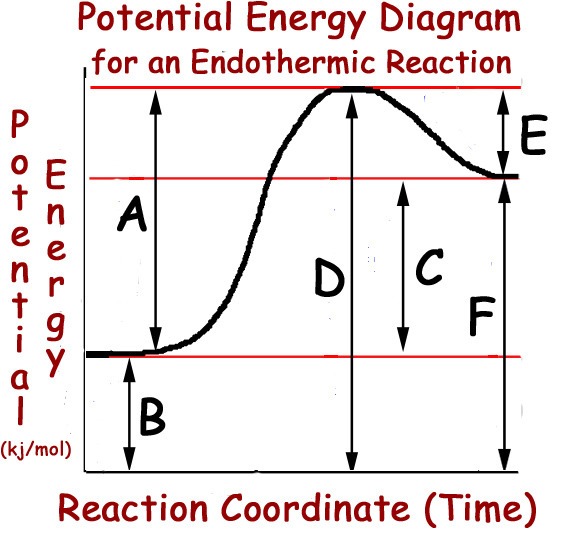
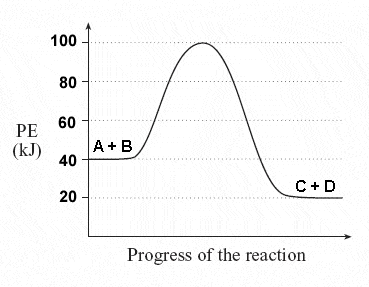
What is the change of the heat of the reaction (ΔH)?
-40 kJ
-20 kJ
100 kJ
60 kJ


Identify the incorrect statement about achieving equilibrium.
achieved when product and reactant concentrations are equal
achieved when forward and reverse reaction rates are same
achieved when concentration of reactants is stable/constant
achieved when concentration ratio of reactants to products becomes stable, thus fixing the equilibrium constant (equilibrium position)

Which of the following are true
At t3, there are more reactants than products
The equilibrium constant lies to the right
At t3; the amount of reactants and products are equal
At t2; the forward and reverse reaction rates are equal
at t1, the forward reaction rate is slowing and the reverse reaction rate is increasing
Which statement correctly describes an endothermic chemical reaction?
The products have lower potential energy than the reactants, and the ΔH is positive
The products have lower potential energy than the reactants, and the ΔH is negative
The products have higher potential energy than the reactants, and the ΔH is positive
The products have higher potential energy than the reactants, and the ΔH is negative
Which balanced equation represents an endothermic reaction?
N2(g) + 3H2(g) --> 2NH3(g)
N2(g) + O2(g) --> 2NO(g)
CH4(g) + 2O2(g) --> CO2(g) + 2H2O(l)
C(s) + O2(g) --> CO2(g)
A solution at equilibrium must be
concentrated
saturated
unsaturated
diluted

Given the reaction
S(s) + O2(g) --> SO2(g) + energy
Which diagram best represents the potential energy changes for this reaction?
a
b
c
d

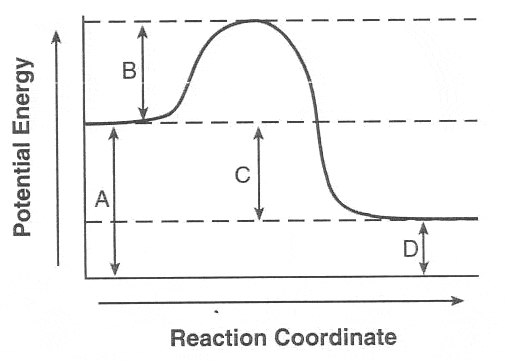
The potential energy diagram below represents a reaction.
Which arrow represents the activation energy of the forward reaction
A
B
C
D

Given the potential energy diagram for the chemical reaction:
Which statement correctly describes the energy changes that occur in the forward reaction
The activation energy is 50kJ and the reaction is exothermic
The activation energy is 50kJ and the reaction is endothermic
The activation energy is 10kJ and the reaction is exothermic
The activation energy is 10kJ and the reaction is endothermic
The ______________is required to break the bonds of the reactants.
Carbonic energy
Activation energy
Plutonic energy
Energi Gaib

Which of the following regarding an endothermic reaction is correct?
Chemical energy is transformed to heat energy
The temperature of the surroundings rises
Heat is released
The energy content of the product is higher than the energy content of the reactants
Which symbol below represents the heat of reaction?


When barium hydroxide is mixed with ammonium nitrate, 377 kJ of heat energy is absorbed by the system. What is the heat of reaction?
+377 kJ
-377 kJ
When a quantity of methane gas is burned, 3822 kJ of energy is released. What is the heat of reaction?
+3822 kJ
-3822 kJ
The amount of heat energy change in a reaction is called the _____
bonding energy
heat of reaction
specific heat
heat capacity
To write the thermochemical equation for an endothermic reaction, where will you write the number for the heat of reaction?
on the Product side
on the Reactant side
To write a thermochemical equation for an exothermic reaction, where will you write the number for the heat of reaction?
on the Product side
on the Reactant side

Is this equation endothermic or exothermic?
endothermic
exothermic

Is this reaction endothermic or exothermic?
endothermic
exothermic
How does a catalyst work in speeding up a reaction?
By lowering the activation energy or reaction
by giving them more energy
by making them more available
Why does a higher concentration increase the rate of reaction?
it increases the amount of reactants
it lowers the activation energy
it increases the energy of particle collisions
it increases the frequency of particle collisions
Why does a higher temperature increase the rate of a reaction?
it increases both the frequency and energy of particle collisions
it only increases the frequency of particle collisions
it only increases the energy of particle collisions
it reduces the activation energy of the reaction

How much energy is produced in the reaction between aluminum and oxygen as written on Table I
-3351 kj
-890.4 kj
-6072 kj
-2219.2 kj

How much energy is produced in the combustion reaction of 2 mol CH3OH with O2 on Table I?
-1452 kj
-2904 kj
-726 kJ
-890.4 kj

How much energy is produced in the combustion reaction of 1 mol C8H18 with 25 mol O2 on Table I?
-10943 kJ
-5471.5 kj
-21886 kj
-1452 kj
How much energy is produced in the combustion reaction of 2 mol C8H18 with 25 mol O2 on Table I?
-10943 kJ
-5471.5 kj
-21886 kj
-1452 kj
Based on Table I, which compound dissolves in water by an exothermic process?
NaCl
NaOH
NH4Cl
NH4NO3
SO2(g) + O2(g) <−> SO3(g)
If the concentration of SO2(g) is increased, the equilibrium of the reaction will ___________.
SO2(g) + O2(g) <−> SO3(g)
If the equilibrium shifts to the right, the concentration of O2(g) will ___________.
energy + N2(g) + O2(g) <−> 2NO(g)
If O2(g) is removed, the concentration of N2 will _______.
Rewrite the above equation with energy as a reactant or product:
heat + N2(g) + O2(g) <−> 2NO(g)
If the heat is removed to the chemical system, the equilibrium will _______.
N2 (g) + 3 H2 (g) <−> 2 NH3 (g)
If the pressure in the system is increased, the reaction will __________________.
2SO3(g) ⇋ 2SO2(g) + O2(g)

