wayground logo

Free Printable Worksheets

Font size

S
M
L
XL
Worksheets

G8 UWCSEA Carbon Cycle

Total questions: 45

Worksheet time: 30mins

Name
Class
Date
1.
Carbon enters the living world through the process of _____.
a)
photosynthesis
b)
respiration
c)
combustion
d)
decomposition
2.

The process of burning is called _____.

a)

decomposition

b)

combustion

c)

respiration

d)

absorption

3.
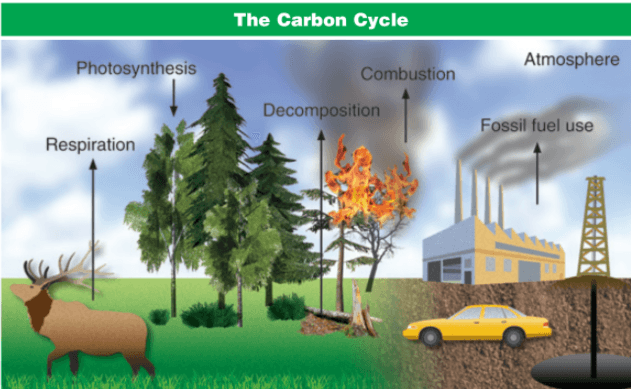
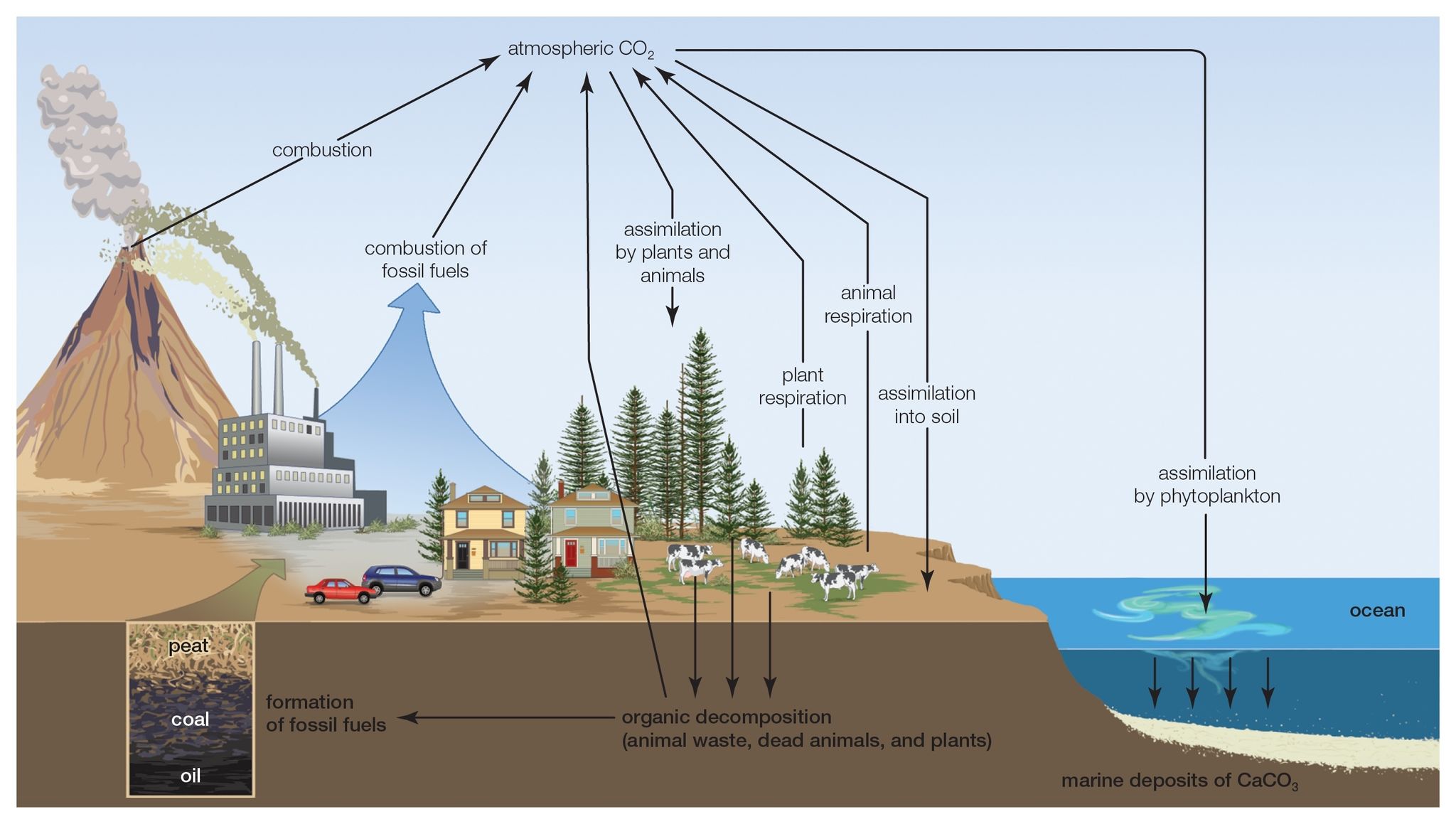
In this diagram, how many ways can carbon enter the living world?
a)
one
b)
two
c)
three
d)
four
4.
Burning fossil fuel has which effect in the carbon cycle?
a)
It removes carbon dioxide from the atmosphere.
b)
It puts carbon dioxide under the ground.
c)
It adds carbon dioxide to the atmosphere.
d)
It has no effect in the carbon cycle.
5.
Which process takes carbon dioxide out of the atmosphere?
a)
respiration
b)
combustion
c)
decomposition
d)
photosynthesis
6.
How do living organisms return carbon to the atmosphere in the carbon cycle?
a)
respiration and photosynthesis
b)
 decomposition and respiration
7.
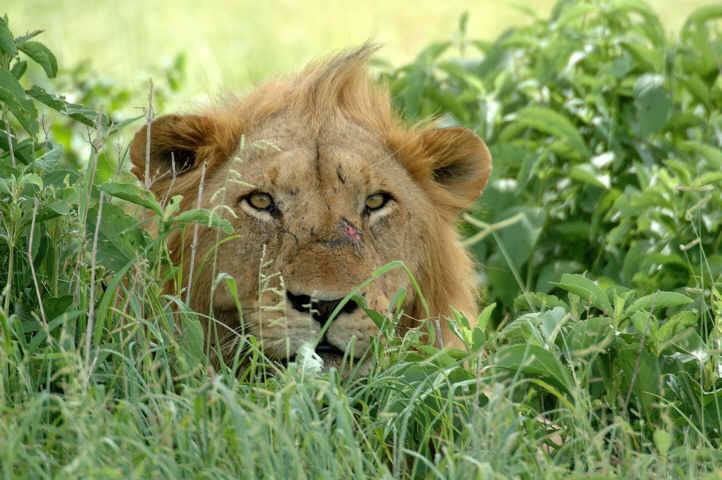
How does the carbon in grass become part of a lion?
a)
The lion eats the grass
b)
Carbon from grass doesn't end up in a lion. 
c)
The carbon ends up in the lion's food chain. 
d)
The lion breathes in carbon given out by the plant
8.
All of the carbon in existence is continually recycled in the carbon cycle
a)
True
b)
False
9.
Organisms that do not decompose can be buried and become what?
a)
water
b)
nutrients
c)
air
d)
fossil fuels
10.
If the plant population decreased, the amount of carbon would _________.
a)
Stay the same
b)
Increase
c)
Decrease
11.

Which of the following creates a calcium carbonate structure?

a)

plants

b)

cows

c)

corals

d)

decomposers

12.

Carbon can be found in...

a)

The atmosphere

b)

Soil

c)

Oceans

d)

All of the above

13.
Respiration is the process by which animals take in _____ and release _____. 
a)
photosynthesis, air
b)
carbon, oxygen
c)
oxygen
d)
oxygen, carbon dioxide
14.
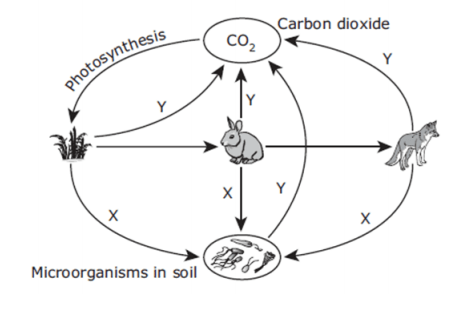
The diagram shows the flow of organic molecules through an ecosystem. What two processes are identified by the labels X and Y?
a)
X : Respiration
Y : Predation
b)
X : Adaptation
Y : Decomposition
c)
X : Fermentation
Y : Nitrogen Fixation
d)
X : Decomposition
Y : Respiration
15.

Volcanic eruptions are part of which carbon cycle?

a)

Geological

b)

Biological

16.

Carbon is absorbed and released where the oceans’ surface meets the air through...

a)

Weathering (rocks breaking)

b)

Respiration

c)

Diffusion

d)

Subduction (movement of tectonic plates)

17.

The reverse of photosynthesis - Sugars are used for metabolism and change “fuel” back into CO2.

a)

Diffusion

b)

Weathering

c)

Decomposition

d)

Respiration

18.

Carbon enters the soil through dead plant or animal matter.

a)

Decomposition

b)

Respiration

c)

Photosynthesis

d)

Diffusion

19.
How is the burning of fossil fuels related to global warming?
a)
Magic
b)
Fuels are hot
c)
Greenhouse effect
d)
Photosynthesis
20.

Which of the following is an example of a decomposer?

a)

Owl

b)

Fish

c)

Tree

d)

Mushroom/Bacteria

21.

Plants use ____________ to make their own food

a)

Water

b)

Sunlight

c)

Carbon dioxide

d)

All of these

22.

C6H12O6 is also known as glucose (sugar). Where is it found?

a)

Plants

b)

Animals

c)

Both plants and animals

d)

Neither plants or animals

23.

Carbon molecules cannot be created or destroyed

a)

True

b)

False

c)

Not enough information to answer

24.

How do animals get carbon?

a)

By eating plants and or other animals.

b)

They absorb it from the atmosphere.

c)

From the ground

d)

They do not get carbon from anywhere.

25.

Which of the following is true about the greenhouse effect? you can choose more than one

a)

It is a natural process

b)

It is caused by gasses trap heat from infrared radiation

c)

It makes life on Earth possible

d)

It is the cause of global warming

26.
How does the law of conservation of energy relates to photosynthesis?
a)
The energy from glucose is transform into light energy
b)
Light energy from the sun is converted into chemical energy in glucose 
c)
Energy from carbon dioxide is converted into chemical energy in Oxygen
d)
All other answers are correct
27.
What is the role of decomposers in an Ecosystem? 
a)
They recycle matter and nutrients to form fossil fuels
b)
They are burn and release as carbon dioxide
c)
Decomposers are responsible to turn oxygen into carbon dioxide
d)
They recycle energy back to the sun
28.

What are the end products of cellular respiration?

a)

Carbon dioxide, water and energy (ATP)

b)

Carbon dioxide, glucose and water

c)

Oxygen, glucose and energy (ATP)

d)

Water, Carbon dioxide and Oxygen

29.
Carbon can be found in...?
a)
The atmosphere
b)
Inside of the Earth
c)
Fossil fuels
d)
All of the above!
30.

The circulation of the element Carbon among Earth's atmosphere, land, oceans, and organisms is called _____________.

a)

the Carbon Cycle

b)

the Oxygen Cycle

c)

the Carbon dioxide Cycle

d)

the Water Cycle

31.

_____________ is an essential element of all living creatures.

a)

Gold

b)

Carbon

c)

Carbon dioxide

d)

Silver

32.
Which of the following add carbon dioxide to the atmosphere?
a)
volcanoes
b)
combustion of fossil fuels
c)
animal and plant respiration
d)
all of these
33.
If the removal of many plants and trees increase in a forest, what effect could this have on the carbon dioxide and oxygen cycle?
a)
CO2 levels decrease
b)
CO2 levels increase
c)
Nitrogen levels decrease
d)
Oxygen levels increase
34.
What is deforestation?
a)
Clearing Earth's forests on a massive scale
b)
Eating too much vegetables
c)
Going to a forest and pulling weeds
d)
Clearing the five trees in my backyard
35.
Why does cutting down trees increase global warming?
a)
trees soak up carbon dioxide
b)
trees provide shade which counteracts global warming
c)
trees absorbs the sun's energy without radiating back into the atmosphere
d)
trees drain greenhouse gases like methane from soil
36.

Why is burning fossil fuels harmful?

a)

they cause cancer

b)

They can get extremely hot

c)

it increases the amount of carbon dioxide/greenhouse gases in the air

d)

this would destroy fossils

37.

How are phytoplankton (plant plankton) similar to trees?

a)

Both are at the top of the food chain

b)

Both conduct photosynthesis

c)

Both grow in soil

d)

Both are about the same size

38.

Which organisms are aquatic plants?

a)

Crabs

b)

Phytoplankton

c)

Fish

d)

Zooplankton

39.

Which of the following have been changed or altered due to climate change ?

a)

droughts

b)

flooding

c)

melting of polar ice caps

d)

all of the above

40.

Within the carbon cycle, anything that absorbs more carbon from the atmosphere than it releases.

a)

carbon sink

b)

carbon source

41.

Within the carbon cycle, anything that releases more carbon into the atmosphere than it absorbs.

a)

carbon sink

b)

carbon source

42.

Select all that apply.

Which of the following are carbon sources.

a)

fossil fuel combustion

b)

volcanic eruptions

c)

forests

d)

oceans

43.

Select all that apply.

Which of the following are carbon sinks.

a)

soil and rocks

b)

fossil fuels

c)

forests

d)

oceans

44.

The total set of carbon emissions caused by an individual.

a)

carbon cycle

b)

carbon handprint

c)

carbon footprint

d)

carbon summary

45.

Why should you be concerned with the size of your carbon footprint?

a)

Sometimes its hard to find shoes that are the right size.

b)

If we don't decrease greenhouse gas emissions Earth will continue to cool.

c)

Greenhouse gases are becoming scarce in Earth's atmosphere.

d)

Increases in greenhouse gases in the atmosphere are contributing to global climate change.