wayground logo

Free Printable Worksheets

Font size

S
M
L
XL
Worksheets

Test 1

Total questions: 150

Worksheet time: 50mins

Name
Class
Date
1.

A computer network is ___ connected together.

a)

One computer

b)

Two or more

c)

Three or more

d)

Four or more

2.

What does LAN stand for?

a)

Limited Area Network

b)

Laser Assisted Network

c)

Local Area Network

d)

Local Aerial Network

3.

Which of the following statements about a network is FALSE?

a)

Viruses can spread to other computers throughout a computer network

b)

Resources such as printers can be shared

c)

Files cannot be shared between users

d)

You can communicate with other users using e-mail and messaging

4.

Which of these statements is TRUE about a LAN?

a)

A LAN connects computers in a small area such as an office or a small site

b)

A modem is needed to connect a computer to a LAN

c)

A LAN consists of only one computer

d)

A LAN can connect geographically distant sites together

5.

What does WAN stand for?

a)

Wide Area Network

b)

Wide Arena Network

c)

World Area Network

d)

World Aerial Network

6.

What is an advantage of a LAN?

a)

You can share peripherals like printers.

b)

It is more secure than a standalone computer

c)

Data and information cannot be easily shared

d)

Expensive to setup.

7.

What does WLAN stand for?

a)

Wide Local Area Network

b)

Wireless Local Area Network

c)

Wireless Local Aerial Network

d)

World Local Area Network

8.

What does VLAN stand for?

a)

Virtual Local Area Network

b)

Visual Local Area Network

c)

Virtual Land Access Network

d)

Video Local Area Network

9.

Different VLANs share the same network hardware....

a)

True

b)

False

10.

What does VPN stand for?

a)

Virtual Private Network

b)

Virtual Public Network

c)

Visual Private Network

d)

Virtual Pirate Network

11.

What is an advantage of using VPN?

a)

Your communications over the internet are more secure

b)

Your communications over the internet are less secure

c)

Your internet traffic can be seen by your Internet Service Provider

d)

It is generally faster

12.

What is an advantage of a peer to peer network?

a)

Security can be managed centrally

b)

Cheap and easy to set up

c)

Will stop working if one of the peers goes down

d)

You need high end computers to keep everything working

13.

What is a disadvantage of a client-server network?

a)

Cheap to set up

b)

If the server goes down, the network goes down

c)

Each client manages its own security

d)

The network can be managed centrally

14.

Which of the following is not a type of server?

a)

Word

b)

Print

c)

File

d)

Database

15.

Which of the following is true of a WAN?

a)

It connects LANs via the public infrastructure (internet)

b)

It is wireless

c)

It only covers a limited area

d)

It will only support a small number of users

16.

A VLAN.....

a)

Allows different LANs to be set up using on the same network hardware

b)

Requires separate network hardware

c)

Does not require special software

d)

Covers a wide geographical area

17.
A computer is connected directly to the internet, so what type of address it must have? 
a)
Public Address
b)
Private Address 
c)
Multicast Address
d)
MAC Address
18.

IP Addresses are separated by two parts, the _____ and the ______.

a)

host ID, internet ID

b)

computer ID, router ID

c)

network ID, console ID

d)

host ID, network ID

19.

_________ is communication between a single sender and multiple receivers on a network

a)

Multicast

b)

Bandwidth

c)

Switching

d)

Routing

20.

______ are for large networks... 8 bits for network and 24 for host. Range: 1-126

a)

Class E address

b)

Class A address

c)

Class D address

d)

Class B address

21.

How is the class of and IP address determined?

a)

From the first bit of the first byte in the IP address

b)

From the first four bits of the first byte in the IP address

c)

From the last bit in last byte in the IP address

d)

From the router

22.
The IP address 126.12.3.5  is :
a)
Class A address 
b)
Class B address
c)
Class C address
d)
Class D address
23.

The IP address 223.120.50.1 is :

a)

Class A address

b)

Class B address

c)

Class C address

d)

Class D address

24.

Whats is the typical size of an IP address?

a)

32 bits

b)

64 bits

c)

128 bits

d)

255 bits

25.
The IP address 10.1.2.5 is : 
a)
 Public address 
b)
 Multicast address
c)
 Private address
d)
Class E address
26.

A _______is a 32-bit number that hides an IP address, and divides the IP address into network address and host address

a)

Subnet mask

b)

Subvention mask

c)

Network division

d)

Data processing

27.
The default subnet mask for the class B IP address is 
a)
 255.0.0.0
b)
 255.255.0.0
c)
 255.255.255.0
d)
 255.255.255.255
28.
The IP address 172.17.2.3  is : 
a)
 Public address 
b)
 Multicast address
c)
 Private address
d)
Class E address
29.
The IP address 10.1.2.5 is : 
a)
 Public address 
b)
 Multicast address
c)
 Private address
d)
Class E address
30.
 IPv4  addresses are ___ bits binary numbers. 
a)
4
b)
30
c)
32
d)
64
31.
An IP address is divided into what two parts
a)
Physical and logical
b)
Network and subnet
c)
Network and host 
d)
Physical and emotional
32.
Which class has the largest number of hosts ?
a)
Class A
b)
Class B
c)
Class C
d)
Class D
33.
Manually configure computers with an IP address.
a)
Static configuration
b)
Dynamic configuration
c)
DNS
d)
MAC Address
34.
Automatically provides computers with an IP address.
a)
Static configuration
b)
Dynamic configuration
c)
DNS
d)
MAC Address
35.

A router has one main IP addresses

a)

True

b)

False

36.
DHCP is abbreviation of
a)
Dynamic Host Connection Private
b)
Domestic Host Configuration Protocol
c)
Dynamic Host Configuration Protocol
d)
Dynamic Hazard Configuration Protocol
37.

What is the correct sequence of an IPv4 address?

a)

10.222.256.100

b)

192.168.2555.4

c)

172.16.2.100

d)

AB3.125.365.2

38.
The latest revision of IP addressing is v6.
a)
True
b)
False
39.

Which of the following IP addresses is valid?

a)

101.167.43.254

b)

101.167.43.256

c)

101.167.43.10.56

d)

1031.167.43.10

40.
Which technology allows the assignment of IP addresses?
a)
DHCP
b)
OSPF
c)
MAC
d)
DNS
41.
What does DHCP also provide in addition to IP addresses?
a)
Subnet mask.
b)
Host name.
c)
Location of the interent.
d)
Wireless passwords.
42.
When you connect to an ISP you will always get the same IP address.
a)
False
b)
True
43.
What are data transfer speeds measure in?
a)
Bytes
b)
Bits
c)
Frames
d)
Relays
44.
Which of the following devices is a sophisticated device that learns MAC addresses for more efficient packet delivery?
a)
Hub
b)
VLAN
c)
Frame
d)
Switch
45.

______is the fundamental protocol for communications on the Internet. It specifies the way information is packetized, addressed, transferred, routed, and received by networked devices.

a)

HTTP

b)

Switch

c)

IP

d)

Data packeting

46.

Every IPv4 address is broken down into four octets

a)

True

b)

False

47.
Processing happens in the user's browser
a)
Client
b)
Server
48.
Data is accessed from a database
a)
Client
b)
Server
49.
The processor may run slowly if too many users are accessing it at the same time
a)
Client
b)
Server
50.
Input data is validated (e.g. is an email address valid)
a)
Client
b)
Server
51.
The web page appears the same no matter what browser the user is using
a)
Client
b)
Server
52.
User's log in details and information is kept
a)
Client
b)
Server
53.
There is less chance of interference by hackers as data is not moving across the internet
a)
Client
b)
Server
54.
The web page is downloaded before it is processed
a)
Client
b)
Server
55.
Processing happens on the web server
a)
Client
b)
Server
56.
Input data is verified (e.g. checked against other data)
a)
Client
b)
Server
57.
A client-server network does not store files locally on a computer on a network.  Instead they are stored on a 'server' - true or false?
a)
True
b)
False
58.
Which of the following is not a type of server?
a)
File Server
b)
Email Server
c)
Webpage Server
d)
PowerPoint Server
59.
Choose the best definition to explain what is meant by a 'peer to peer' network.
a)
Computers have equal status and do not rely on a central server.  Each workstation is effectively a server and client.
b)
A client is used to make requests, the server processes these requests and then responds to the request.  The server provides a service.
60.
Choose the best definition to explain what is meant by a 'client-server' network.
a)
Computers have equal status and do not rely on a central server.  Each workstation is effectively a server and client.
b)
A client is used to make requests, the server processes these requests and then responds to the request.  The server provides a service.
61.
What is the 'client' part of a network?
a)
A workstation, network node or node.
b)
A server providing a service to workstations on a network.
62.
Which of the following is an advantage of a client-server network?
a)
Files and folders cannot be centrally backed up.
b)
Does not need an expensive server as individual workstations are used to access files.
c)
The server is expensive to purchase
d)
Files are stored in a centralised location, meaning it is easier to backup.
63.
Which of the following is a disadvantage of a client-server network?
a)
Files and folders cannot be centrally backed up.
b)
Does not need an expensive server as individual workstations are used to access files.
c)
The server is expensive to purchase
d)
Files are stored in a centralised location, meaning it is easier to backup.
64.
Which of the following is a disadvantage of a peer to peer network?
a)
Files and folders cannot be centrally backed up.
b)
Does not need an expensive server as individual workstations are used to access files.
c)
The server is expensive to purchase
d)
Files are stored in a centralised location, meaning it is easier to backup.
65.
Which of the following is an advantage of a peer to peer network?
a)
Files and folders cannot be centrally backed up.
b)
Does not need an expensive server as individual workstations are used to access files.
c)
The server is expensive to purchase
d)
Network security can be carried out centrally.
66.
Which of the following is an advantage of a client-server network?
a)
If one computer fails it will not disrupt the network.
b)
There is little or no security.
c)
Users can access shared data which is centrally controlled.
d)
If any part of the network fails, a lot of disruption can occur.
67.
Which of the following is a disadvantage of a client-server network?
a)
If one computer fails it will not disrupt the network.
b)
There is little or no security.
c)
Users can access shared data which is centrally controlled.
d)
If any part of the network fails, a lot of disruption can occur.
68.
Which of the following is an advantage of a peer to peer network?
a)
If one computer fails it will not disrupt the network.
b)
There is little or no security.
c)
Users can access shared data which is centrally controlled.
d)
If any part of the network fails, a lot of disruption can occur.
69.

Which of these is a Hard Disk Drive (HDD)?

a)
b)
c)
d)
70.

Which of these are magnetic storage devices?

a)
b)
c)
d)
e)
71.

Solid state storage has no moving parts?

a)

True

b)

False

72.

Which type of storage uses a laser?

a)

Magnetic

b)

Optical

c)

Solid State

73.

Which of the following storage devices is most suitable for use in mobile devices?

a)

Cloud

b)

Magnetic

c)

Solid State

d)

Optical

74.

Which of the following is most commonly found in PCs?

a)

Solid State Storage

b)

Magnetic Storage

c)

Cloud Storage

d)

Optical Storage

75.
What type of device is this? USB memory stick
a)
Input
b)
Output
c)
Storage
76.

What is a storage device?

a)

A device use for calculating data

b)

A device used to store data temporarily

c)

A device used to supply power to the computer

d)

A device used to store data permanently

77.

A CD has one long track on it full of ...

a)

Grooves and pot holes

b)

Pits and Lands

c)

Bumps and Dots

d)

Dots and Grooves

78.
Optical device, fairly fragile, easy to snap or scratch.
a)
Flash memory
b)
Magnetic Tape
c)
CD
d)
Hard disk
79.
Not intended to be a portable storage device.
a)
CD
b)
Flash memory
c)
DVD
d)
Internal hard disk
80.
Large organisations use this type of storage device to  back up their systems daily.
a)
CD
b)
DVD
c)
Blu-ray
d)
Magnetic tape
81.
Typically has the largest storage capacity and is the cheapest per gb.
a)
Magnetic storage
b)
Solid state storage
c)
Optical storage
82.
Typically stores 650mb of data on it - usually music.
a)
DVD
b)
Blu-ray
c)
CD
d)
Floppy disk
83.
What is the most durable?
a)
Magnetic Tape
b)
Solid State Drive
c)
Hard Drive
d)
CD
84.

Is this device Input or Output?

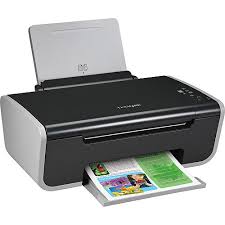
Printer

a)

Input

b)

Output

85.
Is this device Input or Output?
Keyboard
a)
Input
b)
Output
86.
Is this device Input or Output?
Mouse
a)
Input
b)
Output
87.

What doesn’t affect the performance of the computer

a)

Clock Speed

b)

Number of Cores

c)

The number of instructions in the program

d)

Cache Size

88.

If the processing speed goes from 1GHZ to 4GHZ and the processor is changed from an 8 core to a dual core processor – what is the exact effect on the performance of the computer?

a)

The number of instructions executed per second quadruples

b)

The number of instructions executed per second doubles

c)

The number of instructions executed per second stays the same

d)

The number of instructions executed per second is halved

89.

Firmware in which software and hardware are integrated on a circuit board is often used in what type of system?

a)

Point of Sales System

b)

Desktop System

c)

Embedded System

d)

Operating System

90.

Which is an example of an Embedded System:

a)

PCs

b)

Washing Machine

c)

Laptops

d)

Tablets

91.

Processors don’t do the following

a)

Operate in Hz

b)

Execute Data

c)

Execute Instructions

d)

Process Data

92.

The part of a processor in which instructions are executed is known as?

a)

Core

b)

Centre

c)

Instruction Centre

d)

Execution

93.

What acts as an intermediary between the processor and the Main Memory?

a)

Clock

b)

Cache

c)

Bus

d)

User

94.

What is held in cache?

a)

All of the programming instructions

b)

Instructions that have been processed

c)

Commonly used instructions and data

d)

Data that hasn’t been used for a long time

95.

Moore’s Law?

a)

The performance increase of computers would eventually halt in 2020

b)

That the number of cores on a processor would double every year

c)

Predicted that the number of transistors on a circuit board would double ever year

d)

Computers would be capable of thinking and learning for themselves by 2020

96.

If the processing speed goes up from 1GHZ to 4GHZ and the number of cores goes from 1 to 2 – what is the exact effect on the performance of the computer?

a)

Quadrupled

b)

Eight Times faster

c)

Sixteen times faster

d)

Doubled

97.

If the processing speed goes up from 1GHZ to 4GHZ and the number of cores goes from 1 to 8 – what is the exact effect on the performance of the computer?

a)

Sixty Four times faster

b)

Sixteen times faster

c)

Eight Times faster

d)

Thirty Two times faster

98.

What component holds the address of the next instruction

a)

Memory Data Register

b)

Accumulator

c)

Memory Address Register

d)

Program Counter

99.

This holds the number of the current instruction being worked on

a)

Memory Address Register

b)

Program Counter

c)

Memory Data Register

d)

Accumulator

100.

This would reduce the number of memory/processor transfers

a)

Arithmetic Logic Unit

b)

Control Unit

c)

Accumulator

d)

Cache

101.

This sends signals such as “I/O Read”

a)

Control Unit

b)

Arithmetic Logic Unit

c)

Accumulator

d)

Cache

102.

This sends signals such as “Memory write”

a)

Control Unit

b)

Cache

c)

Arithmetic Logic Unit

d)

Accumulator

103.
This doesn’t happen during the Decode / Execute part of the cycle: (7-9)
a)
Results are held in the Accumulator
b)
Instructions are transferred from Main Memory
c)
Current Instruction is held in the CIR
d)
Status Register updated
104.

What is held in ROM?

a)

Operating System

b)

Data currently in use

c)

Bootstrap Loader

d)

Instructions frequently used

105.

Which component generates addresses

a)

Secondary Storage

b)

Processor

c)

Main Memory

d)

Control Unit

106.

What is transferred down the data bus?

a)

Data only

b)

Addresses only

c)

Data

d)

Instructions and Addresses

e)

Data and Instructions

107.

What is the purpose of the accumulator?

a)

To hold the results of a calculation

b)

To hold the accumulation of instructions that are about to happen

c)

To hold the accumulation of instructions that have happened

d)

To perform arithmetic operations

108.
A truth table lists every possible combination of input and the resulting output
a)
True
b)
False
109.
Which gate does this symbol represent? 
a)
AND
b)
NOT
c)
OR
110.
Which gate does this symbol represent? 
a)
NOT
b)
AND
c)
OR
111.
Which gate does this symbol represent? 
a)
OR
b)
AND
c)
NOT
d)
ORR
112.
The logic in used in computer systems is called Boolean logic because there are only 3 possible values.
a)
False
b)
True
113.
A AND B = Q, If A=1 and B=1 what does Q equal?
a)
1
b)
0
114.
NOT A = Q, if A equals 1 what does Q equal?
a)
0
b)
1
115.
(NOT A) AND B = Q, If A=0 and B = 1, what does Q equal?
a)
1
b)
0
116.
(C AND D) OR (NOT(A OR B)) = Q, If A=1, B=1, C=0 and D=1, what does Q equal?
a)
0
b)
1
117.

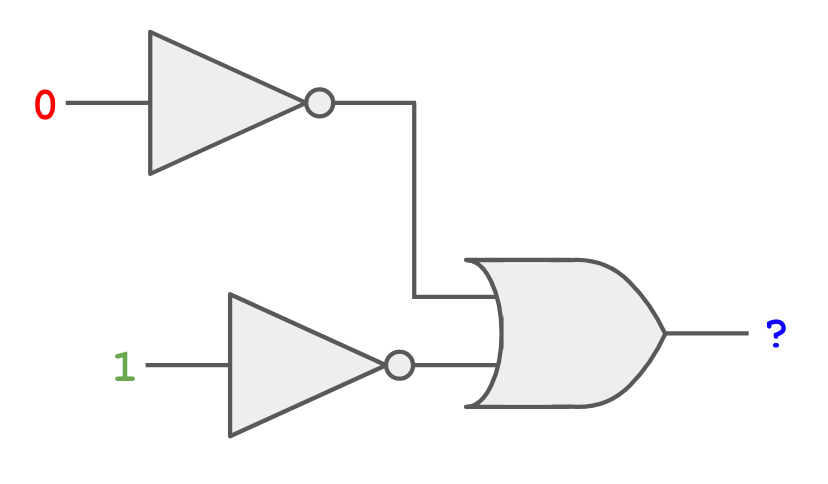
What will the circuit's output be?

a)

1

b)

0

118.

What logic gate has this truth table?

a)

NOT

b)

THE

c)

AND

d)

OR

119.

Choose all the Boolean logic gates ...

a)

NOT

b)

AND

c)

BUT

d)

XOR

120.

Truth table for OR gate?

a)
b)
c)
d)
121.
What is the CPU’s purpose?
a)
To carry out program instructions
b)
To store data
c)
To compile program code
d)
To output data to the user
122.
What are the main characteristics of a Von Neumann CPU?
a)
External storage, programs and data in shared memory
b)
Heat management through heatsinks and fans
c)
Communicating with input and output devices
d)
External and internal cache
123.
What is the difference between Harvard and Von Neumann?
a)
Harvard has separate stores for data and memory, VN does not
b)
Processing capacity; VN is faster
c)
VN has separate stores for data and memory, Harvard does not
d)
Processing capacity; Harvard is faster
124.
What does the MAR do?
a)
Stores the data retrieved from memory
b)
Stores the address of the memory location to access
c)
Stores the address of the next instruction
d)
Stores the results of arthimetic and logical operations
125.
What does the MDR do?
a)
Stores the data retrieved from memory
b)
Stores the address of the memory location to access
c)
Stores the address of the next instruction
d)
Stores the results of arthimetic and logical operations
126.
What does the Program Counter do?
a)
Stores the data retrieved from memory
b)
Stores the address of the memory location to access
c)
Stores the address of the next instruction
d)
Stores the results of arthimetic and logical operations
127.
What does the Accumulator do?
a)
Stores the data retrieved from memory
b)
Stores the address of the memory location to access
c)
Stores the address of the next instruction
d)
Stores the results of arthimetic and logical operations
128.
What does the ALU do?
a)
Performs Arithmetic and Logical operations
b)
Decodes and directs instructions to be carried out
c)
Stores frequently used data and instructions
d)
Processes graphical functions
129.
What is the purpose of the CPU?
a)
To process all the data and instructions.
b)
To turn the computer on.
c)
To create PowerPoint presentations.
d)
To provide power to the computer.
130.
What are the two other parts of the CPU that you learned?
a)
RAM & ROM
b)
Hard Drive & Motherboard
c)
The ALU and Cache
131.

Every computer processor has the same instruction set

a)

True

b)

False

132.
What is Assembly code?
a)
Another name for Pseudocode
b)
A programming language that uses mnemonic codes
c)
A program that joins pieces of code together
d)
Another name for machine code
133.

What are the 2 parts of the instruction?

a)

Opinstruction and Opmemory

b)

Opcommand and Opstate

c)

Opcode and Operand

d)

Opcommand and Opmemory

134.

In Little Man Computer which assembly instruction loads a value from memory onto the accumulator?

a)

STA x

b)

LDA x

c)

ADD x

d)

SUB x

e)

INP

135.

In Little Man Computer which assembly instruction stores the value in the accumulator to a memory location?

a)

STA x

b)

LDA x

c)

ADD x

d)

SUB x

e)

INP

136.

What translates assembly code into machine code?

a)

compiler

b)

assembler

c)

linker

d)

loader

e)

interpreter

137.
Different CPUs require different assemblers.
a)
True
b)
False
138.
What is machine code?
a)
Instructions in binary
b)
Instructions and data in binary
c)
Python code
d)
Mnemonics like LDA
139.
What does the store instruction need to go with it
a)
The data to be stored
b)
Nothing
c)
A second istruction
d)
The memory location to store the data in the accumulator
140.
Little Man wants to read an input from user. Hence, he needs to use .....
a)
INP
b)
OUT
c)
LDA
d)
DAT
141.
What does the following instruction do in LMC: 
A DAT 5
a)
Creates a memory location called B
b)
Creates a memory location labelled 5 which stores the letter A
c)
Create a memory location labelled A which stores the number 5
d)
Creates a memory location labelled C
142.

What Mnemonic is used by the LMC to stop the program

a)

HLT

b)

STO

c)

STP

d)

STA

143.

What Mnemonic is used for Addition by the LMC

a)

ADD

b)

ADS

c)

ODD

d)

IDD

144.

What Mnemonic is used to Subtract by the LMC

a)

SUB

b)

SBU

c)

SBB

d)

SUU

145.
A bitmap is a
a)
raster graphic
b)
a vector graphic
c)
pixel
d)
a dot
146.
A pixel is
a)
a sprite
b)
the colors in an image
c)
the smallest point on a digital image
d)
a collection of colors
147.
A raster graphic
a)
is composed of pixels
b)
looks like a rooster
c)
 images that are made of hundreds of thousands of tiny lines and curves (or paths) to create an image
d)
 images that are made of hundreds of thousands of tiny chicken feathers and eggs (or yolks) to create a chicken
148.
PNG is a
a)
Image format
b)
High-level programming language used to make mobile applications, or apps
c)
Coding festival
d)
Internet meme
149.
What is photo compression?
a)
Reducing a picture's file size
b)
Reducing the height of a picture
c)
Cropping a picture
d)
Making the camera smaller
150.
Lossy compression
a)
is high quality compression of many types of images
b)
pieces of your crushed camera
c)
 reduces a file by permanently eliminating certain information
d)
is when a fat cat sits on a mouse