
 Worksheets
Year 12 AIT General week 2 term 1
Total questions: 155
Worksheet time: 1hrs 25mins

What are the primary colors?
Purple, Green, and Orange
Red, Blue, and Yellow
Baby blue, Pink, and Lime Green
Red-orange, Yellow-green, and Blue-green

You can create textures by making ______ with other elements.
positive and negative
tints and shades
patterns
implied and actual

What are the two types of shapes?
squares and circles
long and short
lightness and darkness
geometric and organic

Shape is a
moving point
the area between objects in an artwork
an area enclosed by a line
the lightness and darkness of a color or shade
A line can be defined or implied. Which artwork shows implied lines?


The value is the
lightness or darkness of a color
the size of an object
a moving point
area enclosed by a line

What are the two types of texture?
Rough and Fluffy
Real and Fake
Implied and Actual
Soft and Hard

The principles of design are
the building blocks
suggestions that you can consider for making art
the tools to organize the elements

The Elements of Art are
the building blocks
the rules of art
a list of suggestions

Symmetrical, asymmetrical, and radial are examples of this principle of design.
Movement
Balance
Contrast
Unity

This Principle of Design is the path the viewer’s eye takes through the work of art, often to focal areas. It can be directed along lines, edges, shape, and color within the work of art.
Balance
Proportion
Movement
Pattern

This Principle of Design is the repeating of an object or symbol all over the work of art.
Pattern
Movement
Color
Unity

This Principle of Design is the feeling of unity created when all parts (sizes, amounts, or number) relate well with each other. It can refer to the size of the head in relationship to the rest of the body, for instance.
Movement
Shape
Form
Proportion

This Principle of Design catches the viewer’s attention. Usually the artist will make one area stand out by contrasting it with other areas. The area could be different in size, color, texture, shape, etc.
Unity
Form
Emphasis
Contrast

This element can be a three dimensional (3D) object or a two dimensional (2D) artwork that appears 3D.
Shape
Sculpture
Form
Clay

The empty space between and around shapes and forms is referred to as ___________ space, or ground.
Positive
Negative
Neutral

Space is the distance or area between, around, above, below, or within things. What type of space creates depth?
Positive
Foreground, middle ground, and background
Negative

This Principle of Design is the feeling of harmony between all parts of the work of art, which creates a sense of completeness.
Balance
Emphasis
Unity
Variety

When an artist uses the colors black and white in their artwork, they are creating a strong sense of _____________ in their design.
Unity
Color
Rhythm
Contrast
The regular repetition of elements
Balance
Contrast
Harmony
Rhythm
A repeated decorative design
Rhythm
Pattern
Balance
Style
The distribution of visual weight in an artwork
Contrast
Movement
Proportion
Balance
The difference between elements in a composition
Contrast
Balance
Unity
Harmony
The condition in which two or more things naturally go together
Harmony
Style
Unity
Proportion
An act of changing physical location or position or of having this changed
Balance
Unity
Movement
Balance
A feature or quality that is typical of designs created by a specific person or during a specific time period.
Theme
Style
Contrast
Rhythm
When the parts of a design have a sense of belonging or similarity so that they visually fit well together
Style
Unity
Harmony
Contrast
The relationship between the sizes of two or more things.
Balance
Proportion
Rhythm
Style
These describe the edges or contours of shapes
Lines
Form
Texture
Color
The shape of an object is two-dimensional (2D), and the _______ of an object is three-dimensional (3D).
Lines
Form
Color
Texture
The feel, appearance, or consistency of a surface, substance, or material.
Lines
Shape
Texture
Color
Decisions that deal with the overall purpose of the design
Conceptual
Marketing
Technical
Aesthetic
Decisions that deal with who will buy/use the product as well as where/how the product will be sold and the selling price
Conceptual
Marketing
Technical
Construction
Decisions that deal with how the design will actually work
Conceptual
Marketing
Technical
Aesthetic
Decisions about how the product will be made and assembled
Conceptual
Technical
Construction
Marketing
Decisions about how the product will look
Conceptual
Marketing
Technical
Aesthetic

What type of balance is represented?
symmetrical
asymmetrical
radial
none of the above

What color scheme is most used here?
neutral
primary
secondary
complementary
The path of a moving point is the element of ...
line
shape
movement
emphasis
This element of art is created by the amount of reflected light...
space
emphasis
form
color
The element of art that shows the way something feels or looks like it feels...
line
rhythm
texture
proportion

What type of balance is best represented here?
symmetrical
asymmetrical
radial

What principle of design is best represented here?
texture
contrast
space
emphasis

use of elements of art to move your eye across the canvas or page
rhythm and movement
space and form
shape and distance
balance

principle of design in which the elements of art are combined in various ways such as in this example
pattern
space
variety
balance
The element of art that is 2D and can be geometric or organic
form
space
shape
value
This refers to the distance above, between, around objects
space
shape
value
line

What color scheme is used?
primary
complementary
analogous
neutrals

repetition of elements of art as seen in this picture
emphasis
line
pattern
balance

What type of space is represented by the "R"?
Positive space
Negative space
Neutral space

Is the shape geometric or organic?
geometric
organic

When the elements of art and principles of design all work together to create a pleasing image
unity
space
texture
color
There are two types, geometric (man-made) and natural (organic). The combining of two or more shapes or a collection of lines creates it. It may be enhanced by tone, texture and colour.
Form - principle of design
Contrast - principle of design
Balance - principle of design
Proportion - principle of design


Level 2: subheadings
Level 3: headings
Level 2: subheadings
Level 3: body text
Level 2: headings
Level 3: body text


The CPU reads an instruction from memory (register, cache, main memory) is refer to:
Fetch instructions
Interpret instructions
Fetch data
Process data
________ : The instruction is decoded to determine what action is required
Fetch instructions
Interpret instructions
Fetch data
Process data
________ : The execution of an instruction may require performing some arithmetic or logical operation on data.
Fetch instructions
Interpret instructions
Fetch data
Process data
________ : –The results of an execution may require writing data to memory or an I/O Module
Fetch instructions
Interpret instructions
Fetch data
Write data
The major components of the processor are
arithmetic and logic unit (ALU)
control unit (CU)
Input/Output
memory
______ does the actual computation or processing of data.
arithmetic and logic unit (ALU)
control unit (CU)
______ controls the movement of data and instruction into and out of the processor and controls the operation of the ALU
arithmetic and logic unit (ALU)
control unit (CU)
CPU carries out a cycle called___.
Execute-decote-fetch
Fetch-decode-execute
Fetch-execute-decode
Decode-execute-fetch
The part of the CPU that gets instructions from the memory is...
Storage
Fetch
Decode
Execute
The part of the CPU that carries out instructions is...
Storage
Fetch
Decode
Execute
Which below is not part of the CPU?
Storage
Fetch
Decode
Execute
The part of the CPU that understand what the instructions mean is...
Storage
Fetch
Decode
Execute
CPU stands for...
Central Processing Unit
Central Programming Unit
Core Processing Unit
Centrally Processing Universally
The purpose of the CPU is to ____.
Process data
Input data
Output Data
Store data


What is Volatile?
Loss of data when the computer is switched off.
Substances that will evaporate in room temperature.
Something to do with electricity.
Liable to display rapid changes of emotion.
What is the purpose of ROM?
To not be volatile.
To contain vital instruction for the computer (e.g. Starting up).
It has no purpose.
To randomly open memory without being tasked to.
Which one of these facts are false?
RAM can't store permanent data
ROM is memory that cannot be changed by a program or user.
ROM is embedded, can’t be removed.
If a computer loses power, all the data is saved onto the RAM
Which one of those is not a type of Storage?
HDD
SSD
SSHD
RAM
What is the CPU process?
Fetch-Decode-Execute
FDE
FED
Decode-Fetch-Execute
What facts about RAM that are true?
RAM is embedded
RAM stores data permanently
RAM is a separate component
RAM has contains instructions for the computer.

True or False: RAM is fast temporary memory
True
False
What is 'benchmarking?
A test used to measure the amount of memory that a computer has.
A test used to measure the number of cores in a CPU.
A test used to measure the performance of a computer .
Capacity of hard disk is measured in
Gigabytes
Megabytes
Kilobytes
Bytes
A gigabyte is equal to
1024 bytes
1024 megabytes
Million megabytes
Thousand kilobytes
Through ______ information travels between components on the motherboard.
Flash memory
CMOS
Peripherals
None of these
Which of the following refers to the memory in computer?
VGA
CPU
RAM
All of these
Storage and memory differ with respect to which of the following characteristics?
Speed
Price
Reliability
All of these
Which is a semiconductor memory?
Static
Dynamic
Bubble
Both (a) and (b)
The main circuit board that everything inside the computer attaches to.
Video Card
Power Supply
RAM
Motherboard
Distribute electricity to all parts inside the computer.
Heat Sink
Power Supply
Computer Processor
Motherboard
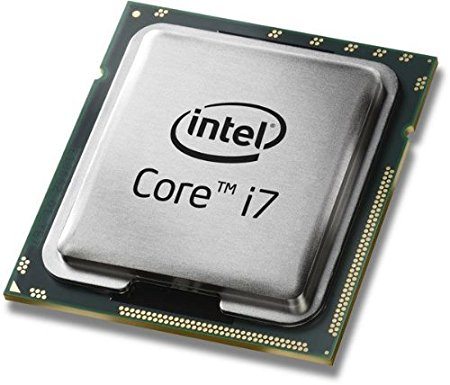
CPU
Computer Processor
Microprocessor
All of these
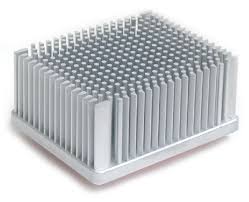
Power Supply
CPU
Heat Sink
Motherboard
What are the internal peripheral devices called?
It means not relating to the main or most important part.
No. They rely on the computer to function properly.
It’s the printer.
They are often referred to as integrated peripherals.
Mouse on a keyboard is called a......?
Mouse
Fingerpad
Trackpad
Touchpad
What software is used to install a peripheral device?
Microsoft Windows
Driver
USB
Scanner
Where do you go to update the driver on computer?
BIOS
Device Manager
Desktop
The device

The devices shown are an examples of ______________ devices.
input
output
both input and output
neither input nor output

