
 Worksheets
5º NATURAL SCIENCE UNIT 5
Total questions: 48
Worksheet time: 26mins


¿Qué instrumento se necesitaría para medir la masa de un objeto?
Balanza
Regla
Termómetro
Brújula

¿Cómo es esta mezcla?
Heterogeneous
Pure substance
Mixture
Homogeneous

¿Como se mide la masa?
En litros
En gramos
Las dos son correctas

¿Qué origen tiene este material?
Animal origin
Plant origin
Artificial origin
Mineral origin

¿Qué origen tiene este material?
Natural origin
Mineral origin
Artificial origin

¿Qué origen tiene este material?
Artificial origin
Plant origin
Mineral origin
Animal origin

Which object has more volume?


Which object has more mass?


Select heterogenous mixtures


Las sustancias puras están formadas por:
Un solo tipo de material.
Dos tipos de materiales.
Varios tipos de materiales
¿Cuál de estas sustancias no es un sustancia pura?
Sal
Masa de pizza
Oxígeno
¿Qué es una mezcla?
La combinación de dos o más sustancias puras.
Una única sustancia pura.
¿Cómo se llaman los dos tipos de mezclas que hay?
(a)
Marca las frases que se refieren a las Mezclas Homogéneas
Todos los componentes son visibles a simple vista.
Tienen el mismo aspecto en todas sus partes.
La composición no es igual en todas sus partes.
Sus componentes no se pueden distinguir a simple vista.
Señala las mezclas homogéneas:
Pizza
Ensalada
Agua de mar.
sal
Marca las frases que se refieran a mezclas heterogéneas.
Sus componentes no se pueden distinguir a simple vista.
La composición no es igual en todas sus partes
Tienen el mimo aspecto en todas sus partes
Los componentes son visbles .
Los componentes de una mezcla no mantienen sus propiedades.
Verdadero.
Falso
densidad, masa, y volumen son propiedades
observables
medibles
materias
estados
Color, textura, forma, olor, y sabor son propiedades
observables
medibles
reglas
probetas

How can you calculate the mass of this liquid?
With a mathematical formula
With measuring cylinders
With a scale
With a measuring cylinder and a scale

Para saber qué material es más adecuado a cada uso nos fijamos en sus:
Colores
Formas
Propiedades
............ is the amount of space an object occupies and is measured in cubic meters and expressed in litres.
Mass
Volume
Density
........... is the amount of matter in an object and is measured in kilograms
mass
volume
density
What object do we use to measure volume?
Scales
Bucket
Spoon
Measuring cylinders
We calculate the density of an object by .................... its mass by its volume
dividing
substracting
adding
multiplying
What is the formula of density?
Mass divided by volume
Volume divided by mass.
Mass plus volume
What is a mixture?
Something formed by 1 or more components.
Something formed by 2 or more components.
The types of mixtures are....
Homogeneous and heterogeneous
Homogeneous and pure substances.
They have got visible components.
Homogeneous mixtures.
Heterogeneous mixtures.
They haven't got visible components.
Homogeneous mixtures
Heterogeneous mixtures
La oposición que presenta un cuerpo a ser rayado se denomina:
Plasticidad
Tenacidad
Colabilidad
Dureza
Si un material se deforma al ejercer sobre él una fuerza y una vez que ésta cesa retoma su forma inicial, se dice que es:
Frágil
Elástico
Dúctil
Maleable
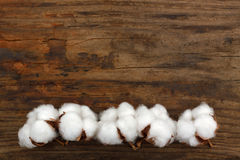
El algodón y la madera son:
materiales naturales
materiales elaborados
Materiales artificiales
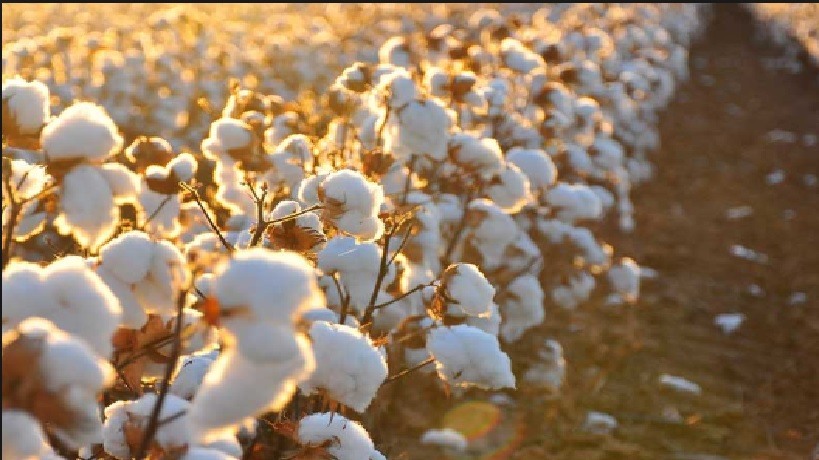
¿Qué son los materiales naturales?
Los materiales que se obtienen de la naturaleza.
Los materiales que llevan productos químicos.
Los materiales que producen en una fábrica.

Selecciona los materiales artificiales (tres)
Cemento
Plástico
Madera
Vidrio
Metal
¿Qué es algo frágil?
Que se puede doblar sin romperse.
Que se rompe si se golpea.
Que no se rompe fácilmente.
Que pesa mucho.
Select the three states of matter:
Solid
Liquid
Gas
Reflection
Refraction
Materials can be...
Natural and raw.
Natural and man-made.

