
Font size
 Worksheets
Semester 1 Final Exam
Total questions: 100
Worksheet time: 3hrs 43mins


Which of the following would be considered a physical change?
Cutting paper
pH test
Burning marshmellow
Roasting a Turkey
Which of the following would be considered a physical property?
Colour
Flammability
pH
Reactivity


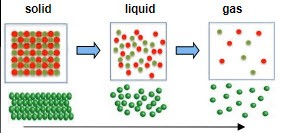
Which represents a decrease in entropy?
sublimation of CO2
boiling water
condensation of steam on cold glass
NaCl dissolving in water
The entropy will usually increase when
a molecule is broken into two or more smaller molecules
a reaction occurs that results in an increase in the number of moles of gas
a solid changes to a liquid
all of these


As you move from left to right on the periodic table, the number of valence electrons.......
Increases
Decreases
Remains the same
As you move down a group on the periodic table, the number of valence electrons....
Increases
Decreases
Remains the same
Which of the following would be most similar to Phosphorus? (select all that apply)
Nitrogen
Sulfur
Silicon
Germanium
Antimony
Which of the following reasons explains why there is a decimal for most atomic masses?
The mass of one atom can have a fraction.
Since electrons are very small mass they only add a little bit, usually only a decimals worth.
It is the average mass of all the potential isotopes of an atom.
Neutrons have a mass of 1.1 meaning that fractions are common.


Why does the melting point of metals increase across period 3, from Sodium (Na) to Aluminium (AI)?
Size of atoms gets smaller
Attraction force between nuclei and free electron increases
Increased space between the valence electrons in the "sea"
Increased number of valence electrons contributed to the "sea"
Why do metals conduct electricity?
They are shiny
The electrons are delocalised and able to move
The electrons are held tightly within the lattice
The electrons are shared between two metal ions
Water has an unusually high boiling point for a molecular compound because it has
hydrogen bonding
ion-ion attractions
a high density
a large gram formula mass

What physical state symbol should be included for water?
(s) - solid
(l) - liquid
(g) - gas
(aq) - aqueous
Why does oxygen's symbol have a subscript "2"?
Because it is monoatomic.
Because it is diatomic.
Because it is triatomic.
If two objects have different temperatures, heat will flow from the warmer object to the cooler one UNTIL ____________
one reaches a temperature of zero
they both have an equal temperature
one runs out of energy


What is the temperature of the metal cube when thermal equilibrium is achieved between the cube and the liquid?
What is the direction of thermal energy flow (in general)?
High to low.
Low to high.
100 g of ice cold water (0 C) is mixed with 50 g of boiling water (100 C). What best describes the outcome of this process?
The final temperature will be 50 C because this is the average temperature.
The final temperature will be less than 50 C because the 100g sample has more mass.
The final temperature will be greater than 50 C because the 100 C water has a higher temperature.
The final temperature can not be determined with the given information.
When a substance increases in temperature, what describes the motion of the particles?
They move more rapidly.
They expand in size.
They change their phase.
They decrease their entropy.
How can temperature be described?
Heat flow from a substance.
How fast (on average) the particles are moving.
The average size of the particles.
The arrangement of the particles.
The units of heat capacity are ________.
JK or J°C
KJ or °CJ
g−KJ or g−°CJ
molJ
Jg−K or Jg−°C
The units of specific heat (specific heat capacity) are ______.
JK or J°C
KJ or °CJ
g−KJ or g−°CJ
molJ
Jg−K or Jg−°C
The specific heat of liquid bromine is 0.226 g−KJ . How much heat (in Joules) is required to raise the temperature of 10.0 ml of bromine from 25.00 °C to 27.30 °C ? The density of liquid bromine is 3.12 mlg .
5.20
16.2
300
32.4
10.4
A sample of aluminum metal absorbs 11.2 J of heat, upon which the temperature of the sample increases from 23.2 °C to 30.5 °C . Since the specific heat capacity of aluminum 0.90 g−KJ , the mass of the sample is _______ grams.
72
1.7
10
65
7.3
What is the final temperature of a 35.1 g sample of iron, having an initial temperature of 24.5 °C , when it absorbs 115 J of heat? The specific heat capacity of iron is 0.450 g−KJ .
26.3
27.9
38.6
31.8
34.9

