
 Worksheets
pollination
Total questions: 29
Worksheet time: 15mins
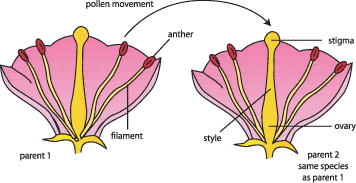

A) wind pollination
B) Insect pollination
C) explosive pollination
Wind-pollinated flowers typically have
A scent
Nectar
Small, light and powdery pollen
Large and colourful petals
Bird-pollinated flowers typically have
Large amounts of nectar
No fragrance
Large amounts of pollen
A dull colour
Insect-pollinated flowers typically have
Small, inconspicuous flowers
No scent
Light, powdery pollen grains
Relatively large, and often sticky grains of pollen

Which part produces pollen?
3
4
6
7
Which part is number 3?
stigma
anther
filament
style
Which part is number 8?
Stamen
Stigma
Pistil
Anther
Which part is number 9?
Stamen
Stigma
Pistil
Anther
Which of the following is not an advantage of seeds?
can become any species of plant depending on the environment they are planted.
Can be spread out over great distances
They can stay dormant for long periods of time
All of the above are advantages
__________________________ is the process of transporting the male gamete from the male flower parts to the female flower parts.
Asexual reproduction
Pollination
Photosynthesis
Vasculation
After fertilization, what does the ovary develop into?
Seed
Fruit
Bud
Flower
Which are plants that grow, mature, flower, produce seeds, and die in one growing season?
Annual
Biennial
Perennial
After fertilization, what does the ovule develop into?
Seed
Fruit
Bud
Flower
THE MAIN DIFFERENCE BETWEEN SEXUAL AND ASEXUAL REPRODUCTION IN PLANTS IS:
In asexual reproduction, seeds are not used to generate new plants, while in sexual reproduction new plants are obtained by seeds.
In sexual reproduction, plants generate new plants without seeds, while in asexual reproduction, do.
Asexual reproduction includes pollination, while sexual reproduction does not.
Asexual reproduction includes fertilization, while sexual reproduction does not.
THE TYPES OF SEXUAL REPRODUCTION IN PLANTS ARE:
BUDDING AND FRAGMENTATION
VEGETATIVE PROPAGATION AND POLLINATION
POLLINATION AND FERTILIZATION
SPORE FORMATION AND FRAGMENTATION
The male reproductive part of the flower is:
Pistil which comprises stigma, style and ovary.
Anther and ovary.
Stamen which consists of anther and filament.
Filament and pistil.
The pistil: female reproductive part of the flower, comprises three parts that are:
STIGMA, STYLE AND OVARY.
PETALS, SEPAL, STAMEN.
FILAMENT, ANTHER, PETAL.
NONE OF THE ABOVE.
What are Sepals?
They are green, outermost part of the plant.
They are green, innermost part of the plant.
What is corolla made up of?
Petals
Sepals
Calyx
Androecium

