Wayground logo

Free Printable Worksheets

Font size

S
M
L
XL
Worksheets

Earth Science End Of Course Assessment

Total questions: 67

Worksheet time: 42mins

Name
Class
Date
1.
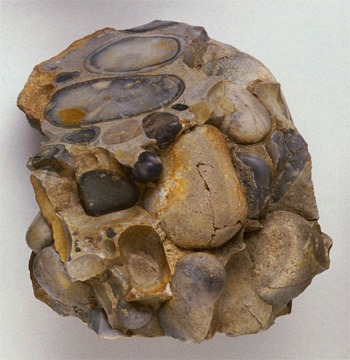
This rock formed when bits of other rocks became pressed into a solid. What type of rock is it?
a)
Sedimentary Rock
b)
Metamorphic Rock
c)
Igneous Rock
2.
What are the 3 major types of rocks?
a)
Igneous, Metamorphic, Sedimentary
b)
Metamorphic, Igneous, Cementation
c)
Brown, Red, Gray
d)
Streak, Hardness, Breakage
3.
This rock was formed by smaller pieces of rock that settled at the bottom of a lake millions of years ago. What type of rock is this?
a)
Sedimentary
b)
Igneous
c)
Metamorphic
4.
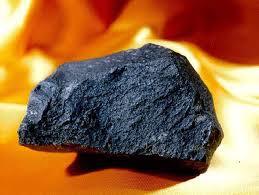
This rock was found near the mouth of a volcano. What type of rock is this?
a)
Sedimentary
b)
Igneous
c)
Metamorphic
5.

When sediments are pressed together tightly, this is called ____________.

a)

Compaction

b)

Cementation

c)

Weathering

d)

Erosion

6.
Extreme Heat and Pressure creates a _________ rock.
a)
Igneous
b)
Metamorphic
c)
Sedimentary
d)
Mineral
7.

Which layer is OLDER? Intrusion M or Layer D?

a)

Intrusion M

b)

Layer D

8.

Which layer is OLDER? Layer M or Intrusion P?

a)

Layer M

b)

Intrusion P

9.

What is the relative age of a rock?

a)

an exact age, in years

b)

an exact age, as shown by index fossils

c)

an approximate age when compare to other rocks

10.

What is true of any fault?

a)

It is older than the rocks it cuts.

b)

It is younger than the rocks it cuts.

c)

It is the same age as the rocks it cuts.

11.

Which statement is true of inclusions?

a)

They are older than the rocks that contain them.

b)

They are younger than the rocks that contain them.

c)

They are the same age as the rocks that contain them.

12.
Relative age dating is used to determine the...
a)
actual age of an event
b)
length of time between two events
c)
age of one event in comparison with other events
d)
rate at which a geologic process occurs
13.
How old is the Earth?
a)
4.6 billion years
b)
1.4 billion years
c)
4.6 million years
d)
6000 years
14.
gaps in rock layers caused by erosion are called
a)
law of superposition
b)
unconformities
c)
uniformitarianism
d)
relative dating
15.
What can scientists directly learn from the sequence of rock layers?
a)
Geologic history of that area
b)
Future geological events
c)
the number of organisms that live in the area
d)
the impact that hikers have had on an area.
16.

Which of these statements describes what happens during radioactive decay?

a)

A stable isotope interacts with an unstable isotope

b)

An unstable isotope bonds with a stable isotope

c)

An unstable isotope breaks down and becomes stable

d)

A stable isotope breaks down and becomes unstable

17.
Metamorphic rocks are foliated if their mineral grains are arranged randomly.
a)
true
b)
false
18.

In which rock type can you find fossils?

a)

Igneous

b)

Metamorphic

c)

Sedimentary

19.

What is the difference between rocks and minerals?

a)

Rocks are composed of minerals

b)

Minerals are composed of rocks

c)

They are the same

20.

How are metamorphic rocks formed?

4 lines
21.

How are sedimentary rocks formed?

4 lines
22.

How are igneous rocks formed?

4 lines
23.

What rock type is forming in the image above?

a)

Igenous

b)

Metamorphic

c)

Sedimentary

24.

What process occurs between the sample on the left and the sample on the right?

a)

Metamorphism

b)

Deposition

c)

Compaction

d)

Melting

25.

What is an epicenter?

a)

The point on Earth's surface, closest to the origin of the earthquake

b)

The exact location of the earthquake

26.
Where is the point at which the first movement occurs during an earthquake?
a)
Epicenter
b)
Focus
c)
Fault
d)
Plate
27.
Where is the point on the Earth’s surface directly above the focus of an earthquake?
a)
Epicenter
b)
Fault
c)
Hypocenter
d)
Tremor
28.
True or false?  Tectonic plates move ONLY by sliding.
a)
True
b)
False
29.
What tool would a meteorologist use to determine the change in air pressure?
a)
thermometer
b)
barometer
c)
weather vane
d)
compass
30.
What is Pangaea?
a)
a supercontinent that existed
 millions of years ago
b)
a new planet
31.
Tides are caused by:
a)
rotation of planet Earth
b)
Earth's revolution
c)
Gravitational pull of the moon
32.

What part of the water cycle is A?

a)

evaporation

b)

condensation

c)

precipitation

d)

collection

33.

What part of the water cycle is B?

a)

evaporation

b)

condensation

c)

precipitation

d)

collection

34.
Which is the most common contamination source for freshwater resources? 
a)
runoff 
b)
digging wells
c)
melting of glaciers
d)
lightning
35.
Which layer of the soil profile would be affected the most by weathering and erosion?
a)
1
b)
2
c)
3
d)
4
36.
Which of the following processes will change a sedimentary rock into an igneous rock?
a)
Melting and crystallization
b)
Erosion and deposition
c)
Deformation and deposition
d)
Faulting and fracturing
37.
Which of the following isn’t a factor/force involved with erosion?
a)
gravity
b)
wind
c)
tension
d)
water
38.

How long does it take for the moon to revolve around Earth?

a)

One year

b)

One day

c)

One week

d)

One month

39.

What causes the phases of the moon that we see from Earth?

a)

The moon's rotation on its axis

b)

The moon's revolution around Earth

c)

The Earth's rotations on its axis

d)

The Earth's revolution around the Sun

40.

Which phase of the moon is represented here?

a)

Full Moon

b)

New moon

c)

Third quarter moon

d)

First quarter moon

41.

What is the name of this phase of the moon?

a)

First quarter moon

b)

Waxing crescent moon

c)

Third quarter moon

d)

New Moon

42.

Which phase of the moon is represented here?

a)

First quarter moon

b)

New Moon

c)

Full Moon

d)

Third quarter moon

43.

VOCAB: the amount of time it takes for half of the atoms in a sample to decay

a)

fission

b)

fusion

c)

radioactive decay

d)

half life

44.

How is Earth's atmosphere mainly heated?

a)

sunlight absorption & radiation

b)

radioactive decay in the core

c)

friction on the surface

d)

global & local winds

45.

After one half life, how much of a 500 g sample will be left?

a)

500 g

b)

250 g

c)

125 g

d)

100 g

46.

After two half lives, how much of a 500 g sample will be left?

a)

500 g

b)

250 g

c)

125 g

d)

100 g

47.

Which of the following best describes climate?

a)

Average rainfall in Gretna over 10 years

b)

Amount of precipitation received yesterday

c)

The current temperature outside

d)

The predicted wind speed tomorrow

48.

Which of the following best describes weather?

a)

Average rainfall in Gretna over 10 years

b)

Amount of precipitation received yesterday

c)

The temperature ranges of Lincoln over 150 years

d)

Wind patterns across the state of Nebraska

49.

A sample of Carbon-14 has a half life of about 6,000 years.


What percentage of the original sample will be left after 12,000 years?

a)

100%

b)

50%

c)

25%

d)

12.5%

50.

As you move up into the troposphere the temperature __________

a)

increases

b)

remains the same

c)

decreases

d)

fluctuating

51.
At what type of boundary is a subduction zone formed?
a)
transform
b)
convergent
c)
divergent
d)
strike-slip
52.

which of the following is not a drawback of solar energy?

a)

sunlight does not have energy

b)

cost

c)

sun is not always out

d)

solar energy is diffuse and hard to collect

53.

which location would be best for solar energy?

a)

Arizona

b)

Oklahoma

c)

Hawaii

d)

Colorado

54.

which of the following is not a biofuel or a biomass?

a)

wood

b)

ethanol from corn

c)

dung

d)

methane

55.

Fossil fuels are considered nonrenewable because they

a)

do not produce pollution

b)

are no longer used by humans

c)

are created so quickly

d)

take millions of years to form, so once they're gone, they're gone

56.

Disadvantages of fossil fuels...

a)

they are not easily replaced

b)

they create pollution in the environment

c)

they are cheap

d)

they can be stored for later use

57.

Advantages of Non-renewable energy...

a)

they can be stored for use at later time

b)

they are cheap

c)

they are not easily replaced

d)

they cause pollution to the environment

58.
Which Virginia province is seen on this map? 
a)
Piedmont 
b)
Coastal Plain 
c)
Blue Ridge 
d)
Appalachian Plateau 
59.
Which Virginia province is shown on the map? 
a)
Coastal Plain 
b)
Piedmont 
c)
Valley and Ridge 
d)
Blue Ridge 
60.
Going in order from EAST to WEST what are the five Virginia Provinces?
a)
Piedmont, Coastal Plain, Appalachian Plateau, Valley and Ridge
b)
Valley and Ridge, Blue Ridge, Appalachian Plateau, Piedmont
c)
Appalachian Plateau, Valley and Ridge, Blue Ridge, Piedmont, Coastal Plain
d)
Coastal Plain, Piedmont, Blue Ridge, Valley and Ridge, Appalachian Plateau
61.
Coal is an example of a ________ formed sedimentary rock
a)
clastic
b)
chemically
c)
organically
d)
poorly
62.
Virginina has many different water resources. Which of the following have fresh water?
a)
Chesapeake Bay
b)
Atlantic Ocean
c)
Lakes & Rivers
d)
Lake Superior
63.
Our watershed is part of a larger watershed called - 
a)
Gulf of Mexico
b)
Mississippi Valley Watershed
c)
 Chesapeake Bay Watershed
d)
Abemarle Sound
64.
Which type of rock appears to be the most easily eroded by the river in this area?
a)
Limestone
b)
Shale
c)
Basalt
d)
Sandstone
65.
While on vacation, a student visits the area around a volcano that has recently erupted. The student can expect to find samples of -
a)
clastic sedimentary rock
b)
nonfoliated metamorphic rock
c)
chemical sedimentary rock
d)
extrusive igneous rock
66.
Which substance is a mixture of organic matter and weathered rock?
a)
Limestone
b)
Soil
c)
Schist
d)
Granite
67.
Caves are found in Virginia's Valley and Ridge province because the area is underlain by -
a)
granite
b)
shale
c)
gneiss
d)
limestone