
 Worksheets
Principles of Programming Languages
Total questions: 100
Worksheet time: 50mins
(a) is the systemic operations to the development operations, maintenance and retirement of software.
There are two types of languages used within computer systems:
High Level
Low Level
Mid Level
Level 42
A high level programming language is...
very efficient on the processor
easy for humans to read
interpreted or compiled
multiple instructions per statement
assembled
A low level programming language is...
very efficient on the processor
easy for humans to read
interpreted or compiled
multiple instructions per statement
assembled
High-level languages are faster to write than in assembly or machine language but they are harder to read and understand.
True
False
The process of developing a sequence of instructions to enable a computer to accomplish a particular task.
Iterative Algorithm
Assembly Languages
Computer Programming
formula which gives instructions for the computer to perform a specific task
Bit Depth
Vector Graphic
Bit-Mapped Graphic
Algorithm
graphic representation of the step-by-step instructions of how the computer processes data
Linear Algorithm
flow chart
Iterative Algorithm
Software Development
process of computer programming, documenting, testing and big fixing through successive phases in an orderly way
Linear Algorithm
flow chart
Iterative Algorithm
Software Development
Flow Charts help programmers pay attention to the logic of solution to the problem.
True
False
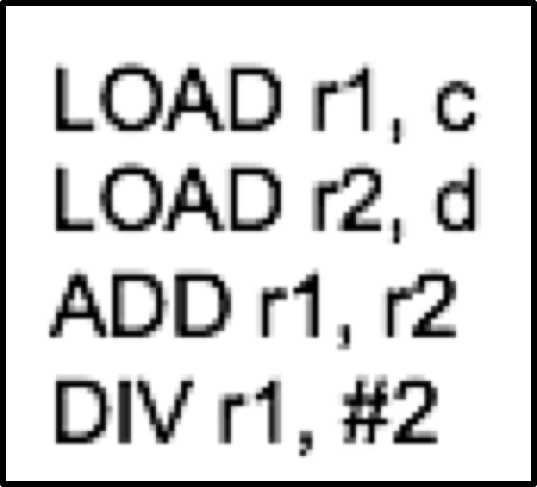
Which generation?
Machine Code - Low
Assembly Code - Low
High Level
Computers must translate everything into binary
True
False
Assembly language is better than machine code because...
it is easier for humans to read
it is easier to remember the instructions
a person is less likely to make mistakes in assembly language
it is written using English-like keywords
The analysis phase ____________________
Determines what the program will do
Determines how the program will work
Determines whether or not the program works
Adds new features to the delivered program
The operations and maintenance phase ____________________
Determines what the program will do
Determines how the program will work
Determines whether or not the program works
Adds new features to the delivered program
The implementation phase ____________________
Determines whether or not the program is feasible
Determines which classes are needed and what they will do
Determines whether or not the program works
Implements the program code
The design phase ____________________
Determines whether or not the program is feasible
Determines which classes are needed and what they will do
Determines whether or not the program works
Implements the program code
SDLC means
Software Development life cycle
System development life cycle
Simple development learning cycle
Non of the above
Software engineering involves
Using engineering tools and techniques in software development
Using scientific way to software development
Both A and B
Non of the above
Risk Assessment is part of software engineering
True
False
Can't say
Non of the above
ERD means
Entity relationships diagrams
Every real dialog
Engineering requirements diagrams
Non of the above
The reason for software bugs and failures is due to
Software companies
Software Developers
Both Software companies and Developers
Software
Someone who solves complex problems with mathematical and scientific application is Called
BCA students
Donald Trump
Engineer
Sportsmen
What is software quality?
Satisfying client needs
Proving Best Lunch
Conducting Semester Exam
Reopening university And Colleges
What do you understand by software?
New Movie
Set of sports items
Set of food items
Set of programs
First step in Requirement Engineering
Gathering Requirement
Feasibility Study
Elicitation
requirement analysis
Expand SRS
System Requirement Specification
System Requirement Software
Software Requirement Specification
Software Requesting Service
Computer Works on which cycle?
Process,Output,Input
Output, Process Input
Input, Process,Output
None of the Above.
CPU is .........................................of a computer.
Heart
Brain
BOth A & B
None of the Above
How many types of computer generation ?
3
5
6
4
What is the Brain of Computer?
UPS
CPU
SMPS
RAM
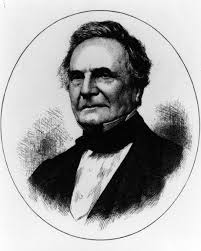
whose person is this picture
(a)
please lisyen audio for question
printer
plotter
monitor
keyboard
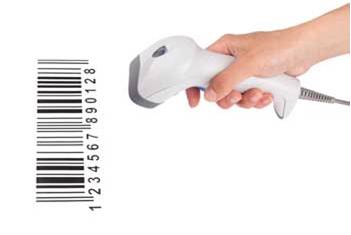
What is the name of this device?
Scanner
MICR
Bar code reader
Zip Code reader
Programmers write programs to satisfy the needs of others called
Coders
End Users
Program Developers
A phase in the Program Development Cycle that involves the consideration of what the end users want or need.
Understanding the Problem
Planning the Logic
Coding the Program
A phase in the Program Development Cycle that involves the creation of Source Codes
Understanding the Problem
Planning the Logic
Coding the Program
What part of an experiment contains the data tables and graphs?
Analysis
Conclusion
Hypothesis
Materials
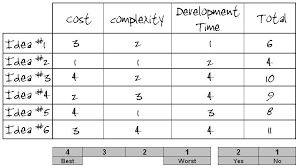
Using one of these will help your group decide on which model to build:
Design Brief
Design Evaluator
Decision Matrix
If I find flaws in my solution I should....
Create a technical drawing instead
Be formal and perfect
go back and make modifications before moving forward
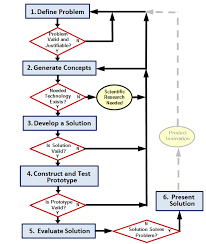
Why are there arrows going in all directions here?
To show that many ideas come from everyone
To show that the chart is incomplete
To show that you can go back to previous steps if needed
In software design three levels of design exist, which are-
External Design
Architectural Design
Detailed Design
Program Design
Software can be described as Fit for Purpose if it:
Fulfils the requirements set out during the Analysis stage
Fulfils the requirements set out during the Design stage
Fulfils the requirements set out during the Implementation stage
Fulfils the requirements set out during the Testing stage
A syntax error is caused by:
A large font size in your code
A typing error in your code
Using internal commentary in your code
Using indentation in your code
Which system modelling tool best describes the hierarchy of subroutines and the sequence in which they are executed?
Dataflow diagram
System flowcharts
IPO diagrams
Structure charts
What is shown on context diagrams?
The movement of data between processes.
The movement of data into and information out of a system.
The order in which processes occur in a system.
The nature of data structures used by processes within the system.
What form of documentation/diagram is the most appropriate for showing the schedule and timelines for activity in a project?
Gantt chart
Storyboard
Data flow diagram
System flowchart
The command STOP is used in a software language as a debugging tool to halt a program. The program cannot resume until the debugging command RUN is issued.
Program trace
Breakpoint
Stub
Value watching
It should not use any specific programming language

What symbol is shown here
Process
Decision
Terminator
Input/Output
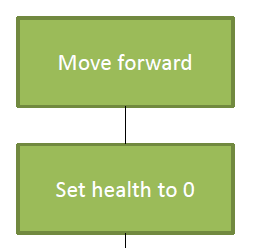
If
To provide a response if a statement is not met
To provide a response if a statement is met
A loop with a condition set at the start
Used in a question as part of the decision process
Else
To provide a response if a statement is not met
To provide a response if a statement is met
A loop with a condition set at the start
Used in a question as part of the decision process
Then
To provide a response if a statement is not met
To provide a response if a statement is met
A loop with a condition set at the start
Used in a question as part of the decision process
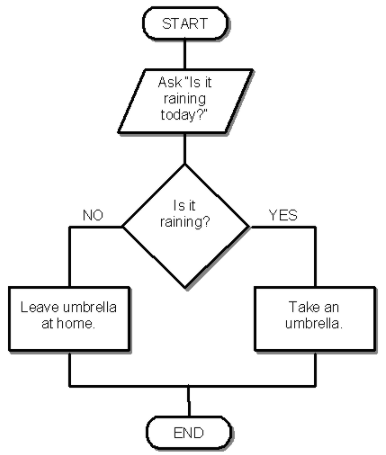
Yes
For
Used to create a counting loop
To display a response on screen to the user
A loop with a condition set at the start
Requires an entry from the user in response to a question
Used to create a counting loop
To display a response on screen to the user
A loop with a condition set at the start
Requires an entry from the user in response to a question
While
To provide a response if a statement is not met
To provide a response if a statement is met
A loop with a condition set at the start
Used in a question as part of the decision process
A decision tree uses _________ to calculate likely outcomes.
stakeholder information
facts and statistics
estimates and probabilities
shareholder data
BENEFITS OF USING DECISION TREES include:
Uses quantitative data only – ignores qualitative aspects of decisions
It is based on assumptions and estimates
Choices are set out in a logical way
Assignment of probabilities and expected values prone to bias
DRAWBACKS OF USING DECISION TREES include:
Probabilities are just estimates – always prone to error
Choices are set out in a logical way
Potential options & choices are considered at the same time
Use of probabilities enables the “risk” of the options to be addressed
When a sub-node splits into further sub-nodes, then it is called
Decision Node
Splitting
Pruning
Terminal Node


(a) can be used to specify complex decision logic in a high level software specification?
The 2 types of Software are:
Operating System
System
Business
Application
Types of application software:
Business
Operating System
Robotics
Educational
Computer Games and Environment
Are closer to human language. Like oracle, VB, VC++, SQL etc. Most of them are used to access database, they allow the programmer to define “what” is required without telling the computer and “How” to implement it.
Machine
Assembly
High Level
4GL
Programming Methods- the use for programming (a) it depends upon the size and the complexity of the program. When a program beyond a particular size and complexity, a traditional methodology may fail to give efficient results and in the case one has to either use a new method which will satisfy the need.
The programmers may use them in other parts of the programs knowing that only their abstract properties without concern for the details of their implementation
Simplicity, Clarity and Unity
Orthogonality
Naturalness for Application
Support for Abstraction
A program may be tested by executing it with text input data and checking the output results against the specifications. For verification and troubleshoot the programs.
Ease of Program Verification
Programming Environment
Portability of Program
Cost
Analyse or Defined the Problem – analyse problem, consists of reviewing program specifications, meeting with the analysts and users; and identifying program components.
TRUE
FALSE
A (a) is an artificial language designed to express computations that can be performed by a machine, particularly computer.
Why study programming language?
To improve your understanding of the language you are using
To increase your vocabulary of useful programming constructs
To make is easier to learn a new language
To make it easier to design a new language
Abstraction is:
adding to a problem
filtering out all irrelevant characteristics and unnecessary details
finding characteristics
looking for similarities
Select all that applies in Abstraction?
is a problem solving tool
removes unimportant information
adds important information
simplifies a situation
focuses on what is important
The widely used abstraction mechanisms in software design are-
Functional Abstraction
Data Abstraction
Control Abstraction
Procedure Abstraction
Which one is not the benefit from using modularization ?
Ease of Understanding
Reusable of code
Increasing algorithm performance
Elimination of redundancy
Which one of cohesion level that has the strongest internal strength of a module ?
Logical cohesion
Temporal cohesion
Sequential cohesion
Functional cohesion
In which one of the following types of coupling, complete data structures are passed from one module to another?
Control Coupling
Stamp Coupling
External Coupling
Content Coupling
Which one of the following is the correct ordering of the coupling of modules from strongest (least desirable) to weakest (most desirable)?
content, common, control, stamp, data
common, content, control, stamp, data
content, data, common ,stamp, common
data, control, common, stamp, content
Consider the sentence: A book has one or more pages. Which of the following best characterizes the relationship between the Book class and the Page class?
Inheritance
Specialization
Association
Composition
What is Top Down Design?
start function at the top, break down into parts, definitions at the bottom
Put the steps at the top and put the explanation in layers at the bottom
Write a 10 page story about how to run the code and break it into chapters to help you organize.
Stepwise refinement is:
Identifying the main steps needed in your program
Breaking down each step until it becomes easy to code
Which of these is not a reason for breaking problems down into modules
Reusability
Easier to test and debug
Allows only one programmer to work on a solution
Individual modules are easier to maintain.
A graphical representation of the modular structure of a solution is a
Structure chart
Modular diagram
Top down design
Identfier table
What is a software design strategy?
A graphical or textual description of the software
A fundamental idea that can be applied to designing a system.
A systematic approach for producing a design.
An overall plan and direction for developing a design.
What is “white box” testing?
Unit testing
Integration testing
Testing with knowledge of the system internals
Testing without knowledge of the software internals
What is “black box” testing?
System testing
Integration testing
Testing with knowledge of the system internals
Testing without knowledge of the software internals

