wayground logo

Free Printable Worksheets

Font size

S
M
L
XL
Worksheets

CDSHS - Yr 8 Biology Revision

Total questions: 72

Worksheet time: 2hrs 7mins

Name
Class
Date
1.
The diagram shows the female reproductive system. The part labelled B is called  
a)
sperm 
b)
the egg  
c)
the womb  
d)
the ovary 
2.
Every living organism is made up of one or more cells
a)
True
b)
False
3.
A cell is...
a)
the basic unit of structure and function in living organism
b)
an organism
c)
a basic part of everything that we see
d)
found only in animals, not plants
4.
Which of the following are NOT found in animal cells
a)
chloroplasts and cytoplasm
b)
chloroplasts and cell wall
c)
cell wall and cell membrane
d)
mitochondria and nucleus
5.
The nucleus is like the ____________ of the cell.
a)
foot
b)
hand
c)
stomach
d)
brain
6.

The fluid that surrounds the organelles is... (hint... "Try to pull a fast one and..."

a)

chloroplast

b)

cytoplasm

c)

vacuole

d)

cell wall

7.
What do vacuoles do? 
a)
They actually do not have an important role
b)
They protect the cell
c)
They are the brain of the cell
d)
storage area for cells; water storage in plants 
8.

Which organelle takes in "sun showers" and helps plants with the process or photosynthesis?

a)

Vacuole

b)

Mitochondria

c)

Cytoplasm

d)

Chloroplast

9.
Which of the following, found ONLY in plant cells, provides structure?
a)
cell wall
b)
chloroplast
c)
mitochondria
d)
vacuole
10.
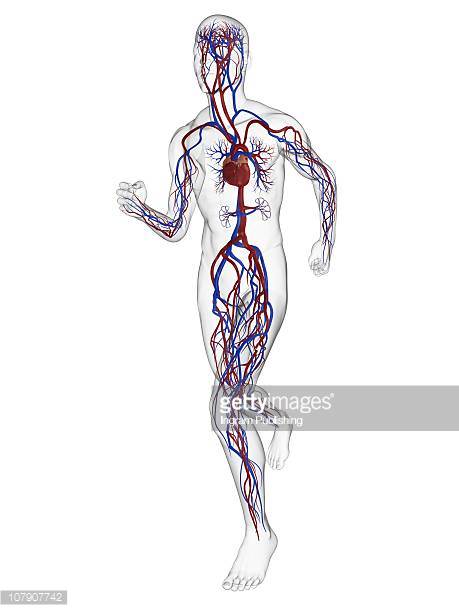
In which system of the human body does the heart belong?
a)
Nervous
b)
Skeletal
c)
Cardiovascular
d)
Digestive
11.
Which best describes the purpose of the cardiovascular system?
a)
It provides stability to the skeleton
b)
It delivers food to power the body
c)
It delivers blood to the body's tissues
d)
It supplies oxygen to the body
12.

What is the main organ of the circulatory system?

a)

small intestine

b)

bone

c)

lungs

d)

heart

13.
How many types of blood vessels are in our body?
a)
1
b)
2
c)
3
d)
4
14.

Arteries carry oxygen rich blood away from the heart.

a)

True

b)

False

15.

Veins carry oxygen poor blood back to the heart.

a)

False

b)

True

16.
______________ are the smallest blood vessels.
a)
Arteries
b)
Veins
c)
Capillaries
17.
______________ are the second largest blood vessel. 
a)
Arteries
b)
Veins
c)
Capillaries
18.
How many chambers does the heart have ? 
a)
4
b)
6
c)
3
d)
1
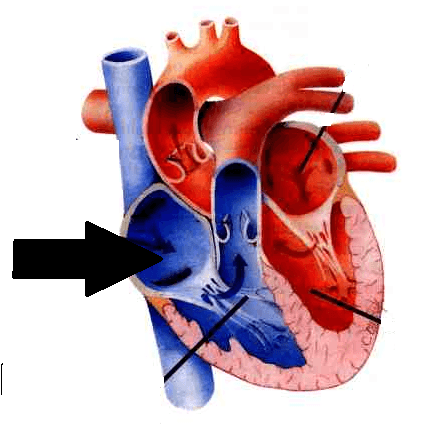
19.
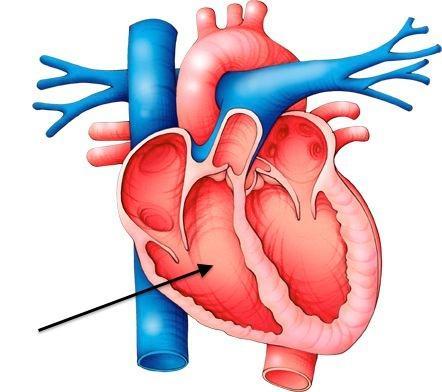
Identify
a)
Left atrium
b)
Right atrium
c)
Left ventricle
d)
Right ventricle
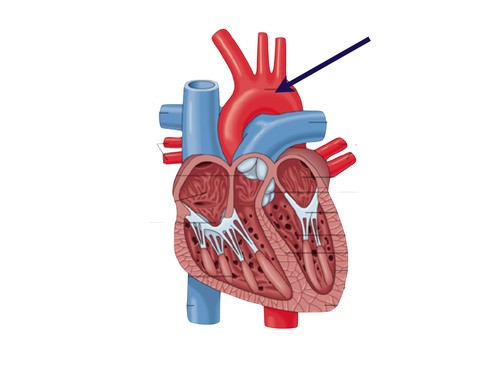
20.
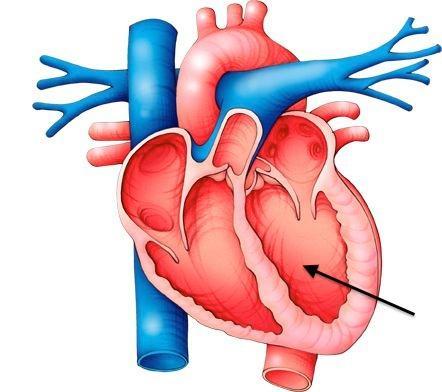
Identify
a)
Pulmonary veins
b)
Pulmonary artery
c)
Aorta
d)
Vena cava
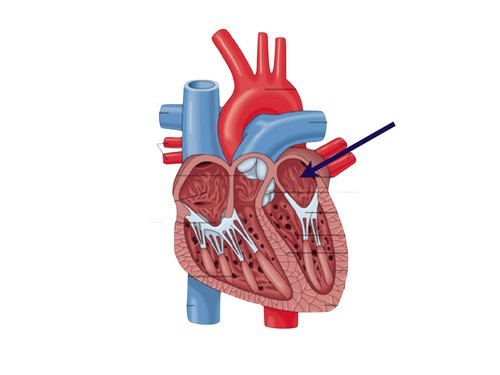
21.
Identify
a)
Left atrium
b)
Right atrium
c)
Left ventricle
d)
Right ventricle
22.
Identify
a)
Left atrium
b)
Right atrium
c)
Left ventricle
d)
Right ventricle
23.
Identify
a)
Left atrium
b)
Right atrium
c)
Left ventricle
d)
Right ventricle
24.

The mammalian heart has ___ chambers.

a)

1

b)

2

c)

3

d)

4

25.
This chamber of the heart RECEIVES blood returning from the body
a)
Right Atrium
b)
Right Ventricle
c)
Left Atrium
d)
Left Ventricle
26.
Structure(s) that keep the blood flowing in one direction.
a)
Valve(s)
b)
Septum(s)
c)
Neuron(s)
d)
Bronchiole(s)
27.

The blood in the vena cava is...

a)

oxygenated, returning to the heart

b)

deoxygenated, returning to the heart

c)

oxygenated, leaving the heart

d)

deoxygenated, leaving the heart

28.
When you breathe, your lungs take in ___ and remove ___. 
a)
air/oxygen
b)
oxygen/carbon dioxide 
c)
carbon dioxide/waste 
d)
waste/air 
29.
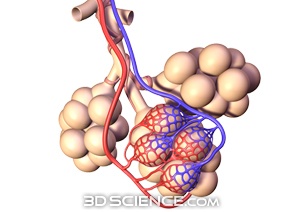
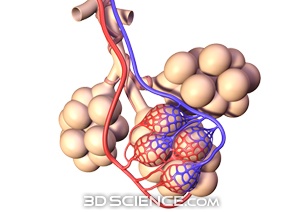
The air sacs that are covered with capillaries where gas exchange takes place
a)
bronchi
b)
lungs
c)
oxygen
d)
alveoli
30.

Flap of tissue that covers the opening to the windpipe during swallowing

a)

Pharynx

b)

Trachea

c)

Epiglottis

31.
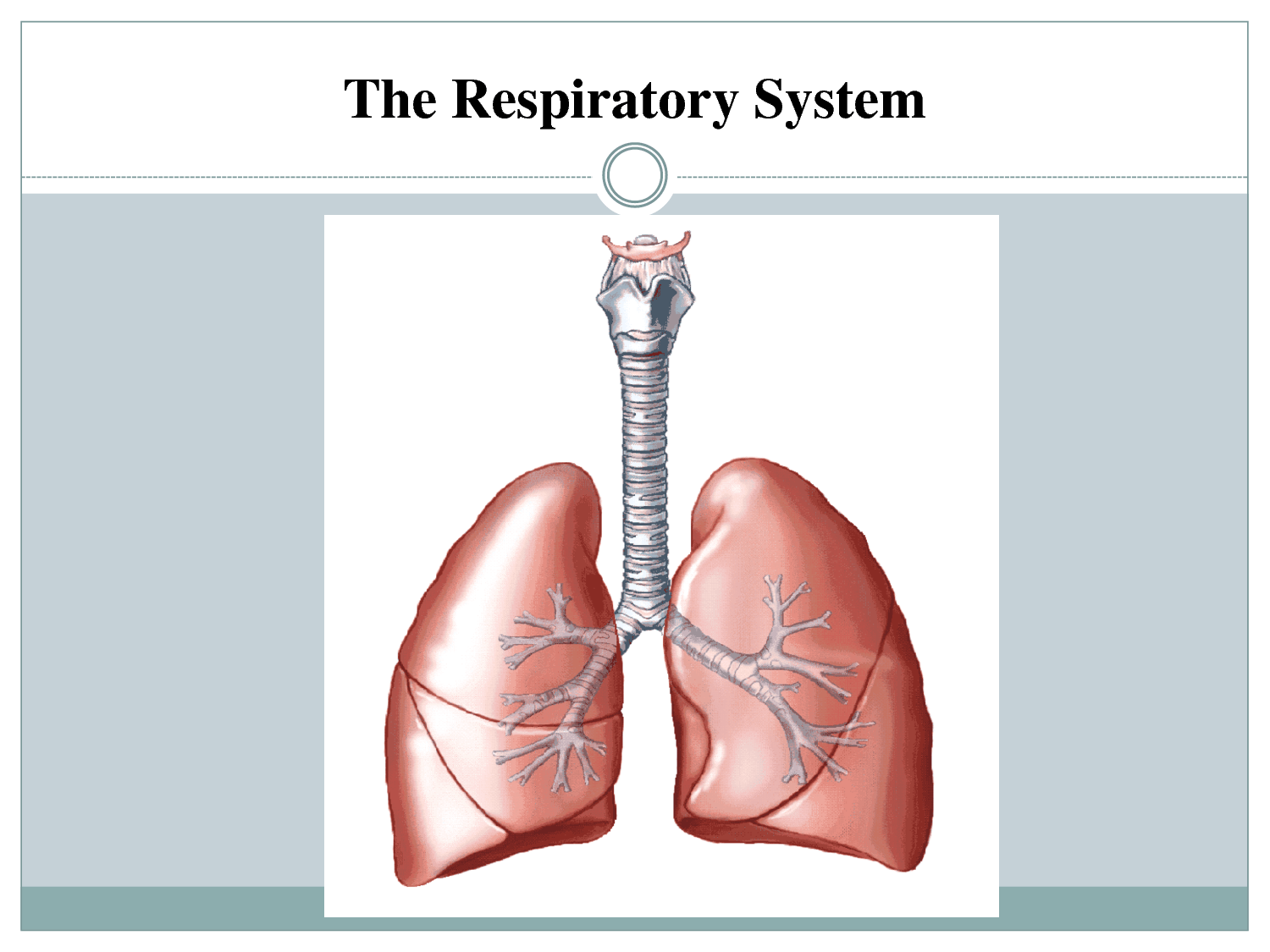
What is the main function of the respiratory system?
a)
to provide oxygen and remove carbon dioxide from the body
b)
to bring oxygen to the body
c)
to break down food and absorb nutrients
d)
to remove oxygen from the body and deliver carbon dioxide
32.
Given the following structures:
1. larynx
2. nasal cavity
3. pharynx
4. trachea
Which of the following is the correct order that air would flow during inhalation. 
a)
1,2,3,4
b)
2,3,1,4
c)
2,1,3,4
d)
4,2,3,1 
33.

The division of the trachea forms

a)

nose

b)

main bronchi

c)

lungs

d)

alveoli

34.

Which part of the Respiratory System plays a major role in speech?

a)

nose

b)

pharynx

c)

larynx

d)

trachea

35.

the windpipe; a passage through which air moves in the respiratory system.

a)

trachea

b)

lungs

c)

larynx

d)

bronchi

36.

What is the dome-shaped muscle beneath the lungs that helps us breathe.

a)

diagram

b)

dialysis

c)

diaghragm

d)

diorama

37.

What do you call the type of reproduction in which the genetic materials from two different cells combine, producing an offspring?

a)

pollination

b)

sexual reproduction

c)

fertilization

d)

asexual reproduction

38.

What do you call the female sex cell?

a)

egg cell

b)

sperm cell

c)

diploid

d)

haploid

39.

What type of reproduction takes place when one parent organism produces offspring without meiosis and fertilization?

a)

pollination

b)

sexual reproduction

c)

asexual reproduction

d)

fertilization

40.

All of the following are advantages of asexual reproduction except ____________.

a)

produce varied offspring

b)

spread and colonize certain part of an area

c)

Reproduce without a mate

d)

produce a large number of offspring

41.

Which of the following is a disadvantage of asexual reproduction?

a)

All organisms have genetic variation

b)

Parents produces identical off spring which is not suitable for survival in a changing environment

c)

Finding a mate is not needed

d)

It can produce a lot of offspring

42.

Which is an example of asexual reproduction by regeneration?

a)

cloning sheep

b)

lizard regrowing a tail

c)

sea star arm producing a new organism

d)

strawberry plant producing stolons

43.

In _________,_____________ only one parent organism produces offspring.

a)

sexual reproduction

b)

asexual reproduction

c)

pollination process

d)

fertilization process

44.

The male reproductive cell is called...

a)

vas deferens

b)

seminal vesicle

c)

ovum

d)

sperm

45.

Choose the parts of the male reproductive organs

(select 3 for points).

a)

scrotum

b)

penis

c)

falopian tubes

d)

prostate

46.

Which part of the male reproductive system produces sperm?

a)

The Scrotum

b)

The prostate

c)

The testicles

d)

The penis

47.

LETTER e: (Hint: there are 2)

a)

Uterus

b)

Vulva

c)

Ovaries

d)

Eggs

48.

LETTER g: (hint: birth canal)

a)

Vulva

b)

Vagina

c)

Ovaries

d)

Uterus

49.

LETTER f:

a)

Ovaries

b)

Uterus

c)

Vulva

d)

Vagina

50.

LETTER b: (Hint: produce sperm)

a)

Urethra

b)

Testicles

c)

Scrotum

d)

Penis

51.

LETTER c:

a)

Urethra

b)

Testicles

c)

Penis

d)

Scrotum

52.

LETTER a: (hint: tube inside)

a)

Urethra

b)

Testicles

c)

Scrotum

d)

Penis

53.
The two male reproductive organs that produce most of the fluids that make up semen are called
a)
Testes & Epididymis
b)
Seminal Vesicle & Prostate
c)
Vas Deferens and Urethra
d)
Scrotum and Penis
54.
The primary male hormone is
a)
testosterone
b)
estrogen
c)
progesterone
d)
FSH
55.
The male reproductive organ that stores maturing sperm is the
a)
Epididymis
b)
Vas Deferens
c)
Prostate Gland
Prostate Gland
d)
Urethra
56.
The duct that propels live sperm toward ejaculation is the
a)
vas deferens
b)
fallopian tube
c)
seminiferous tubule
d)
epididymis
57.
Why are flowers very colorful (and why do they produce odor?)
a)
So people buy them
b)
To make gardens look good
c)
To attract pollinators
d)
To attract sunlight
58.
What is a pollinator?
a)
Animal that moves pollen from plant to plant
b)
Animal that eats pollen
c)
A plant that makes pollen
d)
A plant that does not make pollen
59.
Male reproductive parts of a plant....
a)
Petals and ovary
b)
Ovary and ovule
c)
Anther and filament
d)
Stigma and style
60.
In which part of the flower is pollen found?
a)
Filament
b)
Anther
c)
Ovary
d)
Xylem
61.
What is the female part of the plant called?
a)
Stigma
b)
Pistil
c)
Stamen
d)
Style
62.
How does pollen reach the ovule?
a)
Stigma --> Style
b)
Style --> stigma
c)
Ovary --> stigma
d)
Ovary --> style
63.
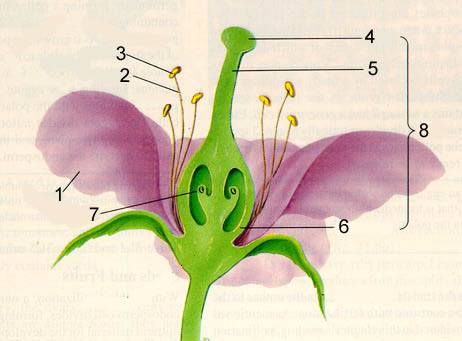
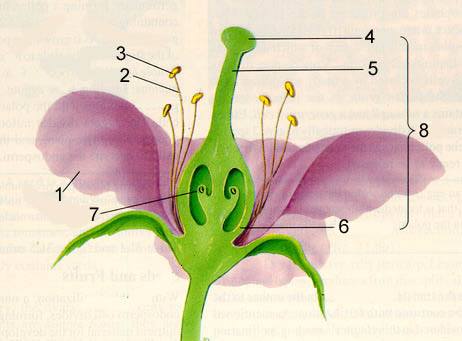
What is #1 pointing to?
a)
ovary
b)
petal
c)
stigma
d)
stamen
64.
What is #8 pointing to?
a)
petal
b)
stamen
c)
pistil
d)
ovary
65.
The male part of the flower is known as the _____.
a)
stamen
b)
pistil
c)
ovary
d)
petal
66.
The female part of the flower is known as the ____.
a)
stamen
b)
anther
c)
filament
d)
pistil
67.
What is #2 pointing to?
a)
anther
b)
filament
c)
ovary
d)
style
68.
What is #3 pointing to?
a)
stigma
b)
filament
c)
ovary
d)
anther
69.
What is #4 pointing to?
a)
anther
b)
style
c)
stigma
d)
ovary
70.
What is #5 pointing to?
a)
anther
b)
filament
c)
stigma
d)
style
71.
What is #6 pointing to?
a)
stigma
b)
style
c)
ovary
d)
petal
72.
What is #7 pointing to?
a)
anther
b)
ovary
c)
ovule
d)
petal