
 Worksheets
5076 Prelims Revision
Total questions: 63
Worksheet time: 50mins

An unknown gas can be collected using the apparatus shown.
Based on the diagram only, what can your infer about the physical property of this gas?
It is denser that air.
It is insoluble in water.
It is less dense than air.
It is soluble in water.
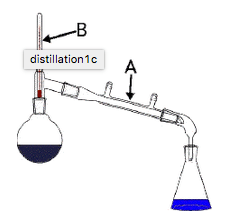
In an experiment, a student needs to measure out 36.50 cm3 of a solution. Which piece of apparatus would measure this volume most accurately?
beaker
burette
measuring cylinder
pipette
What method is used to obtain copper(II) sulfate crystals from its solution?
Crystallisation
Evaporation to dryness
Paper chromatography
Fractional distillation
When an acid, X, was added to a solution containing the nitrate of metal Y, a dense white substance was precipitated.
acid X: nitric acid; metal Y: zinc
acid X: sulfuric acid; metal Y: barium
acid X: hydrochloric acid; metal Y: calcium
acid X: hydrochloric acid; metal Y: silver
When dilute acid was added to an unknown sample, effervescence was observed. Which anion is present?
ammonium ion
carbonate ion
nitrate ion
sulfate ion

Which of the following is correct?
P is nitric acid.
S is copper(II) hydroxide.
T is carbon dioxide.
U is copper(II) hydroxide.
U is barium chloride.

When excess sodium hydroxide was added to an unknown sample, this was observed. What is the precipitate formed?
copper(II) hydroxide
zinc hydroxide
iron(III) hydroxide
iron(II) hydroxide

Two gas jars each contain a different gas. The gas jars are connected and the cover slips are removed. The diagram shows what happens to the particles of the gases. Which process has occurred?
chemical reaction
condensation
diffusion
evaporation

The diagrams show the arrangement of particles in three different physical states of substance X. Which statement about the physical states of substance X is correct?
Particles in state 1 vibrate about fixed positions.
State 1 changes to state 2 by diffusion.
State 2 changes directly to state 3 by condensation.
The substance in stage 3 has a fixed volume.


Sodium chloride can conduct electricity because it
has mobile atoms to carry electric current.
has mobile ions to carry electric current.
has mobile electrons to carry electric current.
strong attractive forces between the ions.
Which of the following is correct?
Water cannot conduct electricity as there are no mobile charged ions.
Water cannot conduct electricity as there are no mobile charged particles
Sodium chloride has strong electrostatic forces of attraction between the ions.
There are weak intermolecular forces between water atoms.
Which of the following best describes CCl4?
It has weak intermolecular forces between the molecules, so it requires small amount of heat energy to overcome the forces.
It has weak intermolecular forces between the atoms, so it requires small amount of heat energy to overcome the forces.
It has strong covalent bonds between the atoms, so it requires large amount of heat energy to overcome the forces.
It has strong electrostatic forces of attraction between ions, so it requires large amount of heat energy to overcome the forces.
2H2 + O2 −−〉 2H2O
What is the volume of O2 gas needed to produce 3.60 g of H2O?
2.4 cm3
2.4 dm3
4.8 dm3
3.2 dm3
2Na + Cl2 --> 2NaCl
5.85 g of NaCl is formed.
What is the mass of Cl2 used?
1.2 dm3
1.775 g
3.55 g
7.1 g
The equation shows the reaction between sulfuric acid and sodium hydroxide.
H2SO4 + 2NaOH ---------- Na2SO4 + 2H2O
What is the volume of 1.0 mol/dm3 sodium hydroxide solution which can neutralise 25.0 cm3 of 1.0 mol/dm3 sulfuric acid?
12.5 cm3
25.0 cm3
50.0 cm3
75.0 cm3
In an exothermic reaction, heat is _____ and temperature _____.
taken in, increase
given out, increase
given out, decrease
taken in, decrease
Which of the following reactions are EXOTHERMIC?
combustion
thermal decomposition
photosynthesis
neutralisation
Which of the following are exothermic?
H2 → 2 H
HCl → H + Cl
2H + O → H2O
C2H4 (g) + 3 O2 (g) → 2 CO2 (g) + 2 H2O (l)
H2O (g) → H2O (l)
The formation of hydrogen iodide from hydrogen and iodine is an endothermic reaction.
H – H + I – I → 2 H – I
What may be deduced from this information?
More bonds are broken than are formed.
More bonds are formed than are broken.
More energy is released by forming bonds than is gained to break bonds.
More energy is gained to break bonds than is released by forming bonds
What is an acid?
A substance that produces hydrogen in water.
A substance that produces hydrogen ions in water.
A substance that produces hydroxide ions in water.
A substance that produces hydrogen gas in water.
Which of the following shows the correct word equation?
Acid + Base --> Salt + Hydrogen
Acid + Carbonate --> Salt + Water + Ammonia
Base + Ammonium salt --> Salt + Water + Ammonia
Acid + Metal--> Salt + Water
Which substance should be added to help to reduce acidity in the soil?
calcium hydroxide
calcium chloride
sodium hydroxide
water
Which of the following describes element Q and its oxide based on the equations below?
Q oxide + nitric acid --> Q nitrate + Water
Q oxide + potassium hydroxide --> no visible reaction
Q is a metal, Q oxide is basic
Q is a nonmetal, Q oxide is basic
Q is a nonmetal, Q oxide is acidic
Q is a metal, Q oxide is amphoteric
Magnesium oxide is ________ while zinc oxide is __________.
acidic; basic
basic; amphoteric
basic ; neutral
acidic ; neutral
Why is excess Copper (II) oxide added to dilute Sulfuric acid during the preparation of Copper (II) sulfate?
To ensure that all the Copper (II) oxide has reacted
To remove excess Copper (II) oxide
To ensure that all the acid has reacted
To ensure that the salt is formed faster
What type of reaction produced an insoluble salt?
Neutralisation reaction
Precipitation reaction
Titration reaction
Insoluble reaction
Titration is a method to prepare salts from the reaction between ...
an insoluble acid with an insoluble base.
an insoluble acid with a soluble base.
a soluble acid with an insoluble base.
a soluble acid with a soluble base.
Which of the following salts is soluble?
Silver chloride
Copper (II) cabonate
Sodium chloride
Calcium sulfate
Which of the following shows the trend that occur when moving down Group I of the Periodic Table?
The melting point of the elements decrease.
The number of valence electrons increase.
The reactivity decreases.
The relative atomic mass decrease.

What group and period does this element belong in? *
period 1 and group III
period 3 and group I
period II and group 3
period III and group 2
What is another name for the elements in group VII?
The Halogens
The Noble gases
The Oxides
The Alkali Metals
Would a displacement reaction occur for Iodine + Potassium Bromide?
Yes
No
Maybe
Which of the following best explains why an alloy is used over pure metals?
The different sized molecules disrupt the order arrangement, thus, the layers of molecules cannot slide easily.
The different sized atoms disrupt the order arrangement, thus, the layers of atoms cannot slide easily.
Alloy is a mixture of metal and other elements while pure metals contain one type of atom only.
Strong electrostatic forces hold the positive ions and the negative electrons together, thus, it is hard to break metals apart.
Which of the following is NOT a property of a metal?
ductile
good electrical conductor
low boiling point
malleable
high melting point
Aluminium is used to store food because...
It is a good electrical conductor.
It has low melting point.
It has a protective oxide layer.
It can react with steam to form aluminium oxide & hydrogen.

Which of the following could be the possible metals?
W: Silver, X: Zinc, Y: Magnesium
W: Calcium, X: Magnesium, Y: Iron
W: Copper, X: Calcium, Y: Magnesium
W: Silver, X: Magnesium, Y: Copper
In the blast furnace, limestone is added to...
Create more heat
Turn iron(III) oxide into pure iron
Remove acidic impurities
Reduce the pH of the blast furnace

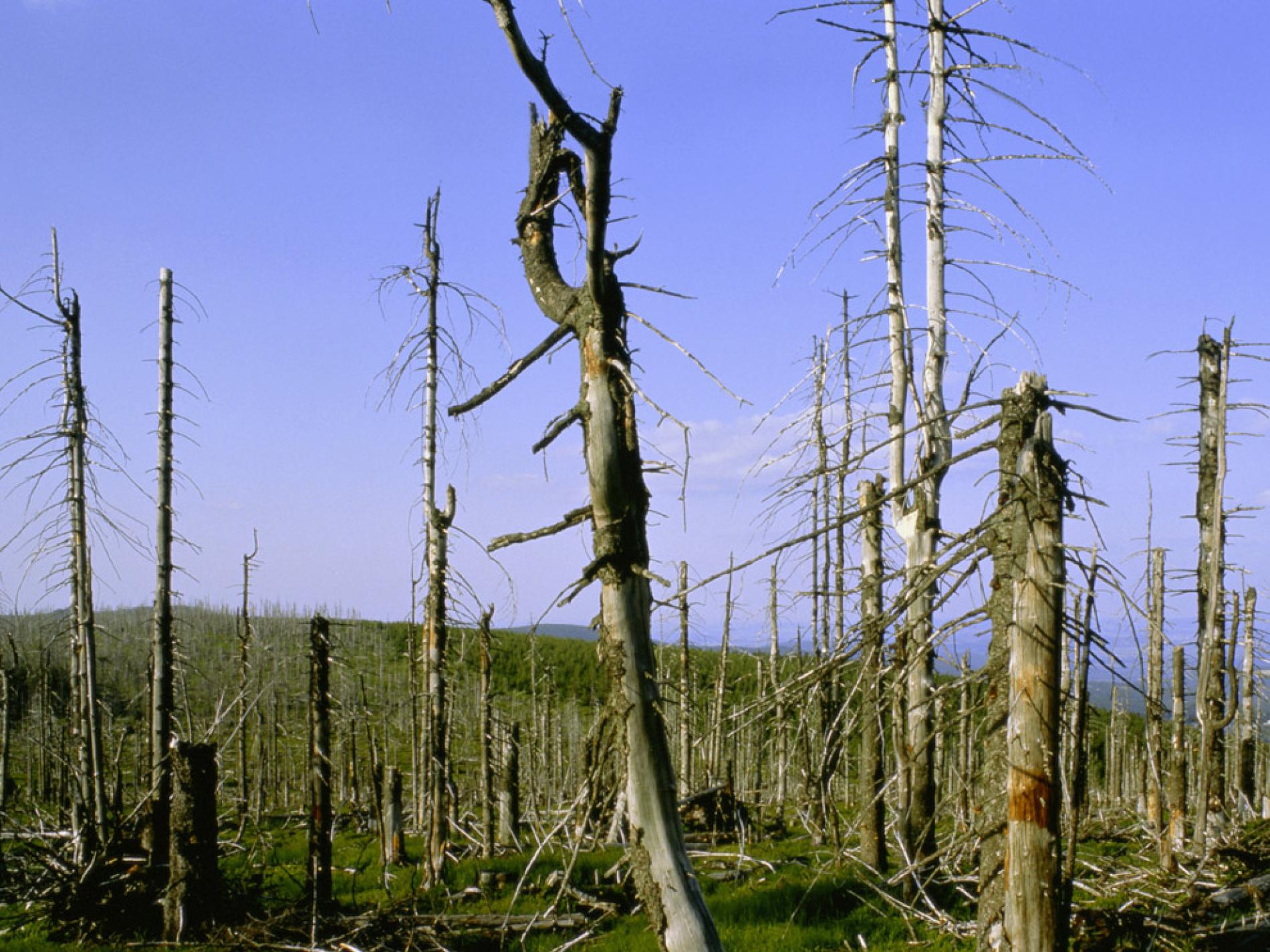
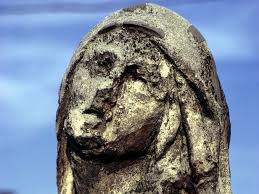
Which of the following is true about carbon monoxide?
It is formed when incomplete combustion of fuel happens.
It is formed when complete combustion of fuel happens.
It causes fatigue and global warming. It also cause acid rain.
It combines with haemoglobin in blood and starves the body of oxygen and cause death.
Which of the following statement about the air pollutants is correct?
Sulfur dioxide is formed from lightning activity.
Nitrogen dioxide is formed from lightning activity.
Sulfur dioxide causes acid rain, which corrodes limestone building.
Nitrogen dioxide causes global warming which causes flood.

